China Country Walk: Rural Villages & Homestay Guide
Something big is happening in China rural travel, and it is not on the usual tourist maps. International visitors are skipping the Beijing-Shanghai-Chengdu circuit and heading straight for the villages. They are sleeping in wooden Miao stilt houses in Guizhou, walking through tea plantations in Anhui, and eating farm-to-table meals in Guangxi rice terraces. Chinese social media has a name for it: “Country Walk” (乡村漫步). The numbers back it up. In 2025, Trip.com reported that inbound orders for rural farmstays jumped over 50 percent year on year, and overnight stays by international guests climbed more than 75 percent. During Spring Festival that year, 51 towns across China received their first overseas bookings ever.
This article covers where to go, how to book, what actually happens when you arrive, and the 2026 policy change that makes rural stays easier than before. If you want urban alternatives beyond the usual Beijing-Shanghai-Chengdu circuit, our guide to China’s rising second-tier cities covers Zhengzhou, Taiyuan, Datong, and more — places the high-speed rail now reaches but guidebooks still skip.
Why China’s villages now
Three things collided to make Chinese countryside travel take off among international travelers.
First, the visa-free expansion. As of mid-2026, travelers from over 50 countries can enter China without a visa. The 240-hour transit-free policy covers 55 countries. This means people who once had a three-city itinerary in two weeks now have the breathing room to spend five days in a single village.
Second, social media rewired the perception. When American cycling blogger Ludwig filmed himself being welcomed into a Hunan village banquet (a funeral feast, actually, which made the hospitality even more startling), the video hit 100 million views. German YouTuber Ken Abroad titled his video “Someone Warned Me Not to Go to China’s Countryside” — then showed clean streets, modern village infrastructure, and people plying him with home-cooked food. The dissonance between expectation and reality became the story. Millions of viewers who had only seen China through a geopolitical lens suddenly wanted to see this version for themselves.
Third, there was a real policy breakthrough. But that deserves its own section.
The 2026 rural registration change
Here is the single most practical problem with rural stays in China, and why the March 2026 change matters.
Chinese law requires international travelers staying outside hotels to register their accommodation with local police within 24 hours of arrival. In Beijing or Shanghai, where hotels handle this automatically, it is invisible. But if you check into a village guesthouse in Guizhou, the nearest police station might be an hour away, and nobody speaks English when you get there. Some village hosts simply did not bother reporting international guests, which put the traveler at legal risk. Others declined international bookings outright to avoid the paperwork.
On March 20, 2026, the National Immigration Administration launched an online accommodation registration pilot across seven provinces: Hebei, Liaoning, Zhejiang, Hubei, Guangxi, Chongqing, and Sichuan. International travelers and their hosts can now register through the NIA website, the “12367” app, or the 12367 mini-programs on WeChat and Alipay. Online filings carry the same legal validity as in-person registration.
Let me be clear about what this does and does not do. The 24-hour rule still exists. You still need to register. What changed is that you no longer need to physically go to a police station — your host can do it from their phone, usually in a few minutes. For rural homestay travel, this is the difference between a workable system and one that scared off hosts.
The pilot covers seven provincial-level regions. Guangxi is on the list, which covers the Longji rice terraces area. Zhejiang covers Moganshan and Anji tea country. Sichuan covers western Sichuan’s Tibetan villages. The major village destinations not yet covered — Guizhou, Yunnan, and Anhui — are expected to join as the pilot expands nationwide. For now, hosts in those provinces still need to register guests the old way. Ask before booking, and choose homestays that have hosted international travelers before.
Where to go: five regions that deliver
Not every Chinese village is worth a long-haul flight. Some are concrete-and-tile new builds with nothing to see. Others are theme-park versions of themselves, with the same souvenir shops you would find in any Chinese tourist town. The following five regions have actual cultural depth, functioning village life, and a growing number of homestays that can handle international guests.
Guizhou: Miao and Dong villages
This is the heavyweight of Chinese village travel. In Qiandongnan prefecture, entire mountainsides are covered in wooden stilt houses (diaojiaolou) that have been built the same way for centuries. Xijiang Qianhu Miao Village is the largest Miao settlement in the world, with over a thousand households stacked on a hillside. It divides travelers — some love the scale and the thousand-light night view, others find the main street too commercial. Zhaoxing Dong Village, four hours east by road, is quieter. Five drum towers anchor five clan neighborhoods. At 3 p.m. daily, the Dong grand song choir performs under the main drum tower, a polyphonic singing tradition recognized by UNESCO.
Homestays in both villages run from 100 to 350 yuan per night (about 14 to 50 USD). The better ones are run by locals who have renovated traditional wooden structures with modern bathrooms. Some owners will take you to their family’s rice terrace, cook dinner with you, or arrange a tie-dye workshop with a village artisan.
For a firsthand account of what a Zhaoxing homestay actually feels like — the sour soup fish, the rice wine you cannot refuse, and the rooster under the window at dawn — read our Zhaoxing Dong village diary.
For a deeper dive into this region, read our Guizhou villages guide.
Guangxi: Longji rice terraces
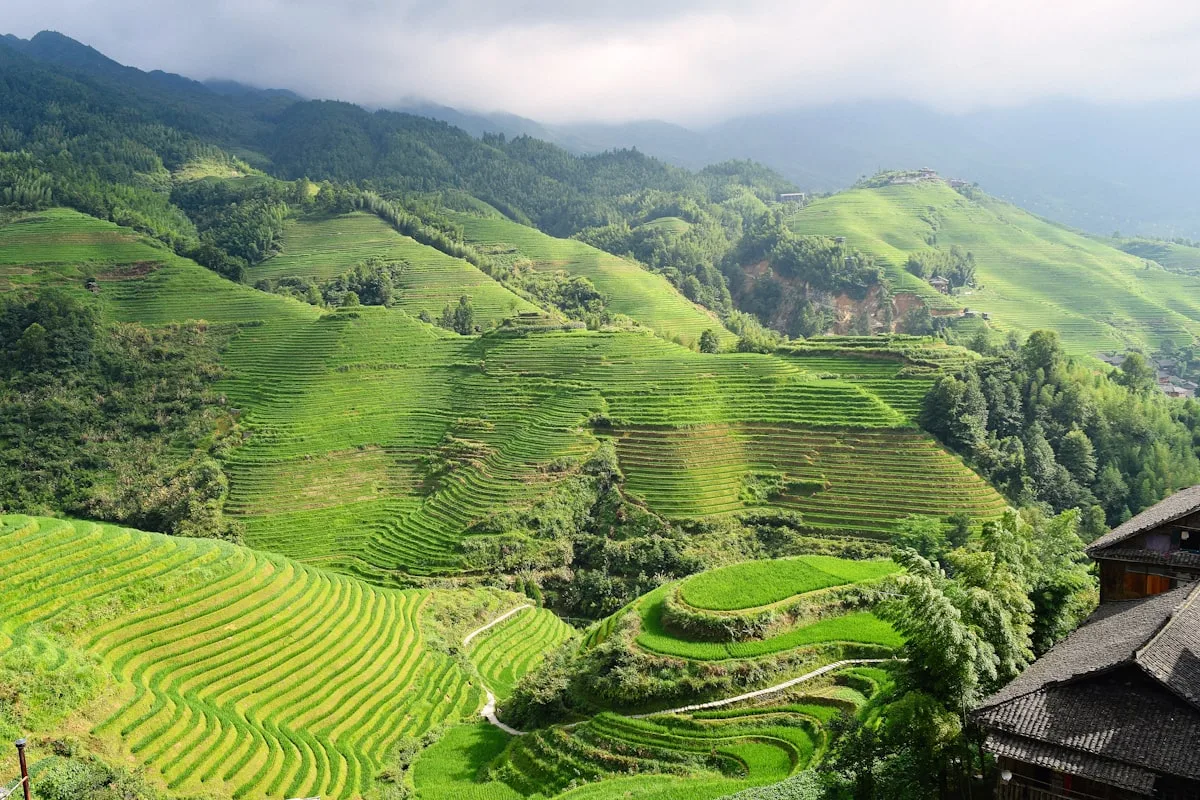
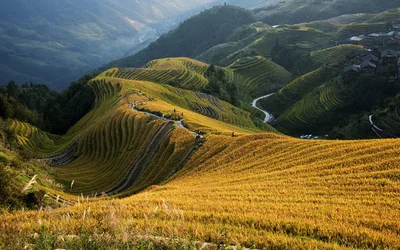
The Dragon’s Backbone terraces in Longsheng county were built over 600 years by Zhuang and Yao minority farmers. They climb from river valleys to mountain peaks in steps so narrow that rice is still harvested by hand. Two main villages — Ping’an (Zhuang) and Dazhai (Yao) — sit among the terraces with guesthouses that look directly onto the paddies.
This is one of the few village destinations where the homestay infrastructure is genuinely mature. Dazhai in particular has dozens of guesthouses at varying price points, many with English-speaking staff. The terrace scenery changes dramatically by season: flooded and mirror-like in April and May, green in summer, golden in September and October. In winter the terraces sit under frost, and guesthouse rates drop by half.
See our Longji Rice Terraces guide for logistics, hiking routes, and whether the drive from Yangshuo is worth it.
Yunnan: ancient towns that still breathe
Dali and Lijiang are famous, heavily touristed, and not what we are talking about here. The Yunnan villages worth the “Country Walk” label are the ones further out: Shaxi, an old Tea Horse Road market town with a cobblestone square and a stone bridge from the Ming dynasty; Jianshui, a city of ancient wells, tofu workshops, and the best-preserved Confucian temple in southern China; and the Bai villages around Erhai Lake where women still tie-dye cloth in indigo vats in their courtyards.
Shaxi in particular has attracted a small community of foreign residents and returnee Chinese entrepreneurs who have restored old courtyard houses into guesthouses. Prices are higher than Guizhou villages — 200 to 500 yuan per night for a decent courtyard room — but the trade-off is genuine comfort, good coffee, and hosts who speak English. The surrounding valley has marked hiking trails through Yi and Bai villages where farmers will invite you in for tea if you stop and gesture that you are lost.
More on these in our Yunnan hidden gems guide.
Anhui: Huizhou villages and Yellow Mountain
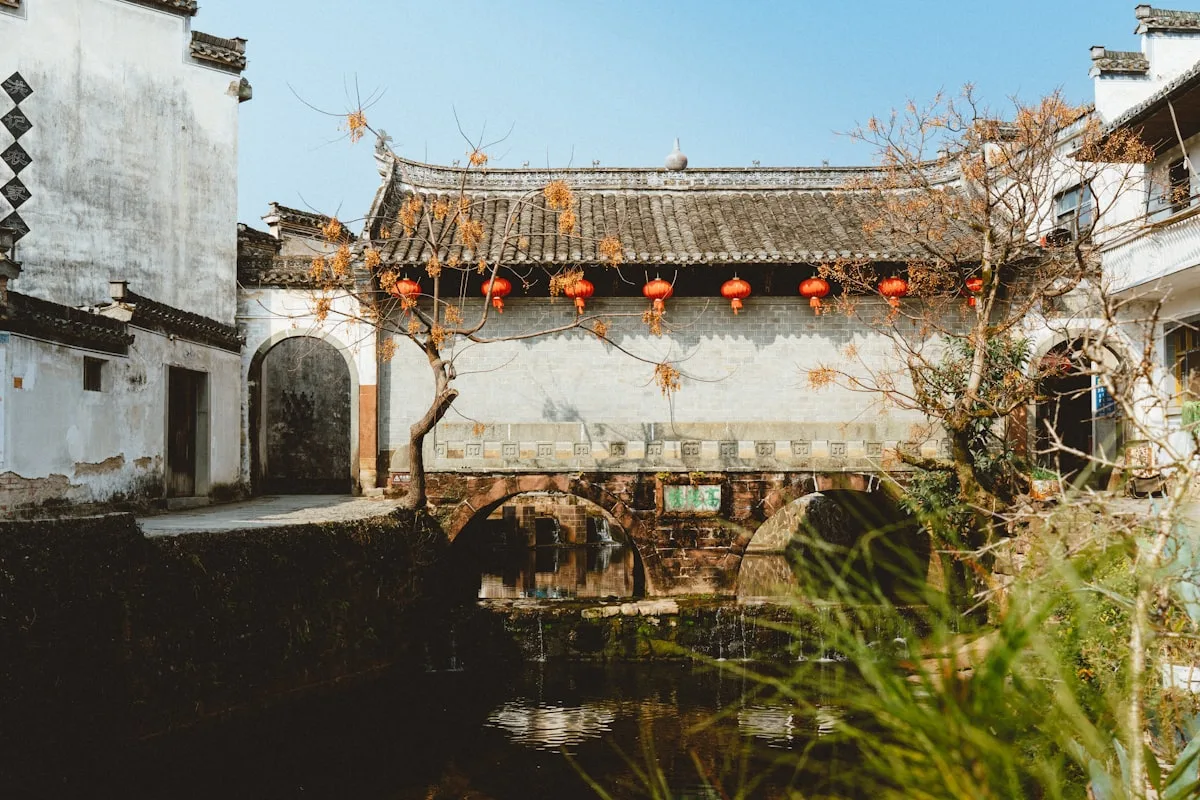
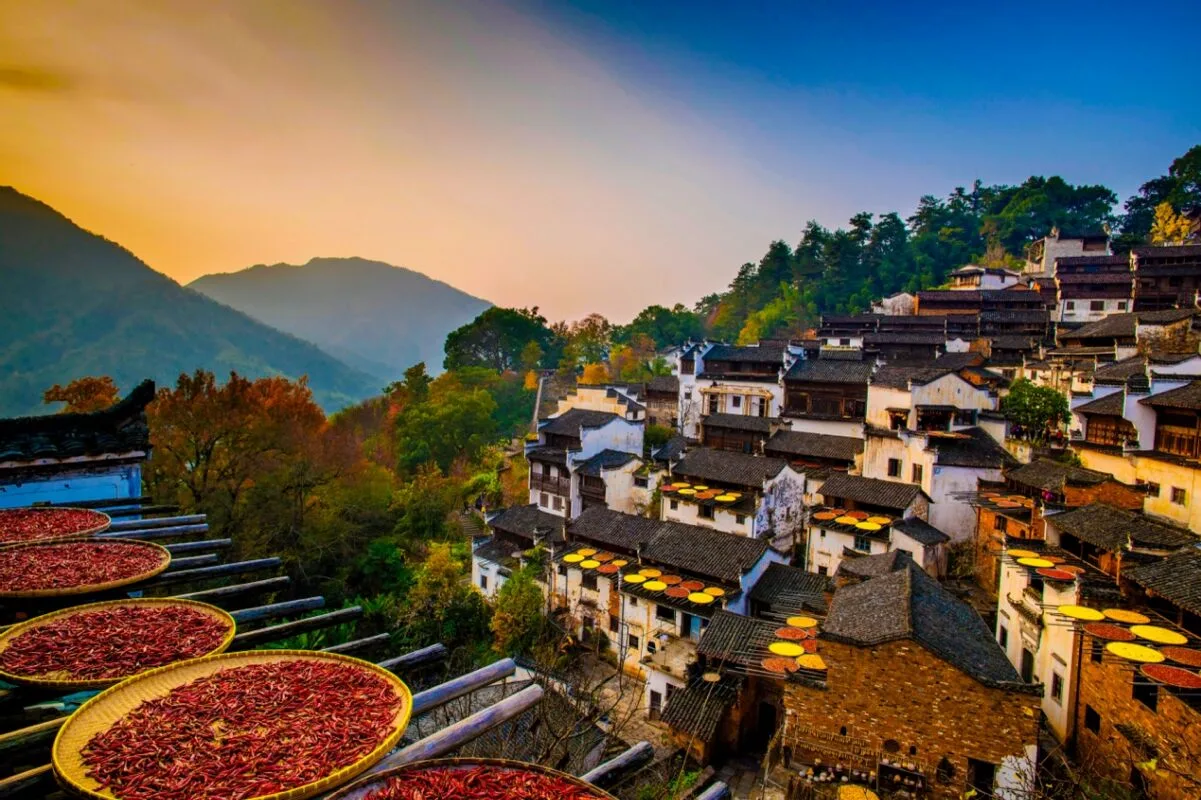
The white-walled, grey-tiled villages of southern Anhui look like ink-wash paintings in three dimensions. Hongcun and Xidi are the famous ones, both UNESCO-listed, both within an hour of Huangshan (Yellow Mountain). Hongcun’s layout follows an ox-shaped water system designed in the Song dynasty — every house connects to a canal that runs through the village. Xidi is larger and more lived-in, with families still occupying ancestral homes that date to the Ming and Qing dynasties.
These villages are more accessible than Guizhou or Yunnan. High-speed rail connects Huangshan North station to Shanghai in about 2.5 hours and Hangzhou in 1.5 hours. Guesthouses in Hongcun range from 150 yuan for a basic room to 400 yuan for a courtyard suite. The best months are April when rapeseed flowers bloom and October through November when autumn foliage turns red against white walls.
Zhejiang: Moganshan and Anji bamboo country
Moganshan was China’s original mountain retreat, a summer escape for Shanghai’s colonial elite in the 1920s. Today it is the country’s most developed rural homestay destination, with over 500 guesthouses ranging from renovated stone farmhouses to architect-designed villas. Anji, an hour north, is bamboo forest country — the bamboo groves from “Crouching Tiger, Hidden Dragon” were filmed here.
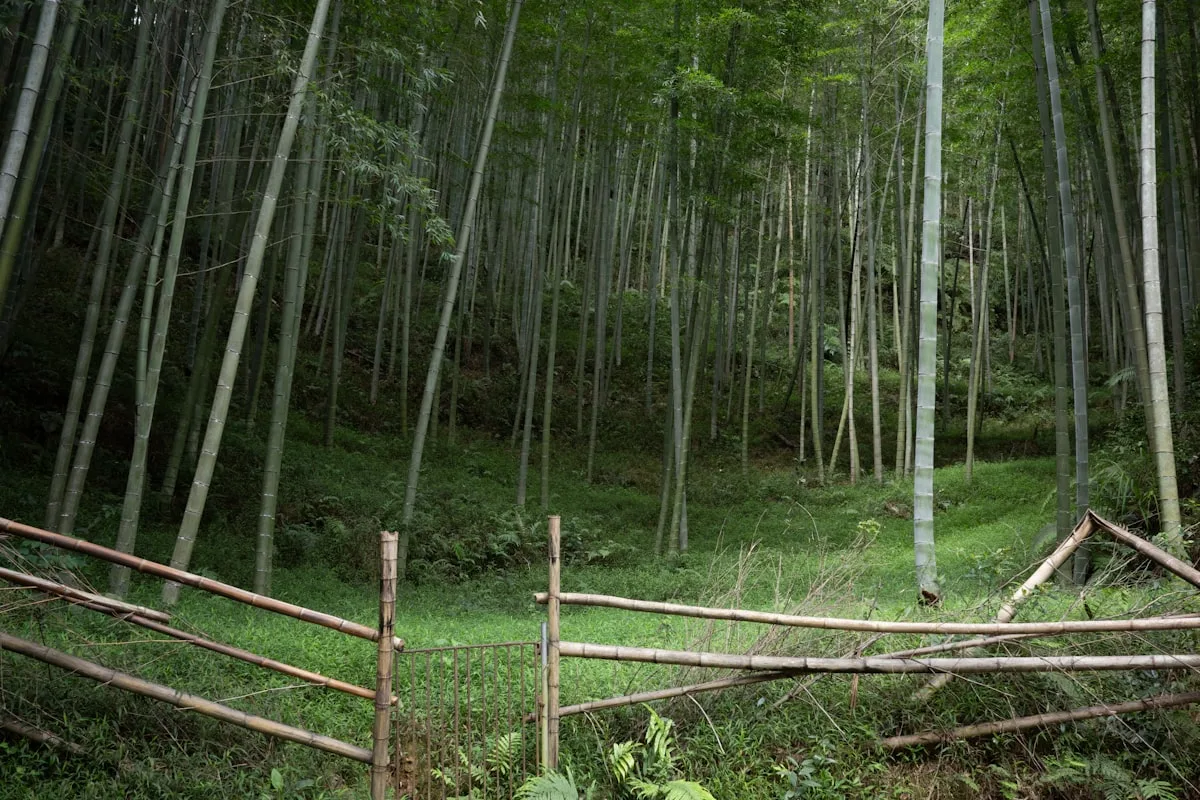
This is the easiest region for a first-time China countryside experience. English-speaking hosts are common. International payment is less of a problem. You can pair a Moganshan stay with Hangzhou’s tea villages, two hours south, for a trip that combines rural and urban without the logistical stress of deeper provinces.
The region also connects well with Jingdezhen porcelain country and Jiangnan water towns if you are building a longer eastern China route.
What rural homestays are actually like
Let me be honest about the trade-offs.
The good: In Guizhou, I have woken up to the sound of roosters and looked out a wooden window onto rice terraces shrouded in mist. A homestay owner once spent an evening teaching me to make sour soup fish (酸汤鱼) in her kitchen, using peppers her family had fermented for months. These are experiences you simply cannot buy in a city hotel.
The less good: Village homestays are inconsistent. A 200-yuan room might have a view that belongs in a travel magazine and a bathroom that belongs in a 1990s train station. Hot water is not guaranteed. Soundproofing rarely exists. If the village has a rooster population, you will know about it at 5 a.m.
The language barrier in villages is harder than in cities. In Beijing, restaurant staff may know enough English to get by. In a Dong village in Guizhou, most homestay owners speak Dong as their first language, Mandarin as their second, and zero English. Gestures, translation apps, and patience cover a lot of ground. Some higher-end village guesthouses (300 yuan and up) in Zhejiang and Yunnan have English-speaking staff. In Guizhou and Guangxi, assume they do not, and treat it as part of the experience.
How to find and book rural homestays
Booking rural stays as an international traveler requires a mix of platforms, because no single site covers the whole market.
Trip.com is the most traveler-friendly platform for Chinese travel bookings. It lists thousands of rural guesthouses and farmstays. Filter by “homestay” or “guesthouse” and read recent reviews. Properties that have hosted international travelers before will usually show English-language reviews.
Beyond Trip.com, things get more local. Xiaohongshu (RED) is a Chinese lifestyle app where travelers post detailed homestay reviews with photos and prices. The search function works in English now, though results are mostly in Chinese. Use it to find places that look good, then book them through Trip.com or by contacting the host directly on WeChat. Many hosts on Xiaohongshu list their WeChat ID in their profile.
For Guizhou and Yunnan specifically, consider using a local travel agent or driver-guide. These are not expensive by Western standards — a private driver for a day in Guizhou costs around 400 to 600 yuan (55 to 85 USD) — and they solve the dual problems of rural transport and language. They know which homestays accept international guests and can call ahead to handle registration.
Best seasons for each region
Timing matters more for village travel than city travel. Cities work year-round. Villages have narrow windows when the weather, scenery, and agricultural cycle line up.
| Region | Best months | What you get | What to avoid |
|---|---|---|---|
| Guizhou | April-May, September-October | Spring planting reflections in paddies; autumn harvest colors | July-August (heavy rain, landslides on mountain roads); winter (cold, damp, some guesthouses close) |
| Guangxi terraces | Late May-June (flooded paddies), late Sep-Oct (golden harvest) | Mirror-like water in paddies; golden rice before harvest | December-March (dry brown terraces, cold); July-August (hot, but green and photogenic) |
| Yunnan villages | March-May, October-November | Spring blooms, dry weather; autumn clarity | July-August (rainy season, though Shaxi and Jianshui are fine); January-February (cold at altitude) |
| Anhui villages | April (rapeseed flowers), October-November (autumn leaves) | Yellow rapeseed against white walls; red maples in autumn | July-August (hot, humid, crowded); January-February (grey, cold, many guesthouses reduce service) |
| Zhejiang | March-May, October-November | Bamboo shoots in spring, tea harvest in April; autumn hiking | July-August (hot and humid, peak domestic tourism); winter (quiet but operating) |
What you will actually do all day
A three-day village stay does not follow a tourist itinerary. There are no ticket booths in most places, no audio guides, no velvet ropes. You walk. You eat. You watch things happen slowly.
In a Guizhou village, a day might look like: morning walk through terraced fields, mid-day meal at the homestay (the owner kills a chicken, vegetables come from the garden), afternoon at a tie-dye workshop or watching a Dong choir rehearsal, evening sitting on the drum tower square watching old men play Chinese chess while kids run around. It does not sound like much when you write it down. That is the point.
Some villages have organized activities now — tea picking, bamboo shoot digging, tofu making, batik dyeing, calligraphy lessons. The better homestays arrange these. Others are just a place to sleep, and you figure out the rest by walking around.
One thing to know: Chinese village life is communal and visible. Doors stay open. Cooking happens on the street. Neighbors comment on what you are eating, wearing, doing. If you are an international traveler, you will be stared at, photographed, and possibly pulled into someone’s house for baijiu. Rural Chinese hospitality is direct and overwhelming in a way that city hospitality is not. How you feel about this determines whether you love village travel or find it exhausting.
Is rural China right for your trip
Rural China is not for every traveler or every itinerary. If you have one week in China, do not spend it all on village logistics. If you are on your first trip, get your bearings in a city first — the language barrier and infrastructure gap are real, and they compound in the countryside.
But if you have two weeks or more, or if you are on a second or third China trip and want something that does not feel like a packaged experience, the villages offer something rare: a version of China that is not curated for tourists, where the economy and daily life predate tourism and will outlast it. The 2026 registration reform makes the logistics easier, and the surge in international visitors means more homestays are learning how to host international guests. The window where these places feel undiscovered will not stay open forever. Our trends page tracks how this fits into the wider shift away from city-only itineraries.