Shanghai Metro: Skip the Ticket Line, Pay with Your Phone
The Shanghai Metro is not just another city subway. It is the largest urban rail network in the world — 18 lines, 729 kilometers, 508 stations, and north of 2.8 billion passenger trips in 2024. Longer than Beijing’s. Nearly twice the reach of the New York City Subway. More daily riders than the London Underground, the Tokyo Metro, and the Paris Métro combined on a bad day.
None of this is trivia. It matters because once you have ridden the Shanghai Metro, every other subway system in China feels like the same machine with fewer stations. The ticket machines work the same way in Beijing. The Alipay QR code scans at the same gates in Chengdu. The security checks use the same conveyors in Guangzhou. Learn it once, in Shanghai, and you never learn it again.
This guide covers how to pay, how to navigate, how to transfer without getting lost, how to get from both airports into the city, and how to survive rush hour. Written for someone who has never set foot in a Chinese subway station.
Quick facts
| Fact | Detail |
|---|---|
| Lines | 18 |
| Stations | 508 |
| Total length | 729 km, the longest in the world |
| Annual ridership | 2.8 billion (2024), the most in China |
| Fare | ¥3-9 ($0.42-1.26) per ride |
| Operating hours | ~5:30 AM to ~11:30 PM (varies by line) |
| English signage | Everywhere: stations, platforms, ticket machines, announcements |
| Payment | Alipay QR, WeChat QR, single-journey ticket, transport card, foreign contactless cards (select stations) |
Compared to what you are probably used to: the New York City Subway runs about 380 km of routes. The London Underground covers 402 km. The Tokyo Metro, including Toei lines, spans roughly 300 km. Shanghai’s network is larger than all three combined. It is also cleaner, quieter, and dramatically cheaper. A cross-city ride from Pudong Airport to Hongqiao: about 60 km, two hours end to end. It costs ¥8 ($1.12).
How to pay: 4 methods, ranked
You do not need cash. You do not need a card. The simplest option involves pulling out your phone and scanning a QR code. Here are all four ways, ranked from best to backup.
1. Alipay Transport QR: best for 95% of travelers
Open Alipay. Tap the Transport module at the top. Set your city to Shanghai. You get a QR code. Walk to the gate. Scan it. Walk through.
That is the entire process. No ticket machine. No queue. No language barrier. The fare deducts automatically from your linked international card. At the end of your trip, Alipay calculates your total rides and charges once, which means your bank statement shows one transaction per day instead of twelve.
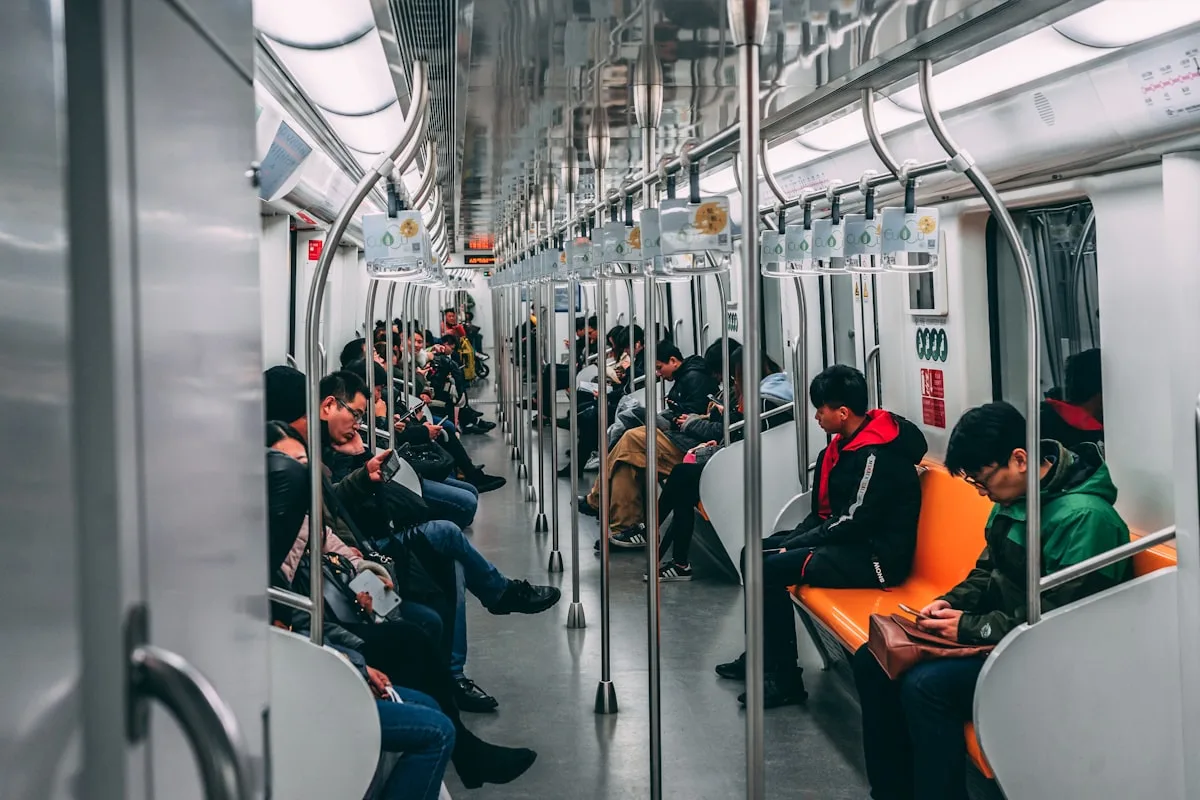
One thing to know: Alipay’s Transport QR uses a separate code from the regular payment QR. You cannot show the payment screen at a metro gate. It has to be the Transport module. It takes ten seconds to switch the first time you do it, and after that it is muscle memory. If you have not set up Alipay yet, read our mobile payment guide before your flight.
2. Single-journey ticket: the fallback
Every station has ticket machines. They have an English button. Tap it. Select your destination station. Insert cash (¥5, ¥10, ¥20 notes) or tap a foreign Visa or Mastercard. The machine spits out a plastic token or a contactless card. Hold it to the gate sensor. Walk through. Keep the token — you need it to exit, and you feed it into the gate at your destination.
Single-journey tickets cost ¥3-9 depending on distance. If you are traveling with someone else, buy two. The machine does multi-ticket purchases.
The downside is the queue. At major stations during peak hours: People’s Square, Nanjing Road East, Lujiazui — the ticket machine line can be ten people deep. If you are paying by QR code, you walk past all of them.
3. Shanghai Public Transport Card: for stays longer than a week
A physical stored-value card sold at metro station service counters. ¥20 deposit, top up with cash in multiples of ¥10 or ¥50. Tap to enter, tap to exit. Works on metros, buses, ferries, and even some taxis.
This used to be the only practical option. It still works fine. But for a trip under two weeks, the Alipay QR code replaces it entirely. The card’s remaining advantage: it works when your phone battery dies. If you chronically let your phone drop to 2%, carry a transport card with ¥50 loaded on it.
4. Foreign contactless credit card: works at some stations
Since 2024, Shanghai has been rolling out card readers at metro gates that accept foreign Visa and Mastercard contactless cards. Tap in, tap out, like you would in London or New York.
The reality: coverage is inconsistent. The gates with the contactless logo exist at major stations: People’s Square, Lujiazui, Nanjing Road East, Hongqiao Railway Station . Not at every entrance and not on every line. At smaller stations, the reader may be present but non-functional. Use this as a backup option at best. Do not assume it will work when you need it.
How to take the metro: step by step
Step 1: Find the entrance
Look for a red sign with the Shanghai Metro logo: a stylized “S” and “M” in a red circle. Entrances are on sidewalks, inside shopping malls, and attached to railway stations. Google Maps and Apple Maps both show metro entrances accurately in Shanghai.
Step 2: Security check
Every Chinese metro station has a security checkpoint. You place your bag on a conveyor belt. You walk through a metal detector. You pick up your bag. This takes fifteen seconds.
Do not carry a pocket knife. Do not carry a selfie stick longer than your forearm (the guard will confiscate it). Do not carry spray cans of sunscreen larger than travel size. The rules are the same as airport security for a domestic flight, slightly looser.
Step 3: Find your line and direction
Shanghai metro lines are numbered 1 through 18, plus the Pujiang Line. Each line has a color. Signs are bilingual throughout the station. Follow the colored arrows.
Once you reach the platform level, look up. The overhead sign tells you two things: the line number, and the terminal station in each direction. Chinese metro directions are named by the terminal stop, not by compass direction. You do not board “a northbound Line 2 train.” You board “Line 2 toward East Xujing.” The terminal name is always shown at the top of the sign and on the platform screen door.
Step 4: Board the train
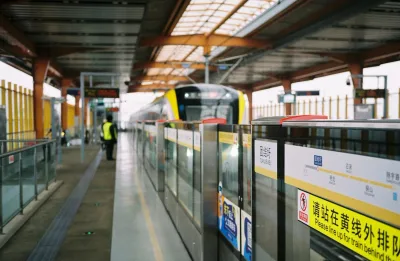
Stand behind the yellow line. Wait for passengers to exit, then step on. The doors close automatically after a fixed interval: usually 15 to 20 seconds. They do not reopen if you hold them. If you miss the train, another one arrives in two to six minutes.
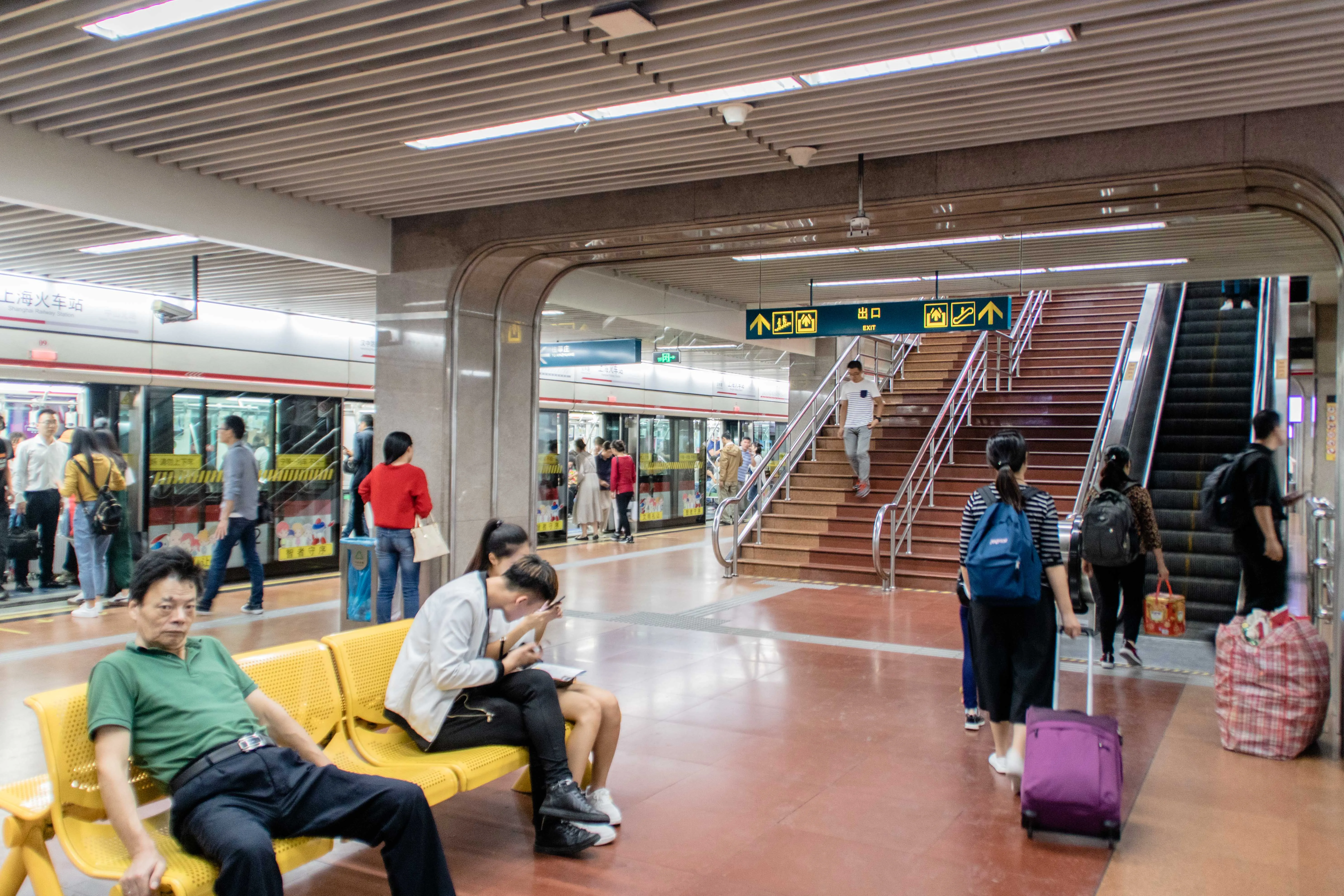
Inside the train, English announcements play at every stop: “Next station, People’s Square. Doors will open on the left.” The electronic display above each door shows the line map with the next station flashing.
Step 5: Exit
Walk to the gate. Scan your QR code, tap your card, or feed in your token. The gate opens. Walk out. Follow the exit signs — exits are numbered (Exit 1, Exit 2, etc.) and each leads to a different street corner. Check which exit you need before you surface. The wrong exit can put you on the opposite side of an eight-lane road with no pedestrian crossing.
Transfers that actually confuse people
People’s Square (人民广场) — Lines 1, 2, 8. The busiest station in the network and the most complex transfer in Shanghai. Line 1 and Line 8 share a platform. Line 2 requires a long underground walk . Budget five minutes from the Line 2 platform to the Line 1 platform. Follow the signs and do not stop in the middle of the corridor. The crush behind you is real and it is not patient.
Century Avenue (世纪大道) — Lines 2, 4, 6, 9. Four lines, four levels, multiple transfer corridors. The signage is clear but the distances are long. This is not a station where you make a tight connection. Budget eight to ten minutes between lines.
Nanjing Road East vs. Nanjing Road West: these are two different stations on two different lines. Line 2 stops at Nanjing Road East (near the Bund). Line 2 and Line 12 stop at Nanjing Road West (near Jing’an Temple). They are 4 km apart. Do not confuse them. A taxi driver will also confuse them if you say “Nanjing Road” without the East or West.
Hongqiao Railway Station vs. Hongqiao Airport Terminal 2: these are back-to-back stations on Line 2. If you are catching a train, get off at Hongqiao Railway Station. If you are catching a flight, get off at Hongqiao Airport Terminal 2. They share a building complex connected by a long indoor walkway, but the metro stations are separate. The wrong stop costs you a 20-minute walk with luggage.
Airport connections
Shanghai has two airports. The metro connects to both, and the choice between options is a trade-off between cost and speed.
Pudong International Airport (PVG)
Line 2: runs from PVG through the heart of Shanghai (People’s Square, Jing’an Temple) all the way to Hongqiao in the west. From PVG to People’s Square takes about 70 minutes. Fare: ¥8. The cheapest option by a wide margin.
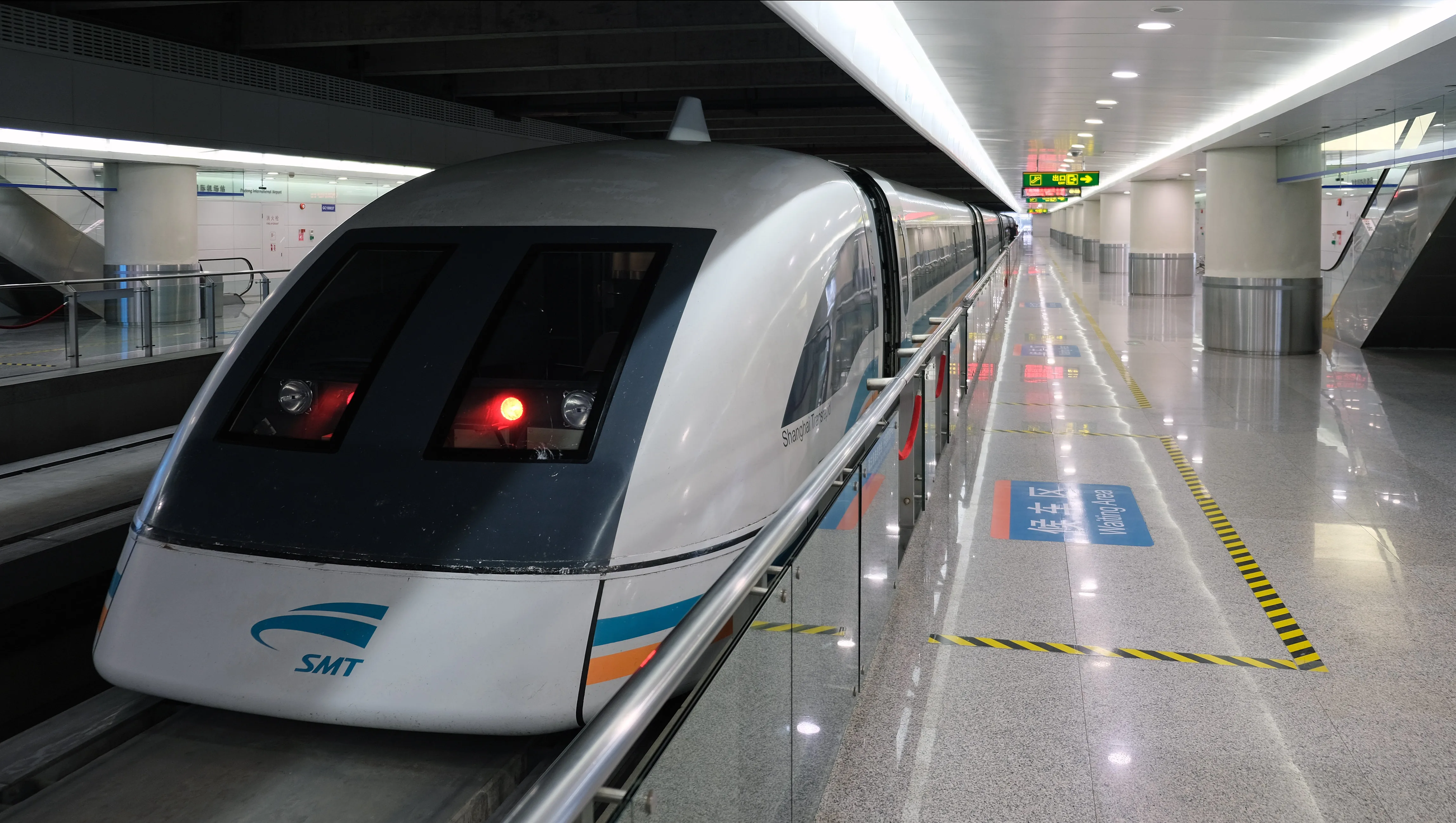
Maglev: the magnetic levitation train from PVG to Longyang Road station. 30 km in 7 minutes. Top speed: 431 km/h. Arrive at Longyang Road, then transfer to Line 2 or Line 7 for the rest of your journey. Fare: ¥50 one-way, ¥80 round-trip. Saves about 40 minutes versus Line 2.
The Maglev is genuinely fun. The speed is not a gimmick — you feel it. The train tilts on curves and the countryside blurs past. If you are not in a rush, take Line 2 and relax. If you want to say you have ridden the world’s fastest commercial train, take the Maglev.
Hongqiao International Airport (SHA)
Line 2: SHA Terminal 2 to People’s Square in 25 minutes. Fare: ¥5. Shanghai’s domestic airport is close to the city center by any standard.
Line 10: SHA Terminal 1 to the French Concession and Huaihai Road in 20 minutes. Better for travelers staying in the former French Concession or Xintiandi areas.
Rush hour survival
Shanghai rush hour is not Tokyo’s. Nobody pushes you onto the train. But it is dense, and the density is relentless.
Peak hours: Weekdays 7:30-9:00 AM and 5:30-7:00 PM. The worst stretches are Line 1 (north-south through People’s Square), Line 2 (east-west, especially the Lujiazui-to-Jing’an segment), Line 8 (north into the city center), and Line 9 (the Pudong-to-Xujiahui corridor).
What happens: Trains arrive every two to three minutes on the busiest lines. Each one fills to standing-room-only immediately. At the worst stations — People’s Square during the 8 AM wave — platform staff with megaphones direct the flow. You do not need to push. The crowd will carry you forward whether you push or not.
How to avoid it: Do not travel between 8:00-8:45 AM or 6:00-6:30 PM on weekdays. If you must, stand near the doors and let people off before you board. Hold your bag in front of your body, not on your back. A backpack worn behind you in a packed metro car is a weapon aimed at everyone within a meter of you.
Saturday and Sunday: Rush hour evaporates. The metro is busy but not crushed. You can sit on most lines at most times of day.
Three mistakes to avoid
1. Trusting Google Maps for station exits. Google Maps does not know which exit is open, which is under renovation, or which connects to your destination’s underground entrance. MetroMan (available in English) and Gaode Maps (高德地图, Chinese-only but visually clear) show exits correctly. At minimum, check the exit map posted inside the station before you surface.
2. Exiting through the wrong gate. The standard gates work for QR codes and transport cards. The wide gate (marked with a wheelchair icon and usually at one end of the gate line) also works for QR codes and is easier with luggage. If you have a foreign card and the gate rejects it, find a staffed service counter near the exit gates and show your card. Do not keep tapping. The gate will lock after three failed attempts.
3. Missing the last train. Shanghai metro lines do not all close at the same time. Most end between 10:30 PM and 11:30 PM. Line 2 closes earlier on the Pudong Airport end — the last train from PVG departs around 10:00 PM. Check the last train time for your specific route before you go out for the evening. The station entrance has a sign listing the last departure time. MetroMan shows it in the app. A missed last train means a Didi ride home, which costs ¥40-120 depending on distance. Not ruinous, but avoidable.
Shanghai’s metro is the reason the city works at its scale. It moves more people, more cleanly, more quietly, and more cheaply than any comparable system. If this is your first Chinese subway experience, it will spoil you for the rest.
Frequently asked questions
How do I pay for the Shanghai Metro with my phone?
Open Alipay, tap the Transport module at the top, and set your city to Shanghai. You get a QR code. Walk to the gate, scan it, and walk through. No ticket machine, no queue, no language barrier. The fare deducts automatically from your linked international card. Alipay calculates your total rides at the end of the day and charges once, so your bank statement shows a single transaction instead of a dozen. Important: the Transport QR is a separate code from the regular payment QR. You cannot show the payment screen at a metro gate. It must be the Transport module. If you have not set up Alipay yet, link an international card and verify your identity before your flight.
Does the Shanghai Metro have English signage?
Yes, everywhere. Station names, line maps, ticket machines, platform signs, and onboard announcements are all bilingual in Chinese and English. Announcements play at every stop: “Next station, People’s Square. Doors will open on the left.” The electronic display above each door on the train shows the line map with the next station flashing. Ticket machines have an English button that switches the entire interface. For navigation apps, MetroMan (available in English) and Apple Maps both show Shanghai metro routes accurately.
How do I get from Pudong Airport (PVG) to central Shanghai by metro?
Take Line 2 from Pudong International Airport station. To People’s Square takes about 70 minutes and costs ¥8 ($1.12). For a faster option, take the Maglev train from PVG to Longyang Road station: 30 km in 7 minutes, top speed of 431 km/h. From Longyang Road, transfer to Line 2 or Line 7 for the rest of your journey. The Maglev costs ¥50 one-way or ¥80 round-trip and saves about 40 minutes versus Line 2 alone. Last Maglev departure from PVG is around 9:40 PM. The last Line 2 train from PVG departs around 10:00 PM.
What are the Shanghai Metro operating hours?
Most lines operate from approximately 5:30 AM to 11:30 PM, though exact times vary by line and station. Line 2 closes earlier on the Pudong Airport end: the last train from PVG departs around 10:00 PM. Check the last train time for your specific route before you go out for the evening. The station entrance has a sign listing the last departure time. MetroMan shows it in the app. Missing the last train means a DiDi ride home, which costs ¥40-120 depending on distance. Not ruinous, but avoidable.
Can I use a foreign credit card on the Shanghai Metro?
Since 2024, Shanghai has been rolling out card readers at metro gates that accept foreign Visa and Mastercard contactless cards. Tap in, tap out, like London or New York. However, coverage is inconsistent. The gates with the contactless logo exist at major stations like People’s Square, Lujiazui, Nanjing Road East, and Hongqiao Railway Station, but not at every entrance or on every line. At smaller stations, the reader may be present but non-functional. Treat this as a backup option at best. The Alipay Transport QR code is the reliable, universal method for foreign travelers.
How do I transfer between metro lines in Shanghai without getting lost?
Follow the colored signs. Each line has a distinct color and number, and transfer signs are bilingual throughout every station. The most complex transfer is People’s Square (Lines 1, 2, 8): budget five minutes from the Line 2 platform to the Line 1 platform and do not stop in the middle of the corridor. Century Avenue (Lines 2, 4, 6, 9) is even larger, so budget eight to ten minutes between lines. A common mistake: Nanjing Road East and Nanjing Road West are two different stations 4 km apart. Line 2 stops at Nanjing Road East near the Bund. Nanjing Road West is on Line 2 and Line 12 near Jing’an Temple. Do not confuse them. Hongqiao Railway Station and Hongqiao Airport Terminal 2 are also separate stations: wrong stop costs you a 20-minute walk with luggage.