China Layover Guide: 240-Hour Transit and City Plans

A layover in China is either the best accident of your trip or a wasted day in a terminal, and the difference is paperwork rather than time. Land in Shanghai at nine in the morning with a fourteen-hour connection and you can be eating xiaolongbao by noon. Land at the same hour with the wrong ticket in your hand and you will spend the day in a building that sells the same fridge magnet in four shops.
The length of the layover barely matters. What decides it is your passport, the routing on your ticket, and which airport you land at.
This guide covers the doors out of a Chinese airport, the time arithmetic that makes a city visit realistic instead of reckless, and plans for Beijing, Shanghai and Guangzhou at the layover lengths people actually book.
The three ways out of the terminal
Chinese immigration treats a short stay in one of three ways, and they are not interchangeable.
The first is ordinary visa-free entry. Around 50 countries, including most of Europe, the UK, Australia, Japan, South Korea and Canada, get 30 days with no application and no fee. The policy runs through 31 December 2026 and no extension has been announced. If this applies to you, ignore the transit desks entirely. You walk through the regular foreigner lane, and the full country list and entry options are worth checking before you book.
The second is the 240-hour transit without visa, usually shortened to TWOV. It grants about ten days and covers 57 nationalities, including the United States. For Americans it is the usual way into a long layover, because the 30-day scheme does not include them. India is the large market it leaves out entirely, and Indian passport holders need a visa even for a short city stop. The transit route has conditions attached, which is where most layover plans fall apart.
The third is a visa you already hold, which makes everything simple and is worth the hassle if China is more than a stopover.
There is also a fourth case that is not a way out at all. The 24-hour direct transit is open to every nationality at every open port, needs only a passport and a confirmed onward ticket, and requires you to stay inside the port’s restricted area. To leave the building you need a temporary entry permit from the immigration officer, granted case by case. Do not book a city tour around it.
What the 240-hour transit actually requires
Four conditions, and missing any one of them turns your layover into a terminal day.
You must be flying from one country to a different third country or region. London to Shanghai to Tokyo works. London to Shanghai to London does not, because your origin and destination are the same. Hong Kong, Macau and Taiwan each count as a separate region for this purpose, which is why so many itineraries end with a hop to Hong Kong.
You need a confirmed onward ticket with a departure date and a seat. An open-dated ticket or a standby booking will be refused.
You need an ordinary passport from one of the 57 eligible countries, and you need to arrive at one of the 65 designated ports. Land at a small regional airport that is not on the list and the policy does not apply to you.
You must stay inside the permitted area attached to your entry port. The policy covers 24 provincial-level regions, but that does not mean you can cross the country. A Shanghai entry covers Shanghai, Jiangsu and Zhejiang. A Beijing entry covers Beijing, Tianjin and Hebei. Most provinces allow travel anywhere inside their borders; a few limit you to named cities. The National Immigration Administration publishes the port-by-port table, and it is worth five minutes before you book a domestic flight.
The stay is counted from midnight after your arrival day. Arrive at eight in the evening and you effectively get close to eleven days on the ground, which is more than the arithmetic on the advert suggests.
What you can do is tourism, business meetings, visiting friends and family. Work, study and news reporting still require a visa. And the permit is not a right: the officer at the desk can refuse you, and air carriers are the ones who tend to be strictest, because they get fined when they fly an ineligible passenger.
At the transit counter
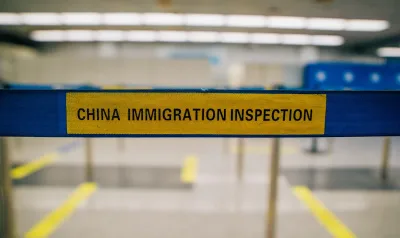
The permit is issued on arrival, not online. No form to submit in advance, no fee, no appointment.
At Beijing Capital the transit desk sits on the international arrivals level, before the regular foreigner inspection lanes, and it is signed in English and Chinese. Shanghai Pudong, Shanghai Hongqiao and Guangzhou Baiyun run the same service; follow the signs marked Transit Without Visa or 过境免签 rather than joining the general queue.
Bring the passport, the onward ticket and your hotel address. The officer asks where you are staying and for how long. Processing usually takes fifteen to forty-five minutes, and the queue gets slower late at night when fewer desks are staffed.
Tell your airline at check-in that you are travelling on the 240-hour transit. They check your eligibility in the Timatic system before they print a boarding pass. This is the step where people get burned: a gate agent in a third country who has never issued a Chinese transit boarding pass may decide you need a visa and refuse you, and the argument happens at the counter with the flight closing. Carry a screenshot of the NIA policy page and the page that lists your port. It has rescued more travelers than any other document in this guide.
How long a layover you actually need
Airport-to-city time is only half the calculation. The other half is the two hours before your onward flight, plus the hour you lose to immigration and bags on the way in.
| Layover | What is realistic |
|---|---|
| Under 4 hours | Stay inside. You will not clear immigration, reach the city and come back without running. |
| 4 to 6 hours | One nearby district, two hours on the ground. Only worth it at Hongqiao or if your onward flight is domestic. |
| 6 to 8 hours | One area and a meal: the Bund, or a hutong lunch in Beijing. No museums with timed entry. |
| 8 to 12 hours | Two stops, or the Forbidden City if you book ahead. This is the sweet spot. |
| 12 to 24 hours | A full day in one city, dinner included, back at the airport by 22:00 for a late flight. |
| Over 24 hours | Two cities by high-speed rail, or one city properly. |
Three rules sharpen the numbers.
International departures need you back at the terminal three hours before the flight, not two. Check-in queues at Chinese hubs are long, and outbound immigration adds another twenty to forty minutes.
If your bags are checked through to the final destination, you walk out with a daypack and the math above holds. If they are not, add thirty to sixty minutes for the baggage hall and a left-luggage counter, and carry the receipt.
A domestic connection is a different animal. You clear immigration, collect your bag, re-check it and go through security again. Two to three hours is the realistic minimum, and three is safer if you change terminals.
Beijing: the Great Wall question
Beijing Capital and Beijing Daxing sit on opposite sides of the city, so know which one you booked. The Capital Airport Express costs ¥25 and reaches Dongzhimen in about 25 minutes, connecting to Line 2 and Line 13. The Daxing Airport Express costs ¥35 and takes about 20 minutes to Caoqiao, where you join Line 10. Both are immune to the traffic that turns a 40-minute taxi into ninety.
From Capital, a six-hour layover gets you to Dongzhimen, a bowl of noodles and a walk through the hutongs around the Drum Tower, then back. It is not glamorous and it is the right call.
With eight to twelve hours, the Forbidden City becomes possible. It costs ¥60 from April to October and ¥40 from November to March, closes on Mondays, and requires a timed booking made with your passport through the official channel. Tickets for popular dates go days ahead. If you have not booked, go to the Temple of Heaven instead: ¥34 for the combination ticket in peak season, ¥28 in winter, a park full of retirees doing tai chi, and no reservation system to fight.
The Great Wall is the trap. Mutianyu is roughly ninety minutes by road each way from the airport side, plus cable car queues at the top. That is five hours of your layover before you have seen anything. It works with a twelve-hour connection and a pre-booked driver, and it does not work with eight. The Badaling high-speed train is faster on paper and still puts you on a mountain with a thousand other people at midday.
With a full 240-hour permit, spend two nights. Beijing is a three-day city pretending to be a one-day stop.
Shanghai: Pudong and Hongqiao are different trips
Hongqiao is inside the city. Metro Line 2 and Line 10 reach People’s Square in about half an hour for a few yuan, and a taxi is 30 minutes outside rush hour. If your connection is at Hongqiao, a five-hour layover is genuinely usable.
Pudong is 30 km out and the arithmetic changes. The Maglev covers the first 30 km to Longyang Road in seven to eight minutes at ¥50, or ¥40 if you show a same-day boarding pass. From Longyang Road, Metro Line 2 continues into the center. The all-metro option costs ¥8 and takes 70 to 80 minutes, which is fine on the way out and miserable on the way back with a flight to catch. Our Shanghai arrival guide has the full comparison, including the taxi fares.
A six-hour layover at Pudong buys you the Bund and one bowl of noodles, and only if immigration is quick. Eight to twelve hours buys the Bund, Nanjing Road and the French Concession at a walk. Twenty-four hours is enough to add Suzhou, a 25-minute high-speed train from Hongqiao, or Hangzhou at around an hour.
Guangzhou: the underrated layover
Baiyun is the airport most people route through on the way to Southeast Asia and the one they waste. Metro Line 3 runs from the airport into Tianhe in 45 to 60 minutes for ¥7 to ¥9, and the Canton Tower, the riverfront and a proper dim sum breakfast all sit within a short taxi ride of each other.
Six hours is tight but workable if you go straight to Tianhe. Ten hours gives you dim sum in the old city, the tower at dusk and a comfortable return. Guangzhou is also the easiest of the three for a first-timer: the metro is signed in English, the food is the point, and nobody expects you to see everything.
Bags, showers and sleep
Every major Chinese airport has left-luggage counters in the arrivals hall, usually priced per item per day, with a receipt you need to keep. Prices vary by airport and by bag size, so ask before you hand over the suitcase.
Paid lounges and transit hotels are the other option. Transit hotels inside the terminal exist at Capital, Pudong and Baiyun, bookable by the hour, and they are the difference between a functional day and a wasted one when your connection lands at two in the morning. Airport showers are usually inside the lounges rather than standalone.
One thing that surprises people: a 14-hour overnight layover with a 23:00 arrival is not enough time to sleep in the city and get back. Sleep at the airport, leave at seven, and treat the morning as the layover.
Money and internet before you leave the terminal
China is a cashless country in practice, and the airport is a bad place to discover your card does not work. Set up Alipay or WeChat Pay before you fly, add a Visa or Mastercard, and test a small payment at home. Our mobile payment guide walks through the setup, and the digital survival guide covers eSIMs, VPNs and the apps you will need.
For getting around, DiDi works with a foreign number and a foreign card, and the English interface makes it the fastest way from an airport to a hotel. Airport taxis are metered and fine, but the queue at peak hours is long and the driver will not speak English.
Wi-Fi in Chinese airports requires a passport scan or a Chinese phone number at a kiosk. Roaming data or an eSIM installed before departure is the simpler path, and it means maps work the moment you clear immigration.
What goes wrong, in order of frequency
The airline refuses boarding because the agent does not know the transit rules. Carry the policy page and arrive early enough to argue.
The ticket does not qualify. Round trips to the same country, open-dated onward tickets and itineraries that start and end in the same place are all refusals.
The port is not on the list. Regional airports are added over time, but a small one may not be designated, and the policy only works where the policy works.
The connection is too tight. A 90-minute international-to-domestic connection in a Chinese hub is not enough, however the booking site sells it.
The traveler leaves the permitted area. Taking a train to a city outside the designated region is an overstay, and the exit officer will notice.
None of this is exotic. It is the ordinary cost of using a policy that rewards preparation and punishes improvisation.
Frequently asked questions
Can I leave the airport during a layover in China?
Only if one of three things is true: your passport gets 30-day visa-free entry, you qualify for the 240-hour transit, or you hold a visa. Under the 24-hour direct transit you must stay in the port’s restricted area unless immigration grants a temporary entry permit, which is discretionary.
What is the 240-hour visa-free transit?
A permit that lets nationals of 57 countries stay up to ten days while travelling from one country to a different third country through China. It is issued at the airport, free, with no advance application. You need an ordinary passport, a confirmed onward ticket with a seat and date, and arrival at one of 65 designated ports.
Does Hong Kong count as a third country for the transit rule?
Yes. Hong Kong, Macau and Taiwan each count as a separate region, so London to Shanghai to Hong Kong satisfies the rule. Flying back to the country you started from does not.
Where do I get the transit permit at the airport?
At the transit desk on the international arrivals level, before the regular foreigner lanes, signed Transit Without Visa or 过境免签. Bring your passport, onward ticket and hotel address. Allow 15 to 45 minutes, longer at night when fewer desks are open.
How long a layover do I need to see Shanghai?
From Pudong, six hours gets you the Bund and little else, because the Maglev and metro eat two hours of it. Eight to twelve hours is comfortable. From Hongqiao, the city is 30 minutes away and five hours is enough for one district.
Do I need a visa if I already have a 240-hour transit permit?
No, the permit is the entry permission. But it is not a visa and it does not allow work, study or reporting, and it is limited to the area attached to your entry port. If your plans go beyond that, apply for the tourist visa before you fly.