How to Get a Chinese Name That Actually Fits You (Before Your Trip)
You booked the flight. Your visa is sorted. You practiced “ni hao” until it stopped feeling foreign.
But here’s a question most first-timers don’t ask: what’s your Chinese name?
Not a transliteration. Not “John” squeezed into two syllables. A real Chinese name: one with meaning in its strokes and a story behind its tones.
That’s what givechinese.name does — not by transliterating your name, but by mapping your personality and temperament to characters that carry matching cultural weight. And it’s worth the five minutes it takes.
Why a Chinese name matters
Walk into a tea house in Hangzhou and the owner asks your name. Say “Michael” and you get a polite nod. Say “Ma Tianyou” — a name that means “blessed by heaven” — and you’re suddenly not just another tourist. You’re someone who stepped into the culture.
Chinese names aren’t random labels. They’re compact poems. Each character holds layers of meaning: literary allusions, natural imagery, philosophical ideals. A well-chosen name says something about who you are.
The catch? Making one takes real cultural knowledge. Chinese parents pore over dictionaries and classical poetry to name their children. As a foreign traveler, you don’t have that toolkit.
That’s where tools like givechinese.name come in.
How it works
The app walks you through a few steps. No account, no payment, no data collection:
Tell it who you are. Your name, what it means in your language, your gender, and anything you’d rather avoid (snakes? dark imagery? certain sounds?).
Pick a Chinese surname. You get over 100 real Chinese surnames, each with its origin story, element association (Wood, Fire, Earth, Metal, Water), and the impression it gives. Your last name starts with M? The app suggests Ma or Meng, surnames that echo that sound.
Choose cultural figures you connect with. Twenty-four Chinese archetypes: from Li Bai the wandering poet to Sun Wukong the irreverent Monkey King to Zhuge Liang the strategist. Pick up to three whose spirit feels familiar.
Refine with personality tags and a core feeling. Are you steady or unbound? Witty or reflective? Then choose the aura you want your name to carry: clear as moonlight, steady as a mountain, gentle as jade.
Generate. The AI takes everything you’ve shared and produces six names, each with character-by-character breakdowns, pinyin, and the reasoning behind why it was chosen for you. Pick the one that clicks.
Get your name card. Pick a visual style, and the app generates a downloadable name card with your Chinese name in calligraphic script, its meaning, and a short poetic story. Save it, share it, print it.
The whole thing takes about five minutes.
What to do with your Chinese name
Once you have it:
- Introduce yourself with it. Hotels, guides, tea house owners. Lead with your Chinese name and watch the reaction.
- Use it on WeChat. Set it as your display name. Chinese contacts respond differently to a real Chinese name than a romanized one.
- Put it on your luggage tag. Practical (Chinese airport staff can read it instantly) and a conversation starter.
- Sign guest books with it. At that temple, that calligraphy shop, that mountain rest stop. Your Chinese name looks right at home.
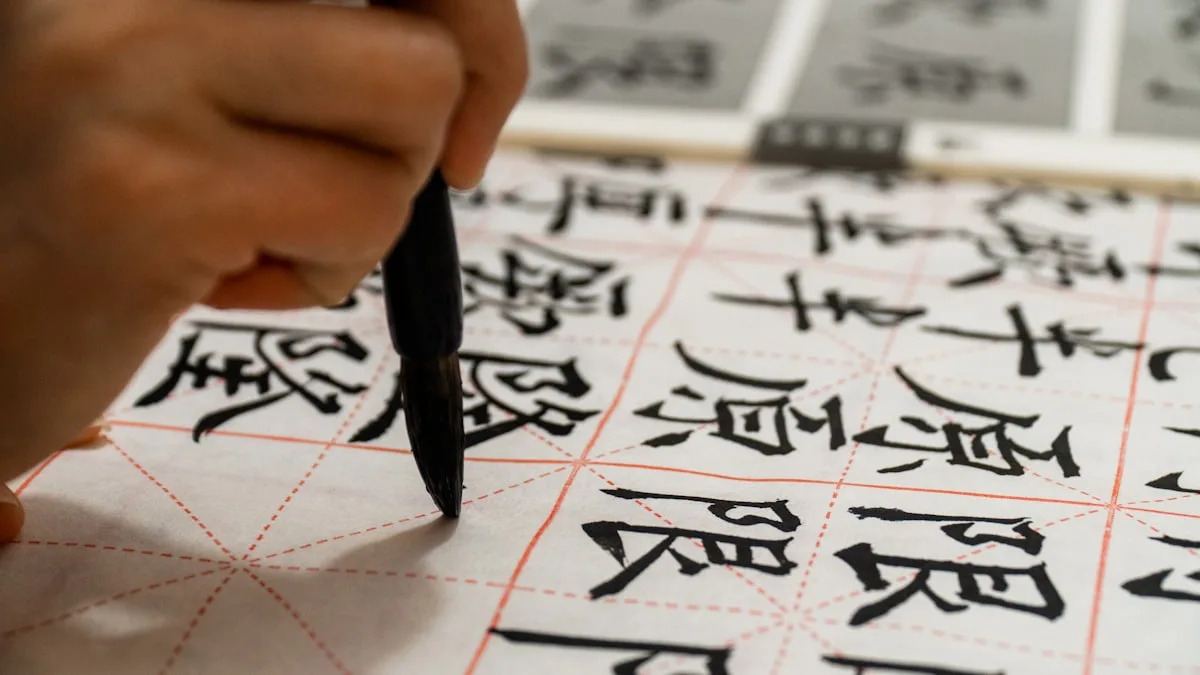
- Learn to write it. The app shows each character drawn stroke by stroke. Watch it a few times and you’ll start to recognize the rhythm. A brush pen costs about ¥20.
A few names the AI has made
Ma Tianyou (马天佑): “Horse, Heaven’s Blessing.” For someone whose given name means “gift from God,” the AI found a name that carries the same weight: divinely protected, heaven-sent.
Lin Wangshu (林望舒): “Forest Gazes at the Clear Sky.” Quiet strength, nature, contemplation. A name pulled from classical poetry.
Tang Xingye (唐星夜): “Tang Starry Night.” Wonder, adventure, the cosmos. Echoes of Tang dynasty poets gazing upward.
Yue Zhixing (岳知行): “Mountain, Knowing Through Action.” Neo-Confucian ideal that knowledge comes from lived experience, set against the steadiness of peaks.
Each one is distinct. Each came from a real person’s description, not a template.
Worth five minutes
Your trip will have plenty of moments: the first bite of xiaolongbao, the first glimpse of karst peaks through Li River mist, the first time Tiananmen Square makes you feel small.
Getting your Chinese name might be one of the quieter ones. But it’ll follow you through every conversation, every introduction, every guest book you sign.
Try it at givechinese.name. No accounts, no paywalls, no data storage. Five minutes, and you’ll have something most travelers never get: a name that’s actually, specifically yours.