Where to Stay in Beijing: 6 Neighborhoods for Every Traveler
Beijing is not a city you can “stay anywhere” in. It is 16,400 square kilometers with 22 million people. The wrong hotel placement means an hour on Line 1 at 8am, pressed against strangers who have been up since 5:30. The right one means walking to the Forbidden City before the tour buses arrive.
This guide covers six neighborhoods that work for international travelers, from the obvious to the overlooked. Each one comes with the actual trade-offs, because no neighborhood in Beijing has everything.
Quick decision table
| Your priority | Pick this neighborhood | Metro lines |
|---|---|---|
| First time, want the big sights within walking distance | Dongcheng (Wangfujing) | 1, 2, 5, 6, 8 |
| Nightlife, restaurants, international vibe | Chaoyang (Sanlitun) | 10 |
| Hutong atmosphere, photos, cafes | Gulou / Nanluoguxiang | 6, 8 |
| Quiet but still central, parks nearby | Xicheng (Xidan / Financial Street) | 1, 2, 4 |
| Slow travel, neighborhood life, fewer tourists | Dongsi hutongs | 5 |
| Catching an early flight | Dongzhimen | 2, 13, Airport Express |
One rule that applies everywhere: stay within 500 meters of a metro station. Beijing blocks are long, January is cold, and “a 15-minute walk” on a map becomes 30 when you are tired and dragging a suitcase.
Dongcheng: the first-timer’s sweet spot
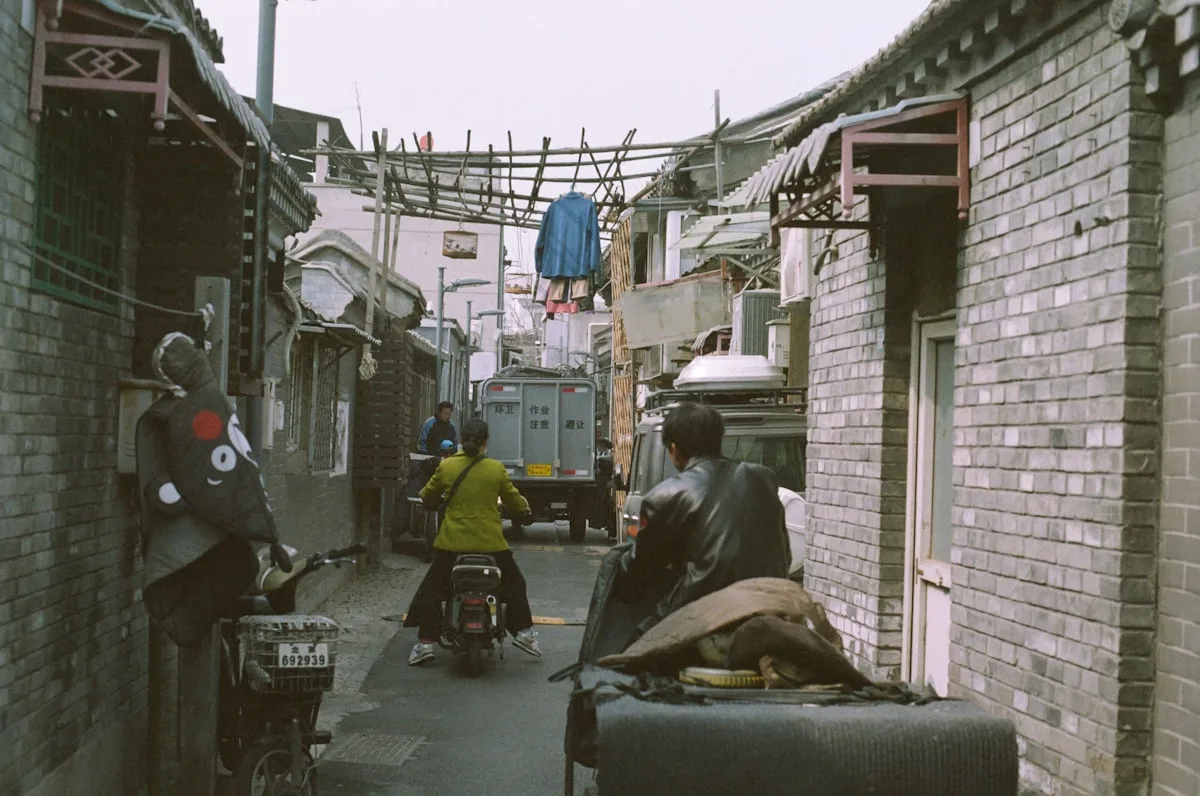
Dongcheng District covers the Wangfujing and Dengshikou area. It puts the Forbidden City, Tiananmen Square, Jingshan Park, and the National Museum within a 15-minute walk. If your Beijing trip is four days and you want to check the big boxes, stay here.
The hotel range is the widest of any neighborhood in Beijing. You can book a ¥100 hostel bed at Peking Youth Hostel or a ¥4,000 suite at the Waldorf Astoria, and both put you on the same street. The mid-range sweet spot is around ¥500-800 per night: Atour and Ji Hotel both have multiple Dongcheng locations. Browse Dongcheng hotels on Trip.com to compare options across price ranges.
The trade-off is price and crowds. Wangfujing is tourist central. The pedestrian street fills with tour groups by 9am. Restaurants in the immediate area are overpriced and mediocre. Walk ten minutes east or west and the food gets better and cheaper, but most visitors never do that.
Metro access is the best in the city. Lines 1, 2, 5, 6, and 8 all run through Dongcheng, which means you can reach the Summer Palace, the 798 art district, or Beijing South Railway Station without a transfer. That matters more than you think after a full day of walking.
Chaoyang: nightlife and international comfort
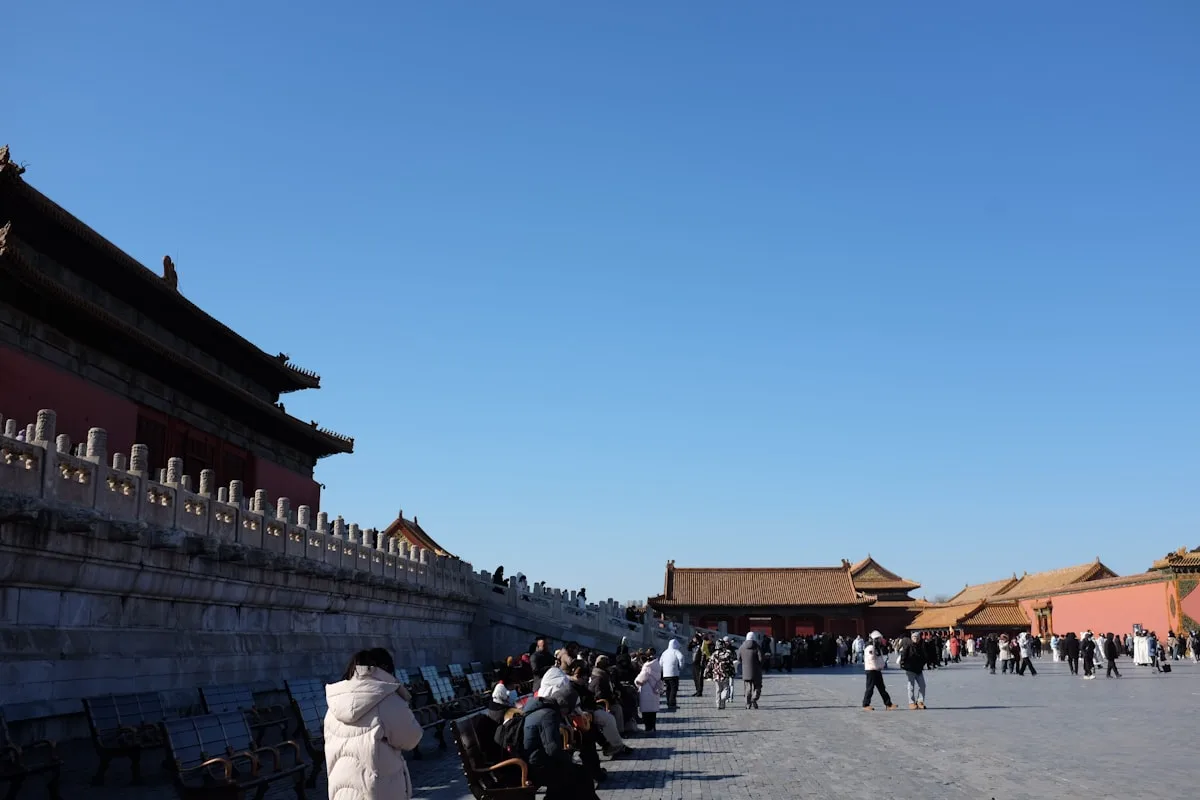
Chaoyang is where Beijing’s international community lives, works, and goes out. Sanlitun’s bar street, the restaurants around Xingfucun, and the shopping at Taikoo Li draw a crowd that is half Chinese, half everything else. If you want English menus, craft cocktails, and a break from historical sites, this is where you stay.
The hotel stock leans modern. The Opposite House, CHAO, and InterContinental Sanlitun are well-known, but there are also solid mid-range options like Atour Sanlitun and the nearby Holiday Inn Express. Prices start around ¥400 and go up fast on weekends.
The downside is geography. Chaoyang is not close to the Forbidden City, the Temple of Heaven, or the hutongs. Budget 20-30 minutes on Line 10 plus a transfer to reach most sights. The metro itself is fine. The time adds up over a three-day trip.
The trade-off makes sense if you have been to Beijing before and have already done the major attractions. Or if your idea of a good evening involves a bar, not a Peking opera.
Gulou and Nanluoguxiang: the hutong postcard
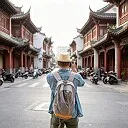
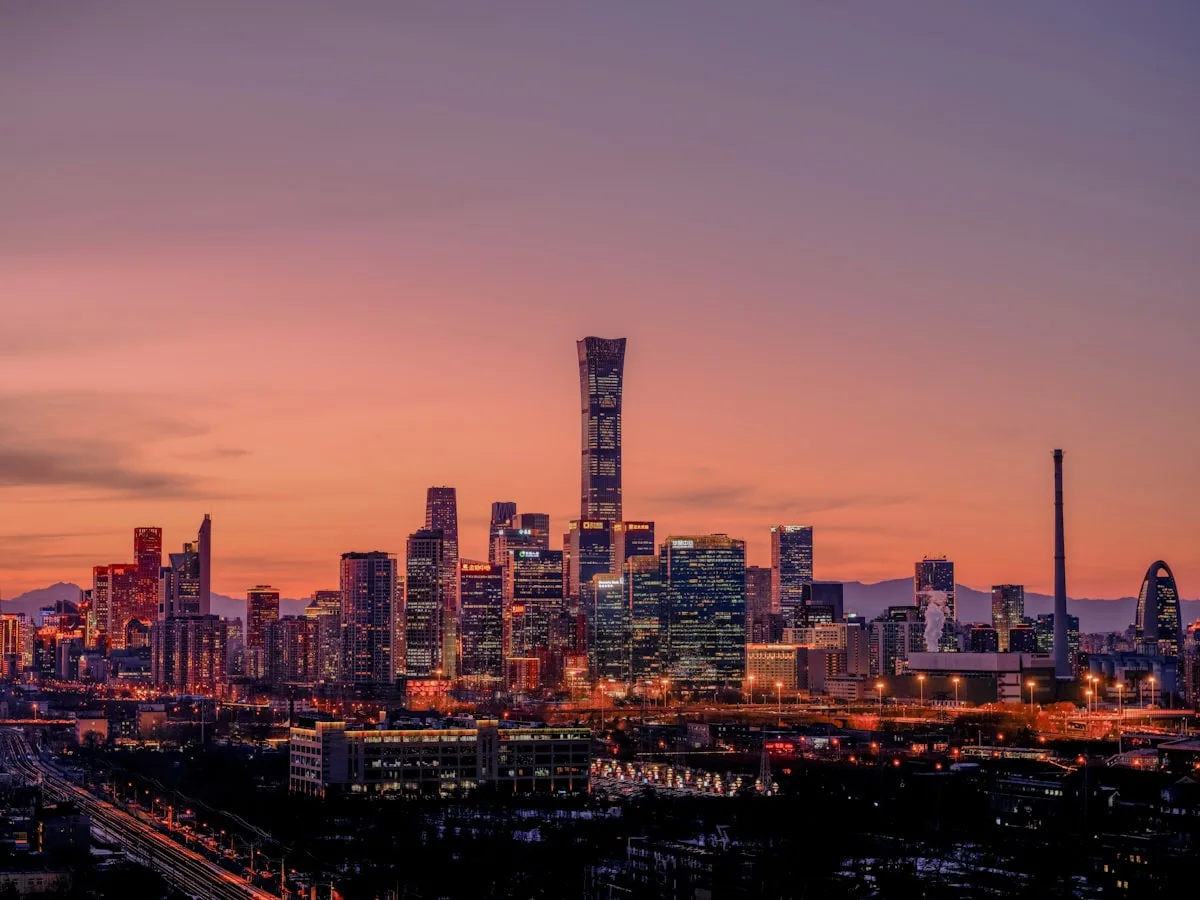
This is the Beijing from the travel brochures. Grey-brick courtyard houses, narrow alleys, red lanterns, and the faint smell of jianbing from a corner stall. The Drum Tower (Gulou) and Bell Tower anchor the neighborhood. Nanluoguxiang is the main commercial alley: packed, loud, and not actually where you should stay. The side lanes branching off it are the real find.
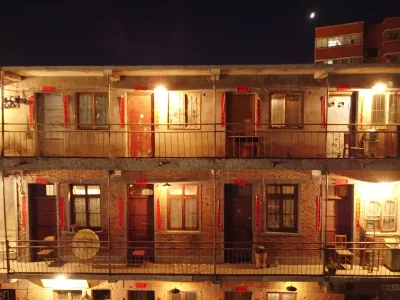
Accommodation here means courtyard hotels. Some are restored Qing-dynasty residences with genuinely beautiful inner gardens. Others are drafty converted houses with thin walls and a bathroom that has never quite dried out. The price tells you which you are getting: under ¥400 a night buys the damp one. Above ¥800 starts to get you the real thing.
IYHA-affiliated Peking International Youth Hostel sits at the north end of Nanluoguxiang. It occupies a converted courtyard and charges ¥80-120 for a dorm bed. Even if you book a private room elsewhere, walk through its gate just to see what a well-done courtyard conversion looks like.
The practical warnings are real. Suitcases do not roll on hutong cobblestones. Many courtyard hotels lack elevators and central heating beyond radiators. In January, you will feel the cold through the paper windows. In July, the humidity settles into the courtyard stones and stays there. The romance is undeniable. The comfort is conditional.
For a self-guided walking route through the neighborhood, see our Beijing hutong walking guide.
Xicheng: quieter but still in the middle of everything
Xicheng sits west of the Forbidden City, centered around Xidan and Financial Street. It is Dongcheng’s calmer sibling. Beihai Park, the Shichahai lakes, and the temple-dotted streets around Liulichang give it more green space and fewer tour buses. The National Centre for the Performing Arts is here too, if your trip includes a show.
Hotels in Xicheng lean corporate. Financial Street has a Ritz-Carlton, an InterContinental, and several business-oriented mid-range options. Xidan has more affordable picks: a Hanting, a Home Inn, and a handful of independent hotels that accept international guests. Rates run ¥300-600 for mid-range, which is ¥100-200 less than equivalent rooms in Dongcheng.
The trade-off is less English infrastructure. Fewer restaurant menus in English. Fewer staff who speak it. You will use your translation app more often. For some travelers that is a feature, not a bug. Just know what you are choosing.
Metro access is strong. Lines 1, 2, and 4 cover Xicheng. You can reach the Forbidden City’s west gate, Tiananmen, and Beijing West Railway Station directly. The Summer Palace is a single ride on Line 4.
Dongsi hutongs: slow travel done right
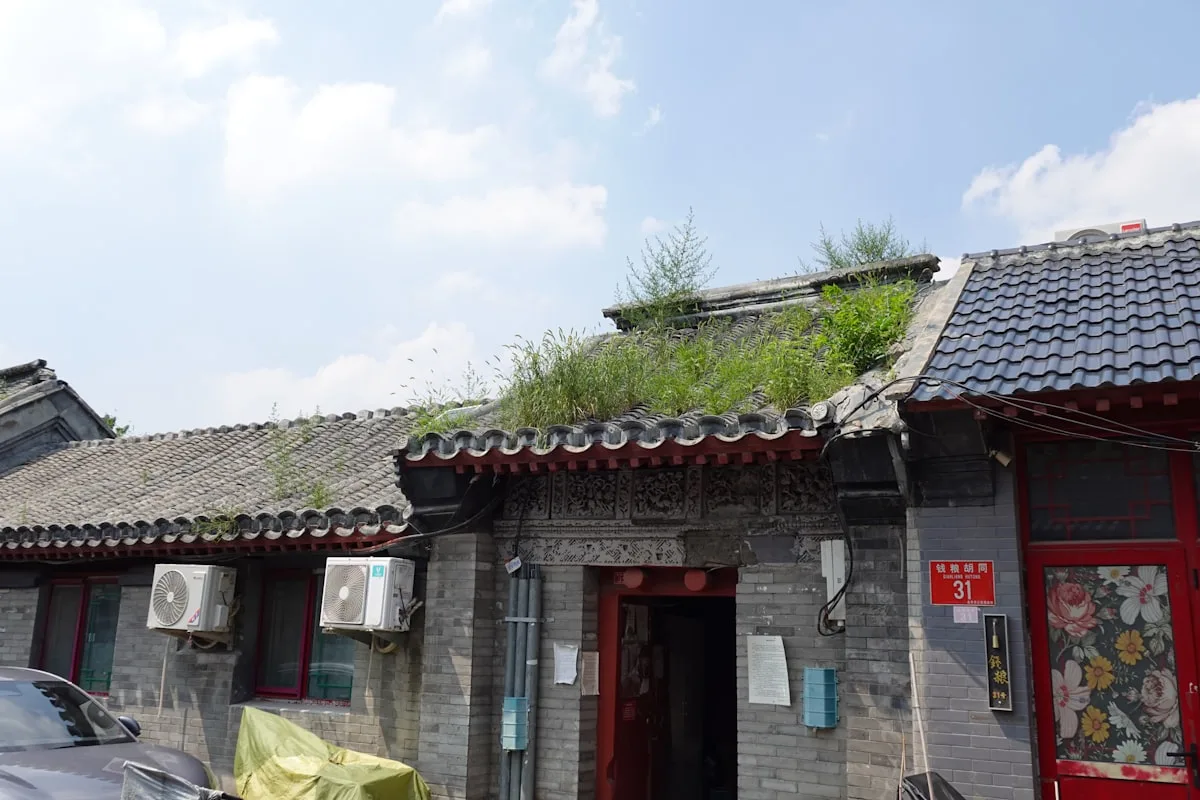
Between Zhangzizhong Road and Beixinqiao, the Dongsi area is a stretch of hutong neighborhoods that Nanluoguxiang was before the souvenir shops arrived. Residents still live here. Old men play xiangqi on the curb. The tofu shop on the corner has been there longer than you have been alive.
This is not a neighborhood with famous hotels. It has guesthouses, small courtyard conversions, and a few independent boutique places with six rooms and no sign outside. Bookings happen through Trip.com or directly with the owner via WeChat. Prices are modest: ¥200-400 for a private room, ¥80-120 for a hostel bed.
The appeal is immersion. You wake up to the sound of neighbors sweeping their doorsteps. You buy breakfast from the same jianbing cart three days in a row and the owner starts remembering your order. You exist in Beijing, not as a tourist passing through, but as someone temporarily living there.
The trade-offs mirror the Gulou area but more so. Even less English. Even fewer western-style bathrooms. Even more patience required. If your idea of a good hotel involves a gym and room service, Dongsi is not for you. If it involves a courtyard cat, a thermos of tea, and the slow satisfaction of learning your neighborhood by walking it, you have found your place.
Dongzhimen: the airport express gateway
Dongzhimen has one reason to exist on this list: the Airport Express. The line starts here and reaches Terminal 3 in 20 minutes. If you have a 7am flight, staying near Dongzhimen buys you an extra hour of sleep and saves you a ¥200 DiDi ride.
Beyond the airport connection, the neighborhood has little to recommend it. There is a shopping mall, a few chain restaurants, and the ghost of Guijie Street’s once-famous crayfish strip. You will not come to Beijing for Dongzhimen.
But for one night at the start or end of a trip, it is practical. The Holiday Inn Express Dongzhimen is a reliable international-brand option directly across from the station. Several Chinese chains in the ¥300-400 range sit within a five-minute walk. You check in, sleep, and leave. That is the point.
Practical notes that apply everywhere
Metro proximity beats everything. A hotel directly above a Line 1 station in a boring neighborhood beats a beautiful courtyard hotel with a 20-minute walk to the nearest metro. Beijing’s blocks are long, the weather swings from freezing to sweltering, and your feet will already be tired from sightseeing. Filter for “within 500m of metro” before you filter for anything else.
Keep the hotel’s Chinese address on your phone. Screenshot it from your booking confirmation. Your DiDi driver cannot read pinyin. Showing them the Chinese characters on your phone solves the problem in three seconds.
Check for heating and soundproofing. Courtyard hotels and hutong guesthouses vary wildly. In winter, ask whether the room has central heating (暖气) or just a split-unit air conditioner. The latter means a cold room and a loud fan running all night. In any season, ask about window soundproofing. Beijing hutongs get noisy by 6am.
Book at least your first night before you land. Search Beijing hotels on Trip.com — use the “accepts international guests” filter. Showing up at Beijing Capital Airport without a confirmed booking is a bad idea. Not every hotel in Beijing accepts guests with non-Chinese passports, and finding one at midnight after a 12-hour flight is the wrong time to learn that lesson.
The hotel handles your PSB registration. As a licensed hotel guest, the front desk registers you with the Public Security Bureau when they scan your passport. You do nothing. You get no paper. The system works in the background. This is one reason to prefer licensed hotels over unregistered guesthouses for your first night in a new Chinese city. For more on the booking process, the China hotel booking guide walks through verification steps and how to avoid properties that cannot accept international passports. For the complete playbook on hotel rejections — why they happen, what to do at the front desk, and how Trip.com support can rebook you — see our China accommodation guide for foreigners.
The bottom line
First time in Beijing, three or four days, want the sights: stay in Dongcheng. Second visit, want nightlife: Chaoyang. Want hutong romance and can handle the quirks: Gulou side lanes or Dongsi. Want quiet and parks: Xicheng. Have an early flight: Dongzhimen.
That is it. Pick one, book it, and spend your energy on what you came for. If you are still planning your itinerary, start with our Beijing first-timer guide.