Chinese Cars in Shopping Malls: Where to Look, Sit In and Test Drive
The cars are on the ground floor
Walk into almost any large shopping mall in a Chinese city and the first thing on the ground floor is not perfume or fast fashion. It is cars.
In Fuzhou, local reporters described new-energy brands as the four new anchors that had pushed cosmetics and casual clothing out of the best positions in the mall. A visitor returning from the United States told the same paper that the mall looked less like a shopping centre than an auto show. Japanese motoring media filed a piece on the same phenomenon under a headline about shopping for a car as casually as shopping for a phone.
That last comparison is more literal than it sounds, which brings us to the strangest part of Chinese car retail.
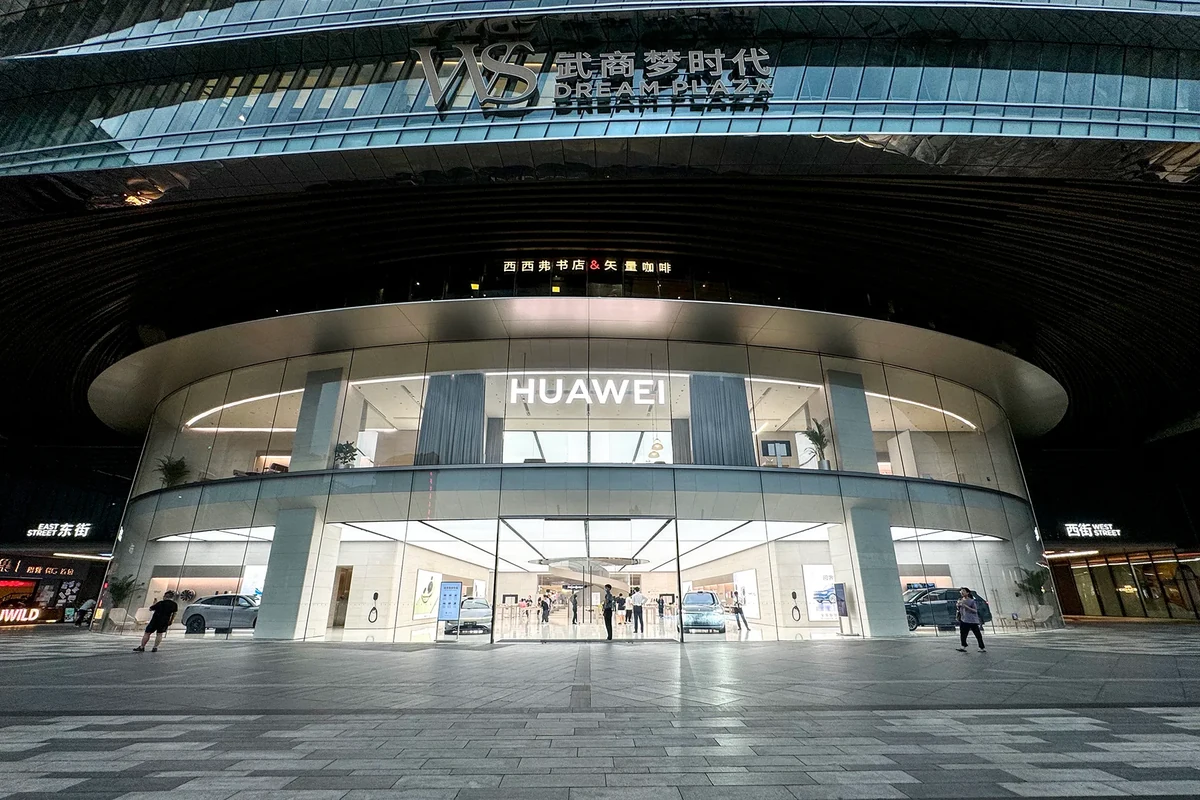
Huawei sells cars next to phones
Huawei does not make cars. It supplies the HarmonyOS cockpit and the Qiankun driver-assistance system, and partner manufacturers build the vehicles around them. Those cars are then sold through Huawei’s own retail network, which is why a Chinese Huawei store can have handsets, tablets and a car on the same floor.
The range is sold under an umbrella brand, and there are now five vehicle lines inside it, each built with a different manufacturer. The best known is the AITO line, built with Seres. Others cover different price points and body styles.
The flagship store in Shenzhen’s MixC is a three-storey glass building of around 1,300 square metres, and the ground floor is a row of cars. In Beijing, a Huawei showroom at the SOLANA mall beside Chaoyang Park displays an AITO alongside the phones. Japanese reporters who visited described the arrangement as shopping for a car the way you shop for a handset, and they were not exaggerating.
Three kinds of place you can walk into
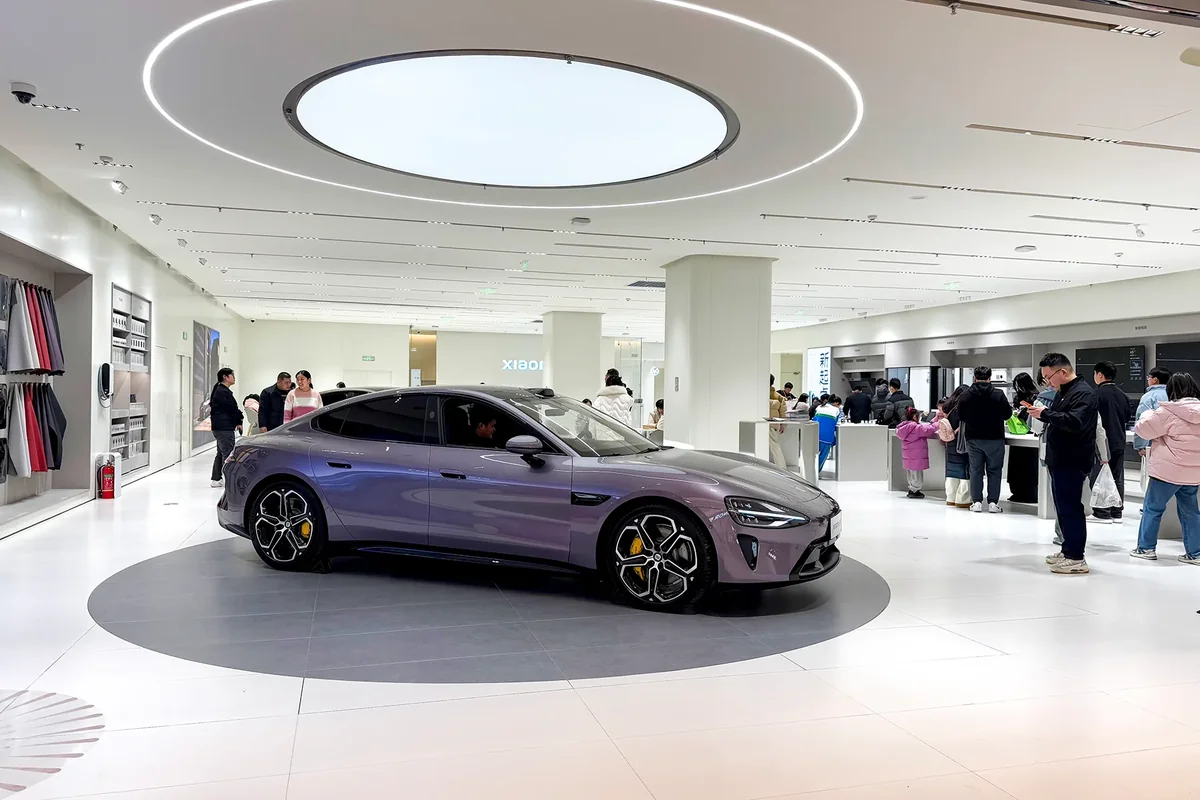
There is no single format. Chinese car retail runs through three distinct channels, and all three are open to anyone who walks in.
Mall showrooms are the most common. They sit inside shopping centres, staffed by brand employees rather than franchise dealers, and they exist as much for exposure as for sales. Chengdu’s Shenye car city, on the east shore of Dong’an Lake, took the idea to its conclusion. It bills itself as the country’s first shopping complex dedicated entirely to new-energy vehicles, with around 39 brands under one roof and service floors above the showrooms.
Traditional dealers, known locally as 4S stores, are the second channel. These are the full-service sites outside the city centre that handle sales, spare parts, service and surveys. They are where the deepest stock sits, and where a serious conversation about a model is possible.
The third is the auto mall or car boulevard, where dealerships cluster along a single stretch of road. These are the least convenient for a visitor, since they are rarely near anything else you would want to see.
Where to go in the cities you are already visiting
The practical question is which of these sit near the sights you came for. In seven of China’s most-visited cities, the answer is usually yes.
In Beijing, the car showrooms have landed in the same malls that tourists already walk through. Oriental Plaza on East Chang’an Avenue, Solana beside Chaoyang Park and the Huaxi Live complex at Wukesong all mix brand showrooms with retail and dining, and all three are a short ride from the central sights.
Shanghai’s densest cluster is Changtai Plaza in Pudong, which local motoring press has repeatedly described as having more new-energy showrooms in one place than anywhere else in the country. Xiaomi also runs a showroom inside the MixC on Wuzhong Road, and there is a Huawei user centre near Century Park.
Chengdu’s Shenye car city is the one worth a deliberate trip within the city, and it sits about a kilometre from the Dong’an Lake sports park. Chongqing spreads its showrooms across the usual shopping districts, including a NIO centre at Raffles City by Chaotianmen and a Xiaomi store in the Guanghuan Garden City mall.
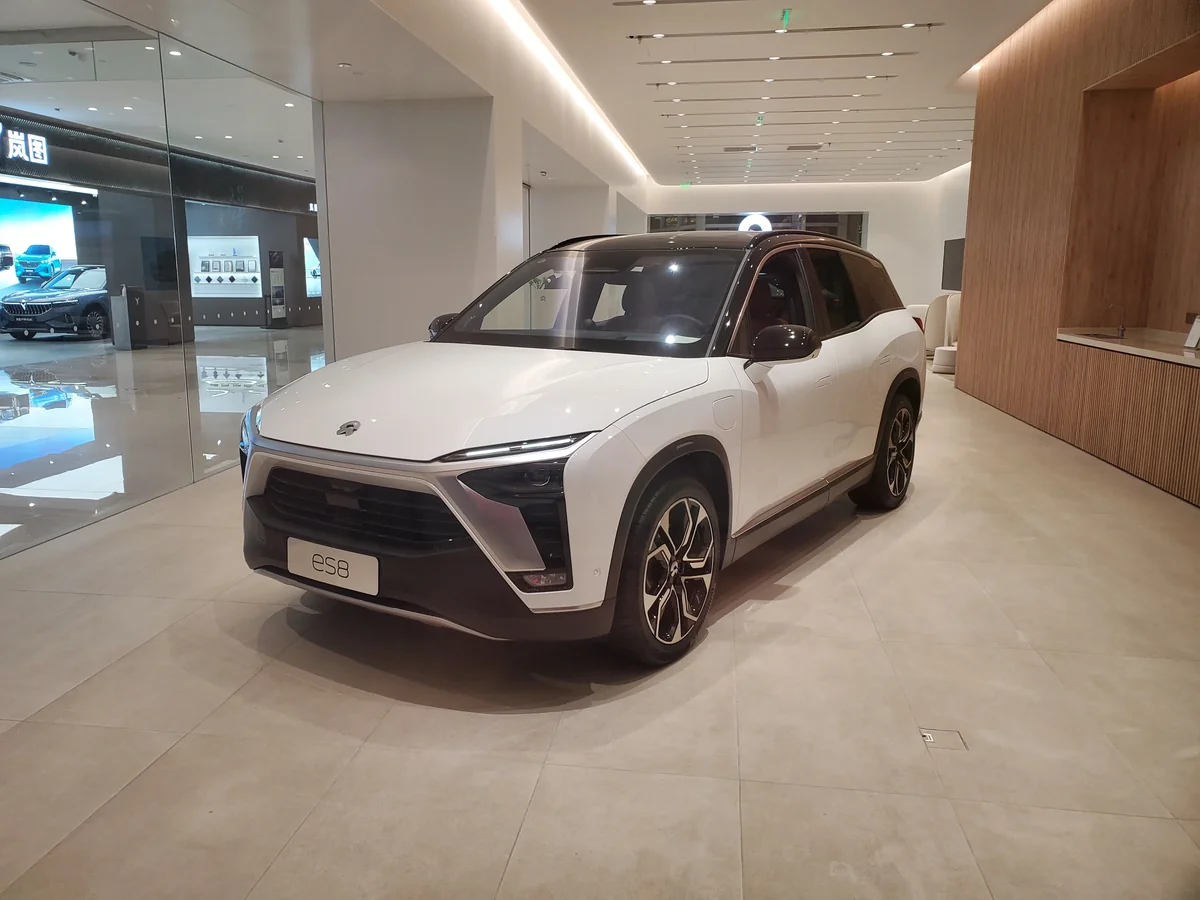
Guangzhou has a NIO centre in the Times CR8 mall in Panyu and another at Guangyue Tiandi, which was the first NIO House in the country to operate as a fully public space. Shenzhen is the strongest single city for this, with the Huawei flagship at MixC and NIO locations at MixC Qianhai and MixC World all within the same shopping group. Xi’an has a NIO centre inside the Livat centre on Ziwu Avenue.
What you can actually do
Walking in, looking and sitting in the cars requires nothing at all. This is the part most visitors underestimate: the interiors are the story with Chinese EVs. The screens, the voice assistants and the cabin materials are what the local market competes on, and you can examine all of it in ten minutes without speaking to anyone.
Ride-alongs are also straightforward. Most showrooms will take you out as a passenger if you ask, and no licence is required for that.
Test driving is the one part with real paperwork. China does not recognise an International Driving Permit, so your home licence is not enough on its own. You need a temporary Chinese driving permit, applied for in person at a vehicle management office with your passport, your home licence and an official Chinese translation of it. The permit is issued on the spot after a short road-rules session, and it is valid for three months. The full process, including the airport counters where you can start it, is covered in our guide to EV factory tours in China, which also covers the factory visits themselves if you want the manufacturing side.
If you would rather understand how these cars fit into daily life before you go, how people pay for things in China is a useful companion, since car deposits and reservations run through the same apps as everything else.
Why you will not see these cars at home
This is the argument that makes the showrooms worth an hour of your trip. The Huawei-linked brands have no official sales network outside China. You cannot walk into a dealership in Europe or North America and see one, and independent importers who do bring them in handle homologation, registration and warranty themselves.
The same is true of several of the newer brands on this list. Their export plans exist, but the cars on the showroom floor in Shenzhen or Chengdu are often a generation ahead of anything offered abroad, and some models are never exported at all.
That makes a Chinese mall showroom one of the few places where you can examine the current state of the world’s largest car market without a plane ticket to a motor show.
The catch: the showrooms move
Car retail in China is volatile, and the mall channel has been contracting as well as expanding. NIO has closed several of its larger centres, including its Shanghai flagship at HKRITaikoo Hui, which shut at the end of August 2026 after four years. Others have closed in Guangzhou and Jinan.
So treat any specific address as a starting point rather than a fixed itinerary. Before you go, search the brand name plus the city in Amap or Apple Maps, or check the brand’s own app, which lists current locations. Mall directory boards are also reliable, since a showroom that has gone will have been removed from them.
If you are building a day around this, pair it with something else in the same mall. Our guide to what is actually worth buying in China covers the rest of the trip. The showrooms are inside shopping centres precisely because the footfall is already there, which means there is always something to eat or buy within a hundred metres.
Frequently asked questions
Can tourists test drive a car in China?
Not without paperwork. China does not recognise an International Driving Permit, so you need a temporary Chinese driving permit, which you apply for in person at a vehicle management office with your home licence and an official Chinese translation. Ride-alongs need no licence at all, and most showrooms will take you out as a passenger.
Can I just walk into a car showroom in China?
Yes. Mall showrooms are built for walk-ins, and staff are used to people browsing without buying. NIO House locations in particular combine a showroom with a cafe and a lounge, so you can sit in a car with a coffee in hand.
Why does a Huawei store sell cars?
Huawei does not build cars. It supplies the software and driver-assistance system, and partner manufacturers build the vehicles. Those cars are then sold through Huawei’s own retail network, which is why they sit beside phones and tablets.
Which Chinese cities have the best car showrooms for visitors?
Beijing, Shanghai, Chengdu, Chongqing, Guangzhou, Shenzhen and Xi’an all combine major tourist sights with car retail districts. Shenzhen’s MixC and Shanghai’s Changtai Plaza are the densest single locations.
Can I buy a Chinese car and take it home?
In practice, almost never. You would be dealing with export paperwork, your home country’s import and homologation rules, and a warranty that is valid only inside China. Treat the showrooms as somewhere to look and sit, not to buy.
Do Chinese car showrooms have English-speaking staff?
Sometimes, but do not count on it. Large flagship stores in Beijing, Shanghai and Shenzhen are the most likely to have someone who can manage English. A translation app covers the rest, and the cars themselves need no translation.