What to Buy in China: 15 Souvenirs Actually Worth It
International visitors are arriving in China with empty suitcases and leaving with them full. The government noticed: in 2025, it dropped the departure tax refund threshold from ¥500 to ¥200 and installed “buy now, refund now” counters in major shopping districts. Tax refund applications from international travelers jumped 240% in Beijing in the first month.
But what is actually worth buying? Some Chinese souvenirs are keepsakes. Some are overpriced tat that sits in a drawer for three years and ends up at a charity shop. This list separates the first category from the second.
For a deeper guide on where to shop, how to negotiate, and how the tax refund system works, see our China shopping guide. This article focuses on the what.
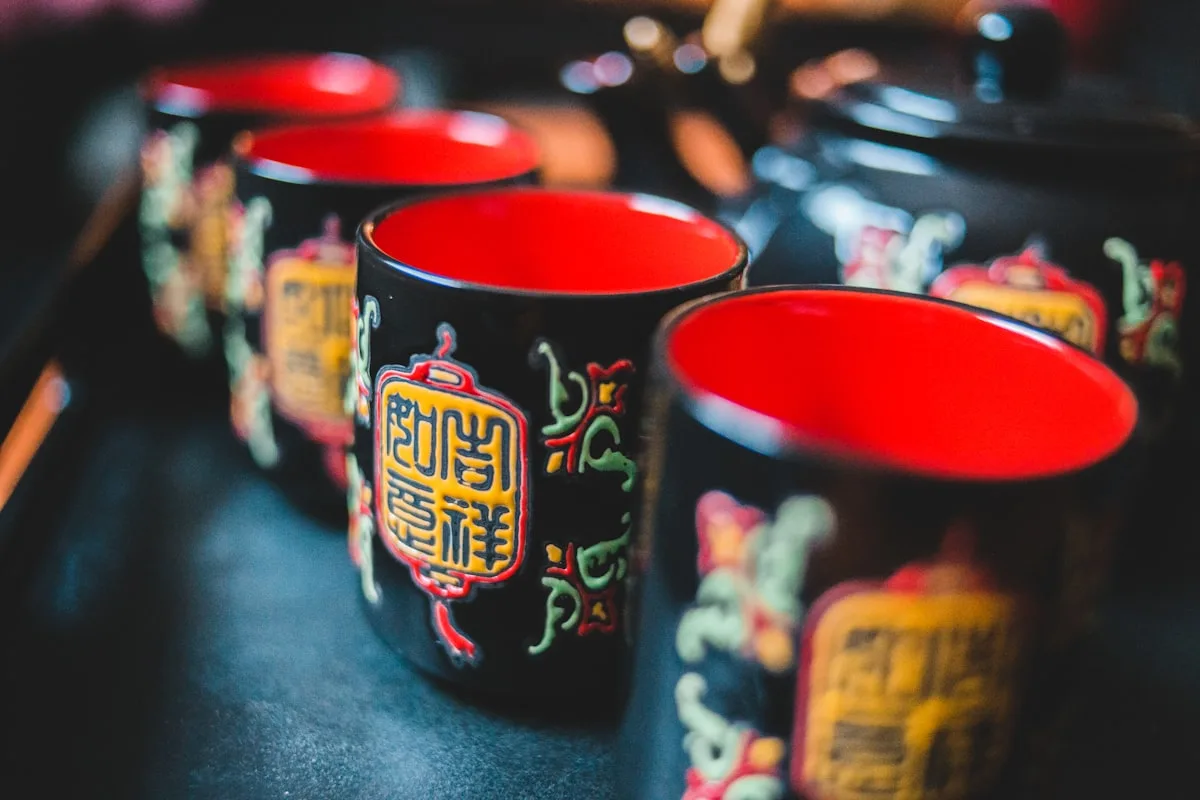
1. Custom clothing from a tailor or fabric market
China’s fabric markets let you get measured, choose fabric, and collect finished garments in 48-72 hours. A bespoke wool suit that costs $800-1,500 in the West runs ¥1,200-2,500 ($170-350) at the South Bund Fabric Market in Shanghai. A custom qipao costs ¥300-800 ($42-112). Two fittings included.
Where: South Bund Fabric Market (Shanghai), Beijing Muxiyuan Fabric Market, or smaller tailor shops near any major city’s fabric market district. Read our Shanghai beyond skyscrapers guide for more on the South Bund.
Price check: A bespoke suit for ¥1,500 ($210) is reasonable. A qipao for ¥400 ($56) at a fabric market is fair. You pay more for imported Italian fabric, less for local wool blends.
Packing tip: Tell your tailor you are leaving on a specific date. They will deliver on time. The fabric market is not a “maybe next week” operation. They live on tight tourist timelines.
Avoid: Tailors who say “same day delivery” for complex garments. Good tailoring requires fittings. Rush jobs produce rushed results.
2. DJI drones at local prices
DJI is a Chinese company, and its products cost 20-40% less in China than in the US or Europe. A DJI Mini 4 Pro that retails for $759 in the US sells for about ¥3,600 ($504) in China. Higher-end models like the Mavic 3 have even larger spreads.
Where: DJI flagship stores in Beijing (Sanlitun), Shanghai (Lujiazui), Shenzhen (Nanshan). Also at major electronics retailers like Suning. The Shenzhen store has the widest selection and demo units for every model.
Caveat: DJI warranties are region-locked. A drone bought in China may not be covered by DJI’s warranty in your home country. For most travelers, the price savings exceed the warranty risk. For a Mavic 3, you save enough to buy a second drone.
3. POP MART blind boxes and designer toys
POP MART has gone from a Beijing toy store to a global phenomenon, and its Chinese retail prices are roughly half of what collectors pay overseas. Mystery boxes that sell for $15-25 abroad cost ¥59-99 ($8-14) in China. Limited-edition figures and collaborations with artists like Kenny Wong and Pucky are released in China first.
Where: POP MART stores in every major Chinese mall. The flagship on Nanjing Road in Shanghai is the largest. Vending machines in metro stations and airports.
Tip: If you want specific figures rather than random pulls, buy opened/confirmed boxes on Xianyu (闲鱼), China’s secondhand app. You will pay slightly more per figure but get exactly what you want.
4. Chinese tea worth the price
Tourist tea shops sell mediocre tea in elaborate packaging at ten times the real price. Skip those. Buy from a tea market where locals shop, not from a “tea ceremony experience” attached to a tour.
What to buy:
- Longjing (龙井, Dragon Well) green tea from Hangzhou: ¥200-500 ($28-70) for 250g of good quality. Spring harvest (pre-Qingming) is the best and most expensive.
- Pu’er (普洱) fermented tea from Yunnan: aged cakes from reputable factories (Menghai, Xiaguan) start at ¥100-300 ($14-42) for a 357g cake.
- Tieguanyin (铁观音) oolong from Fujian: ¥100-300 ($14-42) for 250g. Get the light-roast version if you prefer floral notes.
Where: Maliandao Tea Market (Beijing), Tianshan Tea City (Shanghai), Fangcun Tea Market (Guangzhou). Read our tea culture guide for more.
What to avoid: Tea sold in decorative tins with English slogans. The packaging costs more than the tea inside. “Gift grade” anything — it is a markup, not a quality designation.
5. Silk from where it is made
China produces more than 70% of the world’s silk. A genuine silk scarf in Suzhou or Hangzhou costs ¥80-200 ($11-28). A silk duvet cover runs ¥400-800 ($56-112). These are prices for real mulberry silk, not polyester labeled as “silk feel.”
Where: Suzhou Silk Museum shop (reasonable prices, no counterfeits), Hangzhou Silk Market (haggle), or directly from silk factories with attached showrooms.
Quick authenticity test: Pull a thread and burn it with a lighter. Real silk smells like burning hair and leaves a crushable ash. Polyester melts into a hard plastic bead. Most sellers who deal in real silk will let you test.
6. Jingdezhen porcelain
Jingdezhen has been China’s porcelain capital for a thousand years. A hand-painted teacup from a studio potter costs ¥50-200 ($7-28). A full tea set with gaiwan and six cups runs ¥200-600 ($28-84). These are handmade, one-off pieces, not factory reproductions.
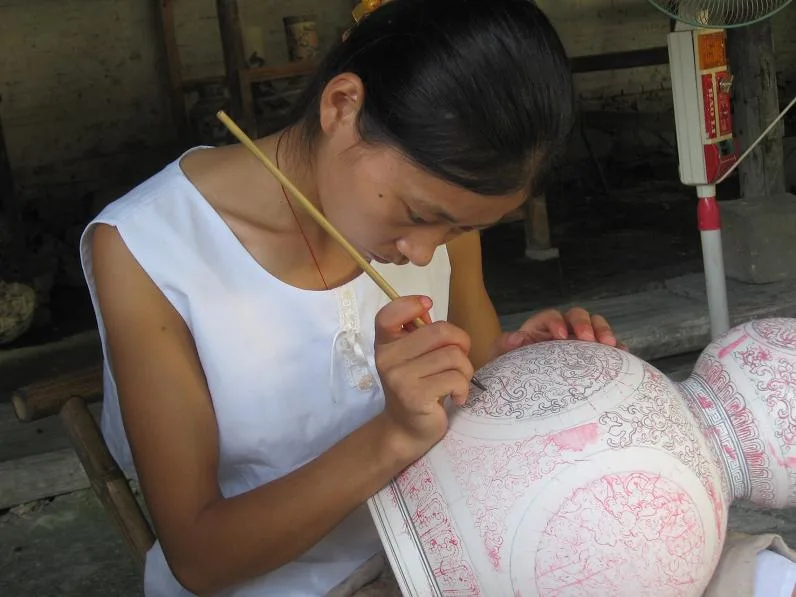
Where: Jingdezhen itself, particularly the Sculpture Porcelain Factory creative district and the weekend market. In other cities, look for Jingdezhen-branded tea ware shops.
Packing: Wrap each piece individually in clothing. Ceramics survive checked luggage better than you think. Read our Jingdezhen porcelain guide for the full trip.
7. Traditional Chinese medicine items (the useful kind)
Skip the dubious cure-alls. Buy the practical stuff Chinese households actually use: Tiger Balm (¥10-20, $1.40-2.80), Yunnan Baiyao spray for muscle pain (¥30-50, $4-7), essential balm (风油精, fēng yóu jīng) for headaches and insect bites (¥5, $0.70). These cost pocket change and work.
Where: Any pharmacy. Watson’s and Manning’s are everywhere and have English labels on some products.
8. Baijiu — if you have to
Chinese sorghum liquor is not for everyone. It tastes like fire and regret. But a bottle of Moutai (茅台) — the most famous brand — is a status object in China and costs less here than anywhere else. A standard bottle of Moutai Flying Fairy runs ¥1,499 ($210) at official stores, when you can find it. Outside China, the same bottle runs $350-500.
Lower-tier baijius like Wuliangye and Luzhou Laojiao are cheaper and, to many palates, better. ¥200-400 ($28-56) buys a very respectable bottle.
Airport tip: Baijiu is high-proof alcohol. Checked luggage only. Most airlines limit alcohol to 1-5 liters depending on ABV. A 500ml bottle at 53% is fine. Six bottles are not.
9. Chinese snacks and sauces
Edible souvenirs are the safest bet because you either use them or eat them. There is no “this sits on a shelf for five years” problem.
What to grab: Lao Gan Ma chili crisp (¥10-15, $1.40-2.10 per jar; available globally but domestic versions have slightly different recipes), Sichuan peppercorns (¥30-50, $4-7 for 250g of top-grade Hanyuan huājiāo), Pixian doubanjiang fermented broad bean paste (¥15-25, $2-3.50 per pack; the foundation of mapo tofu and twice-cooked pork), and individually wrapped White Rabbit milk candies (¥5-10, $0.70-1.40 for a bag; nostalgia in wax paper).
Where: Supermarkets. Carrefour and local chains like Hema (盒马) have all of this. No need for specialty stores.
10. Traditional fans, paper cuts, and small crafts
Hand-painted folding fans from a market stall cost ¥20-60 ($3-8). Intricate paper cuts from an artisan in a tourist market run ¥30-100 ($4-14). These are the closest thing to a lightweight, packable, genuinely cultural souvenir.
Where to buy them right: Jinli Ancient Street (Chengdu), Panjiayuan Antique Market weekends (Beijing), Muslim Quarter (Xi’an). Negotiate. A 30% discount from the first asking price is standard. Read our Xi’an first-timer guide for more on the Muslim Quarter.
11. A carbon-steel wok
A hand-hammered carbon-steel wok costs ¥200-400 ($28-56) and will outlast most things in your kitchen. The Zhangqiu woks from Shandong became famous after a documentary, and the hand-hammered ones are genuinely better than anything at a Western kitchen shop. They weigh less than cast iron, season faster, and take a gas flame that a nonstick pan cannot.
Where to buy them right: Chinese kitchenware stalls in any wet market, or the cookware floors of a department store. Look for a visible hammer pattern and a wooden handle. Skip the nonstick-coated ones; the whole point is bare steel.
Packing note: it is heavy and it will take up a third of a carry-on. Check it in.
12. Chinese sneakers from Li-Ning or Anta
The domestic sportswear brands have gone from knockoff to genuinely good design in about five years. A pair of Li-Ning running shoes or Anta basketball shoes runs ¥300-600 ($42-84), and the flagship models are competitive with Western brands at twice the price. The design language is distinct enough that people will ask about them at home.
Where to buy them right: brand stores in any mall, or the sportswear floor of a department store. Flagship stores in Shanghai and Beijing carry the limited runs. Sizing runs small against European and American sizes, so try before buying.
13. A mahjong set
A full 144-tile set in a carry case costs ¥100-400 ($14-56). It is the most social thing you can bring home: everyone knows what mahjong is, nobody owns a set, and it works with any number of people from two upward. Bamboo-and-bone sets are the traditional version and cost more. Acrylic sets are cheaper, lighter, and fine for playing.
Where to buy them right: department stores, stationery shops, and any market with a toy or game section. Avoid the tiny travel sets sold at tourist sites; they are too small to play with comfortably.
14. A Yixing clay teapot
The unglazed purple clay pots from Yixing in Jiangsu are the ones serious tea drinkers use, because the clay absorbs the flavour of the tea over time. A basic handmade pot runs ¥150-800 ($21-112). Machine-made ones start around ¥60 and are perfectly usable if you just want the object.
Where to buy them right: tea shops in any city, or the tea markets in Beijing and Chengdu. Do not buy from an antiques market unless you know the field; “vintage” Yixing is one of the most-counterfeited categories in China.
How to use it: dedicate one pot to one type of tea. Never wash it with soap.
15. A calligraphy set
A brush, an ink stick, a stone, and paper cost ¥80-250 ($11-35) as a boxed set. This is the best gift on the list for anyone who likes making things, and it is small and light. The ink stone is the heavy part; buy a small one.
Where to buy them right: stationery shops, museum gift shops, and the cultural streets in Xi’an and Beijing. If you want the version with a personal connection, get a Chinese name first so you have something to practice writing. Our guide to getting a Chinese name covers how.
What not to buy
Electronics you cannot confirm the voltage on. Most small Chinese electronics run on 220V. Check before you buy anything with a plug.
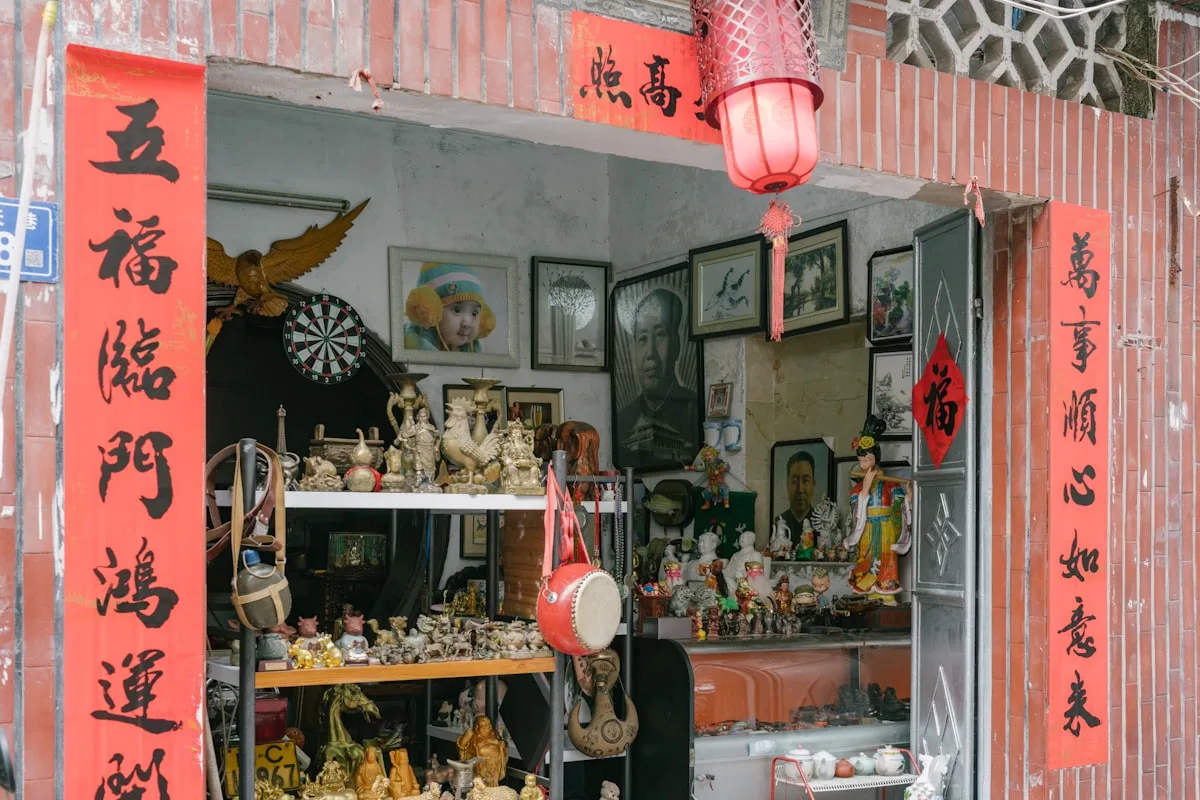
Anything described as “antique” at a tourist market. Real antiques require an export permit from the Cultural Relics Bureau. Without it, customs will seize the item and you will never see it or your money again. Assume all “Ming dynasty” vases at Panjiayuan are reproductions. The good ones still make beautiful decorative pieces, and at ¥100-300 ($14-42) they are priced as reproductions should be.
Loose tea in unlabeled bags. No production date, no origin, no quality control.
Knockoff luxury goods. The quality of fake designer bags and watches varies wildly. Customs in your home country may confiscate them. Is saving $200 on a fake handbag worth an awkward conversation at immigration? Probably not.
The tax refund: yes, you qualify
International travelers who have been in China less than 90 days can claim a departure tax refund of 9-11% on purchases over ¥200 from participating stores. Look for “Tax Free” signs. Ask for the tax refund receipt at purchase. Process it at the airport before check-in.
Not every store participates. Department stores and larger retailers almost always do. Market stalls and street vendors almost never do. For the full guide on how the system works, read our China shopping guide.
The best souvenirs from China are the ones you actually use: a qipao you wear, tea you drink, a drone you fly. The worst are the ones you buy out of obligation. If you do not like baijiu, do not buy baijiu. If you do not drink tea, do not buy tea just because you are in China. The country makes too many genuinely good things to fill a suitcase with guilt.
Frequently asked questions
What are the best souvenirs to buy in China?
The best souvenirs are things you will actually use: custom-tailored clothing from a fabric market (a bespoke suit for ¥1,200-2,500), DJI drones at 20-40% below Western retail, POP MART designer toys at roughly half the overseas price, Jingdezhen porcelain teaware (¥50-200 for a hand-painted teacup), aged Pu’er tea from a reputable market (not a tourist tea shop), and a silk scarf from Suzhou or Hangzhou (¥80-200 for real mulberry silk). Edible souvenirs are the safest bet: Lao Gan Ma chili crisp, Sichuan peppercorns, and Pixian doubanjiang paste all cost pocket change and travel well.
How does the China departure tax refund work for tourists?
International travelers who have been in China less than 90 days can claim a departure tax refund of 9-11% on purchases over ¥200 from participating stores. Look for “Tax Free” signs. Ask for the tax refund receipt at the time of purchase. Process the refund at the airport before check-in, at a dedicated tax refund counter. Department stores and larger retailers almost always participate. Market stalls and street vendors almost never do. In 2025, China dropped the minimum threshold from ¥500 to ¥200 and installed “buy now, refund now” counters in major shopping districts, making the process much faster than it used to be.
Is it safe to buy electronics like DJI drones in China?
Yes, genuine DJI products bought from official DJI flagship stores or authorized retailers like Suning are authentic and priced 20-40% below Western retail. The catch is the warranty: DJI warranties are region-locked, so a drone bought in China may not be covered in your home country. For most travelers, the price savings exceed the warranty risk. A DJI Mini 4 Pro that costs $759 in the US sells for about ¥3,600 ($504) in China. For higher-end models like the Mavic 3, the savings are even larger. Stick to official stores in Beijing (Sanlitun), Shanghai (Lujiazui), or Shenzhen (Nanshan) rather than random electronics markets.
Where can I buy authentic Chinese tea without getting ripped off?
Skip tourist tea shops and “tea ceremony experiences” attached to tours. Buy from a tea market where locals shop: Maliandao Tea Market in Beijing, Tianshan Tea City in Shanghai, or Fangcun Tea Market in Guangzhou. Good quality Longjing (Dragon Well) green tea runs ¥200-500 for 250g. Aged Pu’er cakes from reputable factories like Menghai or Xiaguan start at ¥100-300 for a 357g cake. Avoid tea sold in decorative tins with English slogans: the packaging costs more than the tea. “Gift grade” is a markup term, not a quality designation.
Can I bring baijiu (Chinese liquor) back home in my luggage?
Yes, but checked luggage only. Baijiu is high-proof alcohol (typically 40-53% ABV) and cannot go in your carry-on. Most airlines limit alcohol to 1-5 liters depending on alcohol content, so a single 500ml bottle at 53% is fine while six bottles are not. A standard bottle of Moutai Flying Fairy costs ¥1,499 ($210) at official stores in China versus $350-500 abroad. If Moutai is too intense or too expensive, try Wuliangye or Luzhou Laojiao at ¥200-400 ($28-56) per bottle. Many palates find these mid-tier baijius more approachable than the premium names.
What should I avoid buying in China as a tourist?
Avoid anything described as “antique” at a tourist market: real antiques require an export permit from the Cultural Relics Bureau, and customs will seize undocumented pieces. Avoid electronics you cannot confirm the voltage on, since most Chinese appliances run on 220V. Skip loose tea in unlabeled bags with no production date or origin. Avoid knockoff luxury goods: quality varies wildly and customs in your home country may confiscate them. Is saving $200 on a fake handbag worth an awkward conversation at immigration? Probably not. Also avoid buying anything out of obligation. If you do not like baijiu, do not buy baijiu just because you are in China.