China EV Factory Tours: Visit Xiaomi, NIO, BYD & XPeng
In 2025, China overtook Japan to become the world’s largest car exporter. In 2026, Chinese factories opened their doors to tourists. The result is one of the strangest new attractions in the country: an electric vehicle factory tour.
A few years ago, nobody went to China to see a car plant. Today, Xiaomi’s Beijing factory draws 27,000 lottery applications a month for roughly 1,100 spots. NIO welcomed 130,000 visitors to its Hefei plant in 2024. XPeng’s Guangzhou tour is free and bookable in under five minutes. A small industry of tour operators has sprung up to bring international visitors through these facilities.
If the idea of standing inside a 718,000-square-meter robot-run factory sounds more interesting than another temple, this guide is for you. It covers which factories you can actually visit, which ones are worth the effort, how to test drive a Chinese EV as an international traveler, how to rent one for a road trip, and how car factories fit into a broader China itinerary.
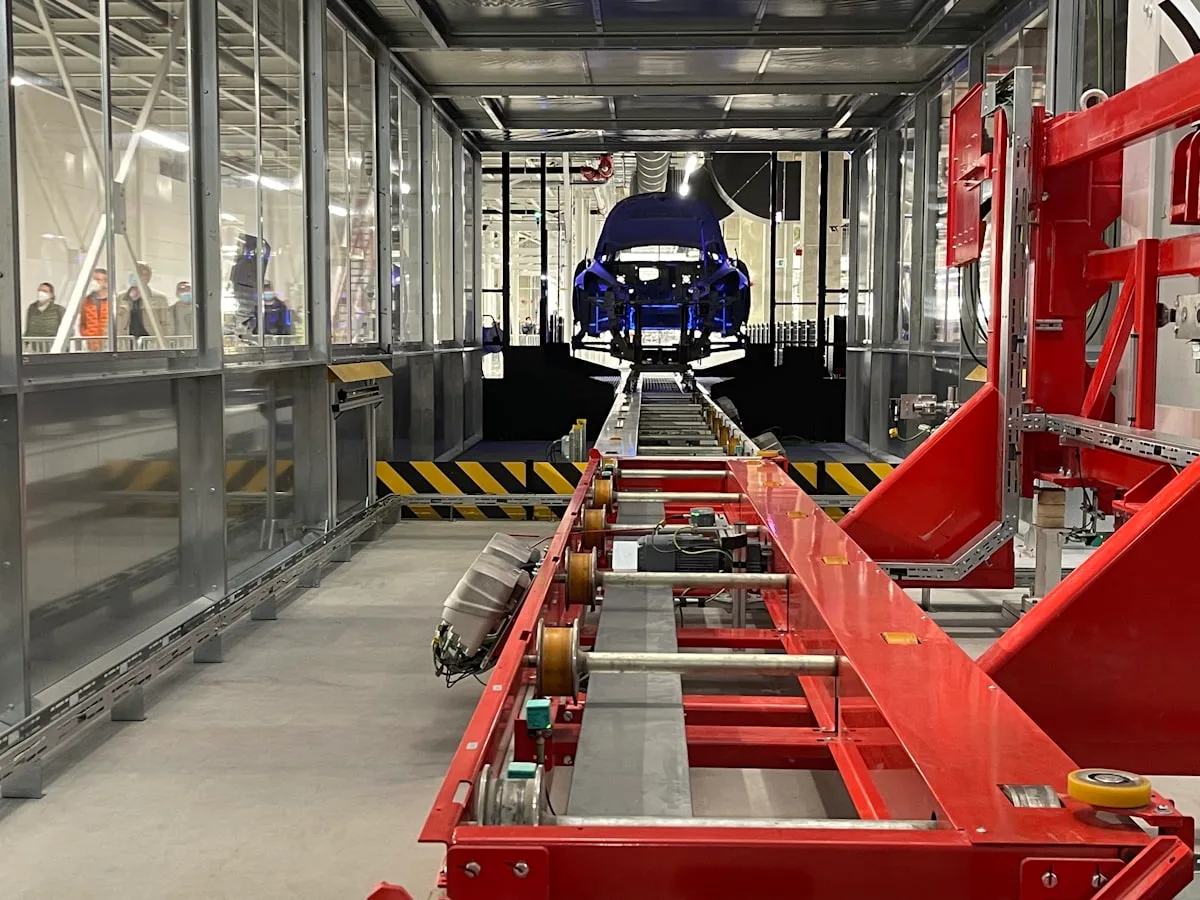
Factories you can visit: at a glance
| Factory | City | Booking difficulty | Cost | English tour? | Best for |
|---|---|---|---|---|---|
| Xiaomi | Beijing | Lottery — ~4% odds | Free | Rare pilot sessions | Manufacturing scale, robot density, bragging rights |
| NIO | Hefei, Anhui | Easy — NIO App | ~$14 worth of NIO Points | Yes | English speakers, battery swap demo, no-lottery access |
| XPeng | Guangzhou | Easy — app/website | Free (kid program ¥258) | Limited | Families, flying car exhibit, straightforward booking |
| BYD | Shenzhen / Zhengzhou | Hard — group booking only | Free | Chinese only | Scale of the global EV leader, if you can arrange a group |
| Tesla Shanghai | Shanghai | Nearly impossible | Museum only | Yes | A small museum, not the factory floor |
| Li Auto | Changzhou | Owner-only | Free | Chinese only | Not open to the public |
Xiaomi (Beijing): the hardest ticket in Chinese tourism
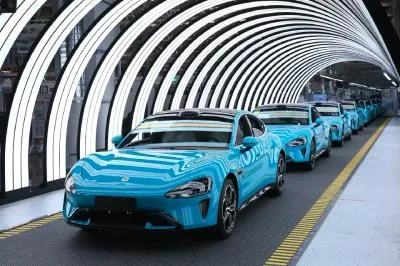
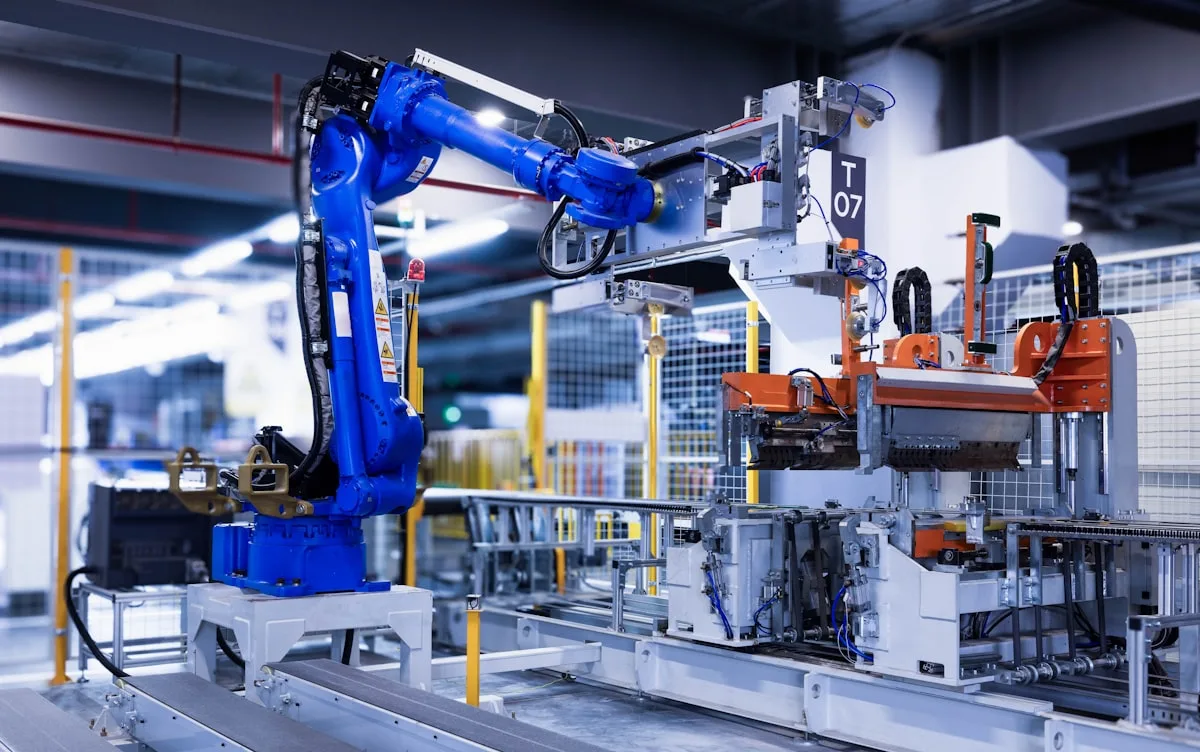
Xiaomi’s EV factory in Yizhuang, 23 km southeast of central Beijing, is the poster child for Chinese factory tourism. A 718,000-square-meter campus houses more than 700 robots welding car bodies at 91% automation. That is roughly the area of the Forbidden City. A 9,100-ton die-casting machine stamps rear underbodies in 120 seconds. The assembly line pushes out a finished SU7 every 76 seconds.
The tour is free. Getting a slot is the problem. The booking system runs through the Xiaomi Auto App. The app is Chinese-only and requires a Chinese phone number. Selection is by lottery. About 27,000 people apply each month for roughly 1,100 slots. That is a 4% acceptance rate. The tour itself runs one to two hours: a technology exhibition hall, an electric shuttle ride through the production floor, and occasional access to the test track. Tours are in Mandarin.
There is a black market: scalped slots resell on Xianyu and WeChat for ¥2,000 to ¥3,000 ($280-420). Do not pay this. Xiaomi’s terms prohibit transfers, and your ID must match the registered name at the gate or you will be turned away.
We have a full guide to the Xiaomi factory tour covering the lottery step by step, what each section of the tour looks like, the dress code, the language barrier, and what to do in Yizhuang if you do not get in. If Xiaomi is your target, read that first.
The short version: apply 4-6 weeks ahead, target weekday sessions for marginally better odds, bring a Mandarin speaker, wear long pants and closed-toe shoes, and treat the lottery as a bonus, not the centerpiece of your Beijing trip. If you win, go. If you do not, the alternatives below are easier to book and arguably more rewarding.
NIO (Hefei): the best option for English-speaking visitors
If you book one factory tour in China, make it NIO. The NIO App has an English interface. Booking costs a trivial amount of NIO Points, roughly the equivalent of $14. There is no lottery. Tours are available in English. NIO is set up for international guests in a way that Xiaomi, for all its spectacle, is not.
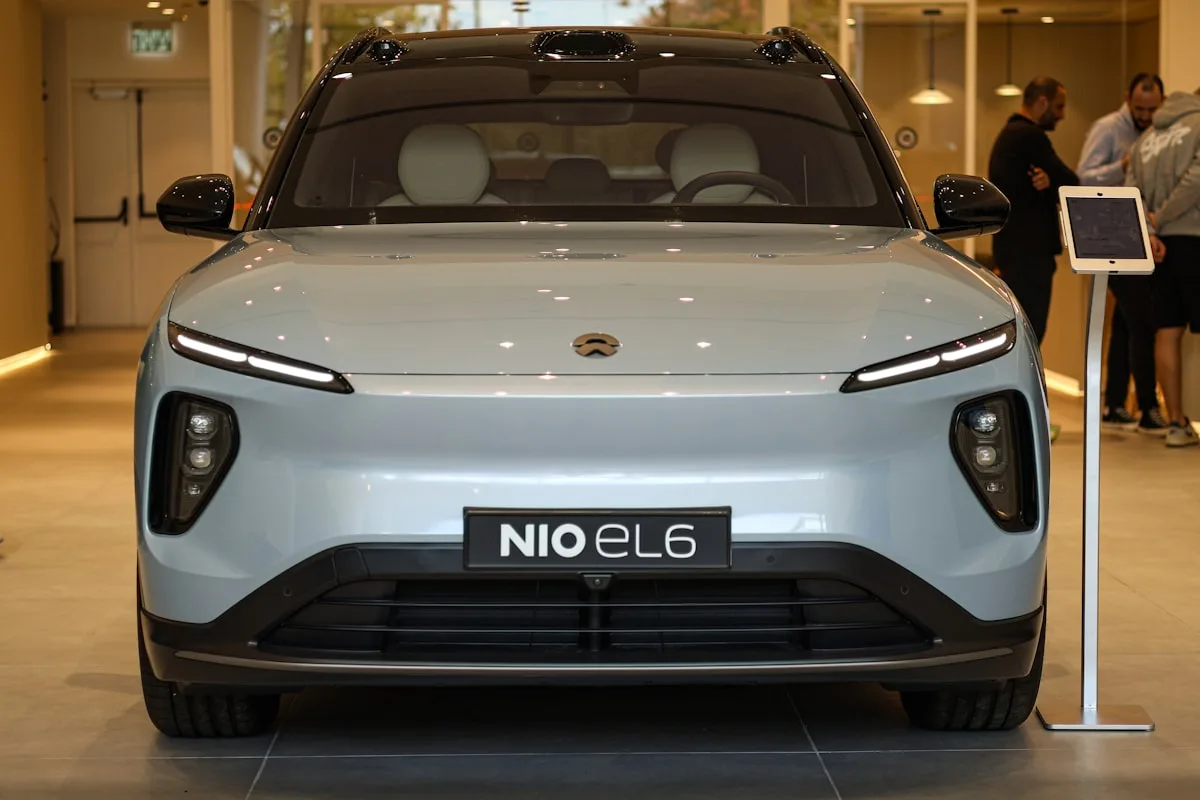
The Hefei plant’s signature moment is the battery swap demonstration. A robotic system exchanges a drained battery for a fully charged one in under five minutes, while the car sits on a lift. This is technology that does not exist outside China at consumer scale, and NIO has deployed over 2,000 swap stations across the country. Seeing it in person, inside the factory where the system was engineered, is the kind of thing that gets auto journalists on planes.
The tour also covers the body shop, where NIO says some lines have reached 100% automation, and the general assembly floor. NIO hosted over 130,000 visitors in 2024, and the visitor experience is polished. Compared to Xiaomi’s lottery stress, booking NIO feels almost suspiciously easy.
Hefei is inland, about two hours from Shanghai or three hours from Beijing by high-speed rail. The city is not a tourist destination on its own, which means you combine this with Shanghai as a 2-3 day side trip. More on that below.
XPeng (Guangzhou): no lottery, kid-friendly, flying cars
XPeng opened its “AI Smart Manufacturing Tour” to the public in January 2026, and it is the most straightforward factory visit in China right now. Three locations:
Global HQ Exploration Center in Guangzhou, the flagship stop. See XPeng’s full vehicle lineup, sit in a flying car prototype (XPeng’s HT Aero unit has a foldable flying vehicle that is sold out for years at $300,000), and explore the AI mobility showroom. No booking lottery. Free for adults.
Guangzhou Smart Manufacturing Base — the production site with the world’s largest die-casting machine: a 16,000-ton press. This is bigger than Xiaomi’s headline 9,100-ton unit. The tour walks you through the stamping and welding shops.
Zhaoqing Smart Manufacturing Base — where the MONA M03 is produced. Another free tour, same straightforward booking.
XPeng also runs a kids’ STEM program called “XPeng Smart Manufacturing Academy” for ¥258 per child. The program includes eco-friendly craft workshops and basic mechanical assembly activities. If you are traveling with kids and want them to remember something other than pandas and dumplings, this is a solid half-day.
The catch: English support is limited. XPeng has said it plans to add multi-language services, but for now the tours run in Mandarin. The visual experience still works without the language. A 16,000-ton press does not need subtitles. But you will miss the engineering context unless you bring a Chinese speaker.
Booking is through the XPeng app, the XPeng website, or their official WeChat account. No phone number gymnastics required.
BYD (Shenzhen / Zhengzhou): the global EV king, if you can get in
BYD is the company that dethroned Tesla. In 2025, it sold 2.26 million pure electric vehicles globally, overtaking Tesla to become the world’s number-one EV maker. Its factories are on a scale that makes other plants look like workshops.
The reality for visitors: BYD only accepts group bookings. Individual travelers cannot walk in. You need a minimum group size, typically 10 or more, and must apply at least 10 working days in advance. Tours are in Chinese only.
If you can organize a group through a tour operator, a university program, or a business delegation, the experience is worth it. The Zhengzhou plant’s welding workshop runs at 97% automation. The blade battery production line turns out one cell every three seconds. A finished vehicle rolls off the line every 55 seconds. BYD’s Zhengzhou campus also features an all-terrain test track where visitors can ride along as a driver puts vehicles through extreme inclines and water crossings.
For the independent traveler, BYD is currently the hardest factory to access among the four major Chinese EV makers. As factory tourism matures, BYD will likely open to individual bookings. There is too much demand and too much PR value for them not to. Until then, go through an organized group or choose NIO or XPeng instead.
Tesla Shanghai: the museum, not the factory
A note on Tesla because people ask: the Shanghai Gigafactory is not open for public tours. Tesla ran a promotional program in late 2024 where customers who purchased through its trade-in program were entered for an exclusive tour with free airfare and hotel, but there is no regularly bookable public access.
What Tesla does offer is an interactive museum in Shanghai. It covers the company’s history, vehicle engineering, and energy products. The space is well-designed and English-friendly. It is not a factory tour. If you are an EV enthusiast with a few hours in Shanghai, it is worth a visit. If you are choosing between Tesla’s museum and NIO’s factory floor, take NIO.
Test driving a Chinese EV as an international traveler
Test driving a car in China as a visitor is possible, but the path is narrower than it should be. Here is how it works.
At the factory or dealership: Xiaomi offers test drives of the SU7 to some factory tour groups, usually on the campus test track. It is not guaranteed with every session and requires a valid Chinese driver’s license. XPeng and NIO both offer test drives at their experience centers. You can book through their apps or walk into a showroom. Some XPeng experience centers have English-speaking staff.
At a dealership (4S store): most Chinese car dealerships will let you test drive a vehicle if you present a valid Chinese driver’s license. Some will accept a home country license with an official Chinese translation, but this is at the dealer’s discretion and inconsistent. The safer route: get a Chinese temporary driving permit.
The temporary driving permit: visitors can apply for a Provisional Driving Permit at major city vehicle management offices or at some international airports (Beijing Capital, Shanghai Pudong). You need your home country driver’s license, an official Chinese translation of that license, your passport with valid visa, and a completed application form. The permit is typically valid for the duration of your visa stay, up to three months. The process takes about one to two hours at the office. Cost is minimal, usually under ¥100. Bring a Mandarin speaker or a translation app. The forms and staff are Chinese-language.
Without a driver’s license: you can still experience Chinese EVs. Most dealerships and experience centers let you sit in the cars and explore the interiors. The infotainment screens, voice assistants, and cabin materials are half the story with Chinese EVs. XPeng’s showroom in Guangzhou has a full self-driving simulation experience. Baidu’s Apollo Park in Beijing’s Yizhuang district offers autonomous taxi rides on a closed course.
Renting a Chinese EV for a road trip
Renting a Chinese electric car as an international visitor is doable. This is new territory. A few years ago this section would not exist. But the infrastructure and availability have reached a point where an EV road trip in China is a realistic week-long plan.
What models can you rent? Most major rental platforms in China now carry Chinese EV brands. You can find BYD Atto 3s, NIO ET5s, and occasionally Xiaomi SU7s at premium rental agencies in Beijing, Shanghai, and Guangzhou. International chains like Hertz have limited EV options in China. Local platforms like Shenzhou (神州租车) and eHi (一嗨租车) have wider EV selections but their apps are Chinese-only. Book through a hotel concierge or a Chinese-speaking friend.
What you need: a valid Chinese driver’s license (or temporary permit), a passport, and a credit card. Some agencies accept foreign cards; others require Alipay or WeChat Pay. Deposit holds range from ¥5,000 to ¥15,000 depending on the vehicle. Book at least a few days ahead for EV models. They are popular.
Charging in China: the charging network is vast. China has over 10 million public charging points. Even small towns in Yunnan and Sichuan have fast chargers. The catch for international visitors: many charging stations require a Chinese phone number to activate via app. The most widely compatible charging app is State Grid’s e-Charging, which requires a Chinese SIM. TELD and Star Charge also work widely. If you are renting an EV, ask the rental company which charging app they recommend and whether they can help you set up an account.
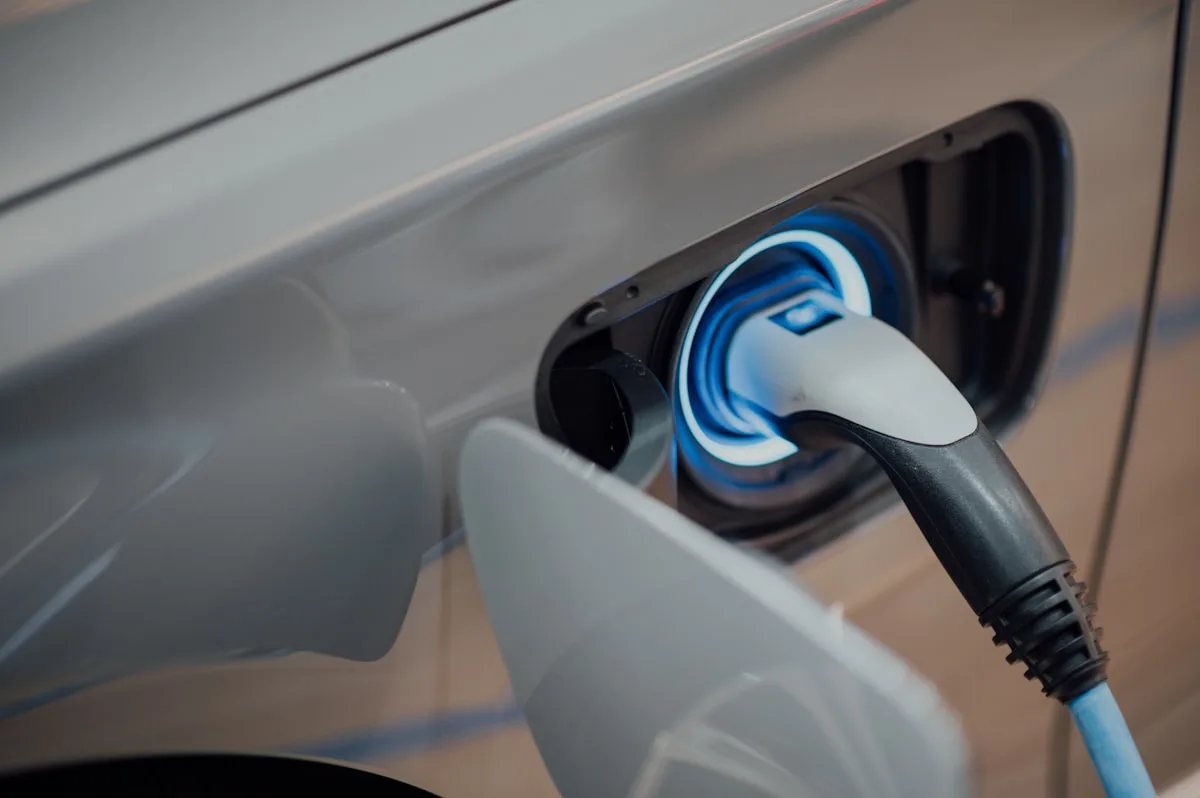
Charging costs: roughly ¥0.8 to ¥1.5 per kWh at public fast chargers. A full charge for a BYD Atto 3 (60 kWh battery) costs about ¥60-90 ($8-13). For context, that is roughly the price of two bowls of beef noodles in Shanghai.
Where to go: the Yangtze River Delta route is the natural starting point. Shanghai → Hangzhou → Moganshan over three days: it tests the car on highways, mountain roads, and city streets, with dense charging coverage the entire way. For the more ambitious, the Yunnan route from Kunming to Dali to Lijiang is 500 km of some of the best scenery in the country, with charging stations available in every town along the way. Several EV tour operators are now running guided group road trips on both routes, led by English-speaking auto journalists. These are worth the fee if you want the experience without the logistics.
Car shows and auto museums
If you time your trip around a major auto show, you can see China’s EV industry in a single building.
Auto Shanghai runs in odd-numbered years (next: April 2027) and is China’s largest auto show. Every Chinese EV brand debuts vehicles here, and international brands bring their China-market models. English signage and media coverage are extensive.
Auto Beijing alternates with Shanghai in even-numbered years (next: April 2028). These two shows are now more significant for EVs than Geneva or Detroit.
Guangzhou Auto Show runs annually in November. Smaller than Shanghai and Beijing but easier to navigate and less crowded.
Between shows, the NIO House locations in Shanghai, Beijing, and Shenzhen function as de facto brand museums. They combine vehicle showrooms with cafes, co-working spaces, and event venues. Walk in, order a coffee, and sit inside an ET7 while you drink it. No appointment needed. NIO Houses are deliberately welcoming to walk-in visitors, including international travelers, in a way that traditional dealerships are not.
Shanghai Auto Museum: a dedicated auto museum in Anting, Jiading District. It covers the history of the automobile globally and has a growing section on China’s EV development. English audio guides are available. Plan for two to three hours. It is about an hour from central Shanghai by metro.
Build a car-themed itinerary
These are not full trip plans. They are the skeleton of how car experiences fit into a broader visit.
Beijing, 2 days: Morning one: Xiaomi factory (if you won the lottery). If not, Robot World in Yizhuang (free, 50+ robot brands, humanoid demos on weekends). Lunch at Robot Flame Lab, the robot-themed restaurant that draws 300-400 visitors a day. Afternoon: Apollo Park for autonomous taxi rides, or the Xiaomi Auto Experience Center (no lottery needed) to see SU7s up close and book a test drive.
Shanghai + Hefei, 3 days: Day one in Shanghai: NIO House on the Bund, Tesla Museum in Anting, Shanghai Auto Museum. Day two: high-speed train to Hefei (two hours), NIO factory tour in the afternoon. Day three: morning train back to Shanghai, afternoon free. This is the most accessible car itinerary for English-speaking visitors.
Guangzhou + Shenzhen, 3 days: Day one: XPeng Global HQ and Smart Manufacturing Base in Guangzhou. If traveling with kids, the XPeng Academy STEM program. Day two: train to Shenzhen (one hour), explore the city’s EV-saturated streets. BYD headquarters is here; if you arranged a group tour, this is your day. Day three: Shenzhen’s Huaqiangbei electronics market fits the tech theme, or return to Guangzhou for the flight out. If you want to extend this route beyond the factory floors, our Greater Bay Area guide connects Guangzhou and Shenzhen with Hong Kong and Macau in a single high-speed circuit.
Before you go
These are the logistics you want sorted before you land. Each one has a dedicated guide on this site:
- Set up Alipay and WeChat Pay — you need these to book factory tours, charge an EV, pay rental deposits, and order at the robot restaurant
- Get a Chinese SIM or eSIM — required for the Xiaomi Auto App, most charging apps, and many factory booking platforms
- Book high-speed trains — the easiest way to reach Hefei (NIO), Guangzhou (XPeng), and Shenzhen (BYD)
- Xiaomi factory full guide — every detail on the lottery, the tour, the language barrier, and backup plans for Yizhuang
Frequently asked questions
Which Chinese EV factory tour is best for English-speaking visitors?
NIO’s Hefei plant. The NIO App has an English interface, booking costs roughly $14 worth of NIO Points, there is no lottery, and English-language tours run regularly. The battery swap demonstration, where a robot exchanges a drained battery in under five minutes, is the highlight. Hefei sits about two hours from Shanghai by high-speed rail, so the visit fits neatly into a Shanghai itinerary.
Can you visit the Xiaomi EV factory in Beijing?
Yes, but entry runs through a lottery in the Xiaomi Auto App. About 27,000 people apply each month for roughly 1,100 spots, so the odds sit around 4%. The app is Chinese-only and needs a Chinese phone number. The tour itself is free, lasts one to two hours, and runs in Mandarin. Apply four to six weeks ahead and treat winning as a bonus rather than the centerpiece of your Beijing trip.
Do you need a Chinese driver’s license to test drive an EV in China?
Yes. Factory and dealership test drives require a valid Chinese driver’s license. International visitors can apply for a Provisional Driving Permit at a major city vehicle management office or at some airports, including Beijing Capital and Shanghai Pudong. You need your home country license, an official Chinese translation of it, your passport with a valid visa, and about one to two hours at the office. It usually costs under ¥100.
Can international visitors rent a Chinese EV for a road trip?
Yes. Local rental platforms like Shenzhou and eHi carry EV models including BYD Atto 3s, NIO ET5s, and occasionally Xiaomi SU7s. You need a Chinese driving permit, your passport, and a credit card or Alipay. Deposit holds run from ¥5,000 to ¥15,000. Book a few days ahead, and ask the rental company which charging app to use, because most charging stations need a Chinese phone number to activate.
Is BYD’s factory open to individual visitors?
Not yet. BYD only accepts group bookings, typically ten or more people, applied for at least ten working days in advance, with tours in Chinese. Individual travelers are better off choosing NIO in Hefei or XPeng in Guangzhou, both of which welcome bookings without a group.
How should EV factory tours fit into a China itinerary?
Treat them as add-ons to cities you are already visiting. Xiaomi sits in Beijing, XPeng in Guangzhou, BYD in Shenzhen, and NIO in Hefei, two hours from Shanghai by high-speed rail. A Beijing day works around the Xiaomi lottery. The Shanghai-Hefei route is the easiest for English speakers, and a Guangzhou-Shenzhen loop pairs the factories with the Greater Bay Area.
China’s EV factories are not like the Great Wall. Nobody is going to tell you they have been standing there for two thousand years and you have to see them before you die. They are ugly. They are loud. They smell like welding flux.
They are also, for a certain kind of traveler, the most interesting thing happening in China right now. The scale is honest. The automation is visible. The ambition is not something a museum can show you: a country that was assembling cheap gas-powered sedans a decade ago, now building the world’s most advanced electric vehicles faster than anyone. You have to see the robots.