China Domestic Flights: Booking, Airports & What It Costs (2026)
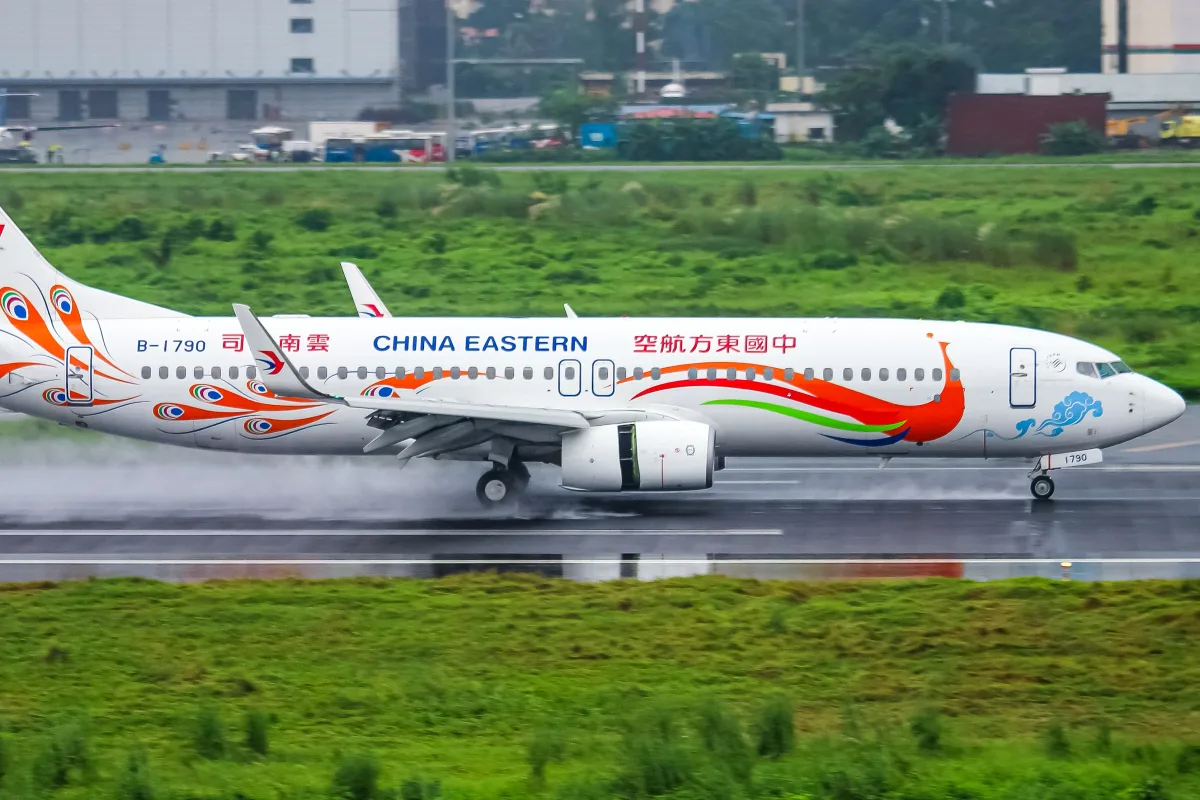
China’s network of domestic flights is the part of the trip most international travelers plan last, and it shows in the itinerary. The train network gets all the attention, and mostly it deserves it. But this is a country the size of a continent, and there are routes where the train is a twelve-hour ordeal and the flight is two hours. Knowing which is which, and knowing how to buy the ticket with the passport you already have, saves real money and at least one ruined day.
The fuel surcharge is at its lowest point of 2026
Every domestic ticket in China carries a fuel surcharge on top of the fare, and on August 5, 2026 it dropped for the third time since June. The standard now in force:
| Segment length | Surcharge per adult |
|---|---|
| 800 km or less | ¥40 |
| Over 800 km | ¥70 |
That is a ¥10 cut on short segments and ¥30 on long ones. To see how far it has fallen, look at where it started the summer. In May 2026 the same surcharges were ¥90 and ¥170. June brought ¥80 and ¥150, July ¥50 and ¥100, and August the current ¥40 and ¥70.
Two details matter when you pay. Infants pay nothing at all. Children, disabled servicemen and police officers disabled in the line of duty pay half, so ¥20 or ¥35. And the surcharge is fixed at the date the ticket was originally issued, which means if the rate falls after you buy, a date change gets you nothing back, and if it rises, you are not charged the difference.
It moves most months, so treat this as the September number rather than a permanent fact. Beijing to Shanghai is over 800 km and therefore ¥70 on top of the fare. A 90-minute hop like Shanghai to Qingdao falls under the line.
A passport is all you need to book
The Civil Aviation Administration of China lists foreign passports as valid ID for domestic flights, and every booking channel that matters accepts them. The rule that trips people up is consistency. The same document has to be used to buy the ticket, check in, clear security and board, and the name and passport number must match the document exactly. A dropped middle name or a surname written in the wrong order is enough to get you stopped at the gate, and fixing it after purchase is a phone call to customer service that may not succeed.
Bring the physical passport. A photo of it, a screenshot, or the copy stored inside Alipay will not be accepted, at check-in or anywhere else.
Where to book:
- Trip.com. Full English interface, international Visa and Mastercard, no Chinese phone number required, and 24-hour English support. It is the default recommendation for a reason.
- The airline’s own site or app. Air China’s app accepts overseas credit cards, but logging in often wants a +86 number for SMS verification. China Eastern’s international site takes foreign Visa and Mastercard as long as 3D Secure is enabled, and lets you switch the billing currency to USD or EUR.
- Qunar and Fliggy. Cheap, Chinese-language, and largely closed to international cards. Skip them unless you read Chinese and hold a mainland bank card.
Since October 1, 2025, domestic routes issue electronic itineraries only. There is no paper ticket to collect at an office, and no reason to arrive at the airport with a printout expecting it to be checked. Your passport is the ticket. Book flights on Trip.com if you want the English interface and a card that works.
Payment is the other half of this. Once Alipay or WeChat Pay is live on your phone, buying a ticket inside China gets much simpler. Our guide to setting up mobile payments covers that before you fly.
Skip the kiosk and find a staffed counter
The self-service check-in kiosks and the facial recognition gates at Chinese airports are built around the chip in a Chinese national ID card. They generally cannot read a passport. Nothing is broken and you have not done anything wrong, but standing in front of a kiosk swiping your passport will not work. Walk to a staffed counter instead, and expect the same at security, where passport holders are routed through a manual lane.
The timing that matters:
| Step | When |
|---|---|
| Check-in opens | 48 hours before, online, where supported |
| Check-in closes | 45 minutes before departure at most airports, 60 at Beijing Capital, 30 to 35 at some smaller fields |
| Boarding starts | 30 minutes before departure |
| Gate closes | 15 to 20 minutes before departure |
| Offload risk | If you are not at the gate 20 minutes before departure |
Airlines publish a two-hour recommendation for domestic departures, and at a hub like Pudong or Daxing that is honest advice, not padding. A smaller airport where you already know the layout is comfortable at 90 minutes. The single most common reason international travelers miss a domestic flight in China is arriving 50 minutes out and finding the counter already closed.
One more thing worth knowing before you sit down at the gate: gate changes are common and are frequently announced in Chinese only. Watch the screens rather than the loudspeaker.
Two airports, one city
China has three cities where a domestic ticket can land you on the wrong side of town, and Beijing is the worst of them. The rule is simple and absolute: book by airport code, not by city name.
| City | Codes | Who flies there | Distance into town |
|---|---|---|---|
| Beijing | PEK Capital | Air China, Hainan Airlines, Grand China Air | Closest to the center. Capital Airport Express, ¥25 flat, to Sanyuanqiao and Dongzhimen |
| Beijing | PKX Daxing | China Southern, China Eastern, Capital Airlines, China United | Opposite side of the city. Daxing Airport Express from Caoqiao, ¥35 standard or ¥50 business |
| Shanghai | PVG Pudong | The international hub. China Eastern, Air China, most long-haul carriers | Maglev to Longyang Road, ¥50, or ¥40 with a same-day boarding pass, 8 minutes. Metro Line 2, about ¥7 and an hour |
| Shanghai | SHA Hongqiao | Heavy domestic schedule. Terminal 2 connects directly to Hongqiao Railway Station | Terminal 2 has Metro Lines 2 and 10, about ¥5 and 30 minutes to People’s Square. Terminal 1 has Line 10 only |
| Chengdu | CTU Shuangliu | Older field, closer to the old city | 16 km out. Metro Lines 10 and 19, 40 to 50 minutes, about ¥6 |
| Chengdu | TFU Tianfu | The newer field, where most international and much domestic capacity moved | Far out. Metro Line 18, roughly 35 minutes on the express and 50 on the local service, about ¥10 |
Two things follow from that table. In Beijing, a Capital arrival puts you near Wangfujing and a Daxing arrival puts you an hour away from it, so a cheap Daxing ticket can cost more than the fare difference in taxi time. In Chengdu, Tianfu is genuinely far from the center, and an early departure from TFU means leaving your hotel before the metro starts running. Check the first train time, not just the journey time.
Shanghai deserves its own note, because it is the city where the airport choice interacts with the train. Hongqiao Terminal 2 and Hongqiao Railway Station are in the same complex, which makes an air-to-rail connection painless. Pudong is the one you fly into from abroad. The two are linked by the Airport Link Line, ¥26 and about 40 minutes, running from Hongqiao T2 between 05:45 and 22:00 and from Pudong between 06:00 and 22:15. It does not serve Hongqiao Terminal 1 and does not go downtown. Our Shanghai arrival guide walks through the terminal-level detail.
In Beijing, the equivalent planning question is which airport your onward train leaves from, and our first-timer’s Beijing guide covers the station side of that.
When to fly instead of taking the train
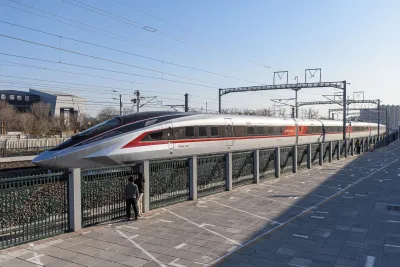
The useful rule is not about flight time, and it is not really about train time either. It is about total door-to-door time, and the Chinese transport industry has settled on roughly four hours of rail time as the dividing line. Below that, the train takes the market. Above about five hours, rail’s ability to pull passengers off planes fades fast.
Airbus put numbers on it in its 2026 market assessment: high-speed rail holds the advantage out to about 500 to 800 km, the 800 to 1,200 km band is genuine head-to-head competition, and aviation’s advantage opens up beyond 1,200 km. The same assessment cut Airbus’s 20-year forecast for Chinese single-aisle aircraft by 470 planes, to 7,480, on the expectation that rail will absorb around 10 percent of domestic air traffic.
The 2026 evidence is blunt. Wuhan to Xi’an used to be a flight route. The Xishi high-speed line opened on June 30, 2026 and brought the fastest trip down to 2 hours 41 minutes. Within one month, rail’s share of that city pair rose from 74.4 percent to 80.2 percent while civil aviation’s fell from 15.8 percent to 7.2 percent. Flight volume on the route dropped 47.4 percent, seat capacity dropped 55.9 percent, and China Eastern cut its own frequencies by 58.7 percent. By August 4, 2026 there was one daily passenger flight left between Wuhan Tianhe and Xi’an Xianyang, a 07:50 departure. Fares fell 20 percent on the way down.
Beijing to Shanghai tells the same story in slower motion. The train takes 4 hours 18 minutes city center to city center. In 2024 the corridor carried 52 million rail passengers against 8.6 million air passengers, roughly six to one, even with 55 daily flights between the two flag carriers.
So the decision procedure is short. Find the fastest direct train and its station locations. If the train is four hours or less and both stations are near where you actually are, take the train. Every seat has a power socket, there is no check-in cutoff, and the high-speed rail guide explains the booking side. If the fastest train is over five hours, requires a change, or leaves from a station an hour outside the city, fly.
Then there is the category where flying is the only real answer. Tibet needs a permit before you board, and no train gets you to Ngari. Xinjiang’s far west and south, from Kashgar to the Taklamakan edge, are days of driving apart and two hours by air. For those, the flight is not a choice between two good options.
What the ticket actually includes
Twenty kilograms. That is the number for economy class on Air China, China Eastern, China Southern, Hainan Airlines and Shenzhen Airlines, which between them cover most of what you will book. Business class gets 30 kg and first class 40 kg. An infant ticket carries 10 kg plus a free stroller.
The low-cost carriers are a separate category and the difference is not small. Spring Airlines includes no free checked baggage at all. Lucky Air, West Air, Tianjin Airlines and Capital Airlines all charge separately for checked bags. A ¥199 fare on one of those can end up costing more than a ¥450 full-service fare once you add a suitcase, and the comparison is only fair when you price the bag in. When you price out a route, see our China travel budget guide for what the totals usually land at.
The physical rules: each checked piece must weigh at least 2 kg and no more than 32 kg, with the length plus width plus height falling between 60 cm and 203 cm including wheels and handles. Air China’s domestic limit is 100 x 60 x 40 cm per piece. Excess baggage runs at about 1.5 percent of the full-fare economy price per kilogram on the route, and the per-person checked total is generally capped at 50 kg.
Carry-on has one rule that catches people: power banks must travel in the cabin, must carry a legible capacity label under 160 Wh, and in China need a 3C mark. An unmarked power bank can be confiscated at security, and one in a checked bag is a safety violation.
How far ahead to book
Chinese domestic fares are dynamic, and the mechanism is worth understanding rather than guessing at. Airlines release discount cabins in waves. When a flight first opens, months out, only the expensive fare classes are on sale, which is why booking six months early is often the most expensive thing you can do. As departure approaches, mid-tier cabins appear. Closer still, the cheap cabins sell out and what remains is priced high.
The practical windows, from Chinese booking-platform analysis:
| Route type | Best booking window |
|---|---|
| Long haul, over 1,500 km | 20 to 40 days out; 45 days in peak season |
| Short haul, under 1,500 km | 7 to 15 days out |
| Hot summer leisure routes | 30 to 45 days out |
Day of week matters as much as lead time. Weekday departures are cheaper, with Tuesday and Wednesday the consistent weekly low and Friday to Sunday the peak. Time of day is the biggest single lever: flights departing before 07:00 or after 22:00 frequently cost less than half the same route at midday. If you are watching a fare, platforms release refunded seats and daily specials between midnight and 06:00, and airlines post new discount cabins between 08:00 and 10:00.
There is a real counter-example worth knowing, because it contradicts the usual advice. The 2026 National Day holiday ran long enough to spread demand out, and by mid-September travelers who had booked two weeks early were watching last-minute tickets come in ¥300 to ¥400 cheaper one way. Business routes into Beijing and Shanghai behave the conventional way and climb close to departure. Leisure routes can dump. Buying early is the safe play, not a guaranteed win.
For scale, the domestic average fare in the post-Spring Festival window of February 24 to March 13, 2026 was about ¥950 excluding taxes, with Shanghai to Guangzhou at roughly ¥460. Off-peak, the same route is a fraction of that.
When the flight is delayed
China’s delay compensation rules turn on cause, not length alone. If the delay is the airline’s fault, meaning a mechanical problem, a crew issue or an aircraft shortage, compensation is owed. If it is weather, air traffic control or flow control, no cash is owed, though the airline still has to help with meals, rebooking or a refund.
The standard scale for carrier-caused delays:
| Delay length | Compensation |
|---|---|
| Under 4 hours | Meals and assistance, no cash |
| 4 to 8 hours | ¥200, or vouchers, miles or ticket credit of at least equivalent value |
| 8 hours or more | ¥400, or vouchers, miles or ticket credit of at least equivalent value |
Airlines vary around that baseline. China Eastern pays ¥200 for 4 to 8 hours and ¥400 for 8 hours or more, and pays 10 percent of those amounts for passengers on infant tickets. Juneyao has described a finer scale: ¥200 for 4 to 6 hours, ¥300 for 6 to 8 hours, ¥400 beyond 8. Compensation gets paid in cash or in vouchers and miles, and you may have to ask at the counter rather than wait to be offered.
Refunds and rebooking on carrier-caused delays are free, and involuntary refunds carry no fee. The seasonal risk is worth planning around: summer typhoons hit the southeast coast and Hainan from July into September, and winter fog and snow disrupt northern airports from December. A morning departure beats an evening one on a weather day, because delays compound through the day.
What changed in 2026
The C919, China’s domestically built single-aisle jet, went from a novelty to a normal sight at the gate this year. By August 12, 2026, the aircraft operated by Air China, China Eastern and China Southern had opened 58 routes connecting 26 cities and carried more than 7.5 million passengers. China Eastern alone had 14 of them flying 19 routes into 16 airports by the summer season that began March 29, including high-frequency service on Shanghai Hongqiao to Chengdu Tianfu and Shanghai Hongqiao to Xi’an at 10 round trips a day. In August the type began regular international service on Air China’s Beijing to Ulaanbaatar route. If you want to know what you are boarding, the aircraft type is printed on the booking page, and C919 is not a code you need to avoid.
Two airport changes are worth tracking. Guangzhou Baiyun’s Terminal 3 opened its international operations fully on January 22, 2026, moving 30 international and regional airlines out of Terminal 1, and Baiyun now runs three terminals and five runways. If your booking says Guangzhou and you have not flown there since 2025, re-check the terminal. Xiamen’s new Xiang’an International Airport is targeting the end of 2026 for its first terminal. A change of airport in Xiamen would affect anyone connecting to Gulangyu, so confirm which field your flight uses closer to the date.
Frequently asked questions
Can I book a domestic flight in China with a foreign passport?
Yes. China’s Civil Aviation Administration lists foreign passports as valid ID for domestic flights, and Trip.com and the major airline websites all accept them. The rule that catches people is consistency: the same passport must be used to buy the ticket, check in, clear security and board, and the name and number must match the document exactly. Bring the physical passport. Photos and screenshots are refused.
Which Beijing airport should I use, Capital or Daxing?
Check the code on your booking. Air China, Hainan Airlines and Grand China Air are based at Capital (PEK), which sits closer to the city center and is served by the flat fare 25 yuan Capital Airport Express. China Southern, China Eastern, Capital Airlines and China United are based at Daxing (PKX) on the opposite side of the city, reached by the 35 yuan Daxing Airport Express from Caoqiao. The two airports are roughly an hour apart by road, so a mix-up costs you the flight.
How much checked baggage is included on a Chinese domestic flight?
Twenty kilograms in economy on the full-service carriers: Air China, China Eastern, China Southern, Hainan Airlines and Shenzhen Airlines. Business class gets 30 kg and first class 40 kg, and an infant ticket carries 10 kg. The low-cost carriers are different. Spring Airlines includes no free checked bag at all, and Lucky Air, West Air, Tianjin Airlines and Capital Airlines all charge separately. Read the fare conditions before you compare prices.
Should I fly or take the high-speed train between Chinese cities?
Look at the total door-to-door time, not the flight time. High-speed rail wins on routes where the fastest direct train runs about four hours or less, roughly 500 to 1,000 km. Flying wins beyond about 1,200 km, or where the rail route is indirect. Beijing to Shanghai takes 4 hours 18 minutes by train. Wuhan to Xi’an fell to 2 hours 41 minutes when the Xishi line opened in June 2026, and flights on that route collapsed by 47 percent within a month.
How far in advance should I book a domestic flight in China?
On long routes over 1,500 km, 20 to 40 days out is the usual trough, and 45 days during peak season. Short routes under 1,500 km often bottom out 7 to 15 days before departure. Booking months ahead is not automatically cheaper: airlines release only full-fare cabins when a flight first opens. Midweek departures are cheaper than Friday to Sunday, and flights before 07:00 or after 22:00 can be half the price of the same route at midday.
What compensation do I get if a domestic flight in China is delayed?
Only for delays the airline caused. The industry standard is 200 yuan for a delay of 4 to 8 hours and 400 yuan for 8 hours or more, paid in cash or as vouchers, miles or ticket discounts. China Eastern pays 10 percent of that for infant tickets. Weather, air traffic control and flow control delays carry no cash compensation, though the airline still owes you assistance with meals, rebooking or a refund.
What to read next
- China high-speed rail guide: booking on 12306, seat classes, station timing, and the passport checks at the gate.
- China travel budget guide: what transport actually eats out of a two-week budget, flights and trains side by side.
- Shanghai arrival guide: Pudong and Hongqiao terminals, the Airport Link, SIM cards and the first 24 hours.
- China multi-week route planner: how to sequence a long trip so you are not flying back and forth across the country.