What to Pack for China: A Practical List
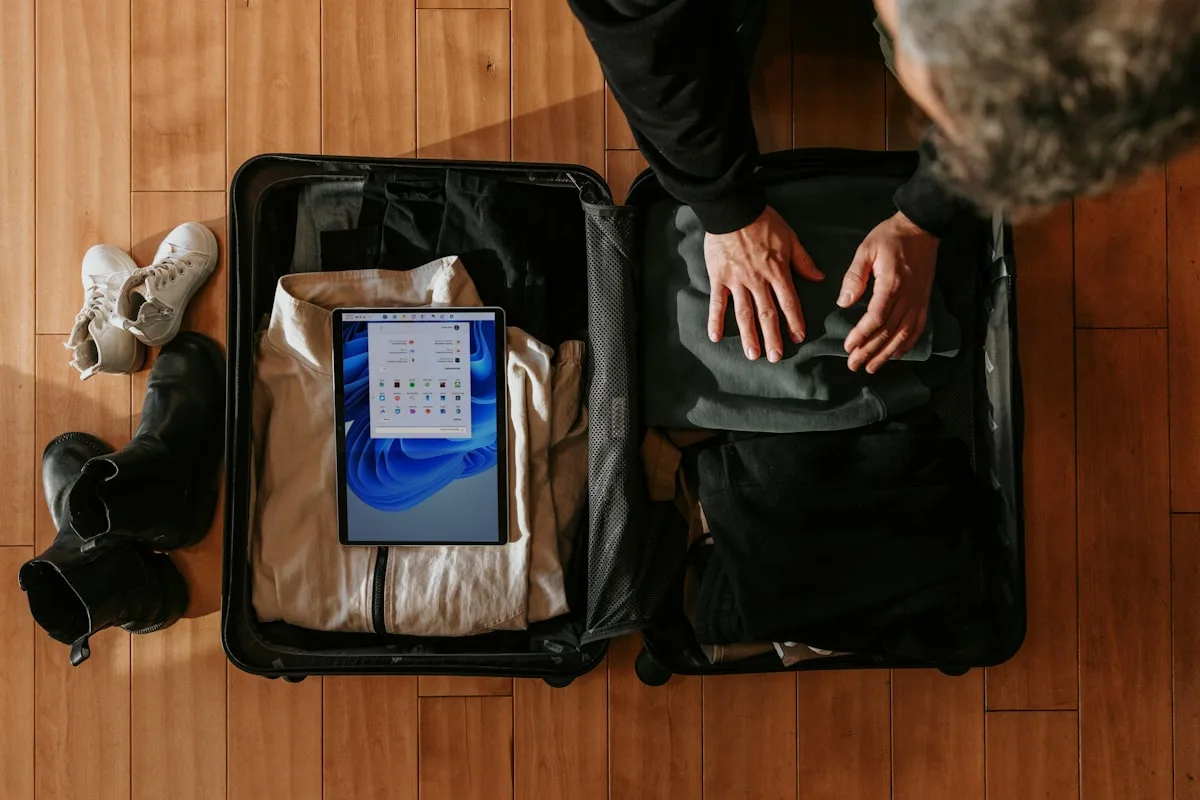
Most China packing lists start with clothes. That is backwards. You can buy a shirt in any Chinese city for less than the price of airport coffee. What you cannot fix on arrival: a dead phone with no way to pay, a VPN that was never installed, or a debit card that your bank froze without warning.
This list starts with what actually matters.
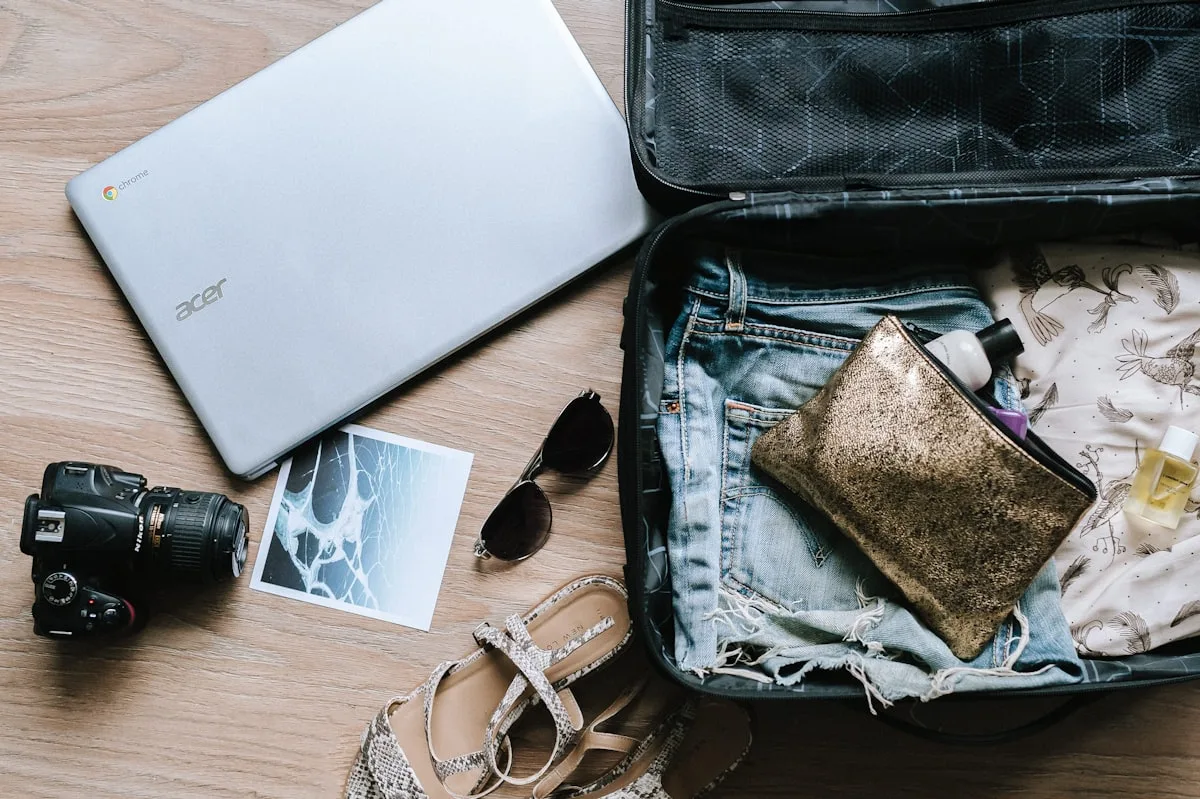
Before anything else: your phone
China runs on phones. You will use yours to pay for meals, navigate the subway, translate menus, and call a taxi. If your phone battery dies at 8pm in an unfamiliar district, you have a real problem.
Power bank. Bring a high-capacity power bank, at least 10,000 mAh. Do not rely on the one built into your backpack or the one you bought in 2019 and never charged. A phone at 0% in China is not an inconvenience. It means you cannot pay for anything, cannot navigate, and cannot translate. Test your power bank the night before departure.
Charging cable. Bring two. One lives in your bag, one lives in your daypack. Chinese outlets accept Type A (two flat blades) and Type I (three flat blades in a triangle). Most hotel rooms have USB-A ports, but they are often loose and slow. A GaN charger with multiple ports is worth the weight.
eSIM (primary internet). Buy and install an eSIM from Nomad, Trip.com, or MobiMatter before you leave. Install it at home on your own WiFi, then turn it off; the plan’s countdown starts when it first connects to a Chinese tower, not when you buy it. Your eSIM handles mobile data for maps, payments, and messaging, and bypasses the firewall without a VPN. Full eSIM comparison here.
VPN (backup). Install one VPN — Astrill or ExpressVPN are the most reliable in China as of mid-2026. Test that it connects before you fly. Your eSIM handles daily mobile use. The VPN handles hotel WiFi, laptops, and the edge case where your eSIM glitches. For stays over a month, install a second VPN (Surfshark is ideal: cheap, unlimited devices) as backup. Do not wait until you land; VPN apps and websites are blocked inside China. Important: LetsVPN terminated China operations in 2026 — old guides that recommend it are out of date.
Documents and money
This is the second category where failure means the trip stops.
Passport. Photocopy the photo page and keep it separate from your passport. Email yourself a scan. These are not paranoid precautions. If your passport is lost or stolen, a copy turns a 72-hour consular nightmare into something manageable.
Visa. If you need one, print the approval or invitation letter. Embassy officials at your destination will not ask for it, but airline check-in staff might, and they can deny boarding. Many countries now qualify for visa-free entry to China. Check the latest policy before applying for a visa you may not need. Our visa-free entry guide covers the current rules.
Hotel bookings. Print the first night’s reservation. Immigration forms ask for an address on arrival, and you want one written down, not buried in a booking app that will not load on airport Wi-Fi without your VPN connected.
Cash. Bring $200-$400 USD equivalent in clean, crisp bills. Most Chinese businesses have not touched paper money in years, but cash solves two edge cases: your Alipay setup failed, or you need to change money at a Bank of China branch. Do not bring torn or marked bills. Chinese banks reject them.
Alipay and WeChat. Set these up at home, link your foreign card, and verify your identity. Make a test payment (send ¥1 to a friend if you know someone in China, or buy something from a vendor that ships internationally). Do not wait until you are standing at a noodle stall with a line forming behind you. See our mobile payment guide for step-by-step setup.
Travel insurance. Hospital deposits in China for international patients can run ¥5,000-¥20,000 upfront before treatment. Buy a policy that covers medical evacuation. Trip.com travel insurance covers China itineraries, including high-altitude evacuation if you’re heading to Tibet, and is priced in line with most international providers.
Electronics beyond the phone
eSIM or local SIM. Decide before departure. An international eSIM (Nomad, Trip.com, MobiMatter) gives you data that bypasses the firewall — no VPN needed for mobile use. Data only, no Chinese phone number. A local SIM gives you a +86 number for taxi apps and food delivery verification, but you must buy it at the airport with your passport and use a VPN for blocked apps. The best setup for trips over 2 weeks: eSIM for data + local SIM for the phone number. Compare options in our full connectivity guide.
Universal adapter. Most Chinese sockets are the flat two-prong Type A or the angled three-prong Type I. A universal adapter costs $10 and weighs nothing. If your charger has a UK or EU plug, you need one.
Laptop and tablet. Install a VPN on every device before departure. Hotel Wi-Fi always uses a Chinese IP — the firewall applies regardless of your eSIM. For work, tether to your phone’s mobile hotspot instead of joining the hotel network. Your phone’s eSIM may reach Google and Gmail without a VPN. Hotel Wi-Fi will not.
Clothing: the seasonal breakdown
Chinese cities are dense. You walk more than you think. Comfortable shoes are not a suggestion; they are the difference between a good day and a day you quit at 2pm with bleeding heels.

Beyond shoes, what you pack depends entirely on when you arrive. China spans five climate zones, but most first-time itineraries fall within a predictable seasonal range.
Summer (June to August)
Hot, humid, and prone to sudden rain. This applies to Beijing, Shanghai, Guangzhou, Chengdu, and most cities east of the 100th meridian.
- Lightweight, quick-dry shirts: cotton gets heavy when you sweat through it
- One pair of long pants for evenings and temples (some religious sites require covered legs)
- A compact umbrella or a rain jacket that actually breathes
- Sunscreen: Chinese brands often contain whitening agents. Bring your own
- Insect repellent: mosquitoes are aggressive in southern cities
For a month-by-month picture of what the weather actually does to your packing, our China in June guide covers how June’s rain and heat differ from July’s, plus a dedicated June packing list.
Winter (December to February)
North of the Yangtze, winter is dry and cold. Beijing routinely drops to -10°C (14°F). South of the river, buildings lack central heating, and indoor spaces hover around 8-12°C (46-54°F). You will feel colder indoors in Shanghai than outdoors in Beijing.
- A proper insulated jacket, not a fashion coat
- Thermal base layers: Uniqlo Heattech or equivalent
- Wool socks, two pairs minimum
- Gloves that work with a touchscreen
- Lip balm: heated indoor air in northern China is desert-dry
If you are heading to the northeast (Harbin, Mohe, or the ice festival), this list scales up fast. At -30°C you need serious down, a face covering, and hand warmers, not just a warm coat. For China’s most extreme winter experience, see our Harbin Ice Festival guide.
Spring (March to May) and autumn (September to November)
The easiest seasons to pack for. Layers work. A light jacket, a sweater, and shirts you can add or remove cover most situations. Beijing spring brings dust storms. Shanghai autumn gets typhoon rains. Check the forecast three days before departure.
Shoes, in any season
One pair you can walk 20,000 steps in. Many Chinese tourist sites involve long approach paths and uneven stone surfaces. Great Wall sections, mountain temples, and ancient town streets are not kind to thin soles or new shoes. Break them in at home.
Medicine and toiletries
Stomach medication. Pack loperamide (Imodium) and oral rehydration salts. Chinese pharmacies carry these, but the staff may not speak English, and explaining diarrhea through hand gestures in a crowded pharmacy is exactly the kind of travel moment you can avoid. Food in China is generally safe, but your gut bacteria are not prepared for the local strains. It takes most people three to five days to adapt.
Prescription medications. Bring enough for your entire trip plus a three-day buffer. Carry them in original packaging with the prescription label. China restricts certain medications (especially psychotropics and strong painkillers). Check the latest customs list before packing anything controlled.
Toilet paper and hand sanitizer. Public toilets in China rarely provide toilet paper or soap. Carry a small pack of tissues and a travel bottle of hand sanitizer. Every day. This is the single most practical piece of advice in this guide.
Sunscreen and moisturizer. As noted above, Chinese sunscreen often includes skin-whitening ingredients. If that is not what you want, pack your own. Moisturizer matters in northern winters when heated indoor air pulls every drop of moisture from your face.
Mosquito repellent. Southern China in summer. Enough said.
Traveling with children? Our China travel with kids guide covers family logistics, from stroller-friendly routes to where kids eat free.
What not to bring
Too many clothes. Chinese cities have Uniqlo, H&M, and local brands at every price point. Clothes take up suitcase space. Leave room for things you will actually buy. For what those things should be (DJI drones at local prices, custom-tailored suits in Shanghai, and electronics from Shenzhen), our souvenirs guide lists the 15 things actually worth the suitcase space.
Physical guidebooks. A 500-page Lonely Planet weighs more than a tablet and cannot update itself. Use your phone.
Drones. China requires drone registration and in many cities (including all of Beijing) they are banned outright. Police do confiscate them. Do not bring one unless you have researched the specific rules for your destination.
Walkie-talkies and satellite devices. Both are restricted or illegal without permits. Leave them home.
Dairy products, meat, fresh fruit. Customs will take them. You will not win the argument.
Too many expectations about breakfast. Hotel breakfasts in China lean savory: congee, pickled vegetables, steamed buns, sometimes fried rice. If you need toast and coffee to function, pack instant coffee sachets and accept that you will figure out the rest.
The night-before checklist
Run through this the evening before departure:
- VPN installed, tested, and connected on every device
- Alipay set up, card linked, identity verified, test payment done
- Power bank charged to 100%
- Passport photocopy packed separately from passport; digital copy emailed to yourself
- First night hotel address written on paper, not just in an app
- Medications in carry-on, not checked luggage
- Two charging cables, confirmed working
- Tissues and hand sanitizer in daypack
- Offline maps downloaded (Google Maps works poorly in China; download Baidu Maps or Amap)
Most packing lists treat China like any other destination. It is not. The things that will strand you are not the wrong jacket. They are a dead battery, a blocked app, or a bank card that stopped working. Pack for those first. Everything else, you can buy on the ground.
Frequently asked questions
What is the single most important thing to pack for China?
Your phone, a high-capacity power bank, and connectivity sorted before you fly. If your phone dies at 8pm in an unfamiliar Chinese district, you cannot pay for anything, cannot navigate, and cannot translate. Install an eSIM or VPN before departure, charge your power bank to 100% the night before, and carry two charging cables. Clothes you can buy anywhere. A working phone you cannot.
Do I need a VPN for China?
Yes, and install it before you leave. Astrill and ExpressVPN are the most reliable in China as of mid-2026. An international eSIM from Nomad or Trip.com handles mobile data without a VPN — it routes through Hong Kong or Singapore. But hotel WiFi uses a Chinese IP address and the firewall still applies. Install the VPN before departure and test that it connects. VPN websites and app stores are blocked inside China.
How much cash should I bring to China?
$200-400 USD equivalent in clean, crisp bills. Do not bring torn or marked notes — Chinese banks reject them. Most of your trip will run through Alipay, but cash solves the edge cases: your payment app fails, you need to change money at a Bank of China branch, or your phone dies. A red ¥100 note still solves every problem in China.
What should I absolutely NOT pack for China?
Drones (banned in all of Beijing, restricted nationwide, police do confiscate them), walkie-talkies and satellite devices (require permits you probably cannot get), dairy products, meat, and fresh fruit (customs will take them), and too many clothes (Uniqlo and H&M are in every Chinese city and cheaper than at home). Leave the 500-page Lonely Planet on your shelf — your phone weighs less.
Do I need a power adapter for China?
If your charger has a UK or EU plug, yes. Chinese sockets are Type A (two flat blades) or Type I (three flat blades in a triangle). A universal adapter costs $10 and weighs nothing. Hotel rooms often have USB-A ports but they are loose and slow. A GaN charger with multiple ports is worth the space in your bag.
What medications should I bring to China?
Pack loperamide (Imodium) and oral rehydration salts — your gut bacteria are not prepared for local strains and most people need 3-5 days to adapt. Bring prescription medications in original packaging with the prescription label, enough for your entire trip plus a three-day buffer. China restricts certain psychotropics and strong painkillers. Check the latest customs list before packing anything controlled.
For connectivity in detail, see our guide to VPNs and eSIMs in China. For payment setup, see Alipay vs WeChat Pay: what actually works. This is one of several pre-trip guides. Start with our complete first-timer’s guide.