How to Climb Mount Tai: Routes, Sunrise and the Night Climb
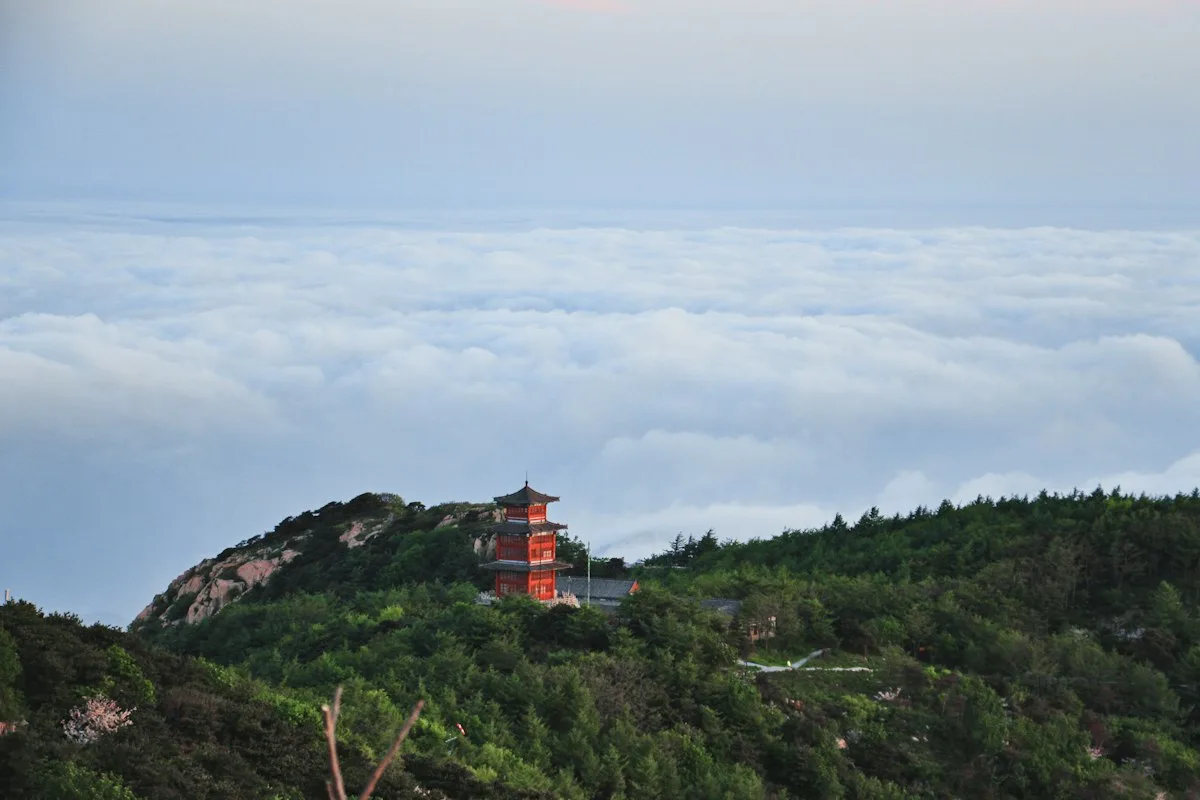
Mount Tai is not a mountain you go to look at. It is a mountain you climb, and how you climb it is the whole trip. Six entrances, three cable cars and a web of shuttle buses wrap around the slopes, and the choice you make in the booking app decides whether you spend the day on stone stairs among carvings that go back two thousand years, or watch the whole thing slide past a bus window on the way to a summit you barely touched.
It also decides whether you see the sunrise, which is the reason most people come.
One thing catches almost everyone: the cable cars stop at 17:30 and do not start again until 06:00. If you want to be on the summit when the sun comes up, you are walking, or you are sleeping up there.
The short version
| Entrance | How you go up | Time to the summit | Who it suits |
|---|---|---|---|
| Hongmen (红门) | on foot, 9.5 km and more than 7,000 steps | 4 to 6 hours | the classic climb, and the only night route |
| Dongyudao (东御道) | on foot, gentler east slope | about 2 hours to Zhongtianmen, then cable or stairs | quiet forest walking, airy and uncrowded |
| Tianwaicun (天外村) | bus to Zhongtianmen, then cable car or stairs | 1.5 to 2 hours | families, tight schedules, anyone with sore knees |
| Tianpinghu (天平湖) | bus plus cable, hub near the high-speed station | 1.5 to 2 hours | arriving by train, or driving with luggage |
| Taohuayu (桃花峪) | bus plus cable on the west slope | about 2 hours | spring blossom, scenery, self-drive, fewer people |
| Tianzhufeng (天烛峰) | on foot, rear mountain | half a day | hikers who want the mountain to themselves |
Hongmen: the classic, and the only one that works at night
This is the route the emperors used, the one Confucius used, and the one that turns up in every photograph. Mount Tai has been a UNESCO World Heritage site since 1987, and Hongmen is the climb that makes the case for it. The Taishan UNESCO Global Geopark, which runs the site, describes the route as 9.5 km with more than 7,000 stone steps and almost no flat sections.
That last part is worth sitting with. There is no approach walk where you find your rhythm. You start climbing at the gate and stop when you reach the top.
What you get for it: eight old temples along the way, more than 200 carved steles and 300 rock inscriptions, and two millennia of people leaving their names on the mountain. Doumu Palace, the Sutra Rock Valley, the Five Pines Pavilion. The middle stretch is genuinely beautiful, and it is the part most bus-and-cable visitors never see.
Then comes the Eighteen Bends.
The Eighteen Bends (十八盘) sit between Zhongtianmen at 847 m and the South Gate of Heaven at 1,460 m. It is around 1,600 steps stacked into less than a kilometre of ground, climbing roughly 400 metres at a pitch that reaches 70 degrees. Local advice divides it into the slow eighteen, the not-too-fast eighteen and the tight eighteen, and the tight eighteen, at the top, is where the handrails stop being decorative. Budget two hours for this section alone if you are not a regular hiker. Your legs will tell you about it for three days.
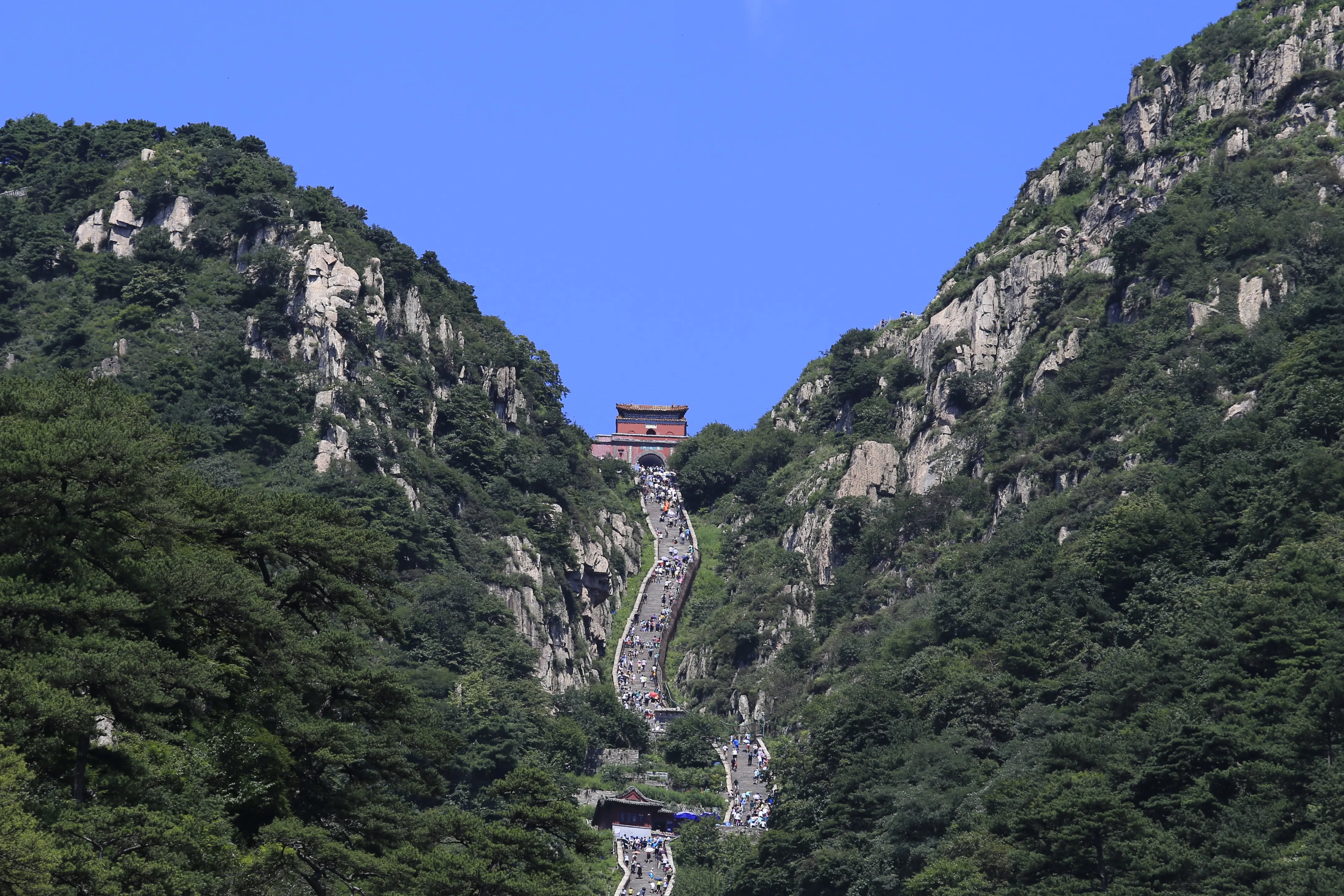
From the South Gate of Heaven you walk Tianjie, the Heavenly Street, past the noodle stalls and the coat-rental shops, and then another 20 to 30 minutes to Jade Emperor Peak at 1,532 m, which is the actual top.
If your fitness is a question mark, do not guess. Take Dongyudao up, or take the cable car down. The descent from Nantianmen does more damage than the climb.
The ones that are not Hongmen
Dongyudao, the Imperial East Road, is the answer nobody expects. It follows the old Han-dynasty approach on the east slope, about 5 km and 4,000-plus steps to Zhongtianmen with a gentler gradient and tree cover most of the way. Entry is roughly 08:00 to 16:00 and it closes at night. It is the quietest way onto the mountain and the best one for a slow walker.
Tianwaicun is the efficient route. A shuttle bus from the Tianwaicun gate climbs to Zhongtianmen in 20 to 30 minutes, and from there the cable car takes you to Nantianmen in about ten. If you are travelling with children or grandparents, this is the one. You skip the temples, the inscriptions and the Eighteen Bends, and you are on the summit within two hours of leaving your hotel.
Taohuayu, the Peach Blossom Valley, is the west-slope route and the one locals use on spring weekends, when the valley fills with blossom and the crowds go elsewhere. It has its own bus and its own cableway to Nantianmen, plus a long walking option if you want the whole 10 km.
Tianpinghu is not really a trailhead. It is a transfer hub about 7 km from the high-speed station with a large car park, useful if you arrive by train or drive and want to leave the car somewhere sensible.
Tianzhufeng is the rear-mountain path for people who want to see nobody. It is the least developed of the six and pairs with the short Houshiwu cableway.
The night climb and the sunrise
Hongmen is the only gate that stays open through the small hours, so the night climb is not a choice. It is Hongmen or a hotel.
The standard plan is to start walking between 22:00 and 23:00, reach Zhongtianmen around 01:00 for a break and a bowl of instant noodles, and be on the summit by 04:00 or 05:00 with time to find a spot. Work backwards from the sunrise, not forwards from bedtime.
| Season | Months | Sunrise | Leave Hongmen around |
|---|---|---|---|
| Spring | March to May | 05:30 to 06:00 | 23:00 |
| Summer | June to August | 04:30 to 05:00 | 22:30 |
| Autumn | September to November | 06:00 to 06:30 | 23:30 |
| Winter | December to February | after 07:00 | 00:30 |
Those departure times assume four to five hours of walking plus a buffer, which is what most people need. A fit hiker will be early and stand around in the cold. A slow one will be late and watch the sky brighten from somewhere near the Eighteen Bends, which is not the same experience.
Two things about the dark. There are no lights on the lower stretch between Hongmen and Zhongtianmen, so a headlamp is not optional. And the summit is 8 to 10 degrees colder than the base, with wind on top of that. Padded military coats are rented near Nantianmen and along Tianjie for somewhere between 20 and 60 yuan depending on how cold it is and how late you ask. Take the offer.
The best places to stand are Riguan Peak, Jade Emperor Peak and Zhanlu Terrace, all within a few minutes of one another. On a peak holiday the summit fills from about 03:00 and the front rows are gone by 04:00.
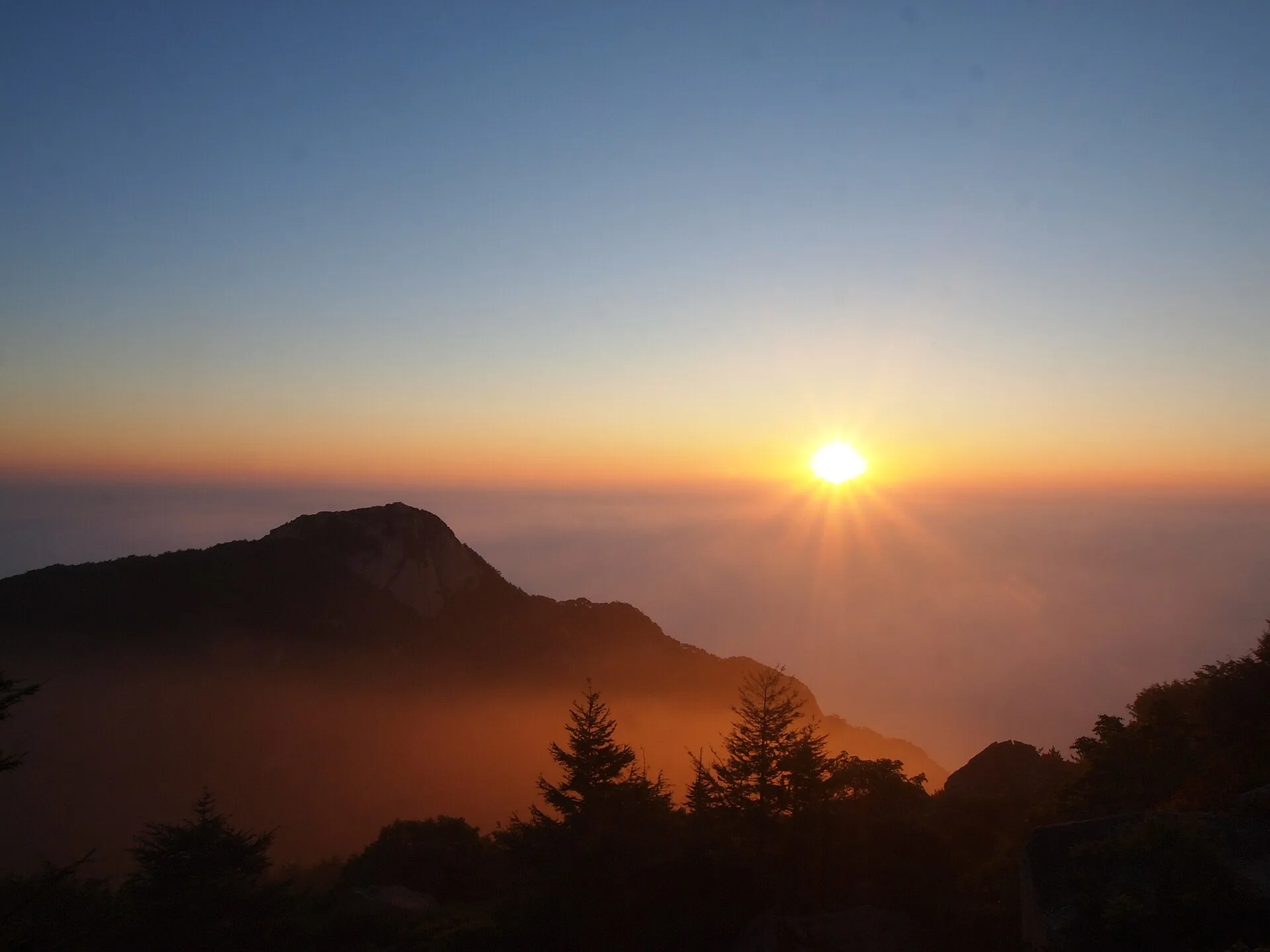
Now the honest part. Mount Tai’s sunrise is a lottery, and the mountain is famous for the sea of clouds that sits under it when you win. The odds are best after rain followed by a clear, cold night, which is why September to November and the tail of winter are the seasons people recommend. In July and August you often climb all night for a hazy orange smear. It is still worth doing. Just do not build the entire trip around it.
Sleeping up there instead
If a 22:00 start sounds worse than a hotel bill, sleep on the summit. There is a cluster of guesthouses around Tianjie and Nantianmen, plus a few rooms closer to Jade Emperor Peak.
Be clear about what you are buying. Beds up there are limited to well under a thousand in total, the rooms are basic, and prices climb steeply in peak season. In exchange you walk up in daylight, eat dinner at 1,500 m, sleep for five hours, and stroll ten minutes to the sunrise in a down jacket. You then take the cable car down at 06:00 or later and keep your knees.
There is a middle option, which is to stay at Zhongtianmen and walk the last two hours in the dark. It halves the night walking but you still arrive tired, and you miss the lower temples anyway.
Cable cars and shuttle buses: what they cost and when they run
| Item | Price | Notes |
|---|---|---|
| Admission ticket | 115 yuan peak, 100 yuan off-season | valid three days, unlimited entries, includes the Dai Temple in Tai’an |
| Zhongtianmen cableway | 100 yuan one way | Zhongtianmen to Nantianmen, about 10 minutes |
| Taohuayuan cableway | 100 yuan one way | west slope to Nantianmen |
| Houshiwu cableway | 20 yuan one way | short rear-mountain link, closed in winter |
| Tianwaicun to Zhongtianmen bus | 30 to 40 yuan one way | 20 to 30 minutes; sources disagree on the exact fare |
| Taohuayu to Taohuayuan bus | about 30 to 40 yuan one way | west slope |
| Tianzhufeng to Houshiwu bus | 15 yuan one way | rear mountain |
A full assist day, meaning bus up, cable up, cable down, bus down, comes to about 385 yuan including admission. Walking the whole thing costs 115 yuan and a lot of thigh.
Since late March 2026 the cableways have run on seasonal hours: Zhongtianmen from 06:00 to 17:30, Taohuayuan from 06:30 to 17:00, with longer hours during national holidays. All of them stop in high wind, ice, thunder and heavy rain, sometimes with no notice at all.
The maintenance calendar matters more than the timetable. The Taohuayuan cableway was closed for scheduled maintenance from 30 March 2026 and again from 25 May to 12 June 2026. During that June window the park kept five lines open instead, three served by bus and two on foot, and folded the west-slope route out of the map entirely. If you were planning Taohuayu on one of those days, you found out at the gate.
The habit that saves you: check the operating notice on the Taishan Scenic Area account the day before you travel, not the week before. Assignments change with the weather and third-party booking sites update last.
Tickets, and the passport problem
Admission is 115 yuan in peak season and 100 yuan off-season, and it is valid for three days with unlimited entries, which means you can split the climb, or come back the next morning for a second attempt at the sunrise. The ticket includes the Dai Temple in Tai’an city, which is where the emperors stopped to worship before they started walking. Skip it and you have skipped the first chapter.
The price is set by Shandong’s development and reform commission, whose current notice runs to 31 December 2026. Some Chinese self-media accounts published claims of a rise to 135 yuan in July 2026. I could not find a matching official announcement, and the price document that governs this year has not been replaced. Treat the higher figure as unverified and confirm on the official account before you budget.
Students and 6 to 18 year olds pay half, so 57 yuan in peak season. Children under 1.4 m, older visitors, serving and retired military personnel, and visitors with disabilities are free or heavily discounted, but everyone still needs a zero-yuan reservation. Bring the original document, not a photo.
Which brings up the part that trips up international visitors. Mount Tai does not sell tickets at the gate. Everything runs on real-name reservations through the Taishan Scenic Area WeChat account or its mini-program, tied to a date, a time slot and a named entrance. Slots are released about a week ahead, and around Golden Week they are gone in days.
If you are booking on a passport, choose passport as your ID type. In practice many passport holders are asked to complete a manual verification at the visitor centre before entering, which means the physical passport and a few extra minutes. Several English-language platforms resell the same reservation with a foreign card accepted, which is easier, costs a little more, and is what most people reading this should probably do. Our guide to booking Chinese park tickets with a passport covers the mechanics in more detail, and they work the same way here.
Getting there
Tai’an has two stations and they are easy to confuse.
Taishan Station (泰山站) is the old city-centre station, for conventional trains, and it sits about 3 km from the Hongmen trailhead. Bus 3 goes there. On a clear day you can see the South Gate of Heaven and the Eighteen Bends from outside the exit, which is a good way to size up what you have agreed to.
Tai’an Station (泰安站) is the high-speed station on the Beijing-Shanghai line, west of the city and roughly 12 km from Hongmen. Bus 37 runs to Hongmen and to Tianwaicun. A taxi is about 35 yuan and takes around 40 minutes.
| From | Time | Second class |
|---|---|---|
| Jinan | 16 to 47 minutes | about 25 yuan |
| Beijing South | 1 hour 40 to 2 hours 40 | about 214 yuan |
| Shanghai Hongqiao | about 3 hours | about 350 yuan |
Jinan is the obvious base if you are building a Shandong trip, and the trains are so frequent that you can treat Tai’an as a day trip. Book on Trip.com or the 12306 app with your passport. Our China high-speed rail guide covers seat classes and the passport-reading gates.
When to go
Mid-September to early November is the best window. Clear air, cold nights, decent odds on the cloud sea, and the mountain at its most comfortable.
May and June are the second choice, warm at the base and green all the way up.
Avoid Golden Week, the first week of October, and Labour Day at the start of May. The Eighteen Bends becomes a single-file queue in both directions, which is genuinely dangerous on a staircase that steep. If your dates are fixed by a holiday, read the China holiday calendar guide and give yourself the early morning.
July and August are hot and humid, and the haze that settles over the North China Plain flattens the sunrise you climbed all night for. Winter is the opposite: few people, rime ice on the pines, and a sunrise that arrives after 07:00, with summit temperatures that can reach minus 20 and wind to match. The cable cars close more often in winter too.
What to carry
The China packing guide covers the general kit. For Mount Tai specifically: a headlamp, because the lower Hongmen stretch has no lighting; a windproof layer, because the summit runs 8 to 10 degrees colder than the base; shoes with grip, because polished granite plus rain equals a fall; and a wooden stick, which costs 2 to 5 yuan near the gate and saves your knees on the way down. Add a power bank, cash for the small vendors, and a passport, which is your ticket.
Water and instant noodles get more expensive the higher you go, which is fair, since someone carried them up. Free hot water is available at the rest stops, so a small flask is worth the weight.
If you are comparing this with the other big mountain trips, our Huangshan guide makes the contrast clear: Huangshan is 60,000 granite steps through mist and pines, Mount Tai is one long, straight, carved staircase through two thousand years of other people’s handwriting. Both are worth a trip. Only one of them is a stairway to a temple that emperors climbed to tell heaven they were in charge.
Frequently asked questions
Which entrance should I use to climb Mount Tai?
Hongmen if you want the classic full climb or a night ascent. Tianwaicun if you want the bus and cable car and the shortest day. Dongyudao if you want a quiet forest walk with no crowds. Taohuayu for spring scenery and self-driving. Tianzhufeng for the empty rear slope.
Can I climb Mount Tai at night?
Yes, from Hongmen, which is the only route that stays open through the small hours. The others close in the afternoon. Most people start between 22:00 and 23:00 and reach the summit around 04:00 to 05:00 for sunrise.
Do the Mount Tai cable cars run at night?
No. The Zhongtianmen cableway runs from 06:00 to 17:30, and the Taohuayuan line from 06:30 to 17:00. A sunrise ascent is on foot. If you sleep on the summit you can ride the cable car down after 06:00 and save your knees.
How much does Mount Tai cost in 2026?
Admission is 115 yuan in peak season and 100 yuan off-season, valid three days with unlimited entries and including the Dai Temple in Tai’an. Add about 35 yuan for the Tianwaicun shuttle bus and 100 yuan for each cable car leg if you ride rather than walk.
Do I need to book Mount Tai in advance?
Yes. Entry is real-name and there are no walk-up tickets. Reservations are made on the Taishan Scenic Area WeChat account, tied to a date, a time slot and a specific gate, and released about a week ahead. Passport holders usually need a manual check at the visitor centre with the physical passport.
Which railway station is closest to Mount Tai?
Taishan Station, despite the name, is the old city-centre station for conventional trains and sits about 3 km from the Hongmen trailhead. Tai’an Station is the high-speed station west of town, roughly 12 km from Hongmen. Bus 3 serves Hongmen from Taishan Station, Bus 37 from Tai’an Station.