Where to Stay in Shanghai: 6 Neighborhoods for Every Traveler
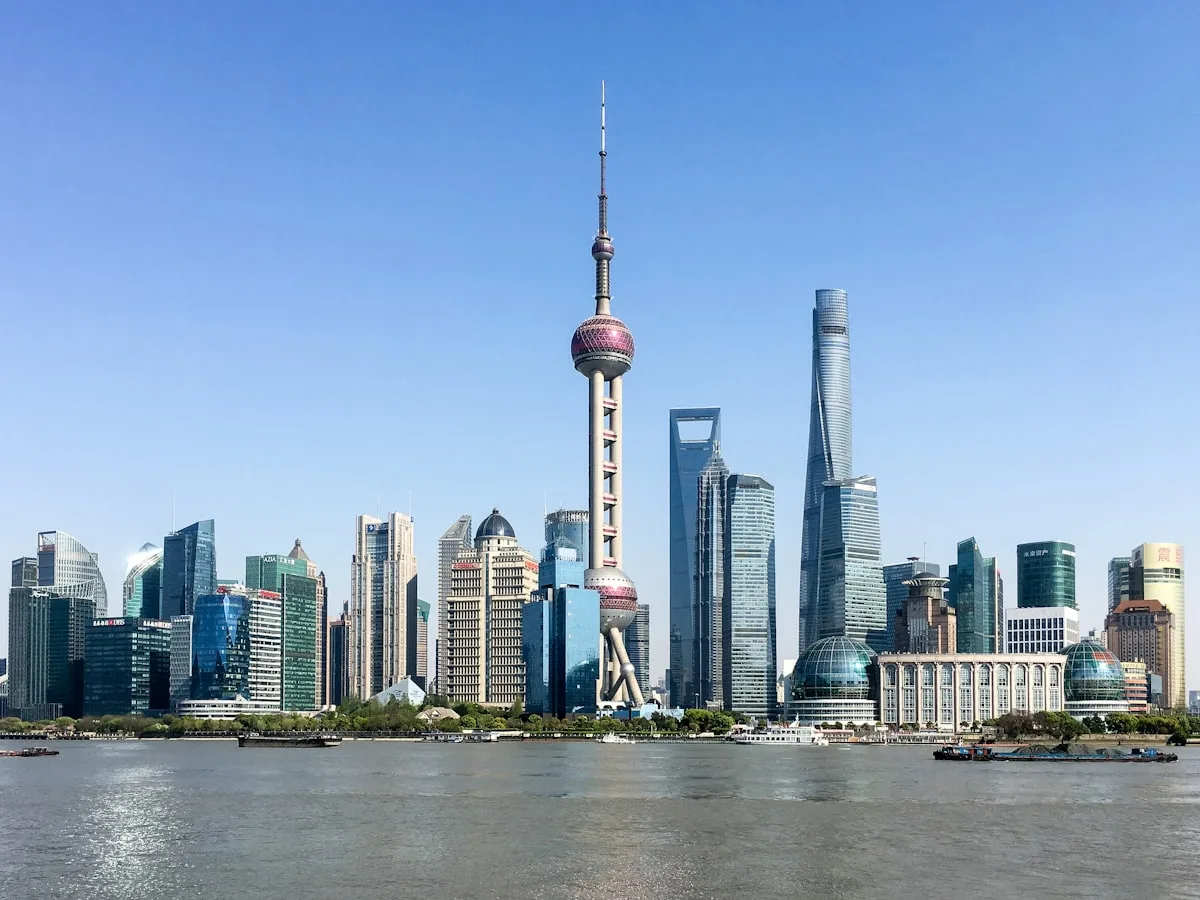
Shanghai is six different cities sharing one metro map. The neighborhood you sleep in determines which version you experience: the 1920s lane-house romance, the glass-tower luxury, the old-town chaos, or the tree-shaded café streets that feel more Paris than Pudong.
Pick wrong and you spend ¥80 on Didi every day. Pick right and you walk to breakfast through streets lined with plane trees, past Art Deco apartment blocks, with a jianbing in one hand and your morning coffee materializing three blocks later.
This guide covers six neighborhoods that work for international travelers. Each comes with the trade-offs spelled out, because no Shanghai neighborhood does everything.
Quick decision table
| Your priority | Pick this neighborhood | Metro lines |
|---|---|---|
| First time, want the iconic skyline and walkability | The Bund | 2, 10 |
| Tree-lined streets, vintage shops, good coffee | Former French Concession | 1, 7, 10, 12 |
| Upscale shopping, central, polished | Jing’an | 2, 7, 14 |
| Nightlife, dining, nightlife again | Xintiandi | 1, 10, 13 |
| Quiet residential streets, fewer tourists, lower prices | Changning | 2, 10, 11 |
| Old Shanghai street life, street food, raw authenticity | Laoximen / Yu Garden | 8, 10 |
One rule before the details: stay within 500 meters of a metro station. Shanghai summers are humid enough to wilt a shirt in ten minutes. Winters are damp and cold in a way that seeps through coats. A 20-minute walk on Google Maps becomes 35 with the wrong shoes and a dead phone. The metro costs ¥3-9 per ride and every station has English signage. Build your trip around it.
The Bund: the skyline you came for
The Bund is Shanghai’s postcard. Huangpu River on one side, the Pudong skyline on the other, and a row of 1920s Art Deco bank buildings behind you. Staying here puts the Oriental Pearl Tower, Nanjing Road, and the ferry to Lujiazui within walking distance. If your trip is three days and you want the Shanghai that lives on Instagram, this is where you sleep.
The hotel range leans high-end. The Waldorf Astoria occupies a restored 1911 club building. The Peninsula has a rooftop bar that makes you feel richer than you are. At the accessible end, the Captain Hostel on Fuzhou Road offers dorm beds from ¥120 and private rooms with Bund-view terraces from ¥500. It is the best-value Bund-adjacent sleep in the city, and it books out weeks in advance. Compare Bund hotels on Trip.com to see what is available for your dates.
The trade-off is noise and cost. The Bund promenade fills with domestic tour groups by 9am. Nanjing Road pedestrian street is a human river of shopping bags and selfie sticks from morning until 10pm. Restaurants in the immediate radius are overpriced and mediocre. Walk three blocks inland toward Beijing East Road and both the food and the prices improve sharply. Most visitors never do that. You should.
Metro: Line 2 (Nanjing Road East) and Line 10 (Yuyuan Garden) bracket the Bund. Both connect to Hongqiao Railway Station and Hongqiao Airport. Pudong Airport requires a transfer at Nanjing Road East to Line 2 all the way east.
Former French Concession: the neighborhood you will not want to leave
The French Concession is the Shanghai that people move here for. Plane trees form a green tunnel over Wukang Road. Old lane houses with wrought-iron balconies sit next to sleek coffee shops. Bicycles outnumber cars on the side streets. It is quiet in a way that a city of 25 million has no right to be.
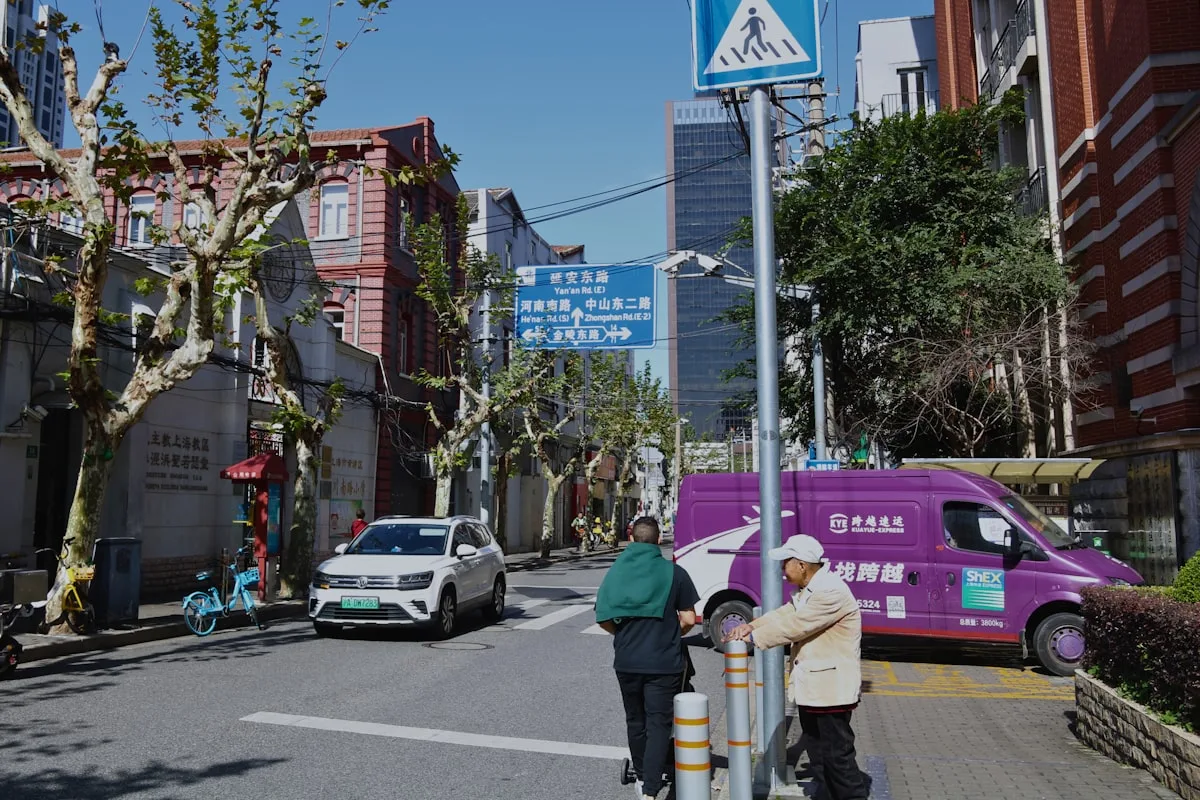
This is not one neighborhood. It is a belt running from Fuxing Park in the east to Shanghai Library in the west, bounded roughly by Huaihai Road to the north and Zhaojiabang Road to the south. The sweet spots within it: Wukang Road and Anfu Road for the lane-house-and-coffee-shop density; the area around Shanghai Library for a slightly quieter, more residential feel; and South Shaanxi Road for access to the metro plus the IAPM mall when you need air conditioning and a supermarket.
Accommodation here means boutique hotels in converted lane houses and Art Deco apartment blocks. The Mansion Hotel on Xinle Road occupies a 1932 building with a courtyard garden. The Puyi Hotel on Wukang Road is a six-room conversion with original wood floors and a spiral staircase that has not changed since the 1930s. At the budget end, the Blue Mountain Youth Hostel on South Shaanxi Road charges ¥90-150 for a dorm bed. At the top end, the Middle House in Taikoo Hui and the Capella in the old Jian Ye Li estate are genuinely exceptional, with prices that reflect it.
The trade-offs: lane-house conversions come with quirks. Soundproofing between floors ranges from acceptable to nonexistent. Elevators are rare in buildings under five stories. Hot water pressure varies by floor. In winter, heating may come from a split-unit air conditioner rather than central radiators. This is part of the romance until it is 2am and you can hear every footstep from the room above you.
Also: the French Concession is not on a single metro line. It is served by four lines at its edges — Lines 1, 7, 10, and 12 — but you will walk 10-15 minutes from the station to reach the deeper residential streets. In June through September, that walk is sticky. In January, the damp cold makes it feel longer. Most people who stay here decide the trade-off is worth it. Most people extend their stay by a day or two.
Jing’an: polished, central, and connected to everything
Jing’an is the sensible choice that does not feel like a compromise. Centered around Jing’an Temple and running north toward Suzhou Creek, it is Shanghai’s second commercial core after Lujiazui, but more walkable and more interesting at street level. You get the mall-and-office towers on Nanjing West Road, then two blocks south the streets turn residential and fill with noodle shops, fruit stands, and old men walking caged songbirds.
The hotel stock is broad. The Jing’an Shangri-La and the Puli are the luxury anchors. At mid-range, the Atour Light near Jing’an Temple runs ¥400-600 per night with consistent quality. Near Suzhou Creek, the Sukhothai and several URBN-brand hotels offer design-forward rooms starting around ¥700. Budget options cluster near the Shanghai Railway Station area: Hanting, Home Inn, and Jinjiang Inn all have locations under ¥300.
Jing’an’s main advantage is metro connectivity. Line 2 runs east-west through the heart of the neighborhood, reaching the Bund in 10 minutes, Lujiazui in 15, and Hongqiao in 40. Line 7 runs north-south, connecting to the French Concession and the Expo area. Line 14, the newest addition, connects Jing’an to both Pudong and the western suburbs without the crush of Line 2. If you plan to move around Shanghai a lot, Jing’an’s metro position saves you real time.
The trade-off is personality. Jing’an is pleasant, clean, and functional. It does not have the French Concession’s lane-house charm or the Bund’s skyline drama. It is a place you stay, not a place you photograph. For some travelers, that is exactly the point.
Xintiandi: nightlife and polished heritage
Xintiandi is what happens when a developer restores a block of 19th-century shikumen houses and fills them with cocktail bars, designer boutiques, and restaurants where the bill for two people exceeds ¥500 before you order wine. It is Shanghai’s most photographed dining-and-drinking precinct, and staying nearby means you walk home after your last drink instead of negotiating with a Didi driver at midnight.
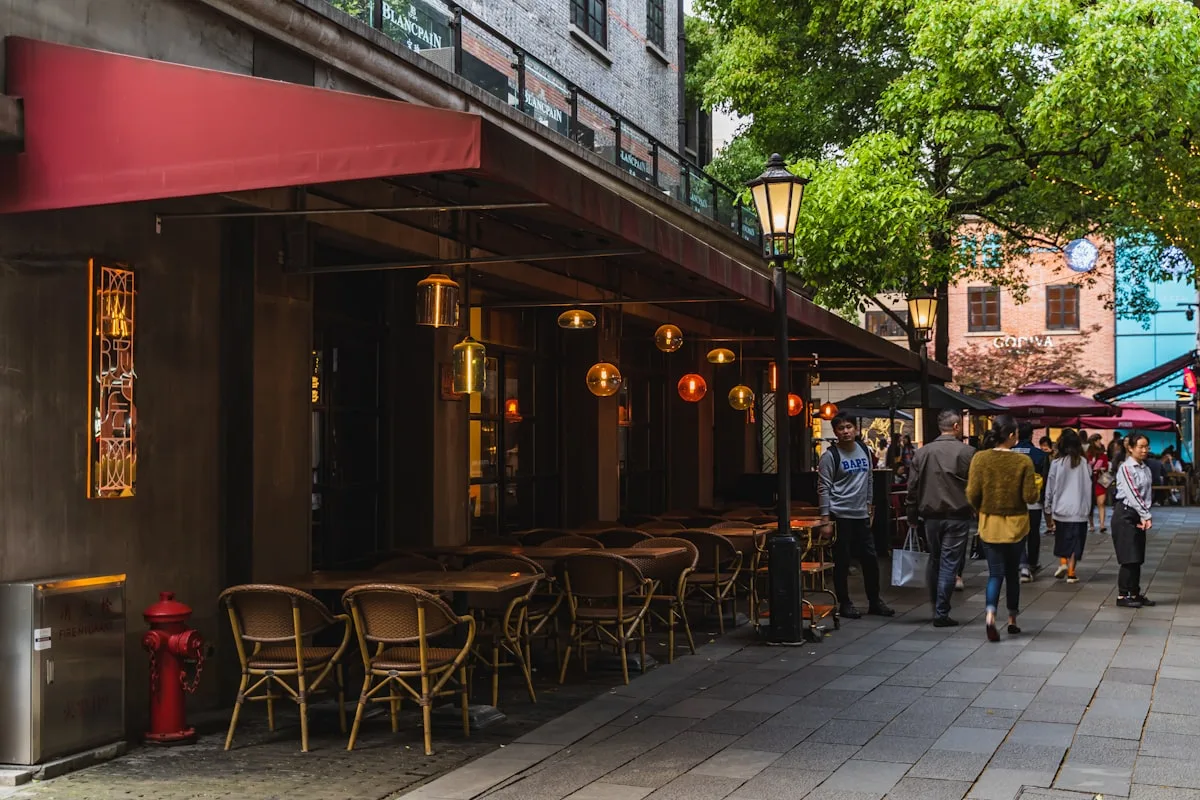
The hotel scene is led by the Langham, which occupies two restored shikumen blocks and connects directly to the Xintiandi pedestrian zone. The Andaz, one block north on Huaihai Road, offers a more contemporary take at slightly lower prices. For mid-range, hotels along South Huangpi Road and Madang Road in the ¥400-700 bracket put you within a 10-minute walk of both Xintiandi and the French Concession. Budget beds are harder to find directly in the area; the nearest hostels are east of People’s Square, a 15-minute metro ride away.
The metro advantage is real. Xintiandi station (Lines 10 and 13) and South Huangpi Road (Line 1) cover most of the city. The French Concession is one stop south. The Bund is two stops east on Line 10. Jing’an is two stops north. You lose very little time to transit.
The trade-offs: Xintiandi itself is expensive and touristy. The restaurants inside the central pedestrian block are fine but overpriced. Walk east toward the streets behind the Lakeville estate for local noodle shops and dumpling houses at a quarter of the price. At night, the area stays loud until the bars close. Ask for a room facing away from Taicang Road.
Changning: the neighborhoods where Shanghai actually lives
Changning stretches west from Jing’an, covering Zhongshan Park, Hongqiao, and the residential streets around the Shanghai Mart. This is not a visitor district. It is where Shanghai’s middle class lives, where the wet market opens at 6am, and where the best food in the city hides in plain sight on streets with zero English signage.
The hotel value here is excellent. The Renaissance Zhongshan Park hovers around ¥600-800 and sits directly above a metro interchange. The Hongqiao area has a cluster of international-brand hotels (Marriott, Hyatt Place, Cordis) priced ¥200-400 below their Bund equivalents. Further out near Gubei, the residential hotels cater to long-stay business guests and offer large rooms, kitchenettes, and genuine quiet.
Changning’s appeal is immersion. You wake up to the sound of neighbors opening their shutters. Your breakfast options are whatever the street carts and hole-in-the-wall shops are selling. Nobody speaks English. Nobody tries to sell you anything. You are just a person in Shanghai, not a tourist in Shanghai.
The trade-offs are distance and language. Changning is west of the core. The Bund is 30 minutes by metro. The French Concession is 20 minutes. Lujiazui is 40. The airport transfer is excellent — Hongqiao Airport and Railway Station are both inside Changning — but getting to the sights adds up. English infrastructure is minimal outside the hotel lobbies. Bring your translation app and a sense of direction. For travelers on a second or third China trip, or anyone who has already seen the Bund and wants something different, Changning delivers something the central neighborhoods cannot: normalcy.
Laoximen and the Old City: street life at full volume
Laoximen, the Old City, and the streets around Yu Garden are Shanghai before the skyscrapers. Narrow lanes. Wet markets where fish are still swimming. Elderly residents in pajamas playing mahjong on folding tables. Noodle shops that have been in the same family for three generations. It is loud, chaotic, and real in a way that the French Concession’s curated café streets are not.
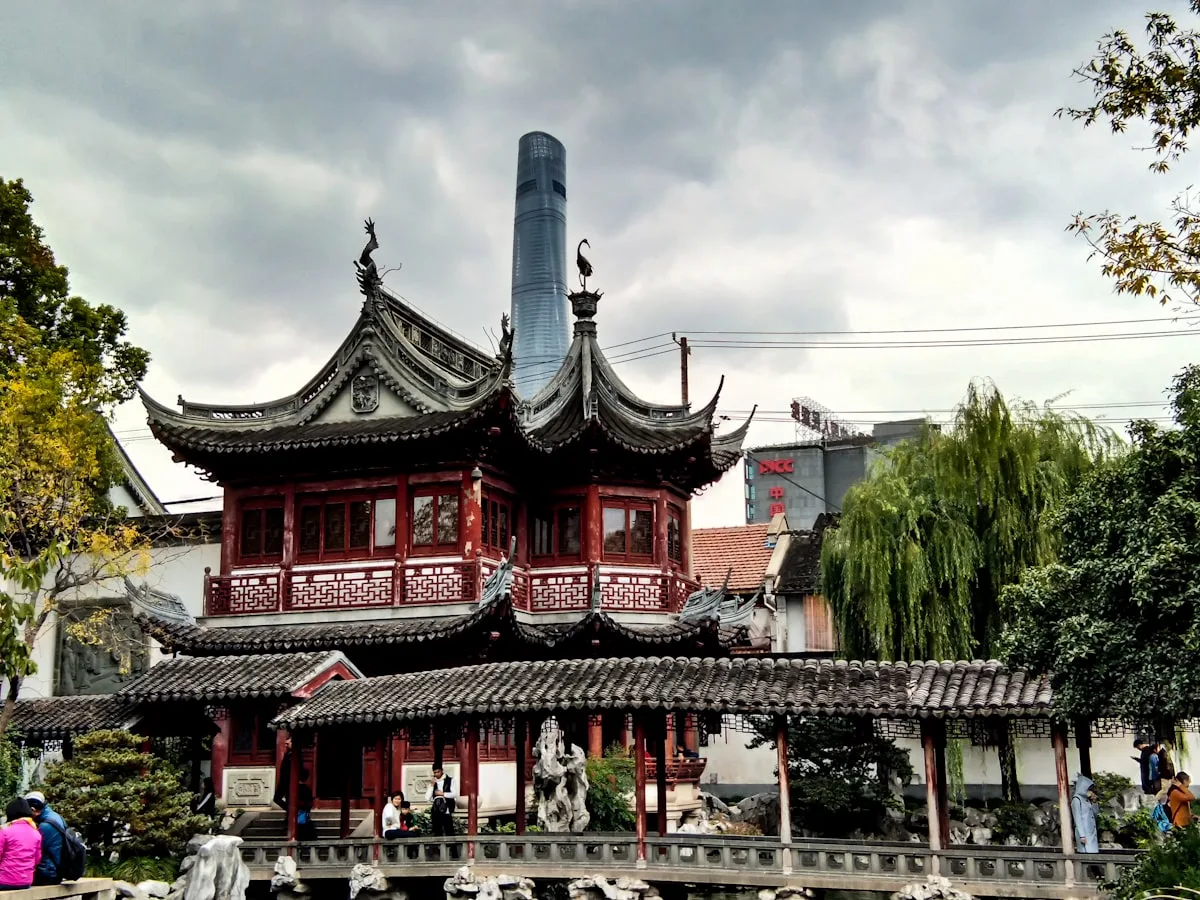
Accommodation here splits two ways. Near Yu Garden, the hotels cater to domestic tour groups: large, functional, and arranged around the garden entrance. The Renaissance Yu Garden and the Indigo on the Bund (technically on the southern Bund edge, within walking distance of the Old City) are the international options. Deeper in the Laoximen lanes, there are guesthouses and small courtyard conversions that are harder to find online. Look on Trip.com with the “guesthouse” filter and read the recent reviews carefully. Some of these places are wonderful. Some have bathrooms that share a wall with a chicken coop. The difference matters.
The metro access is adequate. Line 8 (Laoximen station) and Line 10 (Yu Garden station) connect the area to the rest of the city. The walk to the Bund from the Old City is 15-20 minutes on foot, which skips the metro entirely for Shanghai’s most famous sight.
The trade-offs: the Old City is loud, especially in the early morning. If your room faces the street, you will hear it by 5:30am. English is nearly nonexistent outside hotel lobbies. The area around Yu Garden is a tourist circus during the day and a ghost town after 9pm. The neighborhoods east of Henan Road and south of Fuxing Road are more residential and more interesting, with better food at half the price. Those blocks are where you actually want to be, not the Yu Garden entrance plaza.
Practical notes that apply everywhere
Metro proximity comes first. A Marriott in a boring neighborhood above a Line 2 station beats a charming lane-house guesthouse with a 25-minute walk to the nearest metro. Shanghai’s blocks are long, the humidity is real from May through September, and your feet will already be logging 15,000 steps a day. Filter for “within 500m of a metro station” before you filter for anything else.
Save the hotel’s Chinese address. Screenshot it from Trip.com. Your Didi driver cannot read pinyin. Show them the Chinese characters and the problem dissolves in three seconds. Do this before you leave the airport, not after you are standing on a curb at 11pm with a dead phone and a confused driver.
Old buildings mean old building problems. Shanghai’s lane houses, Art Deco apartments, and converted shikumen houses are beautiful and imperfect. Floors creak. Walls are thin. Hot water pressure varies. Elevators are absent in buildings under five stories. If your trip depends on soundproof walls, blackout curtains, and a gym, book a modern hotel. The lane-house experience is for people who value character over predictability. If you are not one of those people, that is fine. Just know before you book.
Book your first night before you land. Not every Shanghai hotel accepts international guests. The May 2024 reform removed the license requirement, but implementation is incomplete. Search Shanghai hotels on Trip.com — the site clearly labels which properties accept passports. Use their filter. For more detail, read the China hotel booking guide.
Heating and cooling are not guaranteed. Central heating is standard in newer hotels but inconsistent in older buildings and lane-house conversions. In winter (December through February), confirm the heating situation before booking. In summer, confirm the air conditioning works and is not a single unit mounted in a hallway. Shanghai summers hit 35°C with 90% humidity. You will care about the AC.
Payment setup matters here. Shanghai is nearly cashless. Set up Alipay with your international card before you arrive. The China mobile payment guide covers the exact steps. Do it at home, on WiFi, before your flight. The airport setup counters exist, but the WiFi is unreliable and the line is long.
Bottom line
First trip and three days: stay near the Bund. You came for the skyline. Sleep near it.
First trip and a week: split your stay. Three nights on the Bund, four in the French Concession. You get both versions of Shanghai in one trip.
Been to Shanghai before: Changning or the streets south of Laoximen. The landmarks are no longer your priority. The city itself is what you came back for.
Nightlife is your focus: Xintiandi. Walk home from the bar. No Didi. No negotiation.
Good coffee, vintage shopping, Instagram-worthy streets: French Concession. This is not a close call.
Whatever you choose, stay within 500 meters of a metro station. In Shanghai, the metro is the great equalizer. Everything else is negotiation. For navigating the system, the China subway guide covers Shanghai’s metro in detail. Hungry after checking in? The Shanghai food guide covers everything from street stalls to fine dining.