China on a Budget: Where to Find Cheap, Welcoming Stays

The budget trap
Here is something most budget travel guides will not tell you about China: the cheaper the hotel, the higher your odds of getting turned away at the front desk.
A 2024 policy change officially allows all Chinese hotels to accept international travelers. In practice, many budget hotels never updated their licenses, never installed the PSB registration equipment, and never trained their staff. A $12 room means nothing if the night manager stares at your passport with panic and says “mei you” (we do not have it), meaning they cannot check you in. For the full breakdown of why hotels turn foreign travelers away and the step-by-step recovery playbook, read our China accommodation guide for foreigners.
This guide covers what actually works on the ground: which hostels reliably accept international guests, which domestic budget chains are safe to book, what capsule hotels cost, and how to pay when the card reader does not recognize your Visa.
Prices are in US dollars (approximate yuan conversions at 7.2 CNY/USD). Budget range: roughly $7 to $40 per night.
Hostels: China’s best budget option
Hostels in China fall into two camps: IYHA-affiliated ones that accept international travelers by policy, and independent ones that may or may not.
Always book an IYHA (International Youth Hostel Federation) affiliate. These hostels are inspected, licensed, and required to accept international guests. They are also the most likely to have English-speaking staff, Western-style toilets, and someone who can write your address in Chinese for a Didi driver.

Specific hostels that consistently work:
| City | Hostel | Dorm bed | Private room |
|---|---|---|---|
| Beijing | Peking International Youth Hostel (北平国际青年旅舍) | $10-14 | $30-35 |
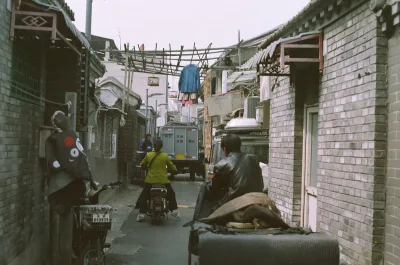
| Beijing | Peking Yard Hostel (北平小院国际青旅) — hutong courtyard converted to hostel | $12-15 | $30-35 |
| Shanghai | Blue Mountain Youth Hostel (蓝山国际青旅) | $8-12 | $25-30 |
| Chengdu | Flipflop Hostel (成都拖板鞋青年旅舍) | $7-10 | $20-28 |
| Xi’an | Seven Sages Youth Hostel (西安七贤国际青年旅舍) | $8-12 | $25-30 |
| Yangshuo | Yangshuo Sudder Street Guesthouse | $6-10 | $18-25 |
Book hostels through Trip.com. Hostelworld and Booking.com have thinner China coverage and some listings are years out of date. Trip.com shows real-time availability and the critical filter: “Foreign Guests Accepted.” If that filter label is not visible on the listing, call before booking.
Hostels in China are genuinely good: cleaner than their Southeast Asian equivalents, with solid Wi-Fi, hot showers, and common areas where travelers trade tips. In smaller cities, the hostel sometimes doubles as the only English-speaking information point in town. Private rooms in hostels ($20-35) give you a door that locks at half the price of a nearby chain hotel.

One downside: Chinese hostels are not party hostels. The common area goes quiet after 10 or 11 PM. If your travel style involves late-night socializing, you will find the atmosphere more library than bar.
Domestic budget chains that work
China has five nationwide budget chains worth knowing. They are not charming, but they are consistent, and consistency is what you need at 11 PM when your first-choice hotel turns you away.
| Chain | Price/night | Reliability | Notes |
|---|---|---|---|
| Hanting (汉庭) | $20-35 | Highest | Huazhu group. Widest coverage. The safest budget pick. |
| Haiyou (海友) | $15-22 | High | Huazhu brand. Self-check-in kiosks at newer locations. Small rooms. |
| Home Inn (如家) | $15-30 | Medium | Some branches refuse international guests. Check before booking. |
| 7 Days Inn (7天) | $14-28 | Medium | Similar caveat: check the “Foreign Guests Accepted” label. |
| City Convenience (城市便捷) | $18-30 | Medium-high | Growing brand, newer buildings, better bathrooms. |
Hanting is the workhorse. There is likely a Hanting within 500 meters of wherever you are going. Rooms are small (18-22 sqm), decor is forgettable beige, but the hot water works, the bed is firm, the Wi-Fi connects, and they check you in without drama. For most budget travelers, that is all that matters.
Haiyou is Hanting’s cheaper sibling; rooms can be as small as 10 sqm, with the bed pushed against the wall like a ship cabin. Some newer locations have self-service check-in kiosks, which eliminate the human interaction entirely. If you arrive late and do not speak Chinese, a kiosk is a gift.
Home Inn and 7 Days Inn are fine when they work, but both have franchise locations with aging licenses that never got updated for international guests. When in doubt, book through Trip.com and only pick listings with the “Foreign Guests Accepted” tag visible. For more on the verification process, see the hotel booking guide, which covers the five-tier safety hierarchy and the pre-booking checklist.
Capsule hotels and new formats
Capsule hotels in China are not Tokyo-level design objects, but they serve a specific purpose: cheap crash space near transport hubs.
Airport and train station capsules run $5-12 for a 2-4 hour block or $15-25 overnight. Think of them as a reclining seat in a private box rather than a hotel room. Shared bathrooms, no luggage storage beyond a small locker, and walls thin enough to hear your neighbor’s phone vibrate. But at 1 AM with a 7 AM flight, a flat surface and a curtain are worth the money.
A newer format worth knowing: study-sleep capsules attached to 24-hour co-working spaces. These show up in university districts in Chengdu and Hangzhou. For $12-18 you get a sleeping pod plus desk access, tea, and decent Wi-Fi. They are designed for Chinese students cramming for exams, but they work equally well for a digital nomad on an overnight layover. The downside: almost zero English signage, and you will need a translation app to navigate check-in.
The local price gap
Chinese booking platforms (Meituan and Ctrip’s Chinese-language site) show rooms at 60-70% of Trip.com’s price for the same property. This is not a secret markup; it is a different pricing tier for a different market.
You cannot book on Meituan. It requires a Chinese ID number to create an account. Having a Chinese friend book for you introduces a separate problem: the hotel registration system matches the booking name to the passport at check-in, and a third-party name creates confusion that budget hotel staff are not trained to resolve.
For a first-time visitor, the Trip.com premium is worth paying. It is effectively an insurance policy against a 10 PM check-in argument in a language you do not speak. Seasoned travelers who speak some Chinese can try booking directly at the front desk for walk-in rates; in smaller cities, this sometimes undercuts even Meituan prices, because the hotel avoids the platform commission.
Small city budget crunch
Tier 3 and 4 cities (think Pingyao, Datong, Jingdezhen, Guizhou villages) have genuinely few budget options that accept international travelers. The local $12 guesthouse with good reviews on a Chinese platform is almost guaranteed to turn you away.

Strategy for small cities:
- Book the best local chain hotel, even if it is $10-15 over your budget. A $35 Hanting in Datong is better than a $15 guesthouse that cannot check you in.
- Day-trip from a larger base. Pingyao is 3.5 hours from Xi’an by high-speed rail. Jingdezhen is 2.5 hours from Hangzhou. In both cases, you can sleep in a reliable chain hotel in the larger city and visit the smaller one as a day trip.
- If you must stay overnight, use Trip.com and sort by the “Foreign Guests Accepted” filter. If zero results appear, call the best-reviewed hotel directly and ask. Some will say yes even though the filter does not say so.
In the major cities (Beijing, Shanghai, Chengdu), this is not an issue. For neighborhood-specific recommendations in those cities, see the Beijing where to stay and Shanghai where to stay guides.
Payment at budget hotels
Budget hotels in China rarely accept international credit cards. A Hanting front desk will swipe your Visa, look confused, and ask “WeChat or Alipay?”
Set up Alipay or WeChat Pay before you arrive. Both now accept foreign cards, and the setup takes about 15 minutes. The digital survival guide walks through the setup step by step.
Cash always works; Chinese law requires all businesses to accept RMB cash. The catch: budget hotels may not have change for a ¥100 note (about $14). Carry ¥20 and ¥50 notes. Some hotels ask for a ¥100-200 cash deposit, returned at checkout after a room inspection. This is normal; it is not a scam.
What actually matters
China’s budget accommodation is better than its reputation and worse than its marketing photos. The bed will be firmer than you expect. The shower will have good water pressure. The front desk person may or may not speak English, but they will almost certainly try to help: pointing, translating on their phone, writing bus numbers on a scrap of paper.
Pick IYHA hostels for the social scene and guaranteed acceptance. Pick Hanting for reliable, boring consistency. Avoid the $10 independent guesthouse unless you have a backup plan. Set up mobile payment before you land. Book through Trip.com with the foreign guest filter on.
That is it. Now go book something and spend your energy on what you came for.
Part of our Where to Stay in China series.