Chongli Skiing from Beijing: Trains, Tickets and Costs

Chongli is the easiest place to ski in China, and the easiest place to overpay for it. The mountains sit 90 minutes north of Beijing by high-speed train, close enough that people commute to the slopes for a day. The same proximity means weekend prices behave like a suburb of the capital rather than a remote alpine town.
This guide is about the money and the logistics: which Beijing station to leave from, how the shuttle works at the other end, what a lift ticket costs in the 2026-27 season, and what a two-day trip actually adds up to. It assumes you are going to ski, not to admire the Olympic architecture, though there is plenty of that too.
If you are still choosing between Chongli, Jilin and Xinjiang, the three-region comparison is the better starting point. This article stays in Chongli.
The train is the whole reason Chongli works
The Beijing-Zhangjiakou high-speed line was built for the 2022 Winter Olympics, and it turned a four-hour drive into a train ride short enough to do twice in a day. Two stations serve the route, and the one you choose changes both the fare and the timing.
Beijing North or Qinghe
Beijing North is the traditional departure point, at Xizhimen in the northwest of the city. Trains take 1 hour 20 minutes to 1 hour 26 minutes to reach Taizicheng and cost ¥79 to ¥99 in second class. It is the easier station to reach from a hotel in the city centre, and it is the one most guides mention.
Qinghe is the better-kept secret. It sits on metro Line 13 in the north, and trains from there reach Taizicheng in about an hour for ¥74 to ¥93. More importantly, the earliest departure is usually from Qinghe at around 06:22, arriving at 07:28. That train is why a day trip is possible at all.
Both stations sell out on winter weekends. Tickets are released 15 days ahead, and the Friday evening and Saturday morning services go first. If you are booking a weekend, set a reminder for the release date rather than hoping to pick something up a few days before.

Booking with a passport
The 12306 app accepts passports, and there is an English interface, but the flow assumes a Chinese ID number in places. The workarounds are the station counter, an English-speaking hotel, or a booking through Trip.com, which adds a fee but handles the passport cleanly. The high-speed rail guide walks through the app in more detail.
One detail that catches people: there is no paper ticket. You board with the passport you booked under, and the gate reads it. If you booked through a third party, make sure the passport number on the booking matches the one in your hand.
Skis on the train
Since December 2025, the Beijing-Zhangjiakou line has run a ski equipment service on selected G trains, extended to peak D trains in January 2026. It costs ¥68 a set and must be booked through the 12306 app after you buy your ticket. Gear is accepted if its combined length, width and height stay under 200 centimetres, and bookings close ten minutes before departure. Larger bags go as checked luggage.
The service is genuinely useful, but it only covers the train. You still have to move the bag through a Beijing metro station and onto a resort shuttle. For a two-day trip, renting at the mountain is usually less hassle than carrying your own kit from home.
From Taizicheng station to the lifts
Taizicheng station sits in a valley between the resort clusters, and free shuttles meet the trains. The ride is short, but the resorts are not in the same place, so get on the right bus.
| Resort | Shuttle from Taizicheng | Notes |
|---|---|---|
| Thaiwoo | 5 to 10 minutes | the closest, with a free internal loop around the village |
| Yunding | 5 to 15 minutes | shuttles timed to train arrivals, four pickup points in the resort |
| Wanlong | 15 to 20 minutes | the longest ride, still free |
The shuttles run on timetables built around the trains, which is convenient on the way out and unforgiving on the way back. The last resort departures are usually between 19:50 and 20:00, timed for the 20:57 and 21:11 trains. Miss the last bus and a taxi is your only option.
There is also a separate station, Chongli, which serves Fulong, Cuiyunshan and the town itself. If you are staying in Chongli town rather than at a resort, check whether your hotel is closer to Chongli station than to Taizicheng. Most first-time visitors want Taizicheng.
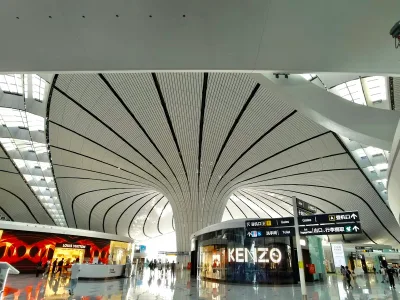
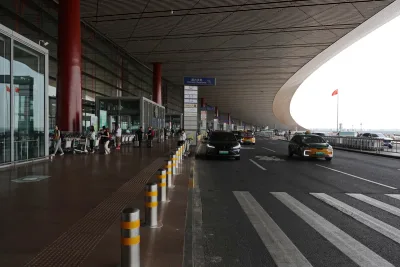
By air, the picture improved for 2026-27. From mid-November, direct coaches connect Beijing Capital, Beijing Daxing and Beijing South station with the resorts: two round trips a day from Capital, one from Daxing, one from Beijing South. There is also a free shuttle from Zhangjiakou Ningyuan airport to the resorts, running from 25 October. If you are flying into Beijing and going straight to the mountain, the coach removes the need to cross the city to a rail station. For airport logistics on arrival, the Beijing arrival guide covers the terminals and the transfer options.
Wanlong, Yunding or Thaiwoo
Chongli has more resorts than these three, but these are the ones that matter for a short trip from Beijing. They are close together and suit different skiers.
| Wanlong | Yunding | Thaiwoo | |
|---|---|---|---|
| Vertical | 554 m | 398 m | 510 m |
| Runs | 32 | 32 | 31 |
| Piste | 47 km | 28 km | 30 km |
| Terrain | steep, long, serious | Olympic race and park | wide, beginner-friendly |
| Base | town side, 15-20 min | closest to the station | closest to the station |
| Best for | strong intermediates and above | ski-in, ski-out convenience | first-timers and families |
Wanlong
Wanlong is the mountain locals rate highest. It has the most vertical in Chongli, the longest runs, and a genuine sense of a ski hill rather than a resort with a slope attached. It opened on 23 October in 2026, a week ahead of its published plan, after an early cold snap let the snow guns run.
The trade-off is that Wanlong is not gentle. Its easier terrain is limited, and a beginner will spend more time on the same two runs than they would at Thaiwoo. It is also the furthest of the three from Taizicheng, at about 18 kilometres, though the shuttle is free and takes 15 to 20 minutes.
Yunding
Yunding, also marketed as Genting Secret Garden, was the freestyle and snowboard venue for the 2022 Olympics. The halfpipe and slopestyle course are still there, and the resort has the most convenient layout for a short trip: hotels, lifts and rental shops sit within a few minutes of each other.
It is the easiest resort to reach from the station and the best choice if you want to ski out of your hotel door. The vertical is the shortest of the three, so strong skiers may run out of mountain in a weekend. For everyone else, the progression from green to blue runs is the smoothest in Chongli.
Thaiwoo
Thaiwoo is the polished, purpose-built village. The lower mountain is wide and forgiving, the ski school is used to English-speaking beginners, and the village has the density of restaurants and coffee shops that Wanlong lacks. It is 5 to 10 minutes from Taizicheng, which makes it the easiest resort to reach on the day you arrive.
The weakness is the same as the strength: it is a resort first and a mountain second. Experts will find less to challenge them than at Wanlong. For a first ski trip in China, or a trip with mixed abilities, that is a fair trade.
What lift tickets cost in 2026-27
This is the part where the numbers move fastest. Chinese resorts publish dated price tables, sell early-bird tickets through live-streams, and charge different rates in opening season, mid-season, peak season and public holidays. The official rate card matters less than the channel you buy through.
The table below uses the published 2026-27 rates where they exist and the most reliable third-party listings where they do not. Treat it as a range for planning, then confirm the date and the price in the resort’s own mini-program before you pay.
| Resort | Weekday | Weekend | Peak holiday | What is included |
|---|---|---|---|---|
| Wanlong | ¥499 presale | ¥569 presale | not published | lift only, excluding Spring Festival |
| Yunding | ¥418 | ¥448 | ¥608 | lift only, peak season |
| Yunding with gear | ¥598 | ¥638 | ¥818 | skis, boots and poles |
| Thaiwoo | from ¥199 early bird | not published | not published | limited November tickets |
Three things are worth knowing before you compare those numbers.
First, Yunding’s published table has cheaper tiers outside peak season. Opening and closing season tickets run ¥288 to ¥338, and the shoulder season runs ¥338 to ¥398. If your dates are flexible, late November and March are materially cheaper than January.
Second, the walk-up list price is much higher than the advance price. Yunding’s list price for a one-day lift ticket is ¥580 on a weekday and ¥710 at holiday rates, against the ¥418 to ¥608 advance prices above. Buying at the window is the most expensive way to ski in Chongli.
Third, Thaiwoo has not published a 2026-27 single-day rate card. The only official number is an early-bird ticket from ¥199, sold through the resort’s Douyin live-stream for limited dates in November. For a normal weekend, expect to pay in the same range as Yunding, and check the mini-program rather than trusting an old blog.
What a weekend actually costs
A two-day trip from Beijing, one night and two ski days, per person and sharing a twin room:
| Item | Low | High |
|---|---|---|
| Train, Beijing to Taizicheng, return | ¥148 | ¥198 |
| Two days of lift tickets | ¥836 | ¥1,216 |
| Rental, two days, if not included | ¥200 | ¥400 |
| One night, half a resort twin room | ¥399 | ¥879 |
| Food and drinks, two days | ¥200 | ¥350 |
| Local transport and extras | ¥50 | ¥150 |
| Total | ¥1,833 | ¥3,193 |
A solo traveller pays the whole room rather than half of it, which pushes the same weekend to roughly ¥2,200 to ¥3,900. That total is higher than most people expect, and the hotel is the reason. The lift ticket is a fixed cost you can plan around; accommodation is where a weekend in Chongli becomes a Beijing salary.
The way to cut it is a ski-and-stay package. Yunding’s 2026-27 packages start at ¥1,538 for one night, two lift tickets and breakfast for two, against about ¥1,634 for the same room and two separate tickets. Thaiwoo sells similar three-night and four-night packages. If you are going for two days, the package is usually the better deal.
You can also stay in Chongli town rather than at a resort. Rooms are cheaper, but you add a daily shuttle or taxi and lose the ski-in, ski-out convenience. For a two-night trip with a car, it works. For a weekend by train, it does not save enough to justify the friction.
Can you do it as a day trip?
Yes, and it is a better day trip than most ski resorts allow. The 06:22 from Qinghe reaches Taizicheng at 07:28, a shuttle puts you at the lifts before 08:00, and the last train back leaves at 20:57 or 21:11. That is close to eleven hours on the mountain, with a train ride at each end.
The catch is margin. The last resort shuttles leave around 19:50, and the last trains are not always both running outside peak dates. If you miss the 20:57, you may be waiting for the 21:11; if you miss both, you are looking at a taxi to Beijing or a very expensive hotel. Check the day’s timetable on 12306 in the morning, and set an alarm for the last shuttle rather than trusting your legs.
A day trip also limits you to one resort. That is fine for a first visit, but it makes the cost per hour of skiing worse: a day ticket bought at the window plus a return train is roughly ¥750 to ¥800 before rental or food, and you will spend part of the day working out the lift system. Two days is the better introduction.
Where to stay
There are three practical choices, and they are mostly about how much you value walking in ski boots.
Ski-in, ski-out resort hotels are the easiest. Yunding’s own rate table for 2026-27 lists a garden-view room at ¥798 on a weekday in opening season, ¥888 at the weekend, and ¥978 to ¥1,698 in the peak weeks, rising to ¥1,878 over Spring Festival. Thaiwoo’s hotels sit in a similar range. You pay for the location, but the lift, the rental shop and breakfast are all within a few minutes of the room.
Village apartments are the second option, and Thaiwoo does this best. Its apartments are built around a walkable core of restaurants and shops, so a group with mixed skiers and non-skiers can split up without anyone being stranded. That is worth paying for if you are travelling with someone who does not ski, and the apartments often work out cheaper than a hotel room for a group.
Chongli town is the budget option. Guesthouses and mid-range hotels are cheaper, and there are more restaurants away from the resort mark-up. The cost is a daily transfer of 15 to 30 minutes, which eats into a short trip. If you are staying a week and skiing different resorts, the town makes more sense.

Gear, rentals and lessons
Rental is the weak point, especially for tall or large-footed skiers. Chongli fleets commonly stop at EU46 boots, and EU48 may need a phone call ahead. Visitors have reported ski lengths above 170 centimetres running short at Wanlong. If you are over 190 centimetres or take EU47 and up, bring your own boots at minimum.
The rest is fine to rent: jackets, trousers, helmets and goggles are all available at the base, and the quality is better than the price suggests. Rental runs about ¥100 to ¥200 a day depending on the package. If your lift ticket includes gear, check whether it includes a helmet and goggles, because some do not.
Lessons are worth the money for a first day in China, not because the snow is different but because the lift rules, the queue etiquette and the safety signage are all local. Thaiwoo’s English-language beginner session costs about ¥600 for two hours. Wanlong has English-speaking instructors for ¥400 to ¥600 an hour. Book ahead at weekends.
English is more common in Chongli than anywhere else in Chinese skiing, but it is not universal. Lift operators, rental staff and restaurant servers may have none. A translation app and a screenshot of your booking are more useful than a phrasebook.
Season, snow and crowds
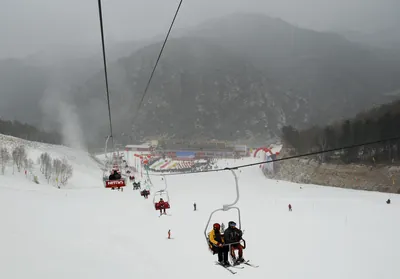
Chongli’s season runs from late October to early April, with the best snow from mid-December to late February. The base is largely machine-made, which keeps the groomers fast and the off-piste limited. Natural snow falls, but you cannot plan a trip around it.
The 2026-27 season opened in stages. Wanlong started on 23 October, the nine-resort Chongli opening festival followed on 31 October with 219 runs across the cluster, and Yunding and Thaiwoo were scheduled for 6 and 13 November. The joint festival is a marketing event as much as a snow report: it does not mean every run at every resort is open. Check the individual resort’s snow report rather than the festival headline.
The one period to avoid is Chinese New Year. The date moves each year, and in 2027 it falls in early February. Lift queues double, hotel rates reach their highest tier, and the trains sell out weeks ahead. If you have flexibility, the two weeks before and after are much better value.
January and February are cold, with daytime highs well below freezing and nights in the minus teens or lower. The China packing guide has a layering list that works at those temperatures. Hand warmers and a face covering are not luxuries on a windy chairlift.
Passports, payments and visas
Your passport is your train ticket, your hotel registration and your lift pass. Carry it, or carry a photo of it and the physical card when you ski. Chinese resorts issue an RFID card for the lifts, usually with a deposit, and the card is what the lift operator scans. Do not put it in the same pocket as your phone if the pocket is loose.
Payments work the way they do everywhere else in China: Alipay or WeChat Pay, with a foreign card linked before you travel. The mobile payment guide walks through the setup. Some ticket desks and rental shops still prefer UnionPay or cash, and a few hotel deposit desks are awkward with Visa, so carry a UnionPay card if you have one.
The visa question needs more care in winter than in summer. The 30-day unilateral visa-free scheme covers 50 countries, but for most of them it currently runs only to 31 December 2026. The ski season runs past that date, so anyone arriving in January or February 2027 may need a visa even if they would not have needed one in December. The visa-free entry guide tracks the current list and the expiry.
The 240-hour visa-free transit is a separate scheme and it does cover Hebei, which means Chongli works for eligible nationalities arriving through Beijing. It does not cover Jilin or Xinjiang, which is one reason Chongli is the simpler first ski trip. Check both schemes before booking, because the lists and the dates change.
Frequently asked questions
Can you ski Chongli as a day trip from Beijing?
Yes, and the train makes it a real option rather than a stunt. The first departure from Qinghe is around 06:22, reaching Taizicheng at 07:28, and a free resort shuttle puts you at the lifts before 08:00. The last trains back leave Taizicheng at 20:57 and 21:11 and reach Beijing around 22:05 to 22:27. That gives you roughly eleven hours on the mountain, but no margin for a missed shuttle, so check the day’s timetable on 12306 before you commit.
How much does a ski weekend in Chongli cost?
Plan on ¥1,800 to ¥3,200 per person for two days sharing a twin room, excluding your flight to Beijing. The train return is ¥148 to ¥198, two days of lift tickets run about ¥800 to ¥1,200, rental is ¥100 to ¥200 a day if your ticket does not include gear, and a room at Yunding starts at ¥798 on a weekday and ¥888 at the weekend in the opening season. A solo traveller should budget up to ¥3,900. A ski-and-stay package usually beats booking the room and the tickets separately.
Which Chongli resort is best for beginners?
Thaiwoo. Its lower mountain is wide, the village is compact, and the ski school runs English-language beginner sessions from about ¥600 for two hours. Yunding has the most convenient ski-in, ski-out hotels and a good progression from green to blue runs. Wanlong is the wrong first mountain: it has the steepest and longest terrain in Chongli and far less easy ground.
Do I need to book Chongli lift tickets in advance?
Yes in peak season, and it saves money at any time. Chinese resorts sell dated tickets through WeChat mini-programs, and advance prices are well below the walk-up list price. Yunding’s 2026-27 table, for example, lists a peak-season day ticket at ¥418 to ¥448 in advance against a walk-up list price of ¥580 to ¥710. Book the date you want, then collect the RFID card at the ticket window with your passport.
Can I take my skis or snowboard on the train?
Yes, for ¥68 a set on the Beijing-Zhangjiakou line. The ski equipment service must be booked through the 12306 app after you buy your ticket, covers gear up to 200 centimetres in combined length, width and height, and stops accepting bookings ten minutes before departure. Anything larger has to be checked as luggage. If you are renting, the resorts’ shops are easier than hauling a bag through Beijing’s subway.
Do I need a visa to go skiing in Chongli?
Check your nationality and the date before you book. The 30-day unilateral visa-free scheme covers 50 countries, but for most of them it currently runs only to 31 December 2026, which falls in the middle of the ski season. The 240-hour visa-free transit does cover Hebei, so a trip routed through Beijing works for eligible nationalities. Both schemes can change, so confirm the current rules rather than relying on a guide written months earlier.