Jiuzhaigou National Park Guide: Booking, Trains & 2026 Costs
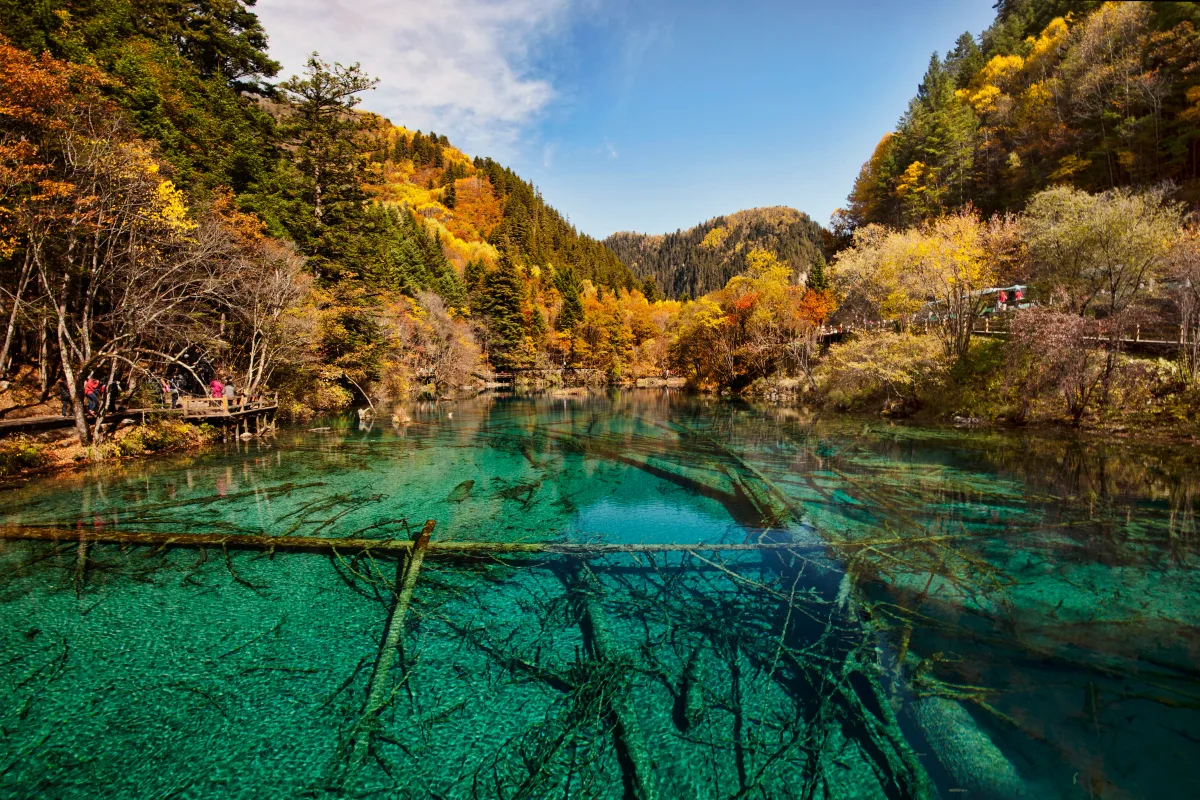
Jiuzhaigou National Park (九寨沟) is a Y-shaped valley of terraced, mineral-blue lakes in northern Sichuan, and it runs on a reservation system that catches independent travellers off guard. There is no ticket window at the gate. You book online, under your real name, days in advance. Turn up without a booking and you get turned around, however far you came to be there.
That one rule reshapes the whole trip. It decides when you can go, how long you need, and whether the trip is worth making at all this year. So this guide starts with the booking, then handles the trains, the money, the altitude, and the day itself.
The park runs on reservations, not gates
Jiuzhaigou operates what it calls a limited, reserved, staggered model. In 2026 it is enforced without much flexibility. No reservation, no entry.
Three numbers decide your trip:
| Season | Dates | Daily cap | Entry window | Park closes |
|---|---|---|---|---|
| Peak | Apr 1 to Nov 15 | 41,000 | 08:00 to 14:00 | 18:00 |
| Off-season | Nov 16 to Mar 31 | 23,000 | 08:30 to 14:00 | 18:00 |
The 14:00 cutoff is the one people miss. It is not a suggestion. The gate stops admitting at 14:00, and a valid ticket does not change that. Plan to be through the gate by midday so you have four or five hours of actual park.
Where you book
Two official channels, both Chinese-language:
- The WeChat mini-program Jiuzhaigou Tourism Official Platform (九寨沟旅游官方平台). Ticketing line 0837-7769999.
- The Aba Tourism Network (阿坝旅游网, abatour.com) mini-program or website. Line 400-088-6969, extension 1.
- The WeChat official account 九寨沟 also works, through the path 游览必看, then 门票预订, then 景区门票.
Every one of these wants a passport number for non-Chinese visitors, and every one of them is in Chinese. The practical workaround is to do it with your hotel’s front desk, or through Trip.com, which resells the same allocation in English. Trip.com is not an official channel and it can dry up on sold-out dates, so for a peak October morning, book direct.
How early is early enough
Official notices have given different advice at different times of year. The Spring Festival notice said 3 to 7 days. Spring and Dragon Boat Festival notices said 7 to 14 days. The booking window itself opens roughly 14 days out.
Here is the rule I would actually follow: 14 days, on the minute, for anything between 20 September and 10 November. Those are the dates that sell out. April, May, and June are far more forgiving.
The waitlist, which is genuinely clever
If your date is gone, Jiuzhaigou runs a ticket waitlist (候补预约) inside the official mini-program. You pick a date, enter your name, ID number and phone number, and pay. If anyone cancels, tickets are released to the waitlist in queue order. If nobody cancels, you get a full refund.
The park built this after the 2024 National Day mess, when 41,000 bookings produced only about 36,000 actual arrivals, and a 280 yuan package was reportedly resold for up to 1,800 yuan. It was among the first scenic areas in China to try the mechanism, and it works: on 3 May 2026, with cancellations flowing in, 2,843 people got in off the waitlist.
One catch. Waitlist eligibility is tied to how close you already are. It started at a 40 kilometre radius and was made dynamic in 2026, tightening to about 1 kilometre when traffic is heaviest, so people physically at the gate get first call. Do not fly to Sichuan on the assumption that the waitlist will save you. It is a rescue line, not a plan.
What a ticket costs in 2026
Prices have been stable, and they follow the same seasonal split as the cap.
| Peak (Apr 1 to Nov 15) | Off-season (Nov 16 to Mar 31) | |
|---|---|---|
| Park admission | 190 yuan | 80 yuan |
| Sightseeing bus | 90 yuan | 80 yuan |
| Total | 280 yuan | 160 yuan |
Insurance is 10 yuan and optional. Take it or leave it.
The 90 yuan bus ticket is not really optional. Jiuzhaigou’s three valleys run more than 50 kilometres end to end and the lakes are strung along them at altitude. Walking the whole thing in one day is not a realistic plan. Buy the bus ticket.
Discounts exist for Chinese students, children under 1.2 metres, military personnel, and visitors with disabilities. Reported age thresholds for senior discounts vary between sources, so if that applies to you, check the official platform rather than a blog. The bus ticket is almost never discounted, whoever you are. Budget the full 280 yuan plus the shuttle from the station and the train fare, and you land near 500 yuan for a day trip from Chengdu.
Getting there by train
The Zhenhuang section of the Sichuan-Qinghai railway opened on 30 August 2024, and it changed the trip completely. Chengdu to Jiuzhaigou used to be an 8 hour drive or a flight with a high chance of cancellation. Now it is a train.
The critical detail: buy a ticket to Huanglongjiuzhai Station (黄龙九寨站). There is also a Jiuzhaigou Station on the conventional network, and it is not where you want to end up. Search 12306 for 黄龙九寨, not 九寨沟.
| Leg | Time | Cost |
|---|---|---|
| Chengdu East to Huanglongjiuzhai Station | 1h 40m to 2h 30m | 110 to 150 yuan, second class |
| Station to park gate, shuttle | About 2 hours | About 51 yuan |
| Total | 4 to 5 hours | 160 to 200 yuan |
The station sits at roughly 2,977 metres in Songpan County, about 90 kilometres from the park. Shuttle buses wait in the forecourt and are timed to train arrivals, running on a loop between 06:00 and 23:00. Book through the Jiulv Yuexing (九旅悦行) mini-program, or buy at the visitor centre at the station. Official one-way pricing ranges from 28 to 56 yuan depending on the route, with the Jiuzhaigou gate service at the top of that range.
Allow one annoyance: traffic control near the gate sometimes stops buses short of the entrance, and you walk the last 15 minutes. Build that into your buffer, especially on the return leg. Missing your train back to Chengdu because of a 15 minute walk is a bad way to end a good day.
For the booking mechanics themselves, seat classes, passport rules, station navigation, our China high-speed rail guide covers all of it. Train tickets go on sale 15 days ahead on 12306, and Chengdu East departures open around 09:00. Peak season on this line sells out fast.
Flying in, and why I would not
Jiuzhai Huanglong Airport (JZH) is a high-altitude field at 3,447 metres, about 88 kilometres and 90 minutes by road from the park. Chengdu to Jiuzhaigou flights resumed on 27 June 2025, with Sichuan Airlines flying four times a week and Air China three, and Beijing service also restored. Flight time is under an hour.
It is still the worse option. High-altitude airports cancel and delay constantly, and this one has a long history of it. You fly for 55 minutes and then risk sitting in a terminal for six hours, arriving no earlier than the train would have. Worse, you land at 3,447 metres, which is a hard first day for anyone sensitive to altitude.
Take the plane only if the train is sold out, or if you are connecting from somewhere other than Chengdu. And if you do fly, do not schedule anything demanding for the first afternoon.
Driving yourself
The Jiumian Expressway (九绵高速) opened along its full length at the end of September 2025, which cut the drive from Chengdu to the park gate to roughly 5 hours over about 430 kilometres. Before that it was 8 to 9 hours of mountain road. Tolls run around 250 yuan.
Drive it only if you want the flexibility, because you are trading a 1 hour 40 minute train ride for a 5 hour drive on a road with a lot of tunnels and an 80 km/h limit through most of them. Summer brings mudslide and rockfall risk on the mountain sections. Winter brings ice. The park lists six self-drive routes and 11 car parks, so the infrastructure exists, but the train wins on almost every measure except freedom.
When to go
Mid to late October is the answer everyone gives, and it is correct. The forest turns yellow and red, the water stays blue, and the whole thing looks engineered. It is also the single busiest fortnight of the year, so booking runs 30 days out in practice, not 14.
Late September to early November is the wider foliage window. July and August trade colour for water volume: the waterfalls are at their heaviest and daytime temperatures sit near 20 degrees, which is genuinely pleasant, but afternoons bring rain and the park is crowded with domestic school holidays.
Winter is the contrarian pick. The off-season ticket is 160 yuan instead of 280, the crowds vanish, and the frozen falls and blue ice are a different park entirely. Some boardwalks close, and the mornings are brutal. Spring, roughly April and May, is the quiet option, with fewer people and less colour.
Avoid Golden Week completely. The first week of October is the worst possible time to visit any Chinese scenic area, and this one is on every domestic itinerary. If your trip collides with it, read our Golden Week survival guide before you finalise dates. The same warning applies to the Mid-Autumn Festival, which lands close to it.
Altitude, honestly
The gate is a little over 2,000 metres. The main touring zone sits between 2,000 and 3,100 metres. That is high enough to feel, and low enough that most visitors are completely fine.
The spot to respect is Long Lake (长海) at about 3,100 metres, at the end of the Zechawa valley, where the wind is strong and there is nothing to block it. Do not park your family there for an hour. If you know you are sensitive, pick up a can of oxygen in Chengdu for around 18 yuan rather than paying roughly double inside the park, and give yourself a slow first hour. The train station is near 3,000 metres too, so the altitude starts on the platform, not at the gate.
How to spend the day inside
The valley is a Y. Shuzheng valley runs up from the gate to the junction. At the junction sits Nuorilang (诺日朗), the only transfer point in the park, with the only restaurant and the widest travertine waterfall in China at about 270 metres across. Past Nuorilang, the Y splits into Rize valley to the right and Zechawa valley to the left.
Two bus routes run from the gate: one to Long Lake via Nuorilang, one to Primeval Forest via Nuorilang. They do not connect to each other. You must change buses at Nuorilang, every time.
The efficient pattern is to ride to the top of one arm first thing, then work downhill on foot and by bus, break at Nuorilang, then do the second arm. Ride up, walk down. Doing it the other way means climbing at 3,000 metres in the afternoon, which is exactly when you do not want to.
Overnight stays inside the valley are banned under a strict stay-outside rule, so your day ends when the park closes at 18:00. Buses run until around then, and the last shuttle down from the far valleys leaves earlier than you think. Watch the clock in the afternoon.
Rules worth knowing before you are corrected: no drones anywhere, no smoking outside the Nuorilang service centre, no pets, no wading or swimming, and no feeding the wildlife.
Where to sleep
Everything is outside the park, clustered around Zhangzha town (漳扎镇) near the gate and in Jiuzhaigou County further out. Staying in Zhangzha means a short ride to the entrance and an early start, which matters more than it sounds given the 14:00 admission cutoff and the crowds that build before 09:00. Staying in the county town is cheaper and adds roughly 40 minutes each way.
Book accommodation and park tickets in the same session. A hotel room is easy to get. A peak October ticket is not, and there is no point holding one without the other.
If you are building the wider trip, Jiuzhaigou slots naturally into a Sichuan loop, and our Chengdu itinerary covers the city end of it, while Chengdu day trips compares Jiuzhaigou against the other UNESCO sites within reach.
What to pack
Layers, without negotiation. The gate can be 18 degrees and Long Lake 6 degrees with wind, on the same afternoon. Bring a rain shell even in October, sun protection for the altitude, and shoes with grip for wet boardwalks. Cash in small notes still helps at small food stalls even though WeChat Pay and Alipay cover almost everything else. Your passport, since it is your ticket.
Frequently asked questions
Do I need a reservation to visit Jiuzhaigou?
Yes, and there is no way around it. Jiuzhaigou requires a real-name reservation made online in advance. There is no ticket window at the gate and no same-day walk-up queue. The daily cap is 41,000 people from April 1 to November 15, and 23,000 from November 16 to March 31. Once the cap is reached, sales stop. Bring the passport you booked with, because that is what gets scanned at the gate.
How far in advance should I book Jiuzhaigou tickets?
Fourteen days for anything in peak foliage season. Official notices have suggested anywhere from 3 to 7 days to 7 to 14 days depending on the holiday, and the booking window opens about 14 days out. For late September through early November, book the moment the window opens. October dates routinely sell out. If your date is gone, the official mini-program runs a waitlist: you pay upfront, and if anyone cancels, tickets are handed out in queue order. If nobody cancels, you are refunded in full.
Can I buy Jiuzhaigou tickets at the gate?
No. The park stopped selling on-site tickets and now runs entirely on advance booking, under a policy it sums up as no reservation, no travel. Turning up without one means being refused entry, regardless of how far you came. Book through the official WeChat mini-program called Jiuzhaigou Tourism Official Platform, or through the Aba Tourism Network mini-program. Both are in Chinese and both need a passport number.
How do I get to Jiuzhaigou from Chengdu?
Take the train. Buy a ticket to Huanglongjiuzhai Station, not Jiuzhaigou Station, which is a different and much less useful stop. The ride from Chengdu East takes roughly 1 hour 40 minutes to 2 hours 30 minutes, and second class costs about 110 to 150 yuan. From the station, a shuttle covers the remaining 85 to 90 kilometres to the park gate in about 2 hours, for roughly 51 yuan; official pricing starts at 28 yuan. Book the shuttle in the Jiulv Yuexing mini-program. Door to gate, allow 4 to 5 hours.
What is the best time to visit Jiuzhaigou?
Mid to late October, if you can get a ticket. The forest turns and the lakes read at their most saturated, which is exactly why those dates sell out first. Late September to early November is the broad foliage window. July and August give you the fullest waterfalls and daytime temperatures around 20 degrees, at the cost of afternoon rain. Winter is cheap and quiet and the blue ice is real, but some boardwalks close. The one period to avoid outright is Golden Week, October 1 to 7.
Is altitude sickness a problem at Jiuzhaigou?
For most people, no. The gate sits a little above 2,000 metres and the main touring zone runs between 2,000 and 3,100 metres, which is high enough to notice and low enough that the vast majority of visitors are fine. The one spot to respect is Long Lake at about 3,100 metres, the highest stop on the shuttle and a windy one. Do not linger there with small children or elderly travellers, and do not treat your first hour in the park as a fitness test. The train station itself is near 3,000 metres, so take the first hour off the train slowly.
What to read next
- China high-speed rail guide: how to book on 12306, seat classes, passport rules, and the station mistakes that cost people their trains.
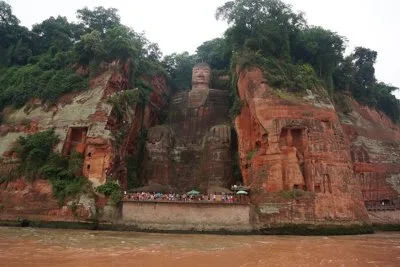
- Chengdu day trips: how Jiuzhaigou stacks up against Leshan, Qingcheng and Sanxingdui if you only have one free day.
- Golden Week survival guide: what the October 1 to 7 holiday does to transport, hotels and every ticket queue in the country.
- Mid-Autumn Festival guide: the other autumn holiday that collides with foliage season.