Mount Tai After Sunrise: Cable Car Hours and the 6am Queue
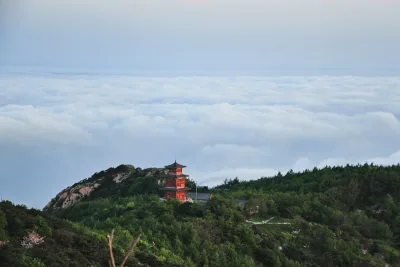
You climbed all night. The sky went from black to grey to a thin band of orange, the cloud sea either showed up or it did not, and by 06:15 the thing you came for is over. Now you are standing at 1,500 metres with the whole staircase still below you, a cable car that has just started running, and no plan for any of it.
Almost nobody plans the descent. The climb gets the research, the packing list and the 3am alarm. The way down gets whatever is left, which is usually nothing, and that is how a good morning turns into a two-hour wait on a cold platform or a three-hour walk on legs that have already given everything.
This is the other half of the trip. It pairs with our full guide to climbing Mount Tai, which covers the routes and the night ascent. Here we only deal with getting off the mountain.
The descent, in the order it happens
The sunrise crowd is not spread out. It is a single mass of people who all arrive at the top within about ninety minutes of each other and all want to leave within about ninety minutes of each other. Everything that goes wrong on the way down comes from that.
| Time | What is happening | What you should be doing |
|---|---|---|
| 22:00 to 00:30 | Midnight shuttle runs from Hongmen Square to Zhongtianmen | Starting the walk, if you are climbing overnight |
| 03:00 to 04:00 | Summit fills; front rows at Riguan Peak go first | Already in position, or accept a worse view |
| 04:30 | One-way control can start on the upper stairs: down only | This one works in your favour |
| Sunrise | 04:30 to 05:00 in summer, after 07:00 in deep winter | Watching, then moving immediately |
| 06:00 | Zhongtianmen cableway opens, both directions | Heading for the cable car station, not the tea stall |
| 06:30 | Taohuayuan cableway on the west slope opens | The alternative if Nantianmen looks solid |
| 07:00 | Tianwaicun shuttle bus starts running | The earliest you can ride from Zhongtianmen |
| Mid-morning | Downhill queue at its worst on busy days | Doing anything else, ideally |
The single most useful line in that table is the last one. If you are on the summit at sunrise and you dawdle, you are volunteering for the worst of it.
The cable car hours, and the 07:00 story that will not die
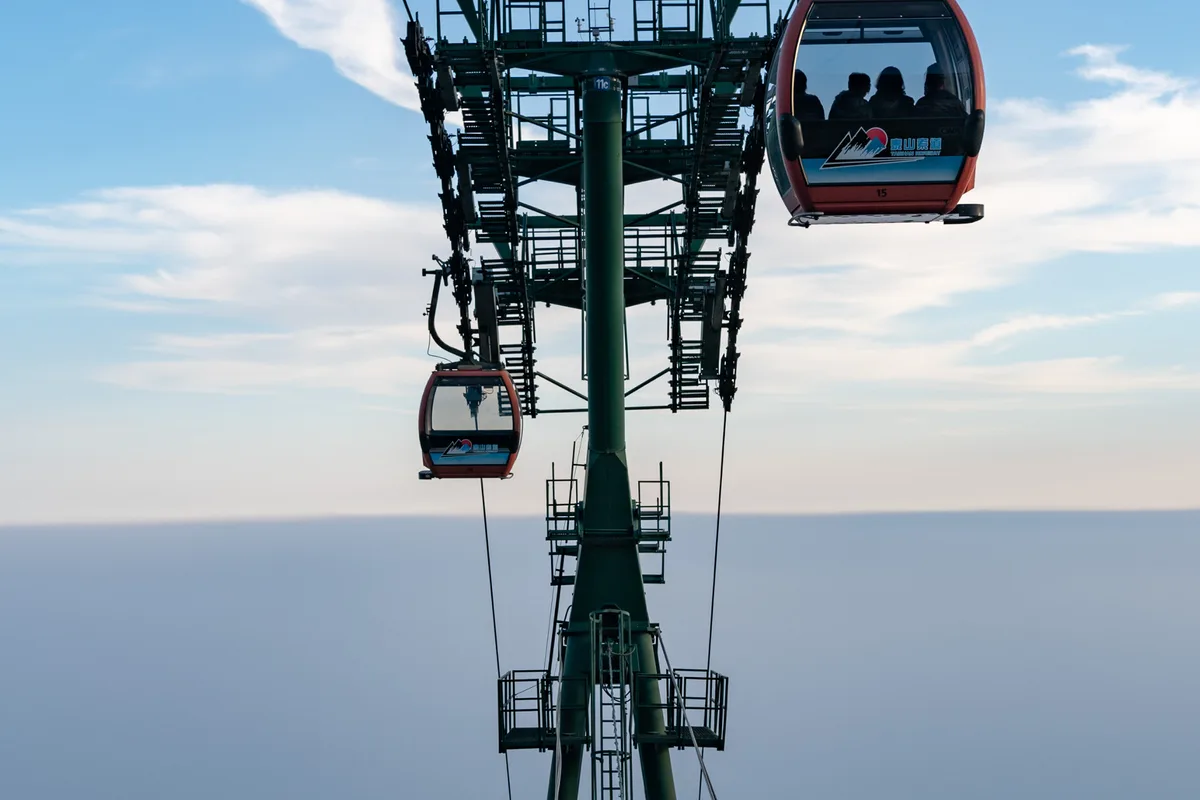
Mount Tai has three cableways. Only two of them matter for a sunrise descent.
| Cableway | Route | Hours | One way |
|---|---|---|---|
| Zhongtianmen (中天门) | Zhongtianmen to Nantianmen | 06:00 to 17:30, extended to 18:30 over National Day | 100 yuan |
| Taohuayuan (桃花源) | West slope to Nantianmen | 06:30 to 17:00 | 100 yuan |
| Houshiwu (后石坞) | Rear mountain link | 08:00 to 16:30 | 20 yuan |
Those hours have been in force since late March 2026, with the National Day extension running from 1 to 7 October. In deep winter, from 1 December, the Zhongtianmen line has opened at 07:00 rather than 06:00. All three stop in high wind, ice, thunder and heavy rain, sometimes without warning.
Now the story. Search for advice on getting down Mount Tai and you will find, over and over, that the cable car only starts taking people down at 07:00. It is repeated in blog posts, in comment threads and in at least one printed guidebook.
It is wrong, and the reason it survives is that it is half of two different true things.
There is no directional timetable. The cableways are not one-way systems with a morning rule about which way the cars face. They run in both directions from the first departure, so at 06:00 you can be on the second car down. The 07:00 figure is real in exactly two places: the Zhongtianmen cableway’s deep-winter opening time, and the Tianwaicun shuttle bus, which genuinely does not start until 07:00.
That second one is the trap worth knowing about, and we will come back to it, because it is the thing that actually strands people. But it is a bus, not a cable car, and getting the two confused has sent a lot of people down the wrong staircase at dawn.
Why there is a queue at six in the morning
A cable car station at 06:00 on a normal Tuesday should be empty. On Mount Tai it is not, and the reason is structural rather than a failure of organisation.
Everyone who climbs overnight is on the summit at the same time. That is the whole point of climbing overnight. The mountain then compresses all of those people into one sunrise, and the moment the sky stops being interesting, all of them turn around at once. The first cable car of the day meets a station that filled up while it was still closed.
What that means in practice depends heavily on when you get there. Travellers who reach the Nantianmen cableway station before 07:00 report waits of around half an hour, which is about as good as it gets. By mid-morning on a busy day the same queue is commonly reported at two hours or more, and on a peak holiday weekend people have described standing in it for three. The pattern is consistent enough to plan around: the queue is short early, ugly late, and worst on weekends and public holidays. If your dates land on the first week of October or the start of May, read our Golden Week survival guide before you book anything, because on those mornings the descent stops being a queue and becomes a slow-moving crowd.
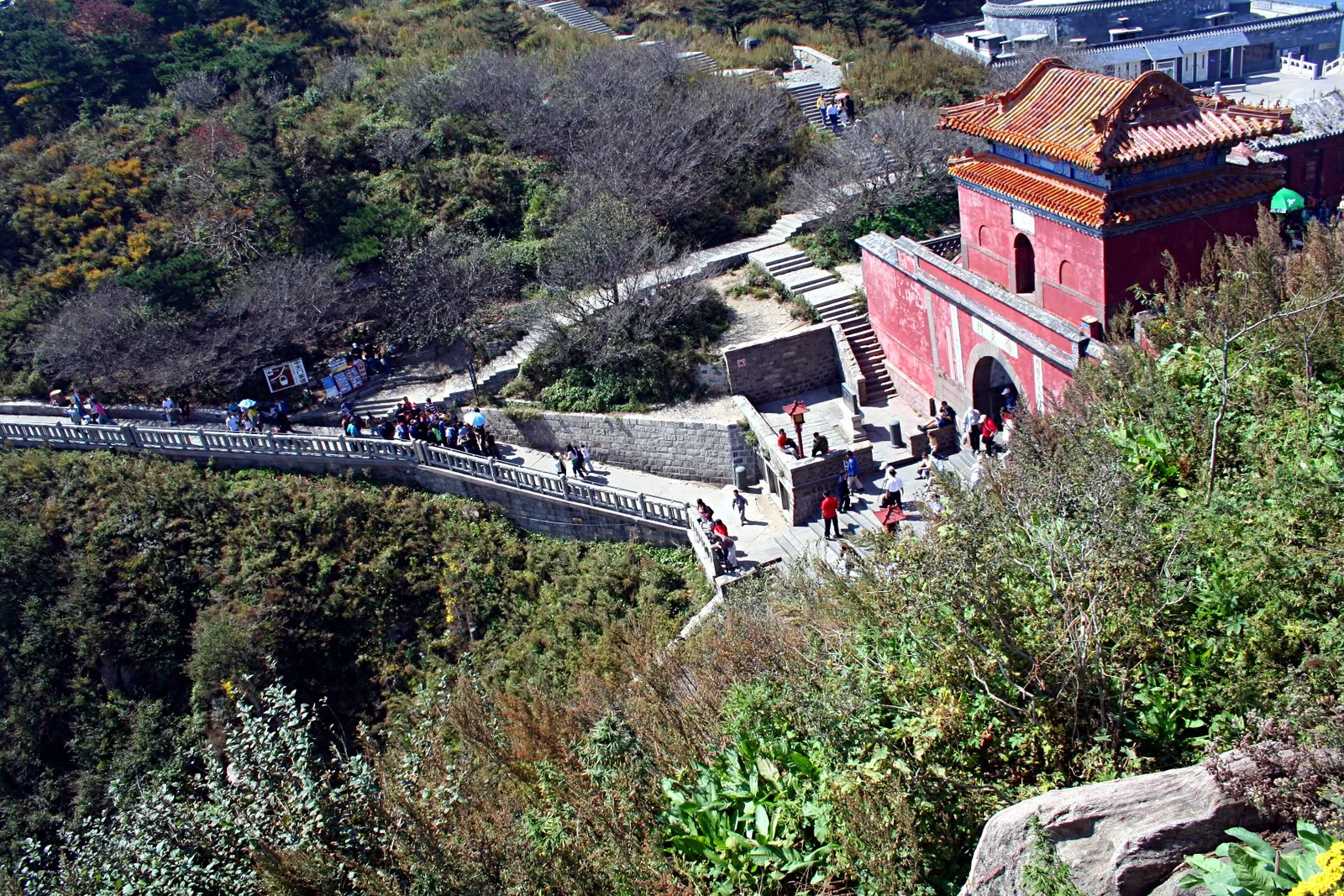
Two things change your position in that queue, and neither costs money.
The first is the viewpoint you chose. Riguan Peak, the classic photography spot, is about 20 minutes from Nantianmen. Zhanlu Terrace is the largest and flattest platform and usually the least crowded. Jade Emperor Peak is the most famous and the most packed, and it sits roughly 30 to 40 minutes and some 671 steps from Nantianmen. Watch the sunrise from Jade Emperor Peak and you have added an hour of walking to the front of your descent, in the exact hour when the queue is shortest.
The second is the tea. The summit has food stalls, hot water and places to sit, and after a night climb they are genuinely tempting. Sit in one for forty minutes and you will walk into the middle of the crowd you could have beaten.
Three ways down
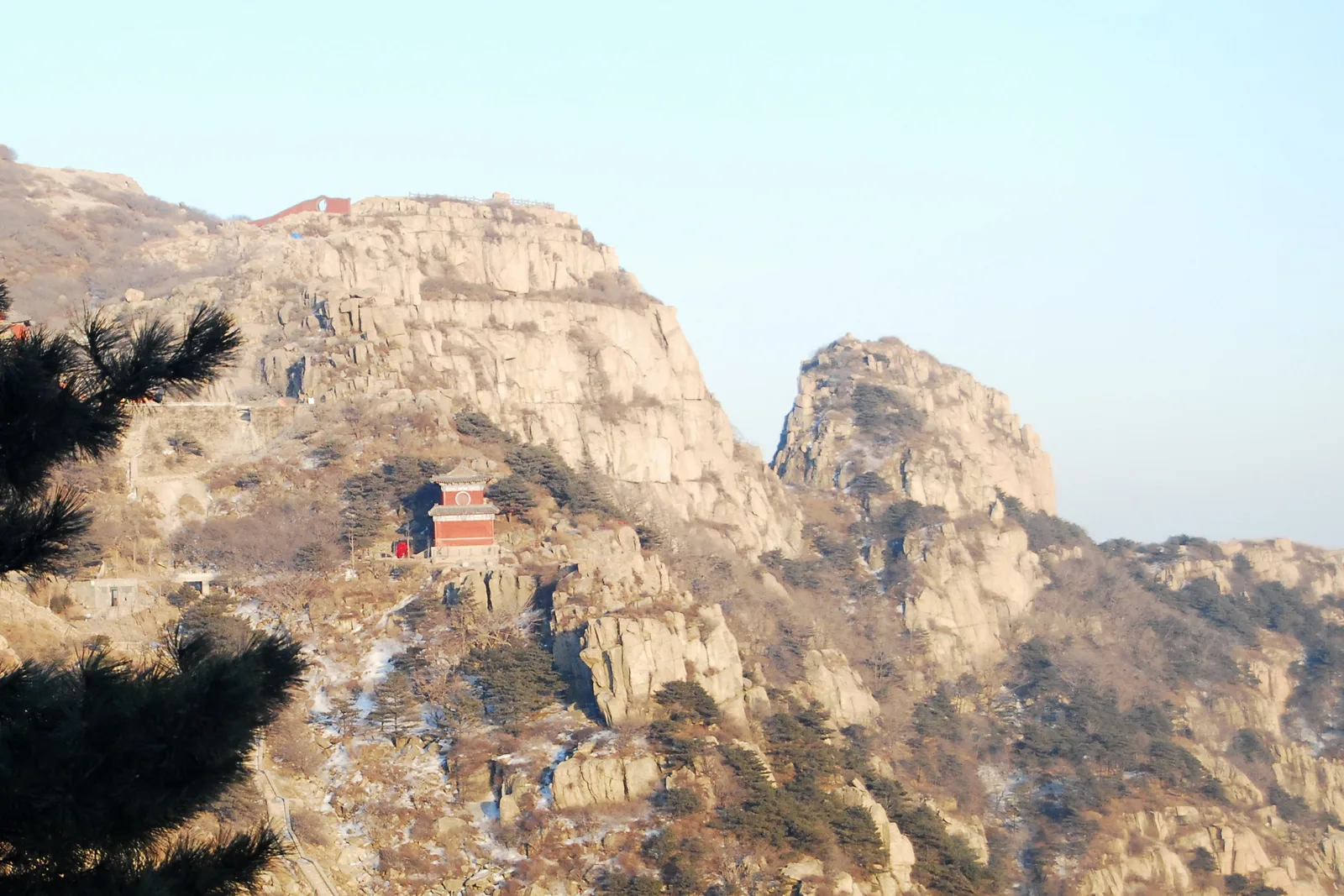
There is no clever fourth option. The mountain offers a cable car, a bus, and your own legs, in various combinations.
Cable car to Zhongtianmen, then bus to Tianwaicun. The default. Fast, expensive, and entirely dependent on the weather and the queue. About 100 yuan for the cable car and 30 to 40 for the bus.
Cable car down, then walk from Zhongtianmen to Hongmen. This is the compromise most people should take. You skip the steep, joint-destroying upper section, and the walk out through the temples and the Sutra Rock Valley is the prettiest part of the mountain. It is downhill but not flat, and it takes a couple of hours at an easy pace.
Walk the whole way. Nantianmen down the Eighteen Bends to Zhongtianmen is the reverse of the hardest climb on the mountain, and it takes most people one to one and a half hours. From Zhongtianmen to Hongmen is another hour and a half to two. Free, no queue, no weather risk, and brutal on the knees. A wooden stick costs 2 to 5 yuan near the gate and is the best-value purchase on the mountain.
One detail that helps: from 04:30, when crowds hit the threshold, the park can put the upper staircase under one-way control from Fangtaizi up through the Eighteen Bends to Nantianmen, descending only. If that is in force on the morning you are there, the stairs are moving your way and the cable car queue is the thing to avoid.
The Zhongtianmen gap, and why it strands people
Here is the part that surprises almost everyone, and the reason the descent deserves its own plan.
Ride the cable car down at 06:15 and you land at Zhongtianmen, at 847 metres, feeling clever. The Tianwaicun shuttle bus, which is how nearly everyone covers the next stretch, does not start running until 07:00. The stairs keep going, of course, but for forty-five minutes your real options are a bench, a bowl of noodles and a slow appreciation of how cold 847 metres is before breakfast.
It is not a disaster. Zhongtianmen has stalls, toilets and shelter, and the first bus of the day is not crowded. But it is worth knowing before you are standing there, because the alternative is to walk out from Zhongtianmen instead, which is a legitimate choice at 06:15 and a much less appealing one at 06:15 in the rain.
The gap cuts the other way too. If you walk down from the summit and reach Zhongtianmen before 07:00, the bus is not there either. Your legs got you that far; they are also the only way to finish.
The west slope is the quiet way out
The Taohuayuan cableway runs from the west slope up to Nantianmen, opening at 06:30, and it is the descent that experienced visitors take when the main line looks bad.
It is the same price and the same mountain, and the queue is usually shorter, sometimes dramatically so on a busy day. From the bottom you take a bus down to Taohuayu on the west side and connect onward from there. It is a longer way back to Tai’an, and it commits you to a side of the mountain you did not arrive on.
The catch is maintenance. The Taohuayuan line has been closed for scheduled work in the recent past, including a stretch in spring and another in June 2026, and when it closes the park reroutes everyone onto the remaining lines, which makes the main queue worse. That is exactly the sort of thing that is announced on the scenic area’s own account and nowhere else, so check it the day before rather than the week before. Our notes on booking Chinese park tickets with a passport cover how these accounts work if you have not used one.
The Houshiwu cableway on the rear mountain is barely a descent option. It runs 08:00 to 16:30, it is short, and it puts you at the back of the mountain with a long transfer to anywhere you actually want to be. It is for people walking the Tianzhufeng route, not for people coming off a sunrise.
When the cable cars stop
Wind is the one that catches people. The cableways shut in high wind, ice, thunder and heavy rain, and the decision can be made after you are already on the summit with a ticket in your hand. Winter is worse: fewer people, more closures, and a sunrise that arrives after 07:00 when the first cars are supposed to be running anyway.
There is no plan B beyond the stairs. That is not a scare tactic, it is just the geometry of the place. So the practical rules are these: keep enough daylight in your plan that walking down is survivable rather than heroic, keep a layer you have not worn yet for the wait, and treat the cable car as a convenience rather than a commitment. The China packing guide covers the layers that earn their weight; on this mountain the one you never took off your pack is the one that saves the morning.
The shutdown risk is also an argument for the early window. A queue you join at 07:00 is a queue you might still be standing in when the wind picks up at nine.
Sleeping on the summit changes the maths
The cleanest way to avoid the entire problem is not to be part of the sunrise crowd at all.
Guesthouses cluster around Tianjie and Nantianmen, plus a few rooms closer to Jade Emperor Peak. Beds are limited to well under a thousand in total and prices climb steeply in peak season, so this is not the cheap option. What you buy is a completely different morning: you walk up in daylight, sleep, get up ten minutes before sunrise in a down jacket, and then have breakfast while several hundred people fight over the first cable car.
You still face the same 06:00 opening and the same 07:00 bus. You just face them after a night’s sleep, which turns out to matter.
The cheaper version is to stay at Zhongtianmen and walk the last stretch in the dark. You still arrive tired, but you start the descent from half way up and the Eighteen Bends are already behind you.
What the descent costs
Add it up and the way down is not cheap.
| Item | Cost |
|---|---|
| Admission, valid three days, includes the Dai Temple | 115 yuan |
| Zhongtianmen or Taohuayuan cableway, one way | 100 yuan |
| Houshiwu cableway, one way | 20 yuan |
| Tianwaicun shuttle bus, one way | 30 to 40 yuan |
| Walking stick at the gate | 2 to 5 yuan |
Cable car down plus bus down comes to roughly 130 to 140 yuan on top of the ticket. Walking down costs nothing and buys you a stick.
One last thing worth knowing: the admission ticket is valid for three days with unlimited entries. If the sunrise is a washout, or the cloud sea never arrives, or your legs simply refuse, you can come back tomorrow without paying again. That is the single best reason not to force a bad descent on a bad morning.
Either way you end up back in Tai’an, and both stations run on the same high-speed rail network that makes the whole climb a day trip from Jinan. If you are weighing Mount Tai against the other famous staircase in China, our Huangshan guide explains why the descent problem there is a cable car queue too, only with mist instead of inscriptions.
Frequently asked questions
What time do the Mount Tai cable cars open?
The Zhongtianmen cableway opens at 06:00 and closes at 17:30, extended to 18:30 during the National Day holiday. The Taohuayuan cableway on the west slope runs 06:30 to 17:00, and the short Houshiwu link on the rear mountain runs 08:00 to 16:30. In deep winter the Zhongtianmen line has opened at 07:00 instead. None of them run overnight.
Is it true the cable car only goes down after 07:00?
No. The cableways have no directional timetable; cars run both ways from the first departure at 06:00. The 07:00 figure comes from the Zhongtianmen line’s deep-winter opening time, and from the Tianwaicun shuttle bus, which does not start until 07:00. That bus gap is real and it catches people who ride down early.
Why is there a queue at 06:00 in the morning?
Because almost everyone who climbed overnight reaches the summit at the same time and wants to leave at the same time. Sunrise crowds the mountain into a single hour, so the first cable car of the day meets a station that is already full. Arriving at Nantianmen before 07:00 is the difference between a short wait and a long one.
Should I walk down instead of taking the cable car?
Walk if your knees are fine and the weather is dry. The descent from Nantianmen to Zhongtianmen is the Eighteen Bends in reverse and takes most people one to one and a half hours; continuing to Hongmen adds another hour or two. It is free, it skips the queue entirely, and it is genuinely hard on the joints.
What happens if the cable car stops for weather?
High wind, ice, thunder and heavy rain all stop the cableways, sometimes with no notice, and they are stopped more often in winter. When that happens the stairs are the only way down, so keep enough daylight and enough legs in reserve. Check the operating notice on the Taishan Scenic Area account the day before you travel.
Is there any way to avoid the descent crowd altogether?
Yes, two. Sleep on the summit and walk to the cable car after a normal breakfast, or take the Taohuayuan cableway on the west slope instead of the Zhongtianmen line. The west slope route is usually the quieter of the two and drops you on the other side of the mountain, where a bus covers the rest.