China Culture Shock: Spitting, Staring, and Other Realities
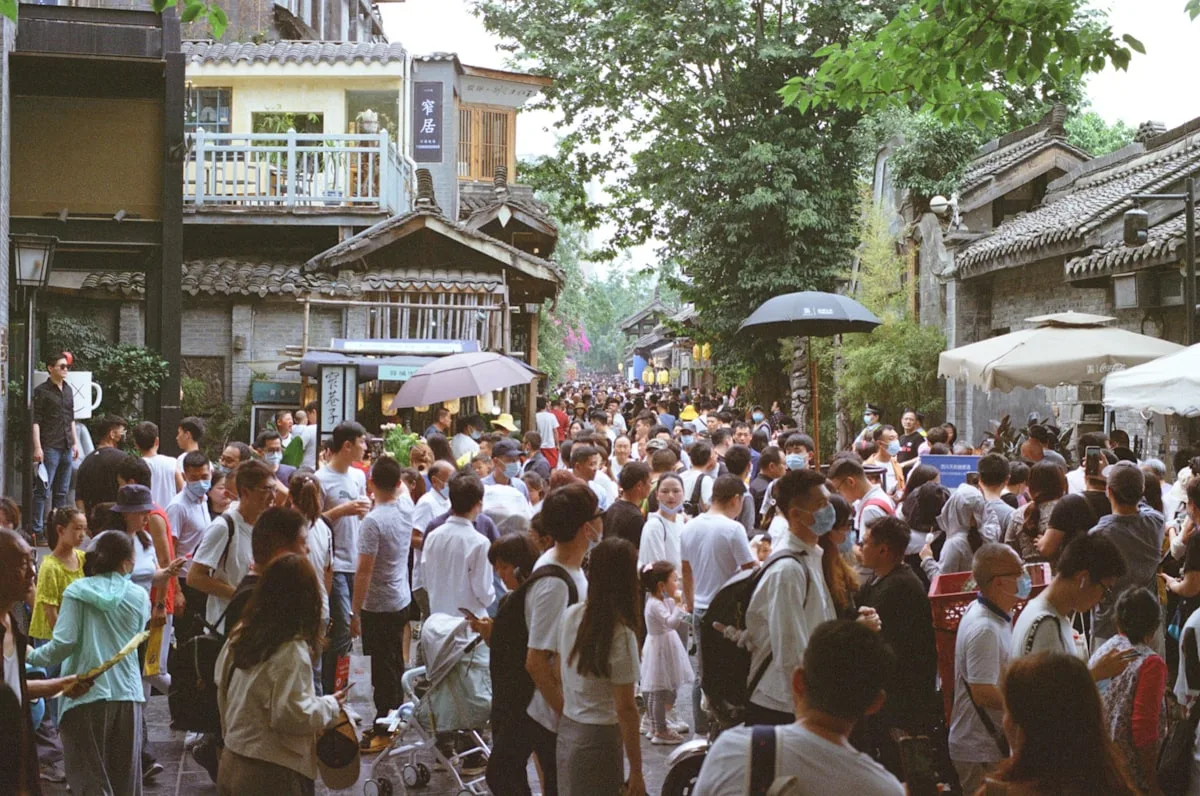
You land in China. The airport is clean, the subway is modern, and your phone with Alipay works. So far, fine.
Then a man hocks a loud wad of phlegm onto the sidewalk three feet from your shoe. A woman in the subway queue is standing so close to your back you can feel her shopping bag pressing against your leg. A group of teenagers points a phone at you and takes a photo without asking. Someone at the next table in a restaurant bellows “服务员!” across the room. An old man on the bus stares at you without blinking for four straight minutes.
None of this is rudeness. But it feels like rudeness if you were raised in a culture where personal space is sacred and public bodily functions are private. That gap between what you expect and what happens is culture shock, and in China it hits differently than in, say, France or Japan. The surface differences are bigger. The rules you know do not apply.
This article walks through the six things that actually shock Western travelers in China, based on what people report on forums like Reddit’s r/travel and r/travelchina, in travel blogs, and in direct conversations with first-time visitors. These are not travel-magazine abstractions. They are the specific, awkward, sometimes funny things that happen on the ground.
Spitting
If there is one universal entry on every “culture shock China” list, this is it.
People spit in public. Men spit more than women, older people spit more than younger ones, and it happens more in smaller cities than in central Shanghai. But it happens everywhere: on sidewalks, in parks, at bus stops, occasionally indoors. The sound is a deep throat-clearing hawk followed by a projectile launch. It is loud, wet, and impossible to ignore.
Why do people do this? In traditional Chinese medicine, phlegm is considered a form of the body’s excess moisture and heat. Clearing it is a health practice, not a sign of illness. For many older Chinese people, especially smokers and those who grew up in heavily polluted industrial cities, throat-clearing is routine bodily maintenance, like blowing your nose. They do not register it as offensive because, in their cultural framework, it is not.
You do not need to pretend it is pleasant. It is not. But understanding it as a different health norm rather than a character flaw makes it easier to tolerate. This habit is fading among younger, urban Chinese, but it will take another generation or two to disappear completely.
Staring
If you are visibly not Chinese, people will stare at you. In Shanghai and Beijing, the stares are glances. In a third-tier city or rural area, you might draw sustained, unmoving eye contact from adults and open-mouthed staring from children. A Reddit user described an old man on a bus who stared at him “without blinking for four straight minutes.”
The staring is not hostile. It is curiosity. For many Chinese people outside major international hubs, a Western face is genuinely unusual. They are not sizing you up. They are looking at something interesting, the way you would look at an unusual bird in your backyard. If you smile and wave, they usually smile back, sometimes with visible relief that you are not offended.
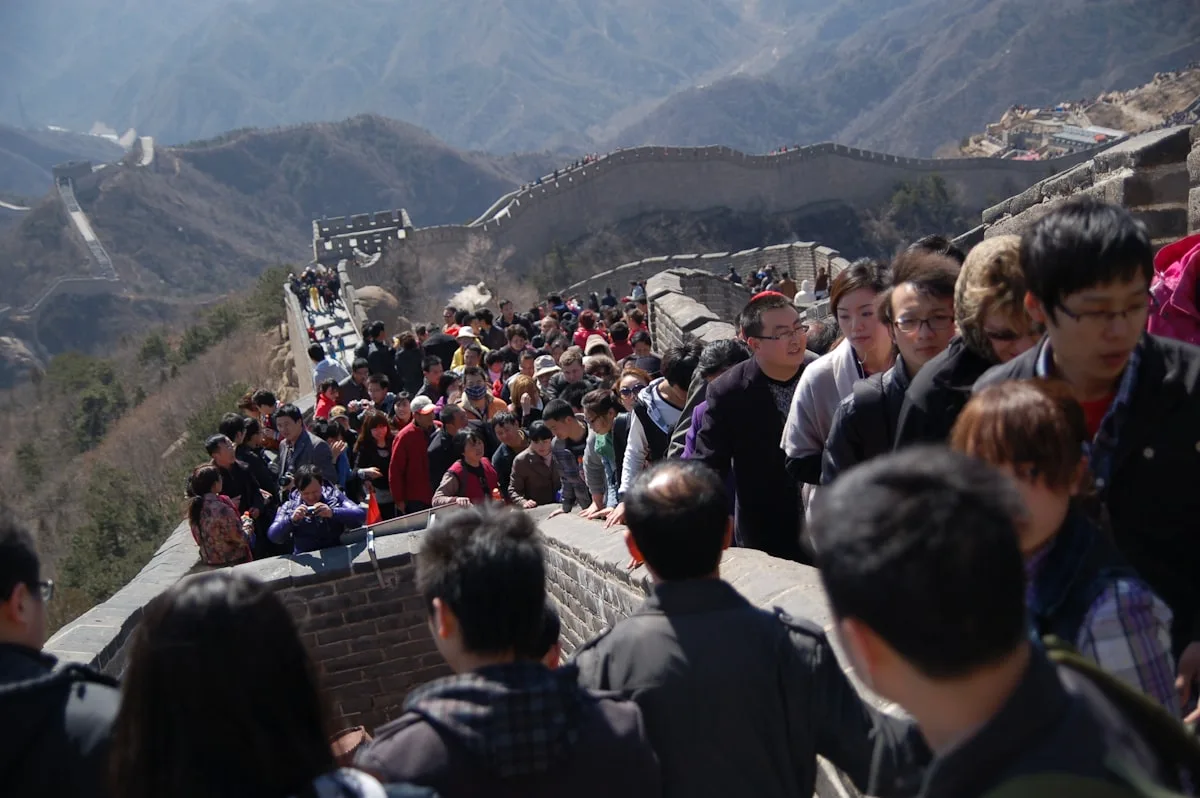
Children will sometimes point and say “老外!” (laowai, a colloquial term for a foreigner). Adults will sometimes ask to take your photo, especially if you are tall, blonde, or traveling with young children. On the Great Wall, one traveler reported that the crowd around him grew so large for photos that it blocked the wall. At a rural wedding, another traveler became more photographed than the bride.
You can say no to photos. A polite head shake works. Or you can lean into it. Some travelers treat the photo requests as a cultural exchange: they take a photo of the person taking a photo of them. It changes the dynamic from “being observed” to “mutual curiosity,” which is closer to what is actually happening.
Personal space (the lack of it)
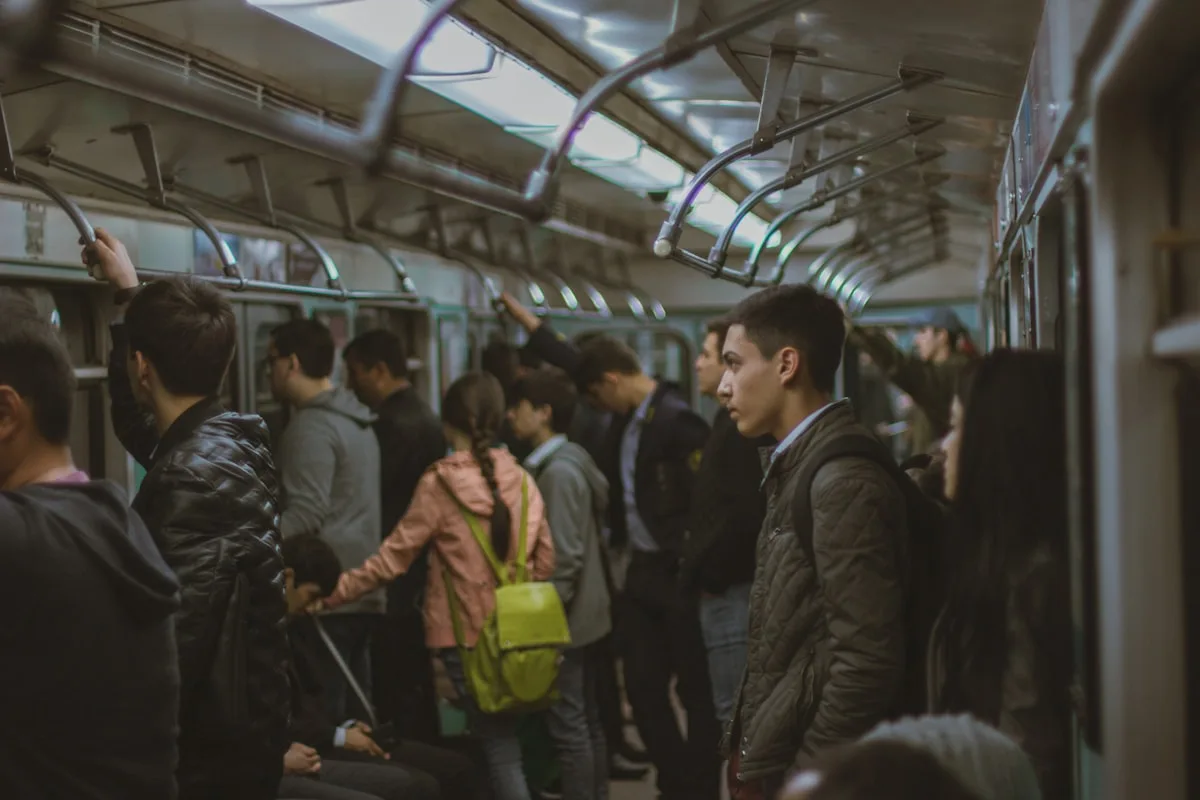
In much of the West, the invisible bubble around your body is roughly arm’s length. In crowded Chinese cities, that bubble does not exist. People will stand inches behind you in line. They will press against you on the subway even when the car is not full. At a store counter, the next person in line will stand directly beside you rather than behind you, peering at your transaction as it happens.
One traveler described the experience of queuing at an ATM in China. In America, he left a five-foot gap between himself and the person ahead. Someone immediately filled that gap. He stepped back to recreate the space. Another person filled it. He gave up.
Bumping into strangers on the street produces no apology, because no offense was committed. Physical contact in crowded spaces is background noise, not a violation. This is not unique to China. It is typical of any dense urban culture. If you have been to a packed subway car in Tokyo or a market in Mumbai, the sensation is similar.
The fix is not to get angry. There is nothing to be angry about. Adjust your expectations. Move your backpack to your front in crowded spaces. Keep valuables in interior pockets. Accept that the density you are experiencing is not rudeness. It is 1.4 billion people sharing limited public space, and the norms that evolved to make that tolerable are different from the norms that evolved in suburbs.
Queuing: it is complicated
The cliché is “Chinese people do not queue.” This was never entirely true, and it has changed a lot in the past decade. In airports, high-speed rail stations, and upscale shopping areas, queuing is orderly and well-enforced with barriers and floor markings.
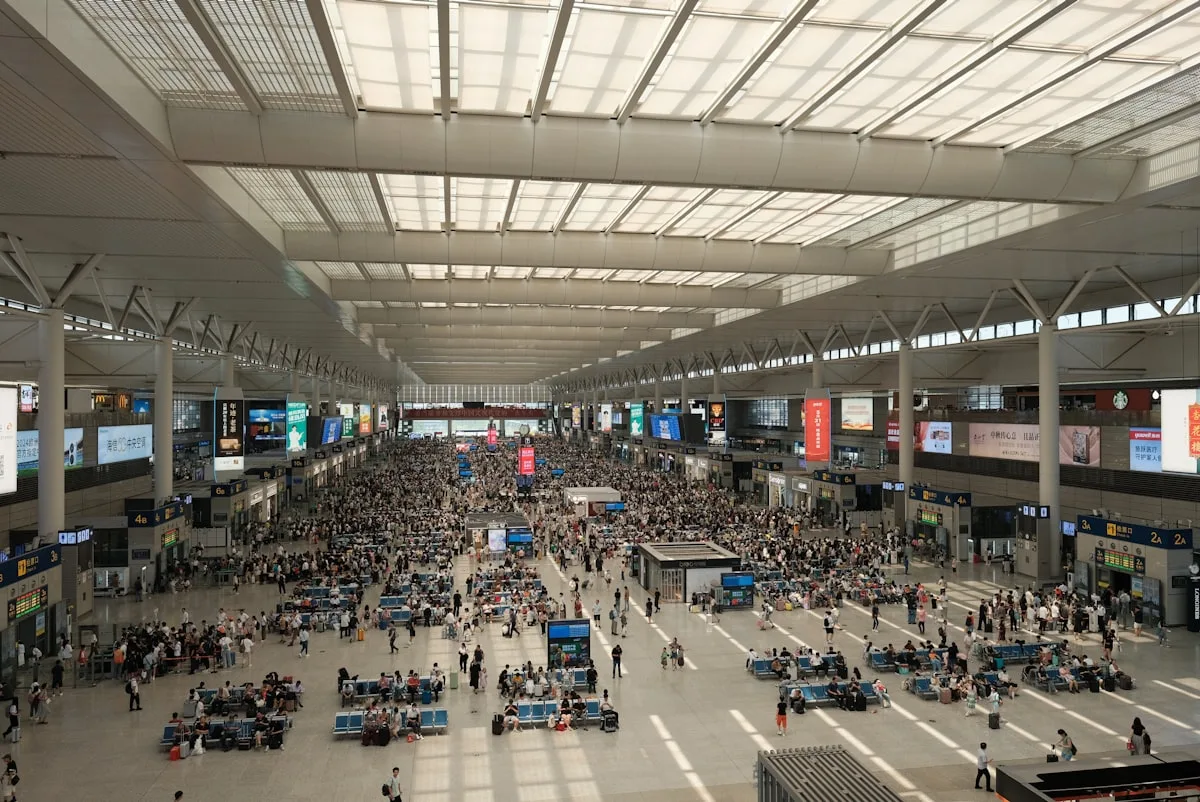
Where it breaks down: bus boarding, subway entry, popular food stalls, and tourist attractions during peak periods. In these situations, the Western expectation (one orderly line, first-come-first-served) can give way to something more fluid. People edge forward. Gaps get filled. The line becomes a cluster.
A HardwareZone forum commenter who visited China in 2025 put it well: “10 years ago, the word ‘queue’ didn’t exist here. Now it’s much better than before. But you still need to be assertive. If you leave a gap, someone will take it.”
This is the key insight. In many Chinese queue situations, the gap is not an act of politeness; it is an invitation. If you want to keep your place, close the gap. Stand your ground. This is not aggression. It is participation in the local system.
Direct communication
Chinese communication in service settings is more direct than many Westerners expect. Waiters do not check on your table periodically with a smile. You summon them by raising your hand and calling out “服务员!” (fuwuyuan, meaning “server”). If you wait quietly for someone to notice you, you will wait a long time.
Shop assistants may follow you closely around a store in a way that feels like surveillance but is actually standard retail practice. Strangers may ask you questions that would be invasive at home: “How much money do you make?” “Why aren’t you married?” “How old are you?” These are small-talk questions in China. They signal interest, not judgment. Deflect with humor if they bother you. Ignore them if you prefer. Getting offended is the one response that will create genuine awkwardness, because the question was not meant as an offense.
Tipping does not exist. Do not tip. It confuses people. Restaurant staff, taxi drivers, and hotel workers are paid a wage and do not expect a gratuity. Leaving money on the table will result in someone chasing you down the street to return it.
Bathrooms
Public toilets in China are better than they were a decade ago and still worse than what most Western travelers expect. Squat toilets remain the standard outside international hotels and high-end shopping malls. Toilet paper is rarely provided. Soap is hit or miss.
There is a full guide to this topic. For now, the short version: always carry tissues and hand sanitizer. Accept the squat. You get used to it faster than you think.
The shocks that go the other way
The five sections above cover things that annoy travelers. But culture shock has a positive side, and in China it is substantial. Here are the things travelers consistently say surprised them in a good way.
How clean it is
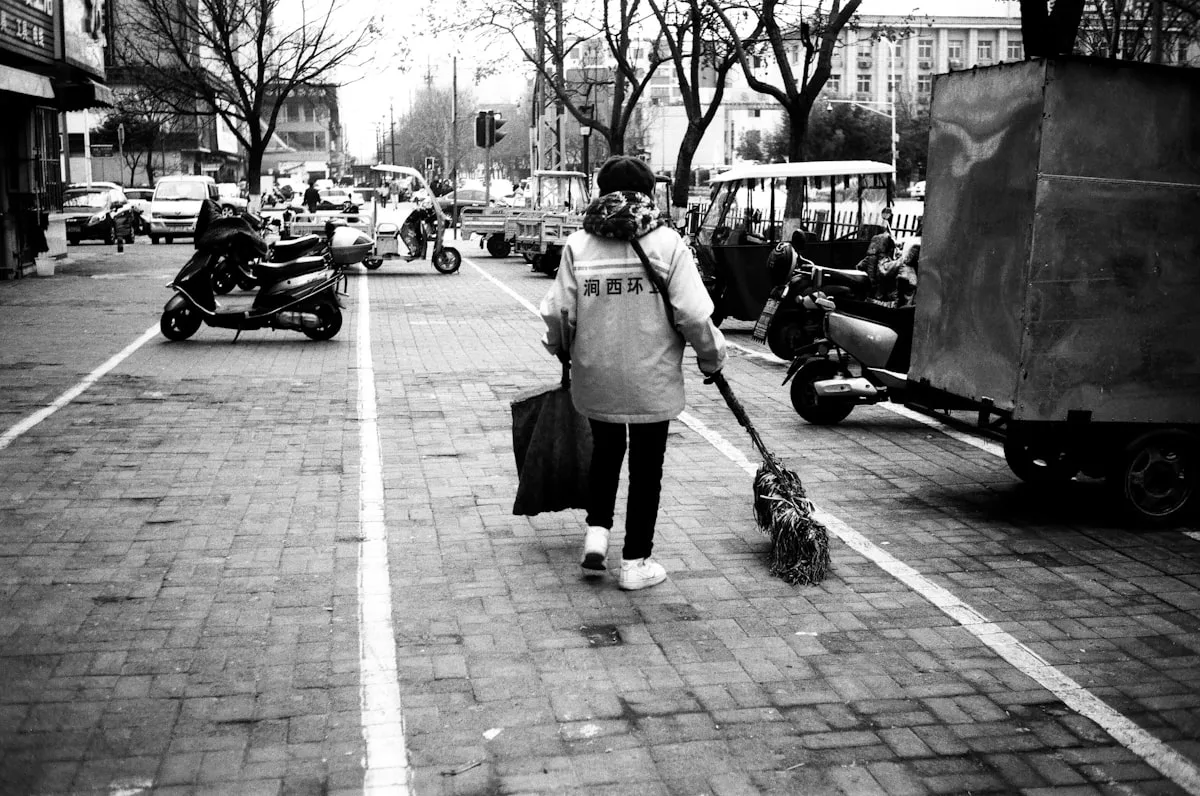
“The streets were spotless. The subways were spotless. Subways!” This Reddit comment from 2025 echoes a near-universal observation. Chinese cities employ enormous street-cleaning crews. Public spaces are swept, mopped, and maintained at a scale and frequency that makes most Western cities look neglected. The contrast between the China of reputation (polluted, dirty) and the China of reality (cleaner than most American downtowns) is one of the most consistent themes in first-timer trip reports.
How safe it feels
Walking alone at midnight in central Beijing, Shanghai, or Chengdu feels safer than doing the same thing in most European or American cities. Violent street crime against tourists is extraordinarily rare. Women traveling solo report feeling safer than they expected. The omnipresent surveillance cameras are unsettling on principle, but the physical safety they help produce is real and noticeable. One traveler on r/solotravel put it bluntly: “I’ve never felt safer walking alone at night anywhere in the world.”
Digital convenience
Once Alipay or WeChat Pay is set up, the convenience is startling. You pay for street food, subway tickets, shopping, and taxi rides with the same app. You never handle cash. You never wait for a card machine. At a noodle stall, you scan a QR code, tap a number, and walk away with your food in under ten seconds. The learning curve is steep, but the plateau is smoother than anything available in the West. As one traveler wrote: “Coming home and having to use a physical credit card again felt like time travel.”
How much people appreciate your interest
If you learn five words of Chinese and use them, the reaction is disproportionate. Waitresses break into smiles. Taxi drivers who were silent become chatty (in Mandarin, which you will not understand, but the tone shifts). Shopkeepers compliment your pronunciation even when it is objectively terrible. A HardwareZone commenter compared it to clapping for a baby who says “da-da”: the bar is low, and the enthusiasm is real.
This is not a performance. It is genuine warmth toward someone who made even a minimal effort to bridge the gap. For many Chinese people, a Western traveler who says “ni hao” or “xie xie” is a pleasant surprise. The baseline expectation is that international visitors will not try at all. Exceeding that expectation takes almost no effort.
The food
Travelers arrive prepared for General Tso’s chicken and leave with addictions to Lanzhou beef noodles, Chengdu hot pot, Xinjiang lamb skewers, and Yunnan mushroom hotpot. The gap between “Chinese food” as understood in the West and Chinese food as it exists on the ground is enormous. One traveler wrote: “I’ve been back for three months and I still think about a bowl of ¥15 noodles I ate at a train station in Xi’an.”
Reality beats reputation
The most upvoted trip report on r/travel about China in early 2026 ended with this: “This was, without exaggeration, the best travel experience of my life. I love this country, the culture, and these cities. If you’re considering China, don’t be afraid. Just go and enjoy it.”
This is not a minority opinion. It is the dominant one. The people who come back from China disappointed are almost always people who skipped the preparation: no VPN, no Alipay setup, no research on social norms. They arrived jet-lagged, could not use their usual apps, could not pay for things, and had no frame of reference for the spitting and the staring. Every culture shock hit them at once, amplified by exhaustion.
If you are reading this before your trip, you have already avoided that outcome.
The scale problem
China is roughly the size of Europe. It spans five climate zones, from the Siberian winter of Harbin to the tropical humidity of Hainan. It contains deserts, grasslands, rice terraces, karst mountains, snow peaks, bamboo forests, and megacities of 30 million people. The one thing it does not have is a Gulf-style tropical beach. Everything else is in there somewhere.
The shock is realizing how little of it you can see in one trip. A traveler on r/travelchina put it this way: “I spent three weeks and saw maybe 5% of the country. I planned to come back and do the south. Then I learned about the west. Then I learned about the northeast. I think I need five more trips.”
This is frustrating and wonderful at the same time. You will not finish China. You will just keep coming back.
The future is here
A recurring theme in first-timer trip reports is the sense of arriving in a more technologically integrated world than the one they left. Hotel check-in at a kiosk with facial recognition. A robot delivering your takeout to your hotel room door. Paying for a bag of roasted chestnuts from a street vendor by scanning a QR code with an app you set up in ten minutes. High-speed trains that depart and arrive to the second at 350 km/h, connecting cities 1,000 kilometers apart in under three hours. Electric vehicles so common that the traffic at major intersections is nearly silent.
The infrastructure is not uniformly futuristic. There are still squat toilets and manual labor and rural villages where hot water comes from a thermos on a coal stove. But the contrast is part of the shock. A single day can move you from a Tang-dynasty pagoda to a driverless metro train to a noodle shop where the owner’s grandmother is hand-pulling dough in the back.
A civilization, not a country
The line appears in various forms across travel forums: “China is not a country. It is a civilization pretending to be one.”
What travelers mean by this is that China does not feel like a nation-state in the modern European sense. It feels like a continuous civilization that happens to have borders. The written language connects 3,000 years of unbroken literary tradition. The same poems that schoolchildren memorize today were being recited during the Tang Dynasty in the 8th century. The same philosophy that structures a boardroom negotiation — Confucian hierarchy, Daoist flexibility, the interplay of face and obligation — was being debated in the Warring States period 2,500 years ago.
Visitors sometimes arrive expecting “communist country” and instead encounter a place where temple incense burns next to luxury malls, where ancient city walls surround skyscraper CBDs, and where the past is not a museum exhibit but an active layer of daily life. This is disorienting in the best way.
Fifty-six ethnicities, one tapestry
Most international travelers know China as “Chinese people.” The reality on the ground is more complex. China officially recognizes 56 ethnic groups. In Xinjiang, you hear Uyghur and Kazakh and watch lamb-skewer vendors work grills that run the length of an entire street. In Yunnan, Bai, Naxi, and Tibetan cultures overlap in a single province, each with distinct architecture, dress, and food. In Guizhou, Miao and Dong villages preserve embroidery traditions and wooden architecture that predate modern China by centuries. In Inner Mongolia, the grasslands and the horse culture feel like a different continent.
The shock is realizing how incomplete the word “China” is as a descriptor. One traveler described spending two weeks in Xinjiang and feeling like she had visited a separate country, then spending two weeks in Yunnan and feeling the same thing again. “The ethnic diversity inside China is bigger than the diversity inside the entire European Union. Nobody told me that before I went.”
For a practical look at how this diversity translates into travel — halal food districts, historic mosques in every major city, and Muslim-friendly itineraries — see our Muslim travel guide.
How to handle it
The through line of this article is: most culture shock in China is not about you. The spitting man is not spitting at you. The staring child is not judging you. The person pressed against you in the subway line is not trying to intimidate you. They are operating by norms that evolved in a different context than yours.
That does not mean you have to enjoy every moment. You are allowed to be annoyed. But you get to choose whether annoyance becomes anger, and whether anger becomes a story you tell later with resentment or with humor.
A few practical things help:
- Learn five words of Chinese. “Ni hao” (hello), “xie xie” (thank you), “fu wu yuan” (server), “dui bu qi” (sorry/excuse me), “mei guan xi” (it’s okay). Locals react to even terrible pronunciation with genuine warmth. If you want a bigger icebreaker, our guide to picking a Chinese name walks you through choosing one that actually fits.
- Carry tissues. Every day.
- On the subway, move decisively. Hesitation reads as an invitation to fill the space.
- When someone stares, smile. You will be surprised how often they smile back.
- When someone spits near you, look away. There is nothing to be gained from eye contact with a man who just cleared his throat onto the pavement.
- Remember that the things that feel hostile probably are not. China is safer than most countries you have visited. The woman standing too close in line is not going to pickpocket you. Pickpocketing in Chinese cities is rare enough to make local news when it happens.
Culture shock is not a problem to solve. It is a signal that you are somewhere different from home, which is the whole point of traveling.
For more on staying safe, read Is China Safe?. If you are preparing for your first trip, start with the packing guide and the digital survival guide. For the complete first-timer picture, see our start-here guide.
For experiencing Beijing’s living culture beyond the landmarks — tea houses, Peking opera, temple fairs, and the 798 art district — see our Beijing culture guide.
Frequently asked questions
What is the biggest culture shock Western travelers face in China?
Spitting. It is the one universal entry on every culture-shock list. People clear their throats and launch onto sidewalks, in parks, at bus stops — occasionally indoors. It is loud, wet, and impossible to ignore. But it helps to know the context: in traditional Chinese medicine, phlegm is considered excess moisture and heat. Clearing it is a health practice, not a sign of illness. For many older Chinese people, especially smokers, it is routine bodily maintenance. You do not need to like it. Understanding it as a different health norm rather than a character flaw makes it easier to tolerate. The habit is fading among younger, urban Chinese, but it will take another generation to disappear completely.
Why do Chinese people spit in public?
In traditional Chinese medicine, clearing phlegm is seen as removing excess moisture and heat from the body — a health practice, not a sign of illness or disrespect. For older generations, especially smokers and those who grew up in heavily polluted industrial cities, throat-clearing is routine maintenance, like blowing your nose. They do not register it as offensive because, in their cultural framework, it is not. You do not need to pretend it is pleasant. But understanding the cultural logic behind it makes it easier to shrug off.
Is staring at foreigners considered rude in China?
In Chinese culture, staring at something unusual is not coded as rude the way it is in the West. For many people outside major international hubs, a Western face is genuinely novel. The staring is curiosity, not hostility. Children may point and say “lǎowài” (a colloquial term for foreigner). Adults may ask to take your photo. If you smile and wave, they usually smile back — often with visible relief that you are not offended. Some travelers treat photo requests as a mutual exchange: take a photo of the person taking a photo of you. It changes the dynamic from being observed to sharing curiosity.
Is China safe for tourists?
China has some of the lowest violent crime rates in the world. Walking alone at midnight in central Beijing, Shanghai, or Chengdu feels safer than doing the same in most European or American cities. Women traveling solo consistently report feeling safer than they expected. The main risks are not violent — they are tourist scams: the tea ceremony routine where a friendly English-speaker invites you to a “traditional tea experience” and hands you a ¥2,000 bill, or taxi drivers who “forget” the meter. Use DiDi for taxis and decline unsolicited invitations to tea houses, galleries, or bars. The baseline personal safety in Chinese cities is higher than what most Western travelers are accustomed to.
Do I need to tip in China?
No. Tipping does not exist in China. Restaurant staff, taxi drivers, and hotel workers are paid a wage and do not expect a gratuity. Leaving money on the table will result in someone chasing you down the street to return it. The one exception is high-end international hotels where a service charge may be included on your bill — check the receipt. In every other setting, do not tip. It confuses people.
How can I prepare for culture shock before my trip to China?
Read about the specific differences before you go. Spitting, staring, the absence of personal space, and direct communication are the big four — knowing they are coming removes half the shock. Learn five words of Chinese: nǐ hǎo (hello), xièxie (thank you), fúwùyuán (server), duìbuqǐ (sorry), and méiguānxi (it’s okay). Locals react to even terrible pronunciation with genuine warmth. Carry tissues and hand sanitizer every day. On the subway, move decisively — hesitation reads as an invitation to fill the gap. Most importantly, remember that the things that feel hostile probably are not. The person standing too close in line is not trying to intimidate you. The staring child is not judging you. China is safer than most countries you have visited, and the locals who gather around you for photos are expressing curiosity, not aggression.