China in November: Weather, Crowds and Where to Go

November is the month China stops pretending to be one country. On the same afternoon, Guangzhou sits around 25°C with the windows open, and Harbin’s daily high is 0°C, with ice already forming along the Songhua. Fly between the two and the outside temperature changes by twenty-five degrees in four hours.
It is also the quietest month of the year for domestic travel. The National Day crowds went home in early October, the New Year rush has not started, and there is no public holiday in between. Hotels in the big cities are cheaper than at any other point in autumn. The trade-off is short daylight, a few seasonal closures, and one headline attraction that is emphatically not open yet.
This guide uses the 1991–2020 climate normals published by the China Meteorological Administration, so the numbers describe what November usually does, not what it will do in any given year.
What November actually feels like
| City | Average high | Average low | Rain days | The short version |
|---|---|---|---|---|
| Harbin | 0.1°C | −9.0°C | 5.8 | Cold, dry, dark by 16:10 |
| Beijing | 10.3°C | 0.7°C | 2.9 | Clear, crisp, frost at night |
| Xi’an | 12.6°C | 2.8°C | 6.1 | Mild days, cold evenings |
| Lhasa | 13.3°C | −2.5°C | 0.6 | Bright sun, freezing after dark |
| Chengdu | 16.0°C | 9.6°C | 7.8 | Grey, damp, no heating |
| Shanghai | 17.8°C | 11.4°C | 9.2 | Damp cold, more rain than Beijing |
| Kunming | 18.7°C | 8.2°C | 5.3 | Warm days, cold nights |
| Guangzhou | 25.3°C | 16.7°C | 5.7 | T-shirt weather, low humidity |
Rain days here means days with at least 0.1 mm of precipitation. Two things jump out of the table. First, November is dry almost everywhere: Beijing gets rain on under three days in the whole month, and Lhasa barely gets any at all. Second, the diurnal range is wide. Kunming at 18.7°C by day and 8.2°C at night is a jacket-on, jacket-off kind of day, and Lhasa swings by nearly sixteen degrees.
Sunset matters as much as temperature. In mid-November the sun goes down around 17:00 in Beijing and before 16:15 in Harbin. Most outdoor sights close at 17:00 or 17:30 in winter, with last entry half an hour earlier, so a late start costs you the afternoon.
The 15 November line that explains half of the month
China heats its buildings by administrative boundary, not by temperature. Beijing’s official heating season runs from 15 November to 15 March, and on the 15th the radiators come on across the north, schools, offices, hotels and apartment blocks alike. Indoor temperatures settle around 20°C to 22°C while it is below zero outside.
South of the Qinling–Huaihe line, there is no municipal heating at all. That is why a 17.8°C afternoon in Shanghai can feel worse than a 3°C afternoon in Beijing: outside is mild, inside is a damp 12°C to 15°C, and nothing dries. The guide to southern China in winter covers which hotels have heat pumps, what to ask before booking, and why a south-facing room matters more than star rating.
Two practical notes. Hotels in the south often run air conditioning in heat mode rather than radiators, and older guesthouses may not have it at all, so ask before you book in November and December. In the north, hotel rooms can be overheated to the point of stuffiness, and the window that opens is usually the only control you get.
Where November is genuinely the best month
Guangzhou and the south coast
Guangzhou averages 25.3°C by day and 16.7°C at night in November, with under six rain days and the typhoon season behind it. Humidity drops, the sky clears, and the city becomes walkable in a way it is not in July. Shamian Island, the ancestral halls, the dim sum restaurants that open at six in the morning: all of it is better in this month than in any other.
The same applies along the coast. Shenzhen, Zhuhai, Foshan and the rest of the Greater Bay Area are at their most comfortable, and hotel rates have not yet climbed to their late-December levels. The autumn Canton Fair usually wraps up in the first days of the month, so the weeks after it are the cheapest of the southern autumn.
Yunnan: warm days, cold nights
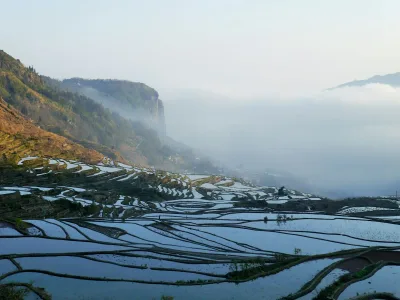
Kunming averages 18.7°C by day and 8.2°C overnight in November, which is the “eternal spring” the city advertises, with the caveat that spring here means a warm afternoon and a cold evening. Dali and the Erhai basin sit at similar numbers. The rainy season ended in September, so the skies are clear and the light is good.

Late November is also ginkgo season in western Yunnan. Tengchong’s ginkgo village, a cluster of farmhouses under a few thousand old trees, usually turns gold in the second half of the month and stays that way into early December. It is a domestic photography destination rather than an international one, which means weekday visits are calm and weekends are not.
If you are thinking about staying longer, the winter long-stay guide covers monthly rents and which towns hold up through the cold months. For a first route through the province, start with the Yunnan golden route.
Lhasa and the plateau
Lhasa records 13.3°C by day, minus 2.5°C at night, and 0.9 mm of precipitation across the entire month, with rain or snow on fewer than one day on average. November and December are the clearest months on the plateau. The Potala is lit by hard, low sun, the crowds of summer are gone, and hotel rates fall accordingly.
The costs are real. Nights are below freezing, the air is dry enough to crack your lips indoors, some guesthouses and restaurants close for the season, and the altitude does not care what month it is. Independent travel in Tibet also requires a permit arranged through a registered agency, usually with a guided itinerary, and that is easier to organise in the low season than in July but not optional. The Tibet travel guide sets out the permit process and the realistic acclimatisation schedule.
Beijing and the north
Beijing averages 10.3°C by day and 0.7°C at night in November, with rain on under three days. The first half of the month is the last of the autumn colour; the second half is bare trees, hard light and empty trails. For the Great Wall this is a good trade. Midweek in the second half of November, some sections are close to deserted, and the section-by-section guide explains which ones stay quiet in the cold.

The ginkgo is the other reason to be here. Beijing’s Diaoyutai ginkgo avenue and the temple courtyards around the city usually peak in the first half of November, and Xi’an’s Guanyin Temple, home to a ginkgo said to be over a thousand years old, draws queues for roughly the same window. After about 20 November, both are done.
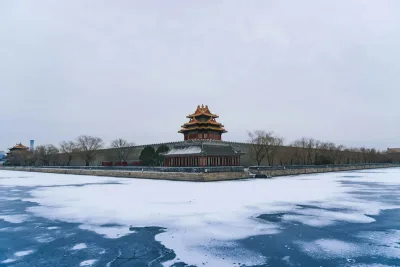
City sightseeing improves as the crowds thin. The Palace Museum drops to winter hours from 1 November, closing at 16:30 with last entry at 15:30, and remains shut on Mondays. Book through the official channel rather than a reseller, and read the first-timer’s guide to Beijing before you build a schedule around opening times.
The ski season starts
November is when Chinese ski resorts open, in a staggered sequence that runs from the high northwest to the northeast. Chongli’s resorts, two hours by high-speed rail from Beijing, have been opening in the second half of October and early November; Changbaishan’s Wanda resort has announced 21 November for the coming season, and Jilin’s rime ice season starts at the very end of the month.
Early season means limited terrain and thin cover, and prices are lower to match. If you are choosing between regions rather than chasing an opening day, the comparison of Chinese ski resorts covers snow reliability, altitude and cost. For the train-and-ticket logistics out of Beijing, see skiing Chongli from Beijing, and for the northeast, Jilin’s rime ice and skiing.
Where not to go in November
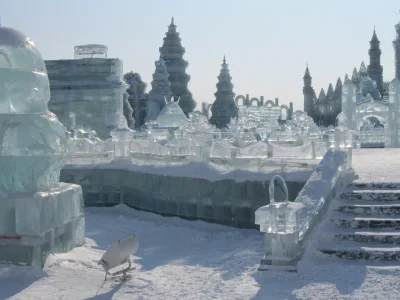
Harbin is the obvious trap. The city’s headline attraction, the ice and snow world, does not open until mid-December, and the 2026-27 dates and ticket prices have still not been published. What you get in November is a grey industrial city at 0°C with short days, the Songhua starting to freeze, and most of the reason you came still under construction. If Harbin is on your list, come in January and read the ice festival guide first.
The Fragrant Hills red leaves are the second. The season peaks in late October and is usually finished by the middle of November, and the weekends during it are a crush of buses. If you want autumn colour late in the month, go south and higher, not to the famous Beijing postcard.
Mountain areas need a caveat rather than an exclusion. Huangshan, Zhangjiajie and the other big scenic areas are quieter and often atmospheric in November, with cloud seas in the valleys, but fog can wipe out a whole day’s view and the cable cars schedule their annual maintenance in the low season. Check the official announcement a week before you travel, because a closed cable car can turn a four-hour hike into a ten-hour one.
Crowds, prices and what to book
November has no public holiday. Singles’ Day on 11 November is a shopping event, not a day off, and it does not move domestic travel volumes the way Golden Week does. Weekdays are quiet almost everywhere. Weekends are still busy at the places city residents drive to, which in practice means the Great Wall, the hot spring resorts around Beijing, and any scenic area within two hours of a big city.
Prices follow the same pattern. Hotel rates in Beijing, Shanghai and Xi’an are at their lowest point of the autumn, well under the October peak, and international-brand rooms that cost a fortune in September are reasonable now. Rates climb again in the last week of December. Flights into China are also cheaper outside the Christmas window, though the difference is smaller than it was in 2023 and 2024.
What you do need to book is the sites that run timed entry. The Palace Museum, the national museums, the big archaeological sites and several popular scenic areas sell timed slots by passport number, often released a few days to a week ahead, and they do sell out on weekends even in low season. The guide to sold-out attractions and passport booking explains the mechanics per site.
Train tickets go on sale 15 days before departure on 12306, and the passport you book with has to be the passport you travel on. In November most routes are fine, but the Beijing–Shanghai and Beijing–Xi’an corridors still fill for Friday departures.
What to pack for a November trip
Pack for two countries, because you may well visit both. In the north you need a proper coat, a hat and gloves, plus a base layer for the overheated interiors. In the south you need a light waterproof shell, a warm mid-layer for unheated rooms, and shoes that cope with damp pavements. Lhasa adds strong sun at altitude: sunglasses, high-factor sunscreen and lip balm are not optional.
A thin down jacket covers the whole range better than a heavy coat, and it compresses into a day bag in Guangzhou. Bring a power bank for long sightseeing days, since cold drains phone batteries quickly, and check the airline rules before you fly, as China treats spare lithium batteries strictly. The full packing list has the layer-by-layer version.
One visa point to keep in mind: the 30-day unilateral visa-free scheme currently runs to 31 December 2026 with no extension announced. A November trip is comfortably inside that window. A trip that spills into January is not, so check the visa-free entry guide before you book anything that crosses the new year.
Who November suits
It suits anyone who wants the big cities without the crowds, anyone heading for Yunnan, Guangdong or Tibet, and anyone who would rather see the Great Wall in cold clear air than in a July queue. It also suits budget travellers, because this is the cheapest comfortable month of the autumn.
It does not suit a first trip built around Harbin, a photography trip that depends on autumn leaves, or anyone who feels the cold indoors. Southern hotels in November are cold in a way that no Mediterranean winter prepares you for, and the fix is clothing, not complaint.
Come with the right expectations and November is the most underrated month on the Chinese calendar. The light is low and clear, the parks are empty, and the country is between two versions of itself.
Frequently asked questions
Is November a good time to visit China?
Yes, for most of the country. It is the low season between the National Day holiday in early October and the New Year, so hotels are cheap and the main sights are quiet on weekdays. The weather is dry across the north and west, mild in Yunnan and genuinely warm in Guangdong. The exceptions are Harbin, where the ice festival has not opened, and any plan that depends on autumn colour, which is mostly finished by mid-month.
What is the weather like in China in November?
It depends entirely on where you are. Average daily highs in the 1991–2020 normals run from 0.1°C in Harbin to 25.3°C in Guangzhou. Beijing averages 10.3°C by day and 0.7°C at night; Shanghai 17.8°C and 11.4°C; Kunming 18.7°C and 8.2°C; Lhasa 13.3°C and minus 2.5°C. Rain is limited almost everywhere, with Beijing recording rain on under three days in the month and Lhasa on fewer than one.
Is the Harbin Ice Festival open in November?
No. The ice and snow world opens in mid-December, and the 2026-27 opening date and ticket prices had not been announced as of mid-November 2026. Harbin in November is cold but not yet the city people come for: the Songhua is beginning to freeze, daylight ends before 16:15, and the ice structures are still being built. Plan Harbin for late December or January.
Where is the warmest place in China in November?
Guangzhou and the south coast, where the average high is 25.3°C and the nights sit around 16.7°C. Yunnan is close behind in the daytime, with Kunming at 18.7°C, but the nights drop to 8.2°C, so it is a layers destination rather than a beach one. Hainan is warmer still and enters its high season towards the end of the month.
Do I need to book tickets in advance in November?
For timed-entry sites, yes. The Palace Museum, major museums and several archaeological sites sell slots by passport number, often released a few days to a week in advance, and weekend slots sell out even in low season. Train tickets open 15 days before departure on 12306. For everything else, November is forgiving enough that a day or two of notice is usually fine.
Is November rainy in China?
Not in most of the country. The east and north are at their driest: Beijing records rain on 2.9 days in the month, Xi’an on 6.1 and Lhasa on 0.6. The wetter spots are Shanghai and the Yangtze delta with 9.2 rain days, and Chengdu with 7.8, though totals are small. What you are more likely to meet is fog in mountain areas and frost in the north rather than steady rain.