Furong Town Tickets: The Day Pass and the 'Free After 8pm' Myth
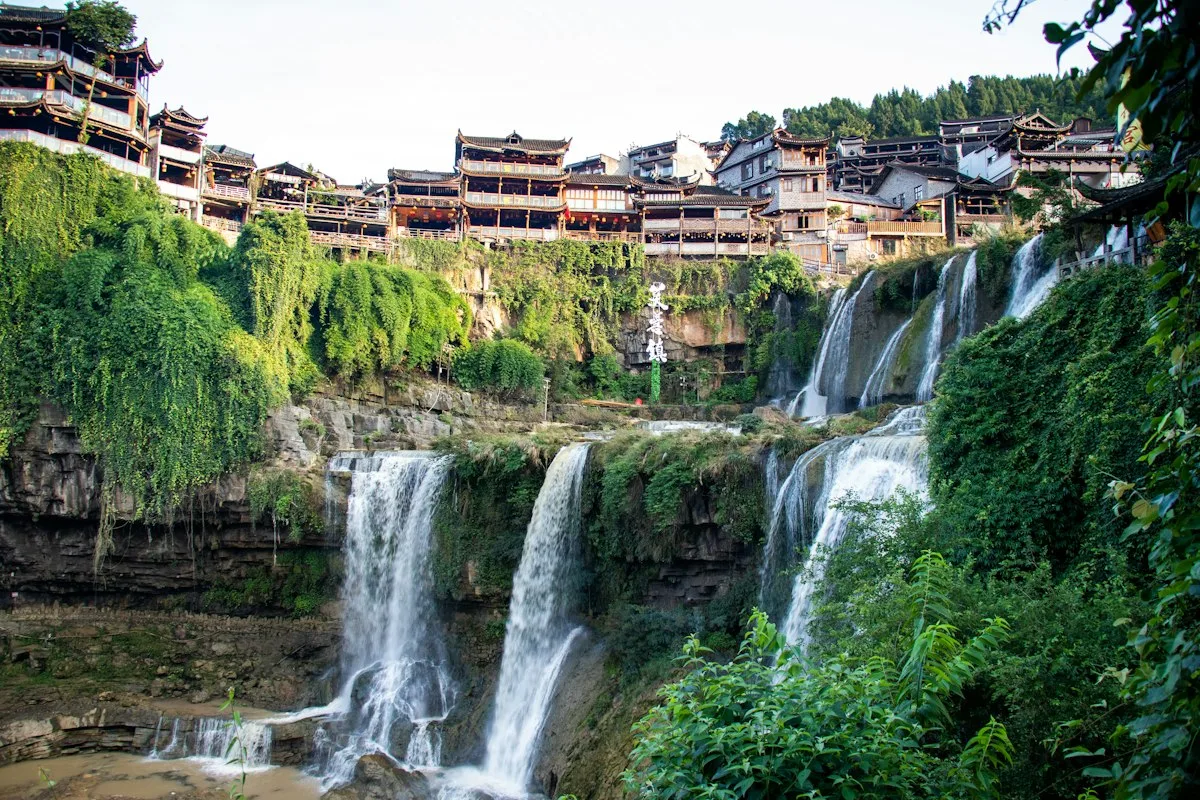
Furong Town sells one ticket and one story. The story is that the place hangs on a waterfall, which is true, and that you can walk in free after 8pm, which is mostly not. The ticket is 108 yuan at the gate, it runs for three days, and it lets you in and out as often as you like.
Most people arrive from Zhangjiajie in the late afternoon, pay, watch the falls under lights, sleep in a stilt house and leave after breakfast. That is a good trip. It is also a waste of two thirds of what you bought. Three days of unlimited entry is an invitation to see the town twice: once in daylight, when the stone street and the old wooden buildings are actually legible, and once after dark, when the cliff is lit and the whole gorge turns into something else. Do that and the 108 yuan stops feeling like a gate fee.
The short version
| Item | Detail |
|---|---|
| Gate price | 108 yuan per adult |
| Online price | commonly 98 to 103 yuan on Chinese booking apps |
| Validity | three days, unlimited entries and exits |
| Opening hours | 08:00 to 24:00 |
| Night lighting | roughly 19:30 to 22:30 |
| Ticketed core | the waterfall and its platforms, the water-curtain walkway, Tuwang Palace, Baishou Hall, the Xizhou Copper Pillar hall, Wuli Stone Street |
| Not included | Youshui River cruise and the internal shuttle, budget about 68 yuan for the pair |
What the 108 yuan actually buys
The ticketed area is the old town on the cliff, not the whole settlement. Inside it you get the waterfall from above and from the viewing platforms, the walkway that runs behind the water curtain, the visitor section of Tuwang Palace, the hall that holds the Xizhou Copper Pillar, and the length of Wuli Stone Street.
You also get the Tujia performances, and this is the part people miss. The scenic area advertises the ticket as including its folk shows, and the hand-waving dance at Baishou Hall is the one to catch: the drumming starts, a circle forms, and anyone standing at the edge gets pulled in. Shows are listed at Baishou Hall around 10:30, 16:30 and 20:00, and at Yinan Theatre at 21:00 and 21:50. In rain the Baishou Hall slot moves indoors. Treat the times as a guide rather than a timetable, because they shift with the season and the size of the crowd.
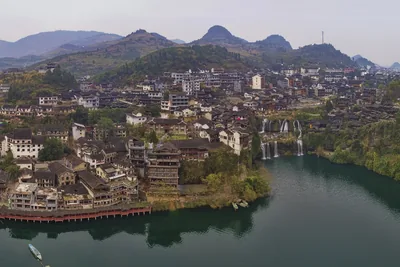
The waterfall is the reason the town exists as a destination at all. It is about 60 m high and 40 m wide in two tiers, and it runs straight through the middle of a working settlement, with stilt houses built along the lip of the gorge above it and the main street crossing the water on a stone bridge. June to September, when the summer rain is still coming through, the volume is at its best. In a dry winter it can thin to something closer to a shower, and the cliff behind it turns into bare rock. If the falls are the whole point of your visit, come in the second half of the year.
The town itself is two thousand years old and was called Wangcun until a 1986 film named after it made the place famous enough to rename. That history is the reason the street is stone and the houses are timber, and it is also why the place has a lived-in feel that a purpose-built attraction cannot fake. People still hang laundry over the railings.
The free-after-8pm story
This one deserves a proper explanation, because it is repeated in every second guide and it is out of date.
The claim traces back to a self-published Chinese post from 2020. At the time the ticket cost 75 yuan and the published opening hours ended at 20:00, and the writer’s observation was simply that after eight in the evening the person selling tickets had gone home. Both numbers have since changed. The gate price is now 108 yuan and the hours filed with the county pricing authority run to midnight.
What is true today: the streets outside the ticketed core, including the newer part of town across the river, are open and free at any hour, and the station side of town is free always. What is not true: the waterfall, the water-curtain walkway, Tuwang Palace, the Copper Pillar hall and the performance venues all still check tickets after 8pm, and there are gates in the way. People walk up expecting to stroll behind the falls for nothing and find a staffed entrance instead.
There is no official free window, and the price filing says nothing about a late exemption. That is not the same as an official denial, and the town has never issued one. The honest version is that the rumour came from a different price and a different timetable, and the parts of the place that make the trip worth taking are still behind a checkpoint. Do not plan an evening around skipping the ticket. If you are already inside on a three-day pass, the evening is when you want to be there anyway.
Booking it, with a passport
Entry is real-name. Your passport number goes in at the time of booking and the name has to match the document exactly, middle names included.
For international travellers the practical route is a resale platform. Trip.com, GetYourGuide and Klook all sell the same admission, take foreign cards, and deliver a QR code by email or messaging app. The official Chinese channels, which means the WeChat mini-program and the domestic booking apps, generally assume a Chinese ID and a Chinese mobile number, and a fair number of them will not complete a booking without both. Save yourself the twenty minutes and use a platform that already handles passports.
Book at least three days ahead. QR codes are sometimes reissued closer to the date, so do not screenshot the first one that arrives and stop checking your inbox. When you get to the town, go to the tourist centre before the gate: there is a counter for overseas visitors where staff register the passport, take a face scan and hand over a physical ticket. After that you can re-enter for the rest of the three days by scanning your passport or your face. Keep the paper ticket anyway, because a few of the halls still ask to see it.
The ticket mechanics at Chinese parks are consistent enough that it is worth reading our guide to booking Zhangjiajie park tickets on a passport if this is your first one. Furong works the same way, minus the timed entry slots.
Discounts, and what is quoted wrong
Children under 14 and visitors over 65 are free with valid ID, and students and 60 to 64 year olds pay half. That much is consistent across sources. The half-price figure is not: you will see both 54 yuan and 64 yuan quoted, sometimes on the same booking page, so check at the window instead of budgeting from a blog. Bring the original passport or ID card for everyone in the group, including the children, because a photograph on a phone will not get you through.
One warning about the touts. There are people near the entrance offering to walk you in through a local path for less than the gate price. There is no such path into the ticketed core. You will pay, you will walk, and you will end up at the same gate you started at, or at the back of a restaurant.
What costs extra
| Extra | Rough cost | Worth it |
|---|---|---|
| Youshui River cruise | about 68 yuan with the shuttle | yes if the weather is clear and you want the town from the water |
| Shuttle inside the scenic area | small fee, sometimes bundled | depends where you sleep |
| Combo with Red Stone Forest | quoted around 228 yuan | only if you have a car or a driver |
| Combo with Red Stone Forest and Youshui Gallery | quoted around 313 yuan | a full extra day |
The Red Stone Forest is a genuinely strange landscape an hour or so away, and the combo tickets are three-day like the single. But they only work if you have transport, because the two sites are not walkable from each other and public transport between them is thin. Most people reading this should buy the plain 108 yuan ticket and spend the saved money on a second night.
Making three days out of it
Day one: arrive mid-afternoon, check in, and walk Wuli Stone Street while the light is still good. Have dinner before seven, then be at the falls for the blue hour, which lands somewhere between 19:30 and 20:00 and is when the photographs happen. The lighting runs until about 22:30, but the crowd thins sharply after nine and the gorge gets quiet.
Day two: get up early. The mist sits in the gorge for the first hour of daylight and almost nobody is out for it, which is the single best argument for sleeping in the town rather than day-tripping. Then take the boat, or walk the street again now that you can see it.
The last entry time is quoted as both 22:00 and 23:00 depending on the source, so if you are arriving on a late train, confirm with your guesthouse rather than trusting a number. Entry to the town’s outer streets is unrestricted at any hour, so a late arrival is not a disaster, only a cheaper first night.
If your dates fall on Golden Week, multiply the crowds by five and book accommodation before you book anything else. The town is small and the stilt-house rooms are the first thing to sell out.
Where Furong fits your Hunan trip
Furong is not a Zhangjiajie attraction and it is not a Fenghuang substitute. It is a third thing, closer to Zhangjiajie than either of them admits: 20 to 30 minutes by high-speed train from Zhangjiajie West to Furong Town station, which makes it the easiest add-on to a mountain itinerary that exists. Our China high-speed rail guide covers how the booking works, and the Zhangjiajie West to Furong Town leg is where you buy the seat in English.
The usual shape is three days in the Zhangjiajie forest park and Tianmen Mountain, then one night in Furong on the way out. If you are still at the stage of choosing trails rather than towns, the hiking routes compared is the place to start, and if you are weighing the glass bridge against a day here, read that piece before you commit a full day to it.
What Furong gives you that the mountains do not is a night. The waterfall is lit, the street smells of woodsmoke and fried rice tofu, and the tour groups have gone back to the city. That is worth 108 yuan for three days, as long as you do not spend it trying to get in for nothing.
Whether to come down for the day or sleep here is a separate decision, and the day trip versus overnight breakdown works through the train times, the last bus back to Wulingyuan and what the morning actually buys you.
Frequently asked questions
How much is the Furong Town ticket?
The gate price is 108 yuan per adult, and Chinese booking apps commonly sell it for 98 to 103 yuan. It covers three days with unlimited entries and exits, so the per-day cost drops fast if you stay overnight.
Is Furong Town really free after 8pm?
Only the streets outside the ticketed core. The waterfall, the water-curtain walkway, Tuwang Palace and the performance halls all still check tickets after 8pm. The free-entry tip comes from a 2020 post written when the ticket cost 75 yuan and the published closing time was 20:00. Neither is true now.
How long is the Furong Town ticket valid?
Three consecutive days, including the day you first enter, with unlimited re-entry. Some English guides still say two days. That is out of date.
What is not included in the Furong Town ticket?
The Youshui River cruise and the internal shuttle are separate, and together they run to roughly 68 yuan. Food, drink and accommodation are obviously separate as well. The Tujia performances inside the scenic area are part of the ticket.
Can I buy Furong Town tickets with a passport?
Yes, but book through an international platform rather than the Chinese mini-programs, which usually want a Chinese ID and phone number. Entry is real-name, so the passport number goes in at the time of booking, and you register at the overseas visitor counter in the tourist centre on arrival.
How do I get to Furong Town from Zhangjiajie?
By high-speed train from Zhangjiajie West to Furong Town station, about 20 to 30 minutes, then a short taxi or the scenic shuttle from the station to the old town. It is close enough for a day trip, though the three-day ticket rewards staying the night.