Mount Tai Routes: Red Gate, Tianwai Village and Peach Blossom Valley
The main Mount Tai guide tells you which route suits you. This one tells you what each route asks of you in distance, steps and hours, and where along the way the decisions actually get made.
Three routes carry almost everybody. The other four exist, and two of them are genuinely useful, but they solve narrower problems than the guides admit.
Seven official routes, and the three that matter
Mount Tai’s management lists seven routes for 2026: four that use a shuttle bus and three that are walked. Most English-language guides mention two, then stop.
| Route | How you move | Where it ends | The numbers |
|---|---|---|---|
| Red Gate (Hongmen) | on foot | summit | 9.5 km, 7,863 steps |
| Imperial East Road (Dongyudao) | on foot | Zhongtianmen | 5 km, more than 4,000 steps |
| Peach Blossom Valley, on foot | on foot | summit, by way of Taohuayuan | 10 km to Taohuayuan, then 5 km |
| Tianwai Village (Tianwaicun) | shuttle bus, then cable car or on foot | summit | 14.35 km of mountain road, 30 minutes |
| Peach Blossom Valley, by bus | shuttle bus, then cable car | summit | the west-slope road |
| Tianping Lake to Zhongtianmen | shuttle bus | Zhongtianmen | transfer hub, roughly 7 km from the high-speed station |
| Tianping Lake to Taohuayuan | shuttle bus | Taohuayuan | the second west-slope service |
Two of these are not really separate walks. Tianping Lake is a car park and a bus stand, not a trailhead. And Peach Blossom Valley runs both a bus and a footpath to the same cableway, which is why it appears twice.
One route that older guides list is gone. Tianzhu Peak, the rear-mountain path, is closed for step repairs and geological work, with no reopening date published. If a blog sends you there, it is out of date.
Red Gate: 9.5 km and 7,863 steps
This is the route the emperors took, the one Confucius took, and the only one that works at night. The official figures are 9.5 km and 7,863 steps from the Hongmen visitor centre to the summit, and almost none of it is flat.
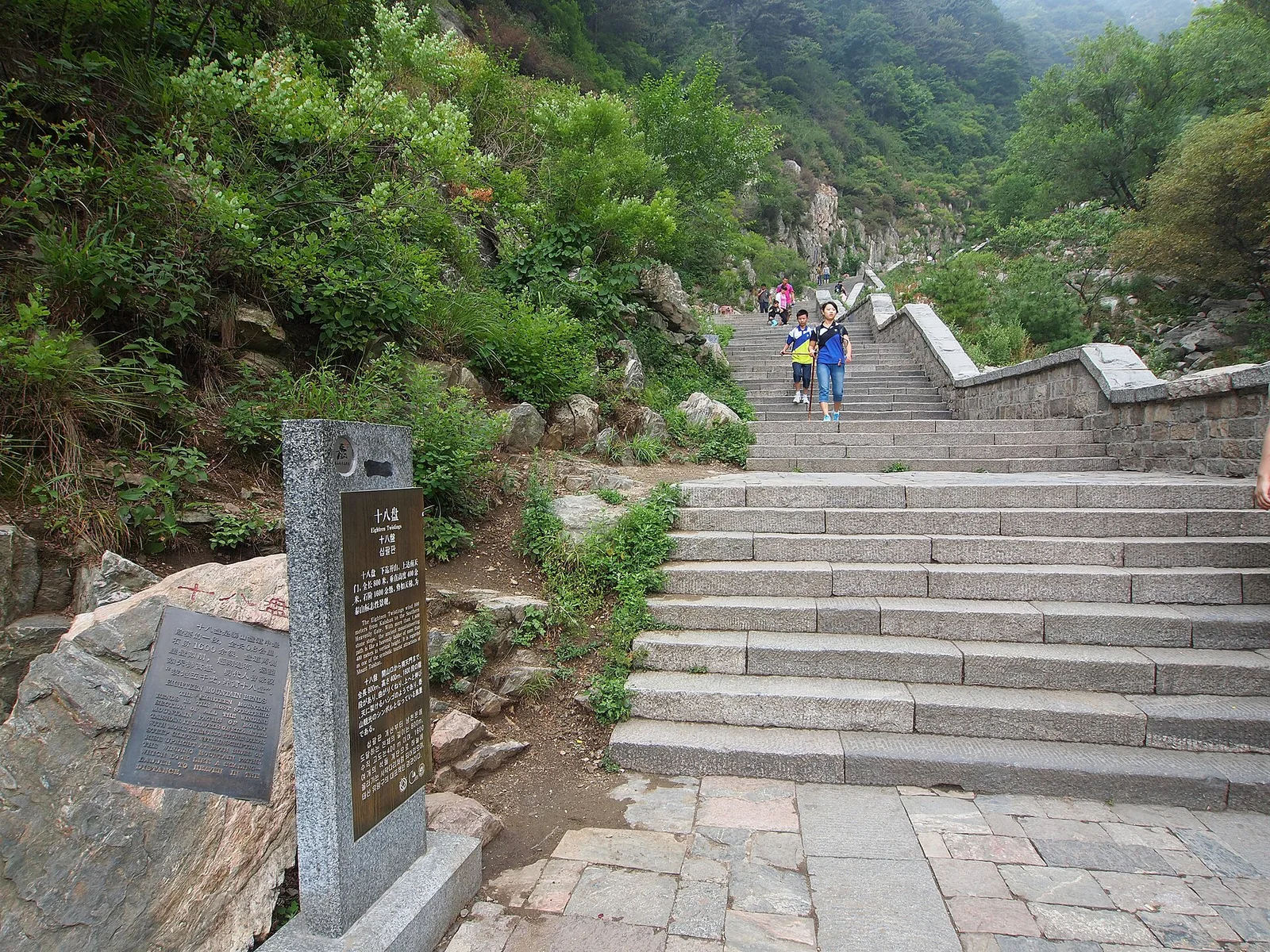
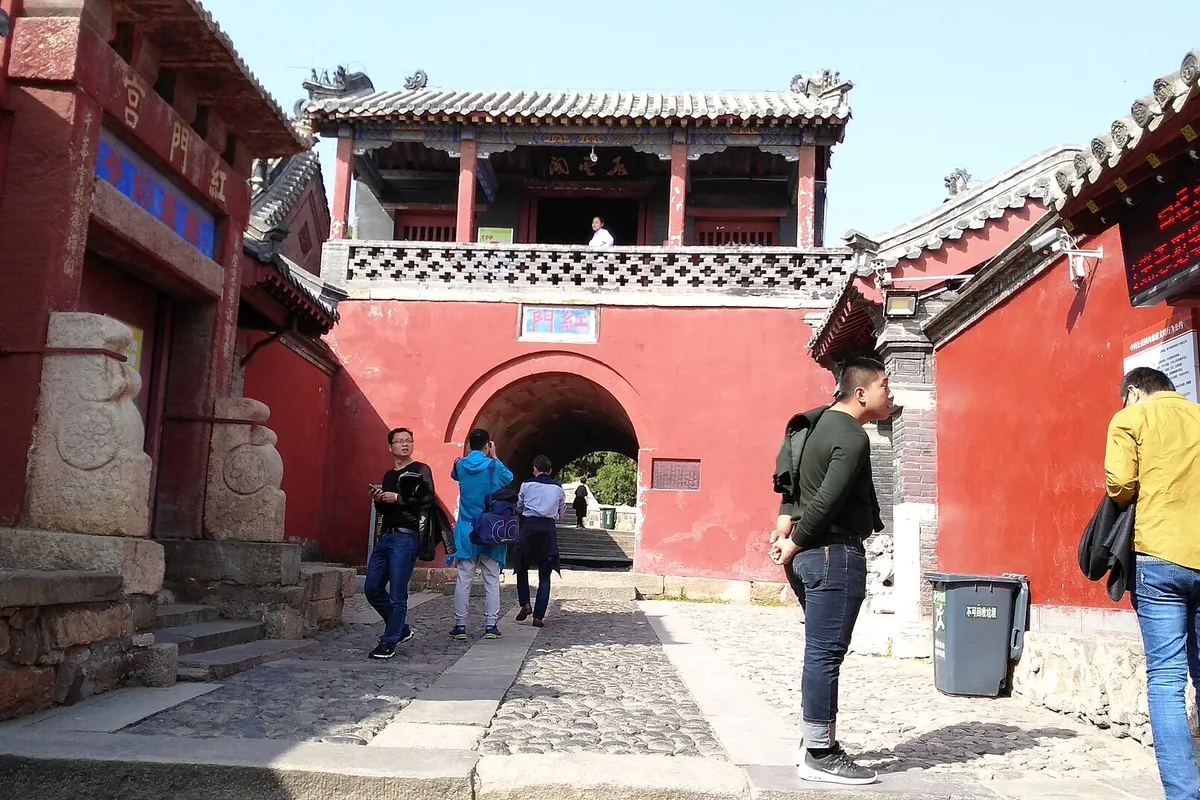
The order you meet things in goes like this. From Hongmen village you pass through the gate itself, then walk roughly a kilometre of gentle stone paving to Wanxian Tower. That is where you show your ticket. Everything after it is the mountain.
Beyond Wanxian Tower come Doumu Palace, the Sutra Rock Valley, Hutian Pavilion and Huima Ridge, spread across the long middle stretch that the bus and cable car skip entirely. This is the part people describe when they describe Mount Tai, and it is also the part where a slow walker discovers that 7,863 is not a marketing number.
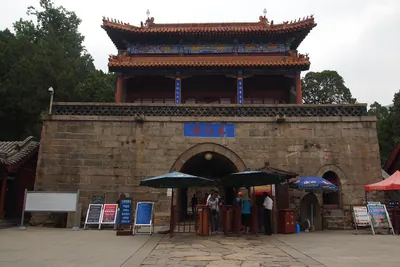
Zhongtianmen arrives at 847 m, roughly halfway in distance and rather less than halfway in effort, because the worst of it is still ahead. Zhongtianmen is also the interchange: the bus from Tianwai Village ends here, the cable car starts here, and if you have had enough, this is the one place where quitting is easy and cheap.
Then the Eighteen Bends. Between Zhongtianmen and Nantianmen the path climbs about 400 m in under a kilometre, at a pitch that reaches 70 degrees. The step count most often quoted for this section is 1,633, split into a slow eighteen, a middling eighteen and a tight eighteen, and the tight eighteen at the top is where the handrails stop being decorative. Budget two hours for this stretch alone if you are not a regular hill walker.
Nantianmen sits at 1,460 m. From there it is the Heavenly Street, past the noodle stalls and the coat-rental shops, then another 20 to 30 minutes to Jade Emperor Peak at 1,545 m. That last stretch is where a lot of people who thought they had finished discover they had not.
On time, official guidance runs from three to six hours for the climb, and older park material says four to six. There is no official split by fitness, so treat the range as honest rather than vague: a fit walker doing it in three and a family doing it in six are both on schedule. The descent costs about three hours, and it is harder on the knees than the climb is on the lungs. Our guide to getting down after sunrise covers why the morning queue at Nantianmen forms and how to avoid it.
The Red Gate line is nominally open around the clock, which is what makes the night climb possible. It is not unconditional. When the night quota fills, entry stops between midnight and 05:00, and on busy days the upper section is switched to one-way downhill traffic from 04:30. If you are not a confident walker, the park’s own advice is to start before 22:00.
Tianwai Village: the bus that deletes the climb
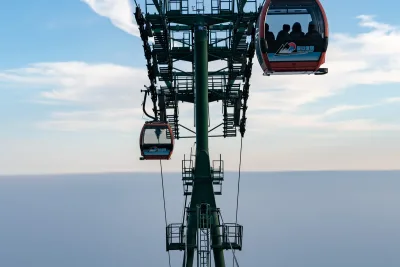
Tianwai Village is the efficient route and it is not embarrassed about it. A shuttle bus runs the 14.35 km of mountain road from the visitor centre up to Zhongtianmen in about 30 minutes, and from there the cable car covers the rest in a quarter of an hour. The park’s own line is that you can get from the foot of the mountain to the summit in under an hour, and that is true if you count the moment the bus pulls away and ignore the queue.
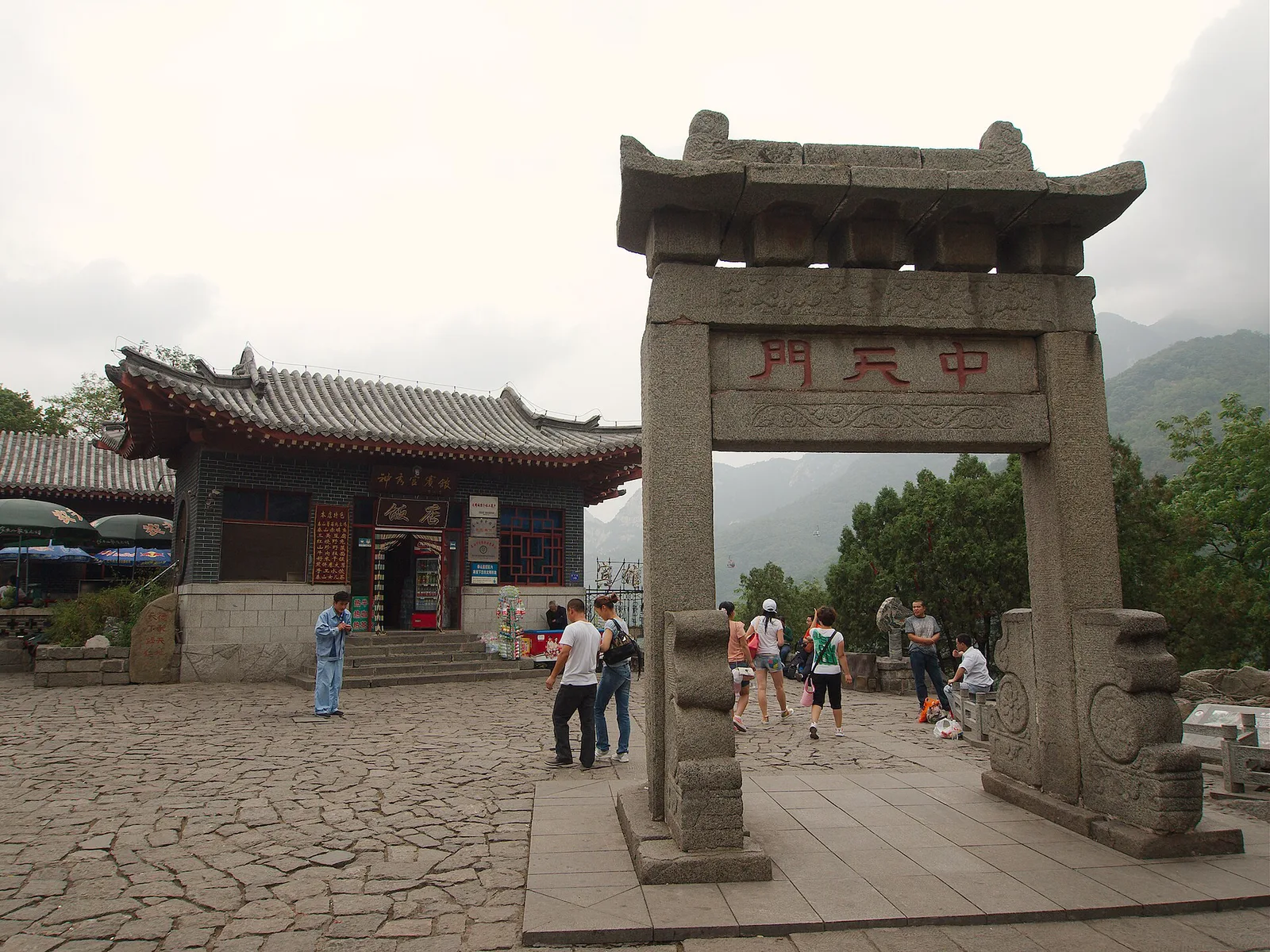
What it costs, and what it skips, are the same list. You lose the temples, the inscriptions and the Eighteen Bends, and you gain a summit arrival before the cable car queue lengthens. With children or grandparents along, this is the route, and there is no close second.
The timing detail that catches people is the bus itself. It does not run overnight, so Tianwai Village is useless for a sunrise climb. It is also useless as a way down for anyone who watched the sun come up and then walked to Zhongtianmen expecting a lift: at that hour the road is quiet and the buses are still parked. Our sunrise timing guide works out what that means month by month.
The bus costs 40 yuan each way, and the cable car is 100 yuan each way, which makes a fully assisted ascent and descent around 280 yuan on top of the ticket. That is the price of the shortcut, and it is worth being clear that it is a real price rather than a nominal one.
Peach Blossom Valley: the quiet west slope
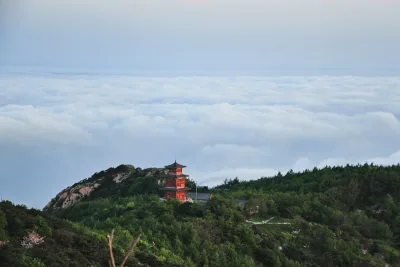
The west slope is the answer to the crowd problem, and almost nobody takes it. The management’s own description is that Peach Blossom Valley sees comparatively few visitors, and on a spring weekend when the valley is full of blossom, the crowds are somewhere else entirely.
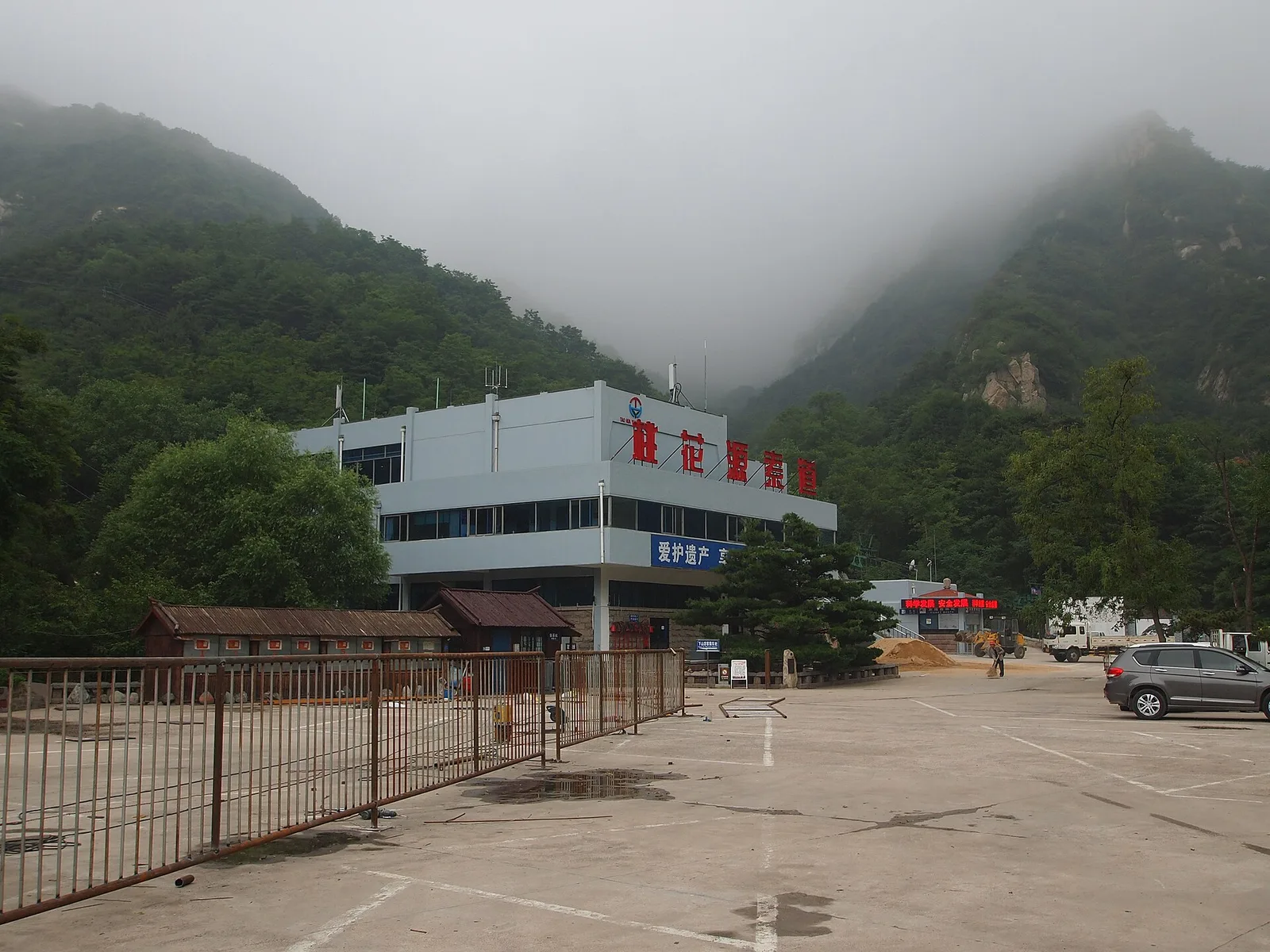
Structurally it works like Tianwai Village: a bus, then a cableway to the summit. The differences are the ones that matter. The walking version goes 10 km to Taohuayuan and then another 5 km up, which makes it the longest single-day walk on the mountain. The slope is gentler than the Red Gate line, which is either a mercy or a disappointment depending on why you came.
The catch is winter. The cableway does not shut for the season, it just shortens its hours through the cold months, but the walking path does close. In December 2025 and again in January 2026, ice and snow took the footpath out of service while the bus and cable car kept running. The park treats this as weather, not as a season, so there is no fixed date to plan around. If you are walking the west slope in winter, check the operating notice the day before.
Where your ticket actually gets checked
One 115 yuan ticket covers every route. What changes is the gate where you present it, and that gate is fixed by your booking rather than by where you turn up.
On the Red Gate line the check is at Wanxian Tower, about a kilometre in from the village. On the Tianwai Village and Peach Blossom Valley lines you pass through the visitor centre first, then board the bus. This is worth knowing before you queue, because walking to the wrong gate with a booking for a different one is not a small mistake.
The three-day validity is also not as generous as it sounds, and our ticket guide goes through the detail. The short version: the ticket stays valid for three days and re-entry stays free, but each new entry needs its own reservation, tied to a date, a time slot and a named entrance.
The good news for route planning is on the other side. Nothing is checked on the way out. You can walk up the Red Gate line and ride down from Tianwai Village on the same ticket, or finish the climb on the west slope and leave from wherever suits you, and nobody will ask. Leaving is free and unrecorded. It is coming back that needs paperwork.
Water, coats and toilets along the way
This is the part where official information runs out, so treat what follows as traveller reporting rather than published fact.
Small shops are strung along the Red Gate route at fairly regular intervals, and prices climb with the altitude. Expect to pay a couple of yuan for water near the bottom and around five higher up, with holiday surcharges that can push a bottle to ten. Instant noodles run about 15 yuan and more on a busy weekend. Coat rental is available on the summit and at the shops below it, generally somewhere between 20 and 50 yuan with a deposit that can reach 100, and the jackets are sized for Chinese frames rather than for a six-foot visitor.
The toilets exist and are more frequent than the guidebooks suggest, which matters more than it sounds like it should at 04:00 in October.
Which route, for the traveller you are
If you want the mountain rather than the summit, walk the Red Gate line. It is the only route that gives you the temples, the inscriptions and the Eighteen Bends, and it is the only one that works at night. Budget six hours, ignore anyone who says four.
If you are travelling with people who cannot do 7,863 steps, take Tianwai Village up. Ride the whole way, arrive fresh, and spend the saved energy on the last 20 minutes to Jade Emperor Peak, which everyone has to walk regardless of route.
If you have already done the Red Gate line, or you are here on a holiday weekend and want to see something other than the back of the person ahead of you, take Peach Blossom Valley. Check the footpath status first if it is winter.
If your knees are the problem rather than your lungs, take the Imperial East Road to Zhongtianmen, then decide. It is gentler, it is shaded, and it closes in the afternoon, so it is a morning plan only.
And if you are here for sunrise, read our comparison of the four places to stand before you commit to a route, because the two decisions are the same decision.
Frequently asked questions
Which Mount Tai route is the easiest?
Tianwai Village, by a wide margin. A shuttle bus covers the 14.35 km to Zhongtianmen and a cable car covers the rest, so you can reach the summit in about an hour without climbing anything. The trade is that you skip the temples, the inscriptions and the Eighteen Bends, which is most of what makes Mount Tai worth the trip.
How long does the Red Gate route take?
Officially three to six hours to the summit, with older park guidance saying four to six, and about three hours to come down. There is no official split by fitness. The Eighteen Bends alone, between Zhongtianmen at 847 m and Nantianmen at 1,460 m, deserves two hours if you are not a regular hill walker.
Is the Tianwai Village bus worth 40 yuan?
For families, yes. It turns an eight-hour day into a three-hour one and it is the only sensible option for anyone who cannot manage 7,863 steps. For everyone else it depends what you came for. The bus skips the entire middle stretch of the mountain, so you arrive at the summit having seen a car park and a cable car.
Can I walk up one route and down another?
Yes, and it is a better plan than most people realise. Nothing is checked on the way out, so you can climb the Red Gate line and descend by cable car and bus from Tianwai Village on the same 115 yuan ticket. Only re-entering the scenic area needs a fresh reservation, and that applies to a new entrance as much as to the same one.
Is the Peach Blossom Valley route open in winter?
The bus and the cableway keep running on shortened winter hours. The walking path does not always, and it has been closed by snow and ice in December and January. There is no fixed winter closing date, so check the operating notice the day before if you plan to walk the west slope.
Do I need to book a route in advance?
Yes. Entry is by real-name reservation, tickets open about seven days ahead, and your booking is tied to a specific entrance and time slot. Turning up at a different gate from the one you booked will not work. Book on the Taishan Scenic Area WeChat account or the tourist service mini-program.