Mount Tai Sunrise by Month: Times, Temperatures and What to Pack
People plan Mount Tai as a mountain. It behaves like a calendar.
The summit is at 1,534 m and the sun comes up over the same ridge every day, but when it comes up moves by about two and a half hours across the year, and the summit’s average temperature moves by 25 degrees between January and July. Pick the wrong month and you will climb all night in a T-shirt to watch fog, or stand on the top at minus fifteen wondering why you packed for October.
This is the timing half of the problem. The routes, the night climb mechanics and the walk up are in our main Mount Tai guide, and the getting-down problem is in the piece on cable car hours and the 6am queue. What follows is what changes month to month.
Sunrise, month by month
These are the published times for the summit at Daiding. The range in each row covers the month, because sunrise drifts about 20 to 30 minutes between the first and last day.
| Month | Sunrise | Move | Summit daily mean |
|---|---|---|---|
| January | 07:05 to 07:18 | latest of the year | −7.2 °C |
| February | 06:35 to 07:05 | −4.9 °C | |
| March | 05:53 to 06:34 | 0.0 °C | |
| April | 05:16 to 05:49 | 6.5 °C | |
| May | 04:49 to 05:11 | 12.2 °C | |
| June | 04:42 to 04:47 | earliest of the year | 16.2 °C |
| July | 04:47 to 05:09 | 18.3 °C | |
| August | 05:07 to 05:34 | 17.3 °C | |
| September | 05:33 to 06:00 | 13.2 °C | |
| October | 05:57 to 06:25 | 7.6 °C | |
| November | 06:25 to 06:55 | 0.9 °C | |
| December | 06:55 to 07:15 | −5.4 °C |
Two things fall out of that table.
First, the spread is wider than most people expect. In late June you need to be on the summit before 04:45, which means leaving Hongmen before midnight. In early January you can leave at 02:00 and still arrive with time to spare. The departure time you read in a guide written in summer will be wrong in winter by more than an hour.
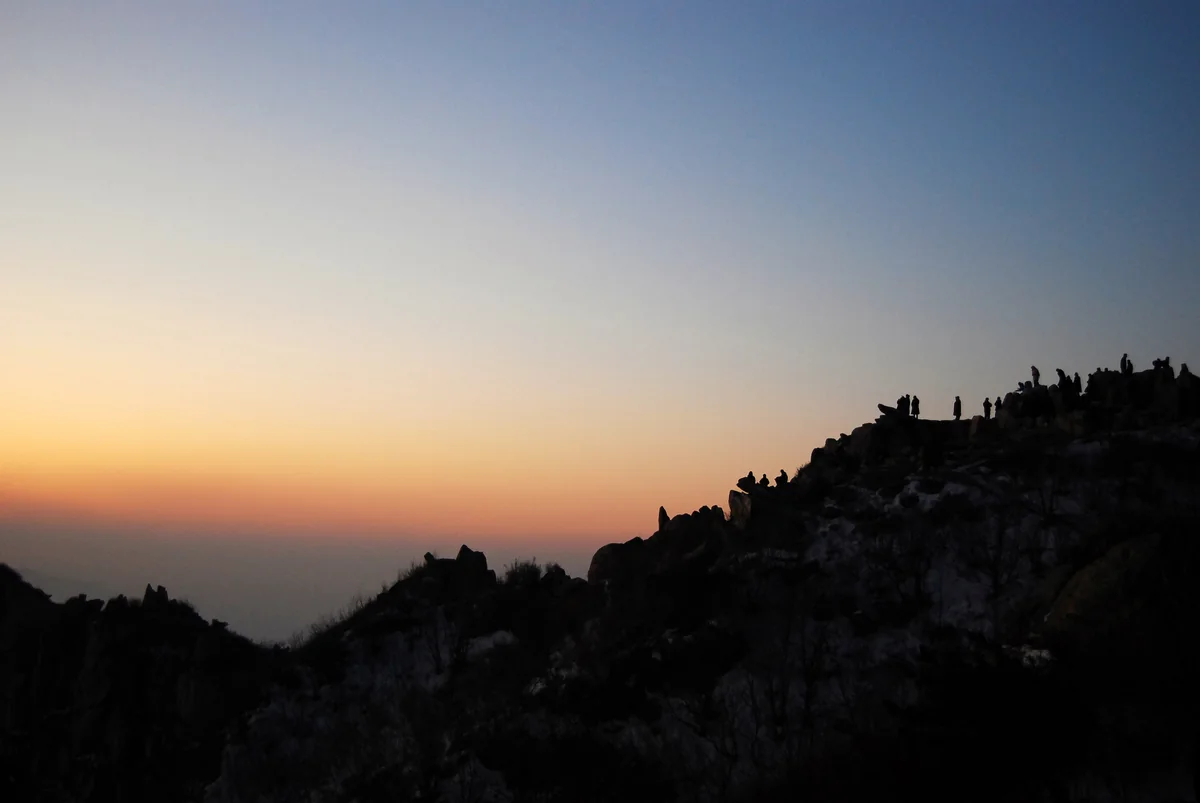
Second, the plateau matters. From mid-June to early July, sunrise barely moves for two weeks, sitting between 04:42 and 04:47. If you are chasing the earliest possible light, that is your window, and it is short.
What the summit actually feels like
The honest version is that the top of this mountain is colder than almost anywhere else you will visit in eastern China.
| Month | Daily mean | Mean high | Mean low | Record low |
|---|---|---|---|---|
| January | −7.2 | −3.8 | −10.0 | −27.5 |
| February | −4.9 | −1.3 | −7.8 | −24.1 |
| March | 0.0 | 4.0 | −3.2 | −20.4 |
| April | 6.5 | 10.5 | 3.1 | −13.9 |
| May | 12.2 | 15.9 | 8.9 | −5.5 |
| June | 16.2 | 19.7 | 13.1 | −0.9 |
| July | 18.3 | 20.9 | 15.8 | 7.6 |
| August | 17.3 | 19.9 | 15.0 | 4.0 |
| September | 13.2 | 16.3 | 10.6 | −0.7 |
| October | 7.6 | 10.9 | 4.9 | −9.1 |
| November | 0.9 | 4.2 | −2.0 | −21.4 |
| December | −5.4 | −2.1 | −8.3 | −24.1 |
These are 1991 to 2020 normals from the China Meteorological Administration station on the summit, at 1,534 m. Read the record low column rather than the mean when you pack: the mountain has been below −20 °C in five separate months.
One correction worth having, because it circulates constantly. You will read, including in visitor notices at the park, that the summit is 9 to 10 degrees colder than the base. That is a same-moment felt difference, the gap you notice when you step off the last step sweating, and it is not a monthly average. Across the year the summit averages about 7 degrees colder than Tai’an. Apply the 9-to-10 figure to a January summit mean of −7.2 °C and you would conclude the city sits above freezing in January, which it does not.
What to pack, by month
The single most useful thing on this mountain is not equipment you bring. It is the padded coat you rent.
Coats are rented near Nantianmen and along Tianjie at the top for somewhere between 20 and 60 yuan, depending on how cold it is and how late you ask. They are ugly, they are warm, and they remove the need to carry a winter jacket up 7,000 steps. Take the offer.
Beyond that, the packing splits three ways.
June to August. This is the easy one, and people still get it wrong. The base will be 30 °C and humid. The summit before dawn will be in the low teens, which is cold when you have been sweating for five hours. Bring a light insulated layer and a windproof shell, not a down jacket. Rain is a real risk and the summit is often inside cloud.
April, May, September and October. The best months, and the ones where the gap is most deceptive, because the afternoons below are pleasant. The summit mean is 6.5 °C in April and 7.6 °C in October, and the pre-dawn hours run several degrees below the mean. Layers you can shed on the way up and rebuild at the top.
November to March. This is a winter mountain. The January daily mean is −7.2 °C and the low averages −10 °C before you count wind chill on an exposed ridge. You need a real insulated jacket, gloves that let you use a camera, a hat, and something for your face. Snow falls on about 28 days a year here. Do not attempt this in street shoes; the steps ice over.
Across all twelve months: a headlamp, because there are no lights on the lower stretch between Hongmen and Zhongtianmen, and the steps are uneven. Cash, because the summit vendors selling hot drinks and instant noodles are not set up for foreign cards. And a thermos, which is the single best purchase you can make at the bottom. Our China packing guide covers the rest of the kit for a trip that spans several climates.
Which months are worth it
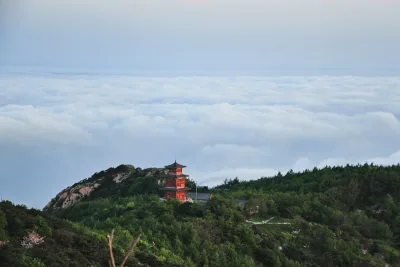
The sunrise itself is a lottery. Mount Tai is famous for the sea of clouds that forms beneath the summit, and you only get the photograph when the cloud sits below you and the horizon is clear.
The odds are best in autumn, roughly September to November, and in the back half of winter. The pattern to look for is rain or snow followed by a clear, cold night with a north wind. That combination clears the valley and leaves the cloud trapped below the ridge.
The worst month for this is July. It is the warmest month on the summit at 18.3 °C, which sounds pleasant until you realise it also means humid air, and humid air at the top usually means you climb all night to watch the sky turn from grey to slightly lighter grey.
Summer is also the wet season. Between the rain and the haze, the odds of a clean horizon in July are materially worse than in October, and the nights are short, which means a later start and a faster climb.
One scheduling note: the summit crowds follow the Chinese holiday calendar, not the weather. Golden Week in early October combines the best sunrise odds of the year with the worst crowds, and the front rows at the viewpoints are gone by 04:00.
Reading the forecast
Check the weather the day before, not the week before, and check it for the summit rather than for Tai’an. The city forecast will tell you it is 14 °C and clear while the ridge is in cloud at 3 °C. Trains from Beijing and Shanghai both reach Tai’an in a few hours, so a last-minute change of date is realistic if you have not locked your rail tickets yet.
The park publishes sunrise times daily through its official channels, and Shandong’s open data portal carries the summit sunrise dataset if you want the exact minute rather than the month. Treat any table, including the one above, as a planning tool and not a schedule for your specific morning.
Finally, decide in advance what you will do if the sunrise fails. The mountain is worth the climb regardless, and the descent is its own problem that does not get easier because the view was poor. A ticket is valid for three days, so the honest move when the forecast turns is to sleep, eat, and come back tomorrow.
Frequently asked questions
What time is sunrise on Mount Tai?
It ranges from about 04:43 in mid-June to 07:18 in early January. The full monthly spread is in the table above. Because it moves 20 to 30 minutes within a single month, work from the date rather than the month.
How cold is the top of Mount Tai?
The summit averages −7.2 °C in January and 18.3 °C in July, with an annual mean of 6.2 °C. The record low in January is −27.5 °C. These are 1991 to 2020 normals from the summit weather station, so they describe a typical year rather than any particular day.
Do I need a winter coat to climb Mount Tai?
In November to March, yes, and a serious one. The rest of the year, layers plus a rented padded coat at the top will do. Coats rent near Nantianmen and along Tianjie for 20 to 60 yuan.
Which month is best for the Mount Tai sunrise?
September to November, then the second half of winter. You want a clear cold night after rain or snow. July is the worst of the twelve, between the humidity, the rain and the short nights.
Can I take the cable car up for sunrise?
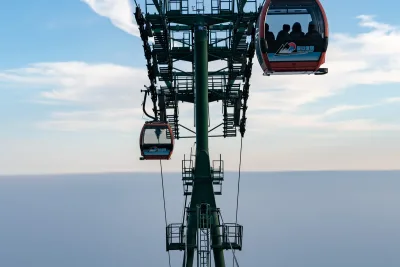
No. The Zhongtianmen cableway runs 06:00 to 17:30 and the Taohuayuan line 06:30 to 17:00, with no night service. A sunrise ascent is on foot, which means the Hongmen route, because it is the only gate open through the small hours.
How long before sunrise should I start walking?
Four to five hours from Hongmen if you want a buffer, which for a June sunrise means leaving before midnight and for a January sunrise means leaving around 02:00. Our main Mount Tai guide covers the night climb rules and where the queues form.