Qingming Shanghe Garden: Tickets, Show Times and the ¥249 Night Show

A theme park built from a painting
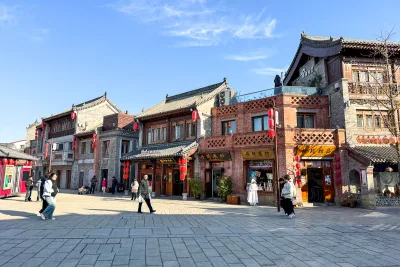
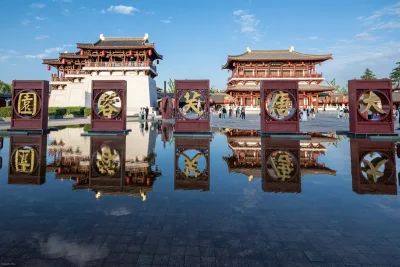
Qingming Shanghe Garden is a reconstruction of the Kaifeng that exists in one painting: Zhang Zeduan’s Along the River During the Qingming Festival, an early twelfth-century scroll showing the Northern Song capital on a busy spring day. The park takes the bridge, the river, the city gates and the market streets from that scroll and rebuilds them at walking scale around a lake, and then fills the streets with performers.
That framing matters, because it tells you what you are buying. This is not a heritage site and nothing in it is old. It is a theme park with a very specific and quite successful idea, which is that the attraction is not the buildings but the schedule: more than a hundred short performances a day, from a morning gate ceremony to water shows after dark.
If you are routing through this part of Henan, the Zhengzhou base guide explains how Kaifeng fits into a day trip, and the four capitals rail route puts the city in sequence with Luoyang and Anyang.
Tickets, and the ¥120 mistake
Start here, because the ticket structure is where visitors lose money.

What each ticket covers
The day ticket is ¥120, with a half-price concession at ¥60. Children under 1.2 m get in free, which is worth noting because several English-language pages still say 1.4 m.
The night tour is a separate cheaper ticket at around ¥80. You will see ¥100 and ¥120 quoted for the night tour on booking sites; those are packages that include a boat.
Then there is the show, Dasong Dongjing Menghua, a 70-minute water-based production staged on the lake. Gate prices run in four tiers: ¥249, ¥299, ¥499 for the VIP seating and ¥999 for the imperial box. You will see ¥239 advertised on the OTAs, which is a promotional rate rather than the gate price.
Here is the part that matters. The show ticket already includes the day ticket and the night tour. If you buy a ¥120 day ticket and a ¥249 show ticket for the same visit, you have spent ¥369 on a bundle that cost ¥249. The add-on is not an add-on. It is the whole day.
The three-day pass and its exception
The standard ticket comes with re-entry across three days, so you can leave for lunch and come back, or split the park over two afternoons. That is genuinely useful given the size of the site.
It does not apply on major holidays. The park switches to single-day single-entry during May Day, National Day and Spring Festival. In 2026 that meant 1 to 3 May and 1 to 5 October, with the three-day rule restored on 6 October. The show ticket, the Song banquet dinner and the tea performance are the three products that keep three-day entry through those periods.
The exception has been a sore point. In April 2026 the Longting District market regulator ruled that the park’s three-day-entry poster was misleading, on the grounds that the holiday exclusion was printed at a fraction of the size of the headline claim, and issued a correction notice. The park removed the poster. The rule still stands, but the fine print is now something you should read rather than assume.
Show times: there is no fixed one
Every English guide that tells you the show starts at eight in the evening is working from a schedule that no longer applies. The performance is timed to darkness, so it moves with the season, and the number of performances in a night is driven by demand.
In autumn 2026 the pattern was two shows, the first at 18:50 and the second at 20:20, each running about 70 minutes. Through the 2026 National Day peak the park ran four, with the last starting at 23:20 and finishing after midnight. On a quiet weekday in the shoulder season there is often a single performance around 20:10.

Why the time moves
Three things shift it. Sunset, which moves the first show by an hour and a half between September and December. Demand, which adds performances when the earlier ones sell out. And weather, which is the real variable: the show is staged on water with mist, pyrotechnics and a cast of several hundred, and heavy rain or high wind will stop it.
The park publishes a programme each day, available at the gate and through its official account. That programme, not any guidebook or booking confirmation, is the schedule. If you are booking a train out of Kaifeng on the same evening, this is the fact that decides whether you make it.
Is the night show worth it
The show was rebuilt for 2026, with a new production that premiered on 23 January after a two-week closure, directed by Mei Shuaiyuan and structured as a continuous narrative from eight Song ci poems across six scenes and four acts. It runs about 70 minutes on the lake at the centre of the park, with the audience seated on the bank.
Two arguments for it. The first is the bundling: at ¥249 for the lowest tier you are effectively paying about ¥130 more than a day ticket for an evening of theatre, entry across three days and the night tour. Judged that way it is good value, and it is the reason to buy the show ticket instead of the day ticket rather than as well as it.
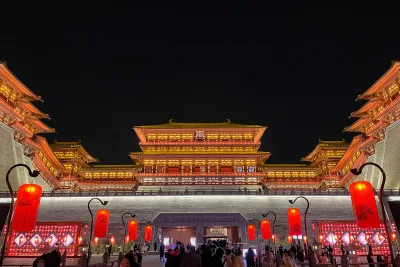
The second is that the park at night is a different place. The lights come on around 17:30 and the whole reconstruction, which looks flat in daylight, becomes something closer to what the painting was selling.
One argument against. The show is spectacle rather than history, and if you have already spent the day watching sword fights and imperial processions, an hour of water-borne pageantry with a large cast may feel like more of the same. There is no particular reason to book the ¥499 or ¥999 tiers. The lake is not large and every seat has a view.
Refunds are the detail to know if the weather turns. The policy is no refund as standard, but a cancelled performance is refundable through the ticket window within three days, and if you have already entered the park the ¥120 day ticket is deducted from what you get back.
The daytime programme, and why to arrive early
The daytime shows are free with entry and they are the reason the park works. The signature one is Yue Fei Defeats Xiao Liangwang, staged in the afternoon with real horses on a dirt arena, and it is consistently rated the best thing in the park. The Song capital defence battle is staged on the water at the Nine Dragon Bridge, with boats and pyrotechnics.
Then there is the volume of smaller material: the magistrate Bao Zheng opens the gates in the morning, a wealthy household stages a daughter’s marriage contest, there is an imperial examination you can watch, cuju football, cock fighting, shadow puppetry and marionettes.
Two practical notes. The headline shows are free but the seating is capped, so arriving 20 to 40 minutes early is normal rather than paranoid, especially for the Yue Fei show. And the schedule moves: the same show often runs two or three times in a day at different hours, so take the day’s programme at the gate and plan around it rather than against it.
In the evening the park adds its molten-iron displays, two of them on the water at around 20:25 and 21:10, both included in the day ticket. The iron-flower tradition is its own subject, and so is the separate show at Wansui Mountain Martial Arts City, which is a different park entirely.
Booking with a passport
Booking is real-name and the ticket is bound to the document you use. International visitors book with a passport rather than an ID card, and the process differs from the domestic one in a way that is easy to miss: you enter by scanning the booking QR code, and your face is captured at the gate on first entry. After that, re-entry runs on face recognition.
The channels are the WeChat mini-program, which is called the Qingming Shanghe Garden Official Mall, the park’s official service account, and the large OTAs. There are also ticket windows on site, which is the fallback if the passport number will not go through an online form, something that does happen on Chinese booking systems. The park’s enquiry line is 0371-25663819.
Tickets are date-specific, so you pick a day and it is not flexible. In practice, if you are booking from outside China and anything goes wrong, the ticket desk to the right of the entrance booths handles collection with the phone number used for the booking.
Getting there
Kaifeng has no metro, so this is a bus or a taxi question, and the answer depends on which station you arrive at.
From Kaifeng North, the high-speed station out in the north-western suburbs, the park is about 11 km: bus 38 runs direct in roughly 50 minutes, and a taxi takes 20 to 25 minutes for around ¥20 to ¥25. From Kaifeng station, the old conventional station inside the city, the park is under 6 km and bus 1 goes there directly.
The evening is the thing to plan. The last trains back towards Zhengzhou leave in the 21:40 to 21:50 window, which is fine for the first show and too early for the second, and on 6 October 2026 the railway added extra late departures from Kaifeng station specifically to serve the show crowd. If you are coming from Zhengzhou and want the late show, the multi-ride rail ticket covers the leg, but check the last departure before you book anything.
What is next door
The park sits in the Longting district with three other attractions inside a short walk, which is what makes a Kaifeng day work.
The Hanyuan Stele Forest is directly across the road from the main gate, about 100 m away. Longting Park, the pavilion on the island in the lake, is around 1.1 km and walkable in fifteen minutes. Wansui Mountain Martial Arts City is roughly a kilometre from there, and the Iron Pagoda is a short bus ride beyond that.
The river boats
The Bian River boat dock sits across the road from the park’s main gate, which makes it the obvious way to end an evening. One-way fares are around ¥30 by day and ¥40 at night, and a ¥68 pass gives unlimited hop-on, hop-off travel for 24 hours across eight docks. The night service runs 18:30 to 22:30 with the last boarding around 21:30.

The Drum Tower and its night market are a few kilometres away in the old city, and that is where you should eat. It is the reason to take a late train rather than an early one, and it costs far less than anything inside the park.
When to go: the chrysanthemum window
Kaifeng has been growing chrysanthemums for a thousand years and holds a city-wide festival for them every autumn. The 44th edition runs from 18 October to 17 November 2026, and Qingming Shanghe Garden is one of its two main venues, hosting the international chrysanthemum exhibition. If you are travelling in the second half of October or the first half of November, the park is decorated for it, which is either a bonus or a crowd, depending on your timing.
Holidays to avoid
The two days that break the park are the first days of the National Day and May Day holidays, when the single-entry rule applies, tickets sell out, and the show runs four times a night to clear the demand. The 2026 National Day version ran 1 to 5 October. Spring Festival is the same story.
Outside those windows, the park is open every day of the year, including through winter, when the show continues on its winter schedule. The claim that it closes in winter, which still circulates on English sites, comes from an old seasonal listing and has not been true since the current production opened in January 2026.
If you are deciding between Henan’s two big costume destinations, the Luoyang versus Xi’an comparison covers the hanfu side of the same trip, and the cities beyond the big five explains why Kaifeng is worth the detour in the first place.
Frequently asked questions
Does the night show ticket include park entry?
Yes, and this is the single most useful thing to know before you book. The Dasong Dongjing Menghua show ticket covers the performance, the daytime park ticket and the night tour. Buying a ¥120 day ticket and then a ¥249 show ticket for the same visit is ¥369 spent to get something the show ticket already included.
What time does the night show start?
It changes, and anyone quoting a fixed 8pm start is quoting an old schedule. In autumn 2026 the first performance ran 18:50 to 20:00 and a second ran 20:20 to 21:30. During the 2026 National Day peak there were four performances, the last ending after midnight, and on quiet dates there is often a single show around 20:10. Check the day’s programme at the gate.
Is Qingming Shanghe Garden worth a full day?
Yes, if you treat it as a theme park rather than a heritage site. There are more than a hundred scheduled performances a day, most of them short, spread across a site built around a lake. Three or four hours covers the highlights and an evening covers the rest. It is not an ancient site: the whole park is a modern reconstruction based on a Song-dynasty painting.
Can you buy tickets with a passport?
Yes. Booking is real-name and the ticket is tied to the document you book with. International visitors buy with a passport, enter by scanning the booking QR code, and have their face captured at the gate on first entry, after which re-entry uses face recognition. The WeChat mini-program is called Qingming Shanghe Garden Official Mall, and there are also ticket windows on site.
How do you get to Qingming Shanghe Garden from the station?
From Kaifeng North, the high-speed station, the park is about 11 km away: bus 38 runs direct in around 50 minutes, or a taxi takes 20 to 25 minutes for roughly ¥20 to ¥25. From Kaifeng station in the old city it is under 6 km and bus 1 goes there directly. Kaifeng has no metro.
Can you re-enter the park on the same ticket?
Usually yes, for three days, but not on major holidays. The park suspends the three-day rule and switches to single-day single-entry during May Day, National Day and Spring Festival, and restored it on 6 October 2026 after that year’s National Day week. The exception used to be buried in small print, and in April 2026 the district market regulator ruled the poster misleading and had it taken down.