Zhengzhou as a Base: Kaifeng, Luoyang and Shaolin Day Trips Compared

Zhengzhou is a rail hub pretending to be a city
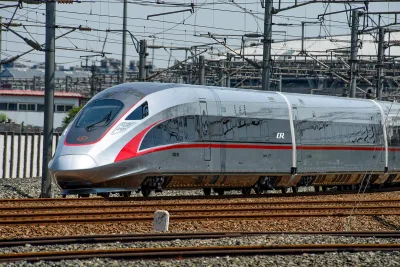
Almost everyone who visits Henan passes through Zhengzhou and almost nobody plans to. That is not a mistake in the itinerary, it is the shape of the province. Zhengzhou sits on the Beijing-Guangzhou high-speed line with the Xuzhou-Lanzhou line crossing it, and the result is a station with sixteen platforms and thirty-two tracks from which Kaifeng, Luoyang and Dengfeng are all reachable in under an hour.
So the real question is not whether to base yourself in Zhengzhou. It is which of the three trips you can actually complete in a day, and that answer is different for each one. Kaifeng is genuinely easy. Luoyang is easy out and late back. Shaolin is the one that eats the day, because there is no train to it, and no amount of planning changes that.
This is the comparison, with the station names, the times and the last-return problem for each. If you want the four-city version instead, the ancient capitals rail route sequences Zhengzhou, Anyang, Luoyang and Kaifeng over four days.
Which Zhengzhou station you booked into
Zhengzhou has three passenger stations and only one of them is useful for these trips.
Zhengzhou East is the high-speed hub, out on the eastern edge of the city, and it handles the G and D trains that go everywhere you want to go. Metro Line 1 connects it to the centre in about 25 minutes for ¥3, which is the single most useful fact about staying in Zhengzhou. Lines 5 and 8 also call there.
Zhengzhou station is the old conventional station, in Erqi district next to the Erqi Memorial Tower, and it is the better arrival point if your hotel is downtown. It handles K, T and Z trains, plus a handful of high-speed services. A few G trains towards Luoyang do leave from here rather than from the east station, and they can be marginally cheaper, so read the ticket rather than assuming.
The third is Zhengzhou Hangkonggang, opened in 2022 and previously called Zhengzhou South. It serves the airport and the lines towards Chongqing and Fuyang. It is useless for any of the trips in this article.
The trap is simple and it costs people an hour. 郑州 and 郑州东 are different stations about 12 km apart, they are linked by Line 1, and booking sites that abbreviate will hide the difference from you. The same discipline that applies to booking high-speed rail in China generally applies here: check the Chinese characters before you pay.
Kaifeng: the one you can do on a whim

Kaifeng is the easy one, and the reason is that it has three stations serving three different parts of the city. Which you book decides how much of the day you spend in transit.
Kaifeng North is the high-speed station, and it is the one people default to. Zhengzhou East to Kaifeng North is about 20 minutes, with more than a hundred departures a day on busy dates. The problem is where it sits: out in the north-western suburbs, roughly 10 to 11 km from Qingming Shanghe Garden and 16 km from the Drum Tower. That is a taxi of 15 to 30 minutes depending on traffic, or city bus 8 which takes the better part of an hour for ¥1.
Kaifeng station is the conventional station, and it is inside the old city. From Zhengzhou station it is 40 to 50 minutes on a slow train for around ¥12.50, which is a third of the high-speed fare. From there the Drum Tower is 2 to 3 km and Qingming Shanghe Garden is under 6 km, both of which are short taxi rides.
The option most English-language guides have not caught up with is the intercity line. Since March 2025 the Zhengzhou-Kaifeng intercity railway runs the whole way through to Kaifeng station rather than stopping at Songcheng Road on the edge, which means you can board at Zhengzhou East and step out inside the old city. The fastest run is 25 minutes and the minimum fare is ¥20, and on peak days the line carries up to 106 trains. It behaves like a metro: turn up, take the next one.
Practically, that changes Kaifeng from a planned day into something you can decide over breakfast. The old city is compact and walkable, Qingming Shanghe Garden needs three or four hours if you take it seriously, and the night market on the Drum Tower square is the reason to take a late train back rather than an early one. The last services towards Zhengzhou leave around 21:40 to 21:50.
Luoyang: longer by train, later by return

Luoyang is the trip with the biggest payoff and the longest ride, and, counter-intuitively, the least pressure on the way home.
Zhengzhou East to Luoyang Longmen runs 36 to 43 minutes on most services, at around ¥65.50 in second class. D trains on the same route cost less and take longer, which is a fair trade if you are not in a hurry. From Zhengzhou station the journey is 44 to 57 minutes and starts from around ¥59.50.
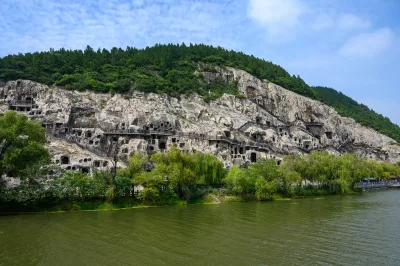
At the far end, Luoyang Longmen is 4 to 5 km from the Longmen Grottoes, which is 10 to 15 minutes and about ¥15 in a taxi, or bus 71 for ¥1 if you have the time. Two things catch people here. The first is the station name, because Luoyang has three stations with Longmen in the title and only one of them takes passengers. The second is that there is no metro to the grottoes, whatever an English guide may have told you. The Luoyang station comparison deals with both in detail.
What makes Luoyang the most forgiving of the three is the return. Services back to Zhengzhou East run until roughly 22:45, and some timetables show later. Unlike Shaolin, you are not racing a bus. That means you can do the grottoes in the late afternoon when the tour groups have thinned out, eat in the old town, and still get home the same night.
The honest caveat is that Luoyang deserves more than a day. The grottoes alone take three to five hours, White Horse Temple is a separate half-day, and the old town around Lijing Gate is at its best after dark, which is exactly when a day-tripper has to leave. If you have the time, give Luoyang one night and cut a night from Zhengzhou.
Shaolin Temple: no station, and that changes the day

Here is the fact that reshapes the whole trip: there is no railway station at the Shaolin Temple, and there is no railway station in Dengfeng either. The intercity line that would connect Zhengzhou, Dengfeng and Luoyang has been planned for years, has been reported as starting construction more than once, and does not carry passengers. Any English guide telling you to take a train to Shaolin, or to a station called Dengfeng East, is describing something that does not exist.
So the day runs on road, and your realistic options are these.
The direct tourist bus is the best of them. Zhengzhou Transport launched a through service in June 2025 running from Zhengzhou Central Bus Station to the Shaolin Temple P3 car park, ¥30 each way, about two hours. It leaves at 07:30, 08:00, 08:30 and 09:40, and returns at 14:30, 15:30, 16:30 and 17:30. You book through the operator’s WeChat account or the DiDi mini-program, and it stops at the old village of Yangjiamen and at the Zhongyue Temple on the way. The catch is built into those numbers: the last bus back is at 17:30, and it leaves from the temple rather than waiting for you.
The cheaper alternative is an ordinary long-distance bus to Dengfeng, which runs from several Zhengzhou bus stations including the coach hub beside Zhengzhou East, costs ¥25 to ¥32, and takes one and a half to two hours. From Dengfeng you still need bus 8 or a ¥15 to ¥30 taxi to reach the temple gate, which adds another half hour each way. It works, and it is more work.
A taxi or DiDi straight from Zhengzhou is about 88 km and a little over an hour in light traffic, at roughly ¥150 to ¥190 each way. For two or more people that is competitive with the bus and enormously more flexible, and it is the option that lets you stay for the last kung fu show.
If you are coming from Luoyang rather than Zhengzhou, there are direct coaches from the bus stations by Luoyang railway station, ¥24 to ¥26 and one and a half to two hours, with the last return from Shaolin in the late afternoon. It is a common route and a reasonable one if Luoyang is your base.
Once you are there, the ticket situation is straightforward but worth knowing before you arrive. Entry is ¥80 and it is a through ticket: the monastery, the Pagoda Forest, the kung fu performance and the outlying sites including Sanhuangzhai and the Bodhidharma Cave. Students pay half, and children under 1.4 metres and visitors over 60 go free. Note that a lot of English-language sources still quote ¥100, which is the old price. The kung fu show runs several times a day and is included, though sources disagree on whether that is four performances or six, so check the board at the gate.
Two extras to budget for. The cable car up towards Sanhuangzhai is ¥100 return or ¥70 one way, with the last ride up in the mid-afternoon, and the shuttle from the gate to the monastery is ¥15 one way. Adding the cable car and Sanhuangzhai turns a three-hour visit into six to eight hours, which does not fit a day trip from Zhengzhou at all. Do the monastery, the Pagoda Forest and the show in three to five hours, and accept that you have seen the famous part rather than the whole mountain.
One warning that several guides repeat and that is worth passing on: some buses sold as Shaolin tours detour to secondary sites, stop for lunch and do not include the entry ticket. Book the direct service or take a taxi.
The three compared, honestly
Kaifeng is the one to do if you have a single free day. Twenty to forty minutes by rail depending on which station you choose, three stations all with late returns, a compact old city you can walk, and the option of the intercity if you want to decide at breakfast. It is also the cheapest. Its ceiling is lower than Luoyang’s, because much of what you see is reconstruction, but the day is relaxed and you will not spend it watching a clock.
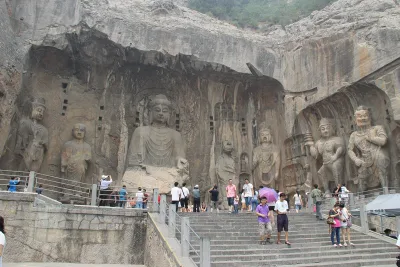
Luoyang is the one to do if you care most about what you see. The grottoes are the best single sight in Henan and among the best in China. It costs more and takes longer, and the return is late enough that it is not a constraint. The mistake is treating it as a day trip when an overnight is barely more expensive and considerably better.
Shaolin is the one to do only if you want it specifically. It is the most famous name of the three and the least efficient day. Roughly three to five hours of travel for three to five hours on site, the earliest start of the three because the direct bus stops running mid-morning, and the hardest deadline on the way home. If the temple is the reason for your trip, stay in Dengfeng and do it properly, and consider pairing it with the Zhongyue Temple and the Songyang Academy on the same mountain.
If you can only do two, do Kaifeng and Luoyang, and take the Shaolin day out of your Zhengzhou base only if you are prepared to be on a bus by 07:30 and back at 20:00 with sore feet. Nobody I have spoken to regrets seeing the Pagoda Forest. Several regret the day it took.
What to do with the half day you have left in Zhengzhou
Zhengzhou gets dismissed as a transfer city, and the dismissal is half fair. It has one thing that justifies a day, and it is free.
The Henan Museum is the best single introduction to the province and one of the strongest provincial museums in the country. The Jiahu bone flute, the Shang bronzes, the Bronze Age material that gives context to everything you will see in Anyang and Luoyang. Entry is free with a real-name timed reservation through the official WeChat account, passports are accepted but you may need the staffed counter rather than the gate readers, and it closes on Mondays. Budget three hours. Its own English page advertises opening until 20:30, which conflicts with the Chinese announcements and looks like a website error, so check before you plan an evening visit.
The second thing is the Shang city wall. Zhengzhou was a Shang capital around 3,600 years ago, which makes it older than Yin Xu, and about 3 km of the inner wall still stands above ground in the middle of the modern city, layered Shang, Warring States, Han, Tang and Ming construction in the same bank of earth. A boardwalk along the wall opened in 2025 and it is free, unbooked and open until 22:00, which makes it the perfect thing to do on the evening you arrive. Metro Line 3 to Zhengzhou Wenmiao or Line 2 to Dongdajie.
The Erqi Memorial Tower is a ten-minute stop, free, and closed on Mondays. Only Henan, the 21-stage theatre complex, is the big paid attraction at around ¥285, and it is genuinely unlike anything else in the country if immersive performance is your thing.
Where to stay, and why it matters more here
The choice is between the centre and the station, and for a rail-based trip the centre wins.
Staying near Erqi Square or Zhengzhou station puts you in the middle of the city with the night market and the food streets on your doorstep, and Line 1 gets you to Zhengzhou East in 20 to 25 minutes without a change. Staying at Zhengzhou East is only worth it if your itinerary is literally a series of early departures, because there is nothing there but the station and a lot of concrete.
If you are doing the Shaolin day on the direct bus, note that it leaves from Zhengzhou Central Bus Station rather than from the rail station, so check which is closer to your hotel. Luggage storage exists at both: counters at Zhengzhou East near gate 32A for around ¥15 a suitcase, and four left-luggage offices at Zhengzhou station at ¥3 to ¥4 a day by weight. That matters if you are doing a day trip on a travel day, which is a common and slightly stressful pattern in Henan.
If your trip is really about the rail network rather than the cities, the multi-ride rail ticket covers Zhengzhou, Kaifeng and Luoyang but not Dengfeng, for the same reason there is no train to Shaolin. The second-tier city guide has the wider case for giving Zhengzhou two nights rather than one.
Frequently asked questions
Can I do Kaifeng, Luoyang and Shaolin as day trips from one Zhengzhou base?
Kaifeng and Luoyang yes, Shaolin reluctantly. Kaifeng is 20 minutes by high-speed rail and Luoyang is around 40, both with late returns. Shaolin has no railway station at all, so the day runs on a bus or a taxi and the last one back leaves in the late afternoon.
Is there a train to the Shaolin Temple?
No. There is no railway station at the temple and none in Dengfeng either, so any ticket sold as a train to Shaolin is wrong. The practical options are the direct tourist bus from Zhengzhou Central Bus Station, a long-distance bus to Dengfeng plus a local bus, or a taxi for around ¥150 to ¥190.
Which Zhengzhou station should I book into?
Zhengzhou East for almost everything, since that is where the high-speed trains stop. Zhengzhou station is the older conventional station in the centre and it is also closer to the Erqi district, so check the characters on your ticket: 郑州 and 郑州东 are different stations about 12 km apart.
What is the last train back to Zhengzhou from Kaifeng?
From Kaifeng North the last high-speed services leave around 21:40 to 21:50, and the intercity from Kaifeng station runs to about the same time. Timetables change with the season, so check 12306 on the day rather than trusting a schedule written months earlier.
Is Shaolin Temple worth a full day from Zhengzhou?
It is a full day whether you plan one or not. Door to door is roughly three to five hours of travelling for three to five hours on site, and the last bus back leaves Shaolin at 17:30. If you want the Pagoda Forest and the cable car up to Sanhuangzhai as well, stay in Dengfeng instead.
How long do I actually need in Zhengzhou itself?
One full day, plus a night on either side. The Henan Museum is free and needs three hours, the Shang dynasty city wall is a short metro ride away, and the Erqi Memorial Tower takes ten minutes. Zhengzhou is a routing hub that happens to have one good museum, and that is an honest description rather than a criticism.