China in March: Weather, Crowds and Where to Go

March is the one month of the Chinese year with nothing to sell you. No public holiday, no festival, no peak. The Spring Festival crowds went home in mid-February. The first holiday of spring, Qingming, does not arrive until 3 to 5 April 2027. In between sit four weeks of ordinary life at ordinary prices, in weather that improves every week.
That gap is the reason to go, and also the reason March is misread. People book it expecting spring and land in a country where spring is arriving at four different speeds. Harbin gains 9.1 degrees on February and still averages 3.2°C. Guangzhou gains 2.3 degrees and starts raining. Between the two lies every version of the season you might want.
Every temperature below is the 1991–2020 climate normal from the China Meteorological Administration. They describe what March usually does, not what it will do this year.
What March actually feels like
| City | Average high | Average low | Rain days | The short version |
|---|---|---|---|---|
| Harbin | 3.2°C | −8.2°C | 5.4 | Ice park closed, ground still frozen, trees bare |
| Beijing | 13.2°C | 1.9°C | 3.0 | Warm afternoons, cold mornings, dust in the air |
| Xi’an | 15.5°C | 3.9°C | 7.2 | The first comfortable month since October |
| Lhasa | 13.4°C | −0.5°C | 2.4 | Bright, bone dry, hard frost after dark |
| Chengdu | 16.8°C | 8.4°C | 11.4 | Mild, grey, damp indoors |
| Shanghai | 14.9°C | 7.6°C | 12.7 | Rain returns with a purpose |
| Kunming | 21.8°C | 8.9°C | 5.4 | The best month of its year |
| Guangzhou | 22.3°C | 15.5°C | 13.8 | Wettest of the eight, sticky indoors |
Rain days means days with at least 0.1 mm of precipitation. The number that matters in March is not the temperature but which way the rain is moving, because it reverses the winter pattern. Through February, Shanghai is the wettest of these cities, with 10.4 rain days and 65 mm. In March, Guangzhou takes the title with 13.8 days and 101 mm, nearly double its February total, and Shanghai follows at 12.7 days and 97 mm. The wet season has started in the south. Everything else in the country is drying out or holding still.
The north does the warming
Look at the month-on-month change and the country splits cleanly in two. Harbin climbs 9.1 degrees by day and 9.6 by night. Beijing adds 7.1 and 6.1, Xi’an 6.2 and 5.0. Guangzhou adds 2.3 and 3.0, Shanghai 4.2 and 3.5. The subtropical south is already close to where it is going; the north has been waiting since November and is now moving fast.
The effect on the temperature gap is dramatic. In February, Harbin and Guangzhou are 25.9 degrees apart by day. In March they are 19.1 apart. Six degrees of that gap close in four weeks, and almost all of it comes from the northern end.
Harbin’s jump matters for a practical reason: 3.2°C is above freezing. Snow turns to slush, river ice loses its load-bearing strength, and the things people visit Harbin for stop existing (more on that below). Beijing’s 13.2°C is the first genuinely pleasant daytime figure since October, though the average night of 1.9°C means a morning start still needs a real coat.
Daylight stops being a constraint. The March equinox falls at 04:25 Beijing time on 21 March 2027, which in China puts the astronomical start of spring after midnight on the 21st rather than on the 20th. Either way, the practical effect is that Beijing gains more than an hour of daylight across the month and passes twelve hours of it around the equinox. In the northeast the gain is larger still, which is the single best argument for visiting Harbin in late March rather than January if you are going for the city and not the ice.
The heating goes off on 15 March
This is the March fact that catches visitors out, and almost no guide mentions it. Under Beijing’s heating regulations, the municipal heating season runs from 15 November to 15 March, with bedrooms and living rooms held at a minimum of 18°C. The 2026-27 season started on schedule on 15 November. It ends on 15 March 2027.
What that means in practice: the second half of March can feel colder indoors than February did. Outside, Beijing is warming quickly. Inside, the radiators are off and the buildings have not caught up. Hotels switch to air conditioning, older guesthouses may have nothing at all, and a 13°C afternoon followed by a 2°C night leaves a room at maybe 16°C by morning.
The northeast runs a different calendar. Harbin’s heating season runs to 20 April under current rules, and the 2026-27 season began early, on 10 October. So Harbin in March is warm indoors and cold outside, which is the opposite problem from Beijing.
South of the Qinling-Huaihe line there is no municipal heating at all, in any month. Chengdu at 16.8°C and Shanghai at 14.9°C are pleasant outdoors in the afternoon and clammy inside, because the buildings are built to shed heat rather than hold it. The guide to southern China in winter explains what to ask before you book a room, and most of it still applies in March, which is the point: the south does not warm up on a schedule.
Where March works best
Yunnan: the last of the dry season
Kunming averages 21.8°C by day and 8.9°C at night, with 5.4 rain days and 19.6 mm across the month. It is the warmest March of the eight cities here and still dry enough that the light stays clean. February is technically its driest month, but March is the one with comfortable evenings.
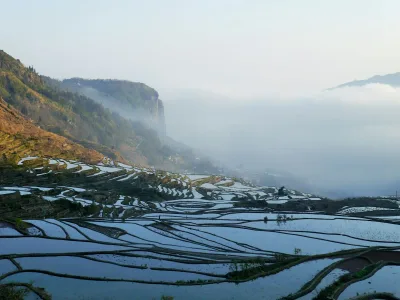
The countryside is the reason to come now. The rapeseed terraces around Luoping are in flower from February into mid-March, and by the end of the month the yellow is going over. The Yuanyang rice terraces are flooded and reflecting sky through this window. Both are a few hours from Kunming by road and neither appears in a standard package. The Yunnan first-timer route covers the transport, and the timing is unforgiving: this is a two-to-three-week window, not a season.
Beijing and the north: blossom, dust and politics
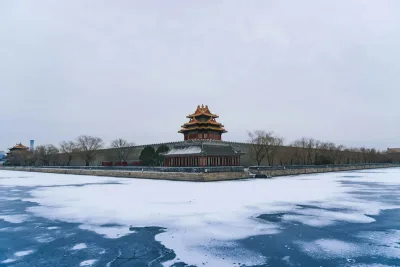
Beijing averages 13.2°C by day and 1.9°C at night, with 8.6 mm of precipitation across 3.0 days. The parks bloom in the second half of the month, the palaces are uncrowded outside two specific windows, and the Great Wall is at its most photogenic because the hills are still brown and the sky is often clear.

Two things to plan around. The first is dust. March is the opening of the northern dust season, which runs to May with April the busiest month; most of the dust comes from southern Mongolia. It rarely closes anything, but it turns the sky yellow, flattens photographs and irritates throats. Check the air quality index in the morning and move a museum day forward if it reads above 200.
The second is political. The national legislature and the advisory conference meet in Beijing in early March, conventionally opening around 4 and 5 March, with the 2027 dates confirmed in late December. For about ten days, roads near Tiananmen close, security checks multiply and central hotels fill with delegations. If your Beijing days are fixed, check those dates before booking. If they are flexible, the second half of the month is calmer and warmer. The Beijing first-timer guide has the booking mechanics, and the section-by-section Wall guide explains which stretches are worth the drive in spring wind.
Shanghai and the delta
Shanghai averages 14.9°C by day and 7.6°C at night, with 12.7 rain days and 97 mm. It is not the wettest city in the table any more, but it is wet enough that an umbrella stops being optional. The rain is different from summer rain: lighter, more persistent, often a grey drizzle that lasts a day and a half.
The compensation is that the delta is at its best before the plum rains of June. The water towns are quiet, the gardens are green, and the two-week stretch after the equinox is the most comfortable weather Shanghai gets until October. It is also the last cheap window: hotel rates climb into April and stay up through the May holiday. The three-day Shanghai itinerary works better in March than in summer, simply because you can walk between stops without arriving soaked.
Guangzhou and the south: the damp arrives
Guangzhou averages 22.3°C by day and 15.5°C at night, with 13.8 rain days and 101 mm. On paper this is the most comfortable warm weather in the country. In practice March is when southern China gets the phenomenon that gives the season its bad reputation.
It is called hui nan tian, the return of the south wind. Warm, saturated air from the South China Sea runs into surfaces that are still cold from winter, and the moisture condenses indoors. Floors sweat. Mirrors fog. Towels stay wet for days. The China Meteorological Administration and Guangdong’s weather service put the peak in late February and early March, with a better than 60% chance of at least one episode in that window and individual episodes lasting three to five days.
You cannot schedule around it more than a few days ahead, and forecasts name it only a short way out. What you can do is book a room with a dehumidifier, keep the windows shut when the corridor floor is wet, and treat a damp day as a museum day. The compensations are real: everything is green, the food is at its best, and hotel prices are a fraction of the Spring Festival rates a month earlier.
Lhasa: the driest place in the table
Lhasa records 13.4°C by day, −0.5°C at night and 3.5 mm of precipitation across 2.4 days. That makes March the driest month of its year in this table by a wide margin, and one of the brightest. The Potala in clear winter light, with far fewer people in front of it than in summer, is the reason photographers go now.
The trade-offs are altitude and cold nights. UV is fierce, the air is dry enough to crack lips, and a surprising number of guesthouses and restaurants stay closed until April. Permits still have to be arranged through a registered agency, and snow can shut mountain roads without notice. The Tibet travel guide sets out the permit process and a realistic acclimatisation schedule.
Cherry blossom season, and how to book it
China’s cherry blossom calendar runs south to north across about five weeks, and the difference between a good trip and a wasted one is usually two or three days of timing.
Kunming goes first, usually in early to mid March, at Yuantongshan and around the universities. Wuhan is next and is the big one: the avenue at Wuhan University, with the green-tiled roofs of the old campus above it, is the most photographed spring scene in the country. Entry is free but controlled. In 2026 the university opened the campus from mid to late March on a real-name reservation, released three days ahead each evening, capped at 20,000 people on weekdays and 40,000 at weekends, with gates closing in the late afternoon. Expect a similar system in 2027, published in early March, and ignore anyone offering to guarantee entry for a fee.

Beijing’s Yuyuantan park and Wuxi’s Yuantouzhu come late in the month and run into early April. Both are weekend destinations for domestic visitors, which means Saturday crowds that make a weekday visit look like a different park. Go on a Tuesday, arrive at opening, and leave by noon.
What March does not do
March is a bad month for two things people still book it for.
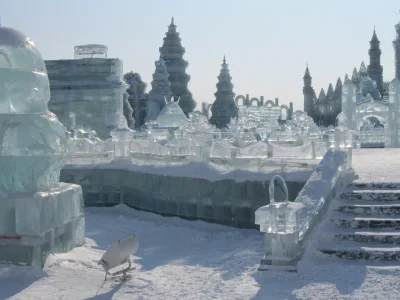
The first is Harbin’s ice. The Ice and Snow World runs from mid-December into late February, and the 2025-26 edition closed early, on 21 February, after warm weather. By March the sculptures are gone, the river ice is unsafe and the parks are bare. What is left is a cold, cheap, ordinary northern city that is worth a day for the architecture and nothing more. If the ice is the reason for the trip, go in December or January; the Harbin ice festival guide covers the season.
The second is skiing at its best. The base is still there in early March, and the daylight is better than in January, but the thaw starts at low altitude and works upward. Resorts near Beijing typically wind down in late March, while Changbaishan and the Xinjiang areas hold on into April. If snow quality matters, book the first half of the month and go high. The ski resort comparison covers altitude and snow reliability, and the Chongli guide handles the two-hour run from Beijing.
The visa question, three months on
The 30-day visa-free scheme for 50 countries expired at midnight on 31 December 2026. As of 18 November 2026 the foreign ministry had confirmed no extension, saying only that it was studying the policy. Unless that changes before you fly, a March 2027 arrival needs a visa.
The exceptions are narrow. Russian passport holders travel under a bilateral arrangement extended to 31 December 2027. Brunei has no stated end date. Everyone else is back to a tourist visa, a 240-hour transit if they are passing through to a third country, or Hainan’s island-only entry.
Apply now rather than in February. Visa centres in Europe and North America fill up in the weeks before Qingming, and an appointment booked late is the single most common reason a spring trip gets pushed to autumn. The visa-free entry guide tracks the country lists and any renewal; the application guide covers the paperwork.
Who March suits
It suits anyone travelling on a budget. With no holiday in the month, this is the cheapest four weeks of the Chinese spring, and the difference against the first week of April is not marginal: the same room in Hangzhou or Sanya can move by half.
It suits cherry blossom chasers, photographers working the brown-to-green transition in the north, and anyone who wants Yunnan before the rains. It suits travellers who are happy to pick one region and stay in it, because the country is not one climate in March and trying to cover Harbin and Guangzhou in the same week means packing for two different trips.
It does not suit anyone who wants the ice, anyone who assumed the visa-free scheme would be extended, or anyone treating “spring” as a promise of warm weather. Beijing at 13.2°C average high means a 2°C morning; Shanghai at 14.9°C means rain.
Pack for the coldest point on the route and add a waterproof layer. A down jacket is still right for Harbin and Lhasa nights, a mid-weight coat for Beijing mornings, and a shell for the south. Add sunglasses and high-factor sunscreen for the plateau, and an N95 mask if you are in the north in late March when the dust comes through. The full packing list has the layer-by-layer version.
The honest summary: March is the cheapest and quietest month of the Chinese spring, and the one where choosing the right region matters most. Go south for warmth and blossom, north for clear skies and empty walls, Yunnan for the last dry weeks. Avoid Harbin. Book the visa before you book anything else.
Frequently asked questions
Is March a good time to visit China?
For value, it is the best month of the Chinese spring. March 2027 has no public holiday, so hotel rates sit at their annual floor and the ticketed sights are walk-in. The weather is a transition rather than a season: Harbin averages 3.2°C by day after −5.9°C in February, while Guangzhou only moves from 20.0 to 22.3°C and turns wet. Choose your region by how much spring you want, not by the calendar.
What is the weather like in China in March?
In the 1991–2020 normals, average daily highs run from 3.2°C in Harbin to 22.3°C in Guangzhou. Beijing averages 13.2°C by day and 1.9°C at night, Shanghai 14.9°C and 7.6°C, Xi’an 15.5°C and 3.9°C, Kunming 21.8°C and 8.9°C, Lhasa 13.4°C and −0.5°C. The rain moves south: Guangzhou records 13.8 rain days and 101 mm, Shanghai 12.7 days and 97 mm, while Lhasa sees 2.4 days and 3.5 mm.
Is March crowded in China?
Not by Chinese standards. There is no statutory holiday in March 2027, and the first one, Qingming, falls on 3 to 5 April. The two exceptions are Beijing in the first ten days, when the national political sessions bring security cordons and full hotels, and the cherry blossom parks, which fill at weekends in the second half of the month.
What is hui nan tian in southern China?
It is the spring damp that hits Guangdong, Guangxi and neighbouring provinces when warm, saturated air from the south meets surfaces still cold from winter. Floors sweat, mirrors fog and laundry refuses to dry. The China Meteorological Administration and Guangdong’s weather service put the peak in late February and early March, with a better than 60% chance of at least one episode in that window and single episodes lasting three to five days.
When do the cherry blossoms bloom in China?
Kunming is first, usually in early to mid March. Wuhan follows in the second half of March, when Wuhan University opens its campus on a free real-name reservation; in 2026 it capped entry at 20,000 people on weekdays and 40,000 at weekends. Beijing’s Yuyuantan park and Wuxi’s Yuantouzhu come late in the month and run into early April. The 2027 windows and booking rules are published in early March.
Can I enter China visa-free in March 2027?
Not under the 30-day scheme, unless it has been renewed. The arrangement covering 50 countries expired at midnight on 31 December 2026, and as of 18 November 2026 the foreign ministry would say only that it was studying the policy. Russian passport holders remain covered to 31 December 2027 under a bilateral deal. Everyone else needs a tourist visa, the 240-hour transit scheme or Hainan’s island-only entry.