China's Wet Markets: How to Shop Like a Local

A wet market is not a tourist attraction and it is not trying to be one. It is where a neighbourhood buys dinner. That is exactly why it is worth an hour of your trip.
The name is literal. Produce is kept fresh with water, the floors stay wet all day, and the building smells like fish, citrus peel, and floor cleaner. It is loud, it is cramped, and it is the most useful introduction to how ordinary China actually eats.
This is the practical version. If you want the wider context of why visitors have started seeking out this kind of thing, our trends page covers that, and the guide to living like a local covers the daily routine around it.
What is actually inside
Markets vary by region and size, but most follow the same layout. Knowing it saves you from wandering.
The vegetable section takes up the most space and is the easiest to shop. Greens, roots, squash, herbs, mushrooms, tofu, and usually a few things you cannot identify. Prices are posted on handwritten signs per jin, which is 500 grams.
The meat section is the one that surprises visitors. Carcasses hang in the open, cuts are butchered to order, and the temperature is ambient rather than refrigerated. This is normal and it is how most of the country buys pork. If it bothers you, walk through quickly.
The seafood section has live fish in tanks, and you choose the one you want. The vendor kills and cleans it on the spot, usually in under two minutes. Crabs and shellfish are sold live as well.
Dry goods are the quiet corner of the market and the best section for a visitor. Mushrooms, spices, rice, noodles, preserved vegetables, tea, and sauces. This is where you can buy things worth carrying home, and where the stallholder is most likely to be patient with you.
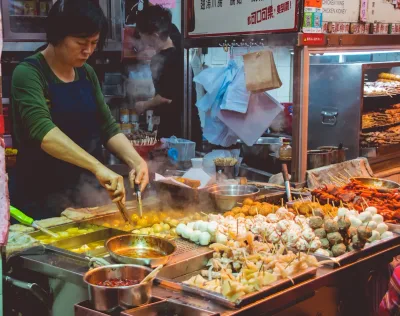
Cooked food stalls line the entrance or the outer edge, and this is where you eat. Noodles, dumplings, pancakes, braised meats, and usually one stall with a queue. Prices run ¥8 to ¥25 for a full meal.
How to buy without speaking
This takes about ninety seconds to learn.
Point at the item. Hold up fingers for how many, or how many jin you want. The vendor weighs it and shows you the price on a scale display or a calculator. You scan a QR code to pay, or hand over cash. That is the entire transaction.
Two things make it smoother. First, have Alipay or WeChat Pay working before you go, because many stalls no longer keep change for large notes. Our payment guide covers setup if you have not done it.
Second, do not pick up produce yourself unless you see others doing it. Point and let the vendor choose. Handing you the good ones is part of the service, and grabbing your own can come across as doubting them.
If you want to cook, ask for help. A translation app plus pointing at a vegetable will usually get you a recommendation and a rough quantity.

Prices, and the overcharging question
Short answer: you are probably not being overcharged much, and it matters less than you think.
Wet market prices are competitive within earshot. If one stall quotes a visitor double, the next stall three metres away will not, and everyone can hear. The margin for tourist pricing is thin because the customer base is neighbours who shop there daily and know exactly what a jin of tomatoes costs.
For scale, a typical basket of vegetables for two people runs ¥15 to ¥30. A whole fish is ¥20 to ¥60 depending on species. Half a kilo of pork is about ¥15 to ¥25. Tofu is ¥2 to ¥4 a block. If you are paying three times those numbers, you are in a tourist market rather than a neighbourhood one.
The real price risk is not the markup. It is buying more than you can carry or cook. Vendors sell by weight and a jin of anything is heavier than it looks.

Etiquette that matters
Photography is the one place travelers get this wrong. Nobody cares if you photograph vegetables, signs, or the building. Photographing a person’s face without asking is rude, and some vendors have had enough of it to react badly. Ask, using gestures if needed. At meat and fish counters, do not photograph at all.
Do not block the aisle. Markets are narrow and locals are working. Step to the side to take a photo or check your phone.
Do not haggle on food. Prices are set. Bargaining belongs at souvenir and clothing markets, and doing it here just wastes everyone’s time.
Ask before touching live animals. Some sections sell live poultry and turtles, and the vendors handling them do not want help.
If you buy something messy, ask for a bag. They will have one.
Where to go
Almost every city neighbourhood has a market and the closest one is usually fine. If you want a specific one worth the trip:
Beijing’s Sanyuanli market is the most visitor-friendly, with some English signage and imported goods alongside the local sections. It is cleaner and pricier than a neighbourhood market but easier as a first experience.
Shanghai’s Tangjiawan or the markets around the old town are good for a wander, though the central ones have drifted toward tourist pricing. Go to a market in a residential district instead.
Chengdu’s markets are the most enjoyable of the big cities, largely because the cooked food sections are excellent and the pace is slower. The market near Kuanzhai Alley is convenient but busy.
Kunming’s Zhuanxin market is the one to prioritise if you are in Yunnan. It has an entire section of mushrooms, herbs, and regional ingredients that you will not see anywhere else in the country, plus a cooked food area that locals queue at.
Guangzhou is where the seafood sections are the most serious. If you want to understand what the Cantonese obsession with freshness means, this is the place.
What to do with what you bought
Hostels with kitchens are the obvious route, and most have a fridge and a wok. This is the cheapest good meal you can make in China.
If you are in a hotel without a kitchen, buy from the cooked food stalls instead and eat there. That section of the market is the best-value meal in any Chinese city, and it is covered in more detail in our street food guide and the beginner’s guide to Chinese food.
One caveat worth repeating. Do not buy pre-cut fruit to eat later in the day. Buy whole fruit and wash it, or buy it cut and eat it immediately.
Frequently asked questions
What is a wet market in China?
A covered market selling fresh food: vegetables, meat, live fish, tofu, eggs, rice, spices, and usually a row of cooked-food stalls. The name comes from the water used to keep produce fresh and the floors permanently wet as a result. Most neighbourhoods have one within walking distance, and locals shop there daily rather than weekly.
Do I need to speak Chinese to buy anything?
No. Point at what you want, hold up fingers for quantity, and use your phone calculator to show the price you are offering or confirming. Vendors deal with this constantly. The only phrase worth learning is the word for how much, and even that is optional because they will show you the number on a calculator or scale.
Are wet markets safe for tourists?
Yes. They are everyday shopping, not a tourist attraction, and crime is not a concern. The practical issues are hygiene and footing: floors are wet, live animals are present in some sections, and raw meat sits at ambient temperature. Do not buy pre-cut fruit you plan to eat later in the day, and watch where you step.
Can I bargain at a wet market?
Rarely, and not on vegetables. Prices are set and posted, and haggling over a ¥3 bunch of greens will not work. Bargaining happens at souvenir markets and clothing markets, not here. If you buy a large quantity from one stall, you might get a small discount, but it is not expected.
What time should I go?
Early. The best stalls are stocked by 6:30am and the freshest fish and meat are gone by 9. By early afternoon the selection is thin and vendors are packing up. Weekend mornings are busiest and have the widest range. If you only go once, go on a weekday around 7am.
Is it rude to take photos?
Ask first if a person is in the frame. Nobody minds you photographing produce, signage, or the building. Photographing vendors’ faces without asking is the thing that gets a bad reaction, and it happens often enough that some are openly hostile to cameras. At meat and fish counters, skip it entirely.