China Travel Trends: What's Actually Happening Right Now

China travel content changed shape this year. The clips that get passed around are no longer shot from a tour bus window at the Great Wall. They are shot in a wet market at 7am, in a foot massage chair, on a 1am walk through a city where nothing bad happens.
This page tracks what is actually driving interest in China right now and what it means for your trip. We refresh it roughly every ten days. Two things moved since the last pass. The season turned: autumn color is peaking in the south and closing in the north, and the booking conversation has moved to winter. And on the rules side, the core 30-day visa-free list is still written to expire on 31 December, with no renewal announced as we publish this. Both are covered below. If you only read one section, make it the one on what this means for your trip.
The three waves, in order
Understanding how the conversation moved explains why your feed looks the way it does.
The first wave was travel as proof. Landmarks, checklists, the same ten photos everyone takes. It is still the biggest category by volume, and it is also the least interesting.
The second wave, which peaked over the summer, was about immersion. High-speed rail, mobile payment, a skyline at night. The pitch was that China is modern and that this is a surprise. That framing worked because it argued with something, and arguments travel.
The third wave is where we are now. Instead of watching, people started copying. Drinking hot water. Morning congee. Slips at the door. Group exercise in the park at 7am with whoever shows up. The shift is small but it matters for you as a traveler: the audience is no longer asking what China looks like. They are asking what it would be like to live here for two weeks. Our guide to the habits people are copying is that question answered with prices and a reality check.
The test for the rest of the year has changed with the weather. Summer made these habits look easy. The cold is the harder edit. Hot water makes more sense in Harbin in January than in a July vlog, but park exercise at dawn and a wet market at 7am become different propositions. The creators worth watching over winter will be the ones who adapt the habits rather than repeat the summer version.
What’s happening this month
No major Chinese public holiday falls in the next two months, which makes this one of the better windows to travel: normal prices, thinner crowds at the big attractions, and no timed reservation pressure on museums. The next holiday period is announced by the State Council roughly two months ahead, and this section updates automatically when it lands.
Practical consequences, in order of how much they will affect you:
- Train tickets on the busiest routes sell out the moment they release, which is 15 days ahead. If your route includes a peak date, book the day the window opens or pick different days.
- Hotel prices in the main destinations roughly double for the week. Book early or shift to the week after.
- Attractions that are normally walk-in start requiring timed reservations. The Forbidden City and the big museums are the usual suspects.
- The first three days of any peak window are the worst of it. Crowds drop fast after that.
Outside those windows, travel in China is markedly cheaper and quieter. Our Golden Week survival guide has the day-by-day version, and the Mid-Autumn guide covers where the moon-viewing actually happens.
Five things people actually film
Patterns in what gets watched are a decent proxy for what is worth your time, because they reflect what people found surprising enough to record.
Night walks. Someone walking a city street at 1am, alone, filming, and nothing happens. This is the most-repeated format of the year and it works because it argues with a belief the viewer arrived with. The darker half of the year gives it more material, not less: earlier sunsets mean more footage shot after dark, and the format has spread from big-city downtowns to smaller towns where the streets empty by ten. If you want the honest version of this, our solo safety guide covers what actually deserves caution and what does not.
Infrastructure shock. Robotaxis, maglev, facial recognition at the gate, a delivery robot in a hotel corridor. The tech roundup covers the fifteen that visitors bring up most, and the EV factory tours are the version you can book yourself. The train story needs handling carefully this season: the CR450 has been everywhere in the feed, but as of this pass you still cannot buy a ticket for it, and our CR450 explainer separates the test records from the timetable. Factory tourism has also grown into a genre of its own, from car plants to space centers, and the industrial tourism guide covers which ones take visitors. The adventure version of the same appetite is the sky ladder on Qixing Mountain, and our Qixing guide covers who it turns away.
Street food. Woks, hand-pulled noodles, skewers, soup dumplings cut open. This is the most portable Chinese content there is because everyone eats. As the evenings cool the footage moves indoors, toward hot pot and noodle shops, but the format does not change. Start with the street food guide if you want dishes rather than footage.
Reversals. First-time visitors admitting they were wrong about something. The format only works when it is specific, which is also why our myths article avoids the generic version.
Price comparisons. A dental cleaning, a high-speed train ticket, a bowl of noodles, priced next to the same thing at home. The numbers are genuinely striking, and the medical tourism guide is where we keep the ones we have verified. The rail version got more complicated this year, because fares on the busiest lines are dynamic now: the price on the poster is a ceiling, not what you will pay. Our high-speed rail guide explains what actually moves the number.
Doing the local things, concretely
Watching the trend is easy. Doing it takes about twenty minutes of planning, and almost none of it costs money. The list below is the summer version, with notes on what changes now that the weather has turned. None of it requires a booking, which is the point.
Hot water is not a wellness practice here. It is what restaurants serve without asking, at every meal, in every price bracket. In winter it stops being a quirk and becomes the thing you are most grateful for. If you want the version with ceremony, a tea house in Chengdu or Beijing will pour for you for the price of the tea. The tea guide covers which regions are worth a detour if you want to go further than a cup.
Park exercise happens early. Between about 6:30 and 8am, city parks fill with groups doing slow movement, and nobody is selling anything. Find the largest green space near your hotel and walk in. You will be invited to join, or you can stand at the edge and copy. In cold weather the groups start later and shrink, and the ones who stay are the serious ones. This is free and it is genuinely one of the better hours you can spend in a Chinese city.

Foot massage is the highest-value hour in China and the one most travelers skip. A standard hour runs ¥80-200 depending on the city, more in Shanghai, less in Chengdu. You get a chair, a bucket, and someone who will find knots you did not know about. Chains are reliable and easy to book by walking in. Look for a place with visible prices and customers who are local. It is also the best winter habit on this list, because you leave warm.
Wet markets are where the local-life thing stops being a trend and becomes just shopping. Go in the morning, which is when the good stalls are stocked. Nobody expects you to speak. Point, hold up fingers, use your phone calculator for the price. The etiquette that matters is photography: ask before pointing a lens at a person, and skip it entirely at meat counters. In winter the produce shifts to cabbage, radish, cured pork and pickles, which is a better story than another shelf of fruit.

Convenience store tea is the cheapest version of all of this. A bottled milk tea is ¥10-20 and every chain makes a decent one. It is not a profound experience. It is what people actually drink on the way to work, which is the point. The winter move is the hot cabinet next to the till: steamed buns, tea eggs, and a bottle of warm soy milk for less than a coffee at home.
Our full guide to the habits covers what each one costs and which are worth your holiday time. For the market side specifically, the wet market guide has prices, etiquette and which cities are worth it. The wellness guide covers the foot soaks, the park exercise and what the evidence supports.
Where people are going instead
The most useful shift for planning purposes is geographic. Beijing and Shanghai have not lost their place, but they are no longer where the interesting decisions are being made.
Chongqing is the clearest example. A city that was a footnote in Western guidebooks five years ago now anchors a whole genre of video because of how disorienting it is to walk around. The 8D city guide explains the layout, which genuinely takes explaining.
Second-tier cities are absorbing real volume now. Quanzhou, Zhaoxing, Shaoxing, Jingdezhen. Smaller places with something specific rather than a checklist. Our rising cities piece covers the ones worth the detour, and the rural village guide covers the version where you sleep in one.
Changsha is still the one we have not written, and it is now overdue. It has become the default answer for younger travelers: night markets that stay loud until 2am, a rebuilt 1980s street food complex that people queue an hour for, and prices noticeably below the coastal cities. It is two hours from Shanghai by rail and almost nobody in the English-language guide space covers it well.
There is also a quieter shift running underneath, which is that county-level towns are showing up in itineraries that used to be city-only. Some of this is saturation: the famous places are full, and people go looking for the version without queues. Some of it is that small towns in Fujian, Zhejiang and Yunnan have quietly built the same infrastructure the big cities have. Either way, the practical effect is that a two-week trip no longer has to be four cities. It can be two cities and three towns. The Zhejiang water town route is one version already worked out.
The season has done most of the work on this year’s map. Autumn color is the theme of the closing booking window, and the names being passed around are almost all small places or single-purpose trips. The poplar forest along the Tarim in southern Xinjiang is in its last weeks. Jiuzhaigou is at or near peak foliage, and the reservation window rather than the price is what decides whether you get in. The larch and birch country in the northeast is already past its best. None of these are day trips from a capital, and most need a domestic flight plus a car. Our Xinjiang guide covers the permits and breaks the season down by region, the Ili piece covers the lake-and-yurt version of the same trip, and the Jiuzhaigou guide explains the booking system that stands between you and the park. We still have not written a dedicated autumn color guide. At this point that moves to next year’s list rather than this one.
The next window is already open. Harbin’s ice park announced its coming season in mid-October with a Frozen theme area and a larger footprint, and the first lifts in Hebei and Jilin are due to turn from late October. The signal worth noticing is on the ski side: the Ikon Pass added two Chinese resorts in the northeast for this winter, which tells you how the global pass system now sees Chinese skiing. Our Harbin guide covers the festival itself, including what the cold actually feels like. Skiing is a gap we have not covered yet, and one we would like to close before the season ends.
If you want the short list: Quanzhou for maritime history and the sea temple, Quanzhou and Xiapu for the coastal route, and Zhaoxing if you want to sleep somewhere with a drum tower and no tour buses.
What this means for your trip
Three practical shifts, in order of how much they will change your planning.
First, budget for everyday experiences, not just attractions. The things people come back talking about are increasingly free: a market, a park at dawn, a foot massage, a long walk at night. Build time for those instead of adding a fourth museum. In winter, move the same budget indoors: a tea house afternoon, a long lunch, a foot massage. The cold makes lingering the point.
Second, get the logistics done before you land, and re-read the entry rules even if you checked them earlier this year. The gap between a smooth trip and a frustrating one is almost entirely decided in advance: payment set up, a working eSIM, and a rough sense of the rail system. Our payment guide and digital setup guide cover it, and both take under an hour at home.
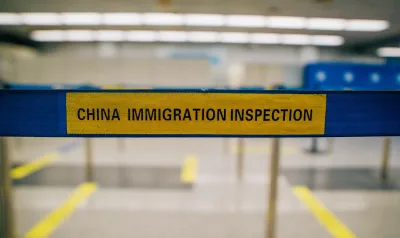
Entry rules are the part that changed, and they are still moving. The 30-day visa-free list that covers most of Europe and much of Asia is written to expire on 31 December, and as of this pass no renewal has been announced. Extensions have been routine with this program, but a winter trip that depends on visa-free entry should have a fallback. The September rule that lets officers ask you to back up your stated purpose with documents or electronic data is now in force. Honest answers are the whole game: a false purpose or a fabricated invitation letter can mean refusal at the border and an entry ban of several years. Carry your hotel booking and your onward ticket, answer the question plainly, and leave a little more room at check-in. The visa policy hub keeps the current country lists, and the visa-free guide covers what officers actually ask.
Third, book the famous places before you fly. The reservation habit started with museums and has spread to the parks: Jiuzhaigou sells nothing at the gate, Zhangjiajie wants a fresh timed reservation for every day of a multi-day ticket, and the panda bases run on the same model. Build the booking into the plan a week or two before you land. Then go one level deeper than the itinerary suggests. The towns in the previous section are not harder to visit. They are just less written about, which is exactly why they are worth the extra planning.
Sources and update log
This page draws on our own tracking of overseas conversation about China travel, cross-checked against published reporting from Chinese state and international outlets, plus platform trend data where it is available.
We deliberately do not quote view counts or engagement numbers. They are reported second-hand, they vary by source and window, and they change faster than a page like this can be updated. Trend direction is what holds up. If you see a specific number attached to a trend, treat it as marketing.
What changed in this pass: the season turned from autumn color to winter booking, with Harbin’s coming season announced and the northern resorts taking bookings; the 31 December visa-free expiry moved from a footnote to the main planning risk; and we added guides to the CR450 and the Qixing Mountain sky ladder, both of which were missing from the site a month ago. What we still have not written: Changsha, a dedicated autumn color guide, and anything on skiing. The first two are overdue.
Last updated: 21 October 2026.