Chinese Street Food Guide: 15 Dishes Worth Leaving Your Hotel For
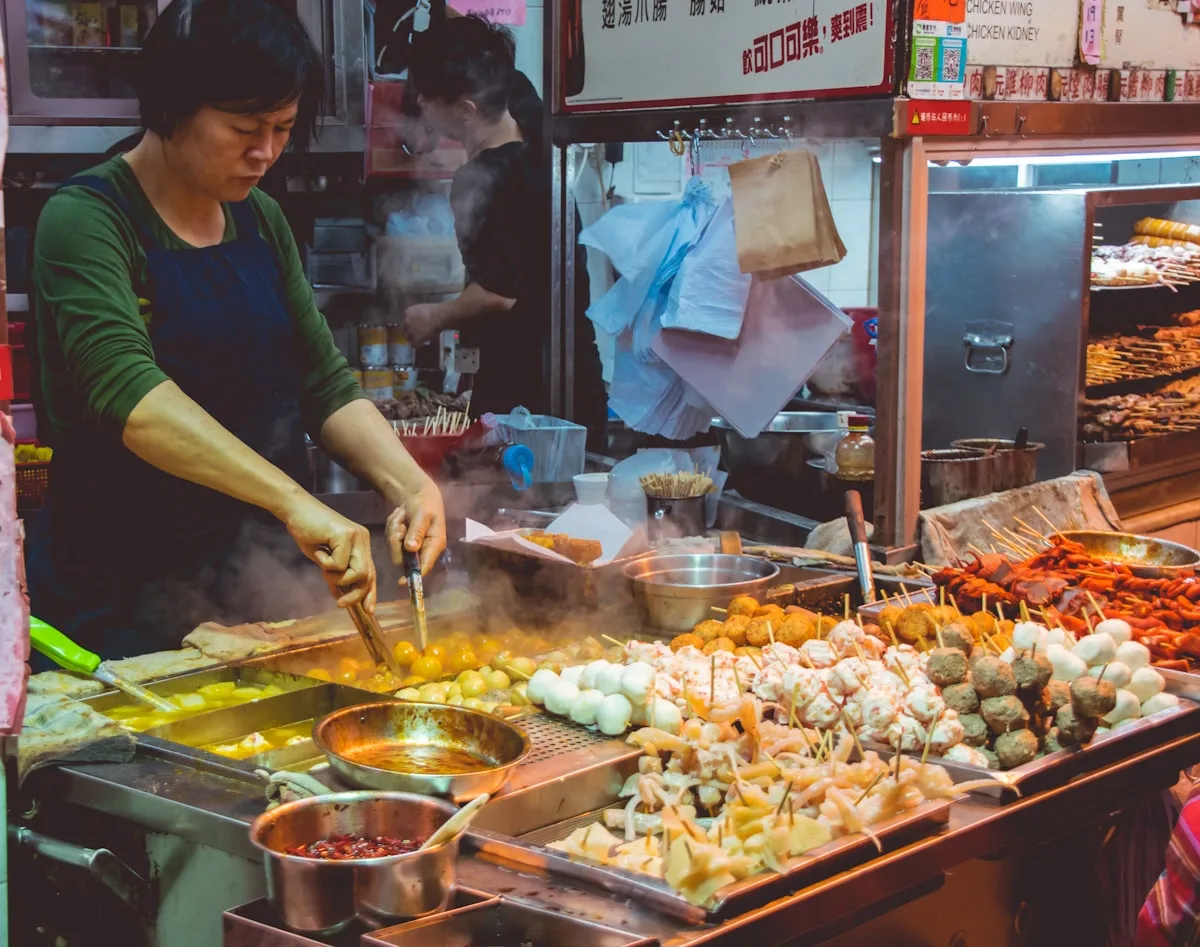
Chinese street food is not a monolith. The jianbing vendor in a Beijing hutong at 7am is making something fundamentally different from the dan hong you chao shou cook in a Chengdu night market at 10pm. The ingredients shift by province. The techniques shift by city. What stays the same: the food costs ¥5-25 ($0.70-3.50), it is cooked in front of you, and it is almost always better than whatever you ate at the restaurant the night before.
This guide covers 15 street foods that every visitor to China should try, organized north to south. Each entry gives you the price, the city where it is best, and the exact phrase to say when you order. You do not need to speak Mandarin to eat well in China. You need to know what to point at.
Jianbing (煎饼), Beijing and Tianjin
A jianbing is a crepe made from mung bean and grain batter, spread thin on a round cast-iron griddle, cracked with an egg, and folded around a crispy fried cracker (薄脆, báo cuì) with hoisin sauce, chili paste, and scallions. The whole process takes about 90 seconds. The result is a handheld breakfast that costs ¥6-10 ($0.85-1.40) and has the structural integrity to survive a Beijing subway commute.
Beijing’s best jianbing come from street carts near office parks and residential compounds between 7am and 9am. The cart with the longest line always wins. Specific blocks to check: the alleys around Dongsi, the area east of Gulou before the tourist rush, and the residential streets behind Zhongguancun where tech workers line up at 8:15am.
Tianjin makes a variant called jianbing guozi (煎饼馃子) that uses a youtiao (fried dough stick) instead of the crispy cracker. It is softer, greasier, and heavier. Tianjin locals will tell you the Beijing version is inauthentic. Beijing locals will not dignify this with a response.
Order: 一个煎饼, 加鸡蛋 (yī gè jiān bǐng, jiā jī dàn). “One jianbing, add an egg.”
Shengjianbao (生煎包), Shanghai
Shanghai’s shengjianbao is a pan-fried pork bun with a thick, yeast-risen wrapper, a crispy bottom from the hot oil in the pan, and a scalding-hot broth sealed inside. The first bite releases a jet of soup that has burned the mouths of every person who has ever eaten one. Let it cool for 60 seconds. Then bite a small hole in the top, slurp the broth, and eat the rest.
Yang’s Fried Dumplings (小杨生煎) on Wujiang Road is the institutional reference point. A plate of four costs ¥12-18 ($1.70-2.50). The original location moved years ago, but the quality at the Wujiang Road shop holds. There is always a line. It moves fast.
Shanghai also does guotie (锅贴), potstickers that are longer, thinner, and crispier than shengjianbao. Same filling, different wrapper, different shape. Same risk of mouth burns.
Order: 一客生煎 (yī kè shēng jiān). “One serving of shengjian.”
Xiaolongbao (小笼包), Shanghai and Wuxi
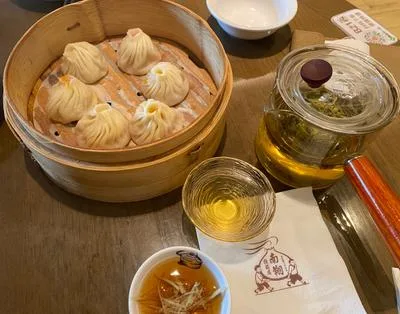
Xiaolongbao are thin-skinned soup dumplings steamed in bamboo baskets. The filling is minced pork with a gelatinized broth that melts into soup during steaming. The wrapper is thin enough to see the liquid moving inside. The technique for eating one: lift it by the gathered topknot with your chopsticks, place it on your spoon, bite a small hole to let the steam escape, drink the soup, dip the rest in black vinegar with ginger slivers, and eat.
Shanghai’s version uses a clear, savory broth. Wuxi’s version, about an hour west by train, uses a darker, sweeter broth and a slightly thicker wrapper. Both are correct. Which one you prefer tells people something about you.
Din Tai Fung is the international chain that made xiaolongbao famous. It is good. It is also expensive: ¥68-98 ($9.50-13.70) per basket. The local shops on Shanghai’s side streets, look for steamed baskets visible through a glass window, charge ¥15-25 ($2.10-3.50) and the quality is often better. Jia Jia Tang Bao (佳家汤包) on Huanghe Road is the local favorite. Go before 11am or after 2pm to avoid the line.
Order: 一笼小笼 (yī lóng xiǎo lóng). “One basket of xiaolong.”
Chuan’r (串儿), Beijing and Northern China
Chuan’r are skewers of lamb, beef, or chicken grilled over charcoal at roadside stalls. The meat is dusted with cumin, chili powder, and salt before and during grilling. The fat drips onto the coals and the smoke rises back through the meat. Beijing’s summer evenings smell like cumin for a reason.
A single skewer costs ¥3-8 ($0.40-1.10). You order by the handful, not by the count. The standard order is ten lamb (羊肉串, yáng ròu chuàn) and five chicken wings (鸡翅, jī chì). The wings take longer. Order those first.
Donghuamen Night Market near Wangfujing is the tourist version. Skip it. Go to Guijie Street (簋街) in Dongzhimen instead. The whole street is lined with chuan’r restaurants where you sit at plastic tables on the sidewalk, order cold beer and hot skewers, and eat until the metal sticks form a small forest on your plate. The Muslim quarter in any major Chinese city, from Niujie in Beijing to the streets around Xiaotaoyuan Mosque in Shanghai, does lamb chuan’r better than anywhere else.
Order: 十个羊肉串 (shí gè yáng ròu chuàn). “Ten lamb skewers.”
Baozi (包子), Everywhere
Baozi are steamed buns with a fluffy wheat dough and a filling of pork, vegetables, or red bean paste. They are China’s universal breakfast item. Every city has them. Every neighborhood has a shop that opens at 5:30am and sells out by 9am.
A pork bun (肉包, ròu bāo) costs ¥1.50-3 ($0.20-0.40). A vegetable bun (菜包, cài bāo) costs ¥1-2. Three or four make a breakfast that costs less than ¥10 and fills you until lunch.
The best baozi are not at chains. They are at independent shops where the steamer baskets have been in continuous use since the 1990s, where the owner works the counter and the steam billows out the door onto the sidewalk, and where the regulars arrive at the same time every morning and get their order without saying a word.
Order: 三个肉包 (sān gè ròu bāo). “Three pork buns.”
Cong You Bing (葱油饼), Shanghai
Scallion pancake is a flatbread made by rolling dough with lard and chopped scallions, coiling it into a spiral, flattening it again, and pan-frying it until the outside shatters and the inside pulls apart in layers. The best versions have been laminated and re-laminated so many times that the cross-section looks like puff pastry.
Shanghai’s most famous scallion pancake shop is A Da Cong You Bing (阿大葱油饼) on Ruijin Er Road. The owner makes every pancake by hand, one at a time, in a shop the size of a walk-in closet. The wait is often 30 minutes. The pancake costs ¥8 ($1.10). People wait anyway.
Elsewhere in Shanghai, scallion pancake carts appear near metro exits during the morning commute. These are faster, cheaper (¥4-6), and slightly less layered. Still excellent.
Order: 一个葱油饼 (yī gè cōng yóu bǐng). “One scallion pancake.”
Youtiao (油条), Everywhere
A youtiao is a long strip of wheat dough, deep-fried until it puffs into a golden-brown, airy cylinder the length of your forearm. The exterior is crisp. The interior is soft and slightly chewy. It is technically a breakfast item, paired with warm soy milk (豆浆, dòu jiāng) for dipping, but you will see people eating youtiao at all hours because it costs ¥2-3 ($0.30-0.40) and tastes like a savory doughnut.
Youtiao appears in multiple forms across China. In Shanghai, you dip it in soy milk. In Cantonese regions, you wrap it in a rice noodle sheet (炸两, zhá liǎng) and douse it in sweet soy sauce. In Wuhan, you stuff it inside a sesame flatbread (烧饼夹油条) for a breakfast sandwich that costs ¥5.
Order: 一根油条 (yī gēn yóu tiáo). “One youtiao.”
Dan Hong You Chao Shou (红油抄手), Chengdu
Chengdu’s defining street food is wontons in chili oil. The wontons are small, filled with minced pork and ginger, boiled, and served in a bowl of dark vinegar, soy sauce, garlic, and a slick of chili oil that stains the wrappers red. The heat builds slowly across the first three or four bites and then stays there.
A bowl of ten costs ¥10-15 ($1.40-2.10). The best versions are sold from carts in Chengdu’s back alleys and at the stalls inside the Jinli pedestrian street after dark. The shop name does not matter. Look for a Sichuanese grandmother working a pot of boiling water next to a row of ceramic bowls pre-filled with the sauce mixture. That is the one.
Chengdu also does chaoshou in a clear chicken broth (清汤抄手, qīng tāng chāo shǒu) if you cannot handle the chili oil. Ordering the non-spicy version in Sichuan carries no shame. The locals eat both. They just eat the spicy one more often.
Order: 一碗红油抄手 (yī wǎn hóng yóu chāo shǒu). “One bowl of chili oil wontons.”
Liangpi (凉皮), Xi’an
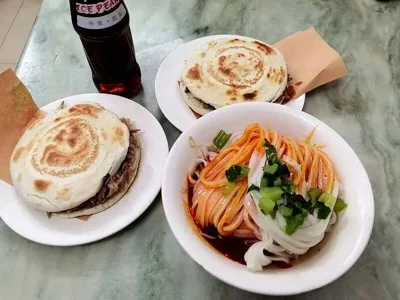
Liangpi is a cold noodle dish from Shaanxi province. The noodles are made from wheat or rice starch, cut into wide, translucent ribbons, and tossed with vinegar, chili oil, garlic, bean sprouts, and cucumber shreds. It is served cold, which makes it one of the best things to eat in a Chinese summer when the temperature is 35°C and you have lost the will to eat anything hot.
A bowl costs ¥8-12 ($1.10-1.70). Xi’an’s Muslim Quarter is the historic source, but liangpi stalls appear in cities across China during the summer months. The vendor will ask how spicy you want it. The correct answer is “medium” the first time. Sichuan-style liangpi adds Sichuan peppercorn for a numbing effect alongside the heat. The Shaanxi original keeps the chili clean without the ma (麻) sensation.
Order: 一份凉皮, 中辣 (yī fèn liáng pí, zhōng là). “One liangpi, medium spicy.”
Xiaomian (小面), Chongqing
Chongqing xiaomian is a bowl of thin wheat noodles in a broth that is equal parts chili oil, Sichuan peppercorn, soy sauce, black vinegar, sesame paste, minced garlic, scallions, and crushed peanuts. It is the breakfast that Chongqing eats standing up on the sidewalk because the shops are too small for seats.
A bowl costs ¥7-12 ($1.00-1.70). The default spice level is hot enough to make your lips go numb by the fourth bite. You can ask for less chili (少辣, shǎo là) or more numbness (多麻, duō má). The ma (numbing) from the Sichuan peppercorn is the sensation that defines Chongqing food. It is not heat. It is a buzzing, vibrating feeling that changes the way your mouth perceives temperature and texture. If you have never experienced it, Chongqing xiaomian is the introduction.
Order: 一碗小面 (yī wǎn xiǎo miàn). “One bowl of xiaomian.”
Cifantuan (粢饭团), Shanghai and Jiangnan
Cifantuan is a ball of steamed glutinous rice wrapped around a filling of youtiao, pickled vegetables, and shredded pork floss. It is the Shanghainese breakfast that looks like a rice ball and eats like a meal. The rice is sticky enough to hold its shape but soft enough to yield to a bite. The youtiao inside adds crunch. The pork floss adds savory depth.
A standard cifantuan costs ¥6-10 ($0.85-1.40). Vendors sell them from carts near metro stations during the morning commute. Ask for the sweet version (甜, tián) and they add sugar and sesame paste instead of pickled vegetables. The savory version is the classic. The sweet version is the one that makes you understand why Shanghainese food has a sweet reputation.
Order: 一个粢饭团, 咸的 (yī gè cī fàn tuán, xián de). “One cifantuan, savory.”
Chou Doufu (臭豆腐), Changsha and Nationwide
Stinky tofu is fermented tofu that has been soaking in a brine of vegetables, meat, and aromatics for anywhere from a few days to several months. It is then deep-fried and served with chili sauce, garlic, and pickled cabbage. It smells like something you should not eat. It tastes like something you should order a second portion of.
Changsha-style chou doufu is black on the outside from the fermentation, with a crispy shell and a custard-soft interior. A plate of six pieces costs ¥8-12 ($1.10-1.70). The best stalls in Changsha are at the Taiping Street night market, where the smell announces the stall from half a block away.
Elsewhere in China, chou doufu is paler and less fermented, with a milder smell and a firmer texture. The Changsha version is the benchmark. Everything else is gentler.
Order: 一份臭豆腐 (yī fèn chòu dòu fǔ). “One serving of stinky tofu.”
Tanghulu (糖葫芦), Beijing and Northern China
Tanghulu is candied hawthorn berries on a bamboo skewer, dipped in hardened sugar syrup that shatters when you bite it. The hawthorn inside is sour enough to make your jaw tighten. The sugar shell outside is sweet enough to balance it. The combination is the taste of a Beijing winter.
A skewer of five or six berries costs ¥5-8 ($0.70-1.10). Vendors sell them from carts in tourist areas and residential neighborhoods alike. Modern variations replace the hawthorn with strawberries, grapes, or cherry tomatoes. The hawthorn is the original. The strawberry version is easier to like on the first try.
Tanghulu appears most often between October and March, when the cold air keeps the sugar shell firm. In summer, the sugar melts and the experience degrades. Eat it in winter or not at all.
Order: 一根糖葫芦 (yī gēn táng hú lú). “One tanghulu.”
Malatang (麻辣烫), Sichuan and Nationwide
Malatang is a choose-your-own-ingredients hot pot for one. You take a bowl, fill it from a refrigerated display of skewered vegetables, meats, tofu, and noodles, hand it to the cook, and they boil everything in a communal pot of numbing-spicy broth. The cooked ingredients come back in a bowl with the broth ladled over them. You pay by weight, not by item: typically ¥20-30 ($2.80-4.20) for a filling meal.
Malatang chains are everywhere in Chinese cities. Yang Guofu (杨国福) and Zhang Liang (张亮) are the two national brands, with thousands of locations each. The independent shops are usually better. Look for a narrow storefront with a refrigerated case visible from the street, a row of sauce bottles on a counter, and a pot of broth so deeply red it looks structural.
The broth contains Sichuan peppercorn, dried chili, star anise, cinnamon, fennel, and about twelve other things the cook inherited from a grandparent. You can ask for a clear bone broth base (骨汤, gǔ tāng) if the numbing heat is too much. The default is the red broth. Choose it.
Order: Point at what you want. The staff will weigh it and ask if you want spicy (麻辣, má là) or clear (清汤, qīng tāng). Say “mala” for the real thing.
Roujiamo (肉夹馍), Xi’an
Roujiamo is sometimes called a “Chinese hamburger.” This is technically accurate and also wrong. It is braised pork belly, chopped and stuffed into a flatbread that has been baked in a clay oven until the outside is crisp and the inside is soft. The pork has been simmering in a pot of soy sauce, rock sugar, and twenty-something spices for hours before you arrive. The bread soaks up the juices. The ratio of meat to bread skews heavily toward meat.
A standard roujiamo costs ¥8-15 ($1.10-2.10). Xi’an’s Muslim Quarter is the historic source, but the best individual shops are scattered across the city. Fan Ji (樊记) on Zhubashi Street has been operating since 1925 and the recipe has not changed in a way that matters.
In Xi’an, roujiamo is typically paired with liangpi. The cold noodles and the hot meat sandwich are a combination that makes sense the moment you try it. Order both.
Order: 一个肉夹馍 (yī gè ròu jiā mó). “One roujiamo.”
Guotie (锅贴), Shanghai and Nationwide
Guotie are long, thin potstickers, pan-fried in a single layer until the bottoms form a connected golden crust. The filling is usually pork and cabbage, sometimes pork and chive. The wrapper is thicker and chewier than a jiaozi, and the extended pan-frying gives the whole thing a texture that steamed dumplings cannot match.
A plate of eight costs ¥12-18 ($1.70-2.50). Shanghai’s best guotie shops are unmarked storefronts in the French Concession and the lanes near Laoximen, open from early morning until they sell out, which is usually by 1pm.
Guotie appear across China under different names and with minor variations. The Shanghai version is the standard. The Tianjin version uses lamb instead of pork. The Dongbei version adds garlic chives and is larger.
Order: 一份锅贴 (yī fèn guō tiē). “One serving of guotie.”
Frequently asked questions
Is Chinese street food safe to eat?
Yes, if you follow basic rules. Eat at stalls with long lines and high turnover — fresh ingredients matter more than appearances. Stick to food cooked in front of you: fried, boiled, grilled. Avoid raw or cold-prep items from stalls without refrigeration. Carry hand sanitizer and drink bottled water only. In years of eating street food across China, the line rule has never failed.
Do I need to speak Chinese to order street food?
No. Pointing works everywhere. Each entry in this guide includes the Chinese name and a phonetic pronunciation of what to say. Hold up fingers for the quantity. Vendors are used to non-Chinese-speaking customers in major cities and will meet you halfway. Show a photo on your phone if all else fails.
How much does street food cost in China?
Most items cost ¥5-25 ($0.70-3.50). A full street food meal of two or three items runs ¥20-40 ($2.80-5.60), less than a single sit-down restaurant dish. Breakfast items like jianbing and youtiao are the cheapest at ¥2-10. Night market skewers and regional specialties like xiaolongbao and roujiamo sit in the middle range.
What is the best street food city in China?
Chengdu and Xi’an are the two essential street food cities. Chengdu does spicy wontons (红油抄手) and malatang. Xi’an does roujiamo and liangpi in the Muslim Quarter. Shanghai is third for its breakfast culture: shengjianbao, xiaolongbao, and cifantuan. Beijing’s jianbing and chuan’r are worth seeking out but the city’s street food scene is thinner than it was a decade ago.
Can vegetarians eat Chinese street food?
It takes more effort but is possible. Vegetable baozi (菜包), liangpi (cold noodles), cong you bing (scallion pancake), and tanghulu (candied fruit) are naturally meat-free. Malatang lets you choose only vegetables and tofu. Be aware that many broths and sauces use pork or chicken stock as a base. Say “I eat vegetarian” (我吃素, wǒ chī sù) and watch for hidden meat in seemingly vegetable dishes.
What time of day should I eat street food in China?
Breakfast street food peaks between 7am and 9am: jianbing, youtiao, baozi, and cifantuan. Lunch stalls run 11am-1pm. Night markets open around 6pm and run until 10pm or later; this is when skewers (chuan’r), stinky tofu, and regional specialties appear. Late night skewer stalls in cities like Beijing and Chengdu stay open past midnight. Avoid street food during the afternoon lull (2pm-5pm) when turnover is slowest.
How to eat street food in China without getting sick
Four rules from someone who has eaten street food in China for years and never been taken out by it:
One: eat where the line is. A long queue means high turnover. High turnover means fresh ingredients. Fresh ingredients mean the oil, meat, and vegetables in your food were bought that morning, not three days ago. This rule works in every city on earth. It works especially well in China, where a bad food stall goes out of business within weeks because locals will not give it a second chance.
Two: eat things that are cooked in front of you. Fried, boiled, grilled — the cooking process kills what needs killing. Raw or cold-prep street foods carry more risk. Liangpi is cold but the noodles are cooked first. Cifantuan is assembled cold but the rice is fresh-steamed. Use your judgment.
Three: bottled water only. Tap water in China is not safe to drink. Street vendors use boiled water for cooking, which is fine. Do not drink from the tap, do not use tap water to brush your teeth in places you are unsure about, and do not accept ice in drinks from street stalls. Bottled water costs ¥2-3 ($0.30-0.40).
Four: carry hand sanitizer. Many street food stalls lack a sink. You will eat with your hands or with chopsticks that have been handled by several people before you. A travel-size bottle of hand sanitizer weighs nothing and solves the problem.
For more on food safety, read the China night market food safety guide. For a broader introduction to Chinese cuisine, start with Chinese food 101. If you want a deeper dive into Shanghai’s food scene, the Shanghai food guide covers everything from street stalls to fine dining. Traveling to Chengdu? The Chengdu panda and spice guide covers the food side of that city.