Chinese Food Guide: What to Eat, Where to Find It & How to Order

Chinese food is not one thing. It’s eight classical cuisines, thirty-some provincial traditions, and thousands of local dishes shaped by geography, climate, and 5,000 years of history. The food you know from takeout boxes back home is a tiny, highly adapted sliver of what actually exists.
This guide is for travelers who want to eat well in China, whether you’re a first-timer staring at an all-Chinese QR code menu, a vegetarian trying to avoid hidden pork, or a food-driven traveler building an itinerary around what you’ll eat.
We’ll cover the Eight Great Cuisines, 50+ dishes worth seeking out, the best food cities, street food strategy, and exactly how to order without speaking Chinese. If tea is the other half of your culinary curiosity, our China tea travel guide maps the best tea regions — from Longjing villages in Hangzhou to ancient pu’er forests in Yunnan.

The Big Picture: Eight Great Cuisines (八大菜系)
Chinese cuisine is traditionally divided into eight classical traditions. Each is defined by its region’s climate, agriculture, and history. You don’t need to memorize them, but knowing the broad strokes will transform how you order.
| # | Cuisine | Region | Flavor Profile | Signature Ingredients | Best For |
|---|---|---|---|---|---|
| 1 | Sichuan (川菜) | Southwest | Numbing-spicy (麻辣), complex | Sichuan peppercorn, chili, doubanjiang (fermented bean paste) | Heat seekers, bold flavor lovers |
| 2 | Cantonese (粤菜) | Guangdong / Hong Kong | Fresh, subtle, umami-forward | Seafood, soy sauce, ginger, scallion | Dim sum, seafood, delicate palates |
| 3 | Shandong (鲁菜) | Northeast coast | Salty, savory, rich broths | Seafood, wheat, vinegar, garlic | Soups, seafood, northern comfort food |
| 4 | Jiangsu (苏菜) | Lower Yangtze | Sweet, refined, balanced | Freshwater fish, sugar, vinegar, soy | Elegant dining, banquet cuisine |
| 5 | Zhejiang (浙菜) | Hangzhou / coastal Zhejiang | Light, fresh, slightly sweet | Freshwater fish, bamboo shoots, tea | Delicate flavors, tea-infused dishes |
| 6 | Fujian (闽菜) | Southeast coast | Umami-rich, broth-focused | Seafood, fermented fish sauce, mountain herbs | Soups, consommés, seafood |
| 7 | Hunan (湘菜) | Central China | Hot, aromatic, sour-spicy | Fresh chili, smoked meats, fermented black beans | Pure fire: spicier than Sichuan, no numbing |
| 8 | Anhui (徽菜) | Inland mountains | Rustic, hearty, wild | Mountain herbs, wild game, bamboo, ham | Mountain food, braises, stews |
Quick tip: Sichuan = numbing + spicy. Hunan = pure spicy. Cantonese = fresh and subtle. Jiangsu/Zhejiang = refined and slightly sweet. When in doubt, start Cantonese and work your way west. The food gets bolder as you go.
Must-Try Dishes by Experience
Rather than list dishes by region, here they are organized by what kind of experience you’re looking for.

For First-Timers (Safe, Delicious, Impossible to Dislike)
| Dish | What It Is | Find It In |
|---|---|---|
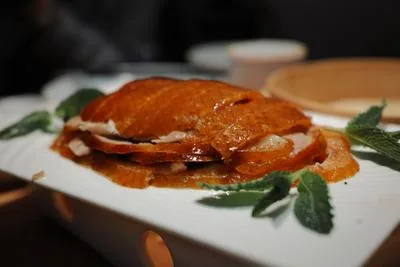
| 🦆 Peking Duck (北京烤鸭) | Crispy lacquered duck skin, thin pancakes, hoisin sauce, scallion, cucumber. The ceremonial dish of Beijing. | Beijing |
| 🥟 Xiaolongbao (小笼包) | Soup-filled dumplings. Bite the top, slurp the broth, eat the rest. Shanghai’s greatest gift to the world. | Shanghai, nationwide |
| 🍜 Lanzhou Beef Noodles (兰州拉面) | Hand-pulled wheat noodles in clear beef broth with chili oil. Watch them pull the dough. | Nationwide (look for 兰州拉面 sign) |
| 🥮 Dim Sum (点心) | Bite-sized steamed and fried dishes rolled on carts: har gow (shrimp dumplings), siu mai (pork dumplings), char siu bao (BBQ pork buns), egg tarts. | Guangzhou, Hong Kong |
| 🍳 Tomato & Egg Stir-Fry (番茄炒蛋) | China’s national home-cooking dish. Sweet, tangy, comforting. Every restaurant knows it. | Nationwide |
| 🥒 Braised Eggplant (红烧茄子) | Silky eggplant in sweet-soy sauce. The dish that converts eggplant skeptics. | Nationwide |
| 🍗 Kung Pao Chicken (宫保鸡丁) | Real Kung Pao is nothing like takeout. Tender chicken, peanuts, Sichuan peppercorn: numbing, sour, slightly sweet. | Sichuan, nationwide |
For the Adventurous (Big Flavors, Bigger Rewards)
| Dish | What It Is | Find It In |
|---|---|---|
| 🌶️ Mapo Tofu (麻婆豆腐) | Silken tofu in a lava-red sauce of chili oil, doubanjiang, and Sichuan peppercorn. The definitive Sichuan dish. | Sichuan, nationwide |
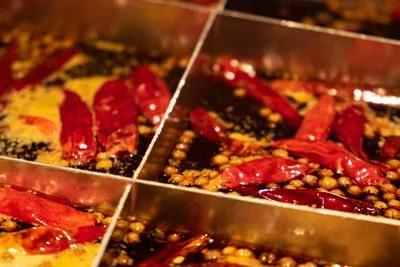
| 🍲 Chongqing Hot Pot (重庆火锅) | A bubbling cauldron of chili oil and Sichuan peppercorn where you cook your own meat, vegetables, and tofu. Not a meal, an event. | Chongqing, Sichuan |
| 🥵 Hunan Spicy Fish Head (剁椒鱼头) | A whole fish head buried under a mountain of fresh and fermented chopped chilies. Steamed. Intimidating. Spectacular. | Hunan |
| Stinky Tofu (臭豆腐) | Fermented tofu, deep-fried, served with chili sauce. Smells like a distant gym bag. Tastes like a crispy, savory revelation. | Changsha, street stalls nationwide |
| Century Egg (皮蛋) | Preserved duck egg with a black, translucent white and creamy green yolk. Eaten cold with pickled ginger. An acquired taste, and a cultural icon. | Nationwide |
| 🐰 Sichuan Rabbit (冷吃兔) | Cold rabbit in chili oil, an addictive snack from Zigong, Sichuan. Yes, it’s rabbit. Yes, it’s delicious. | Sichuan |
For Breakfast (The Most Underrated Meal in China)
| Dish | What It Is | Find It In |
|---|---|---|
| 🥞 Jianbing (煎饼) | The Chinese breakfast crepe: egg, crispy cracker, hoisin, chili, scallions, folded into a portable package. The ultimate street breakfast. | Nationwide |
| 🥟 Shengjian Bao (生煎包) | Pan-fried pork buns: crispy bottom, juicy filling. Shanghai’s superior alternative to steamed dumplings. | Shanghai |
| 🥖 Youtiao (油条) | Long, golden, deep-fried dough sticks: chewy inside, crispy outside. Dip in warm soy milk. | Nationwide |
| 🍲 Doufunao (豆腐脑) | Silky soft tofu in savory (northern) or sweet (southern) broth. The north-south sweet-savory war is real. | Nationwide |
| 🍜 Re Gan Mian (热干面) | Wuhan’s soul: alkaline noodles with sesame paste, soy sauce, pickled vegetables. Breakfast of champions. | Wuhan |
| 🍵 Congee (粥 / 稀饭) | Rice porridge with pickles, century egg, shredded pork, or youtiao. Gentle, warming, available everywhere. | Nationwide |
Street Food Hall of Fame
| Dish | What It Is | Find It |
|---|---|---|
| 🍢 Yangrou Chuan (羊肉串) | Cumin-spiced lamb skewers grilled over charcoal. Follow the smoke. | Xi’an Muslim Quarter, night markets |
| 🍬 Tanghulu (糖葫芦) | Hawthorn berries or strawberries on a skewer, coated in hardened sugar: crackly shell, tart fruit. | Northern China, tourist areas |
| 🥮 Roujiamo (肉夹馍) | “Chinese hamburger”: spiced braised meat stuffed into a crispy flatbread. Xi’an’s street food champion. | Xi’an |
| 🍜 Biang Biang Mian | Wide, belt-like hand-pulled noodles with chili oil, garlic, and vinegar. Named for the sound the dough makes when slapped. | Xi’an |
| 🥔 Langyáng Tudou (狼牙土豆) | “Wolf tooth potato”: crinkle-cut fried potatoes with chili, cumin, and scallions. Dangerous. | Sichuan, Chongqing |
| 🧊 Bingfen (冰粉) | Icy jelly dessert with brown sugar syrup, peanuts, sesame, and fruit. The antidote to a Sichuan hot pot meal. | Sichuan, Chongqing |
For a complete guide to eating well on ¥5-25, see our Chinese street food guide with 15 dishes, where to find them, and exactly what to say when you order.
How to Order Food Without Speaking Chinese
The QR Code System (2026 Reality)
In most Chinese restaurants, from mall chains to local noodle shops, you scan a QR code at your table. The menu opens in WeChat or Alipay. You order and pay entirely within the app. If you haven’t set up either app yet, our mobile payment guide walks through it step by step.
How to handle it:
- Open WeChat or Alipay and tap the Scan function
- Scan the QR code and a menu loads (usually Chinese-only, with photos)
- Tap items to add them to your cart, then submit your order
- Pay in the app; it’s charged automatically
- Wait for your food; a server brings it to your table number
If the menu has no photos: use Google Translate’s camera mode (point your phone at the screen) or take a screenshot and upload it to translate.
If there’s no QR code (traditional restaurant): flag a server, point at the menu, or use the phrase sheet below.
Essential Dining Phrases
| Situation | Chinese | Pronunciation |
|---|---|---|
| I’ll have this (pointing) | 我要这个 | Wǒ yào zhè ge |
| Not spicy | 不要辣 | Bù yào là |
| A little spicy | 微辣 | Wēi là |
| Very spicy | 很辣 | Hěn là |
| No MSG | 不要味精 | Bù yào wèijīng |
| The bill, please | 买单 | Mǎidān |
| Thank you | 谢谢 | Xièxiè |
| Delicious! | 好吃! | Hǎochī! |
| Check, please | 结账 | Jiézhàng |
| Takeaway box | 打包 | Dǎbāo |
| Do you have an English menu? | 有英文菜单吗? | Yǒu yīngwén càidān ma? |
The Point-and-Shoot Method
Look around. If someone at another table has something that looks good, point at it and say “我要这个” (Wǒ yào zhè ge, “I want this one”). This is completely normal behavior in China. Nobody will find it rude. Restaurant staff expect this from international visitors.
Screenshot These Characters
| Character | Meaning |
|---|---|
| 鸡 (jī) | Chicken |
| 牛 (niú) | Beef |
| 猪 (zhū) | Pork |
| 羊 (yáng) | Lamb |
| 鱼 (yú) | Fish |
| 虾 (xiā) | Shrimp |
| 蛋 (dàn) | Egg |
| 豆腐 (dòufu) | Tofu |
| 米饭 (mǐfàn) | Rice |
| 面 (miàn) | Noodles |
| 辣 (là) | Spicy |
| 麻 (má) | Numbing |
Vegetarian & Vegan Survival Guide
This section is critical. “Vegetarian” is a culturally unfamiliar concept in much of China. A dish described as “vegetable” may still contain meat stock, oyster sauce, lard, or fish sauce. For a complete guide to eating meat-free across China, see our vegetarian survival guide.
The Hidden Meat Traps
| Trap | Why It’s a Problem |
|---|---|
| Oyster sauce (蚝油) | Used in almost every stir-fried vegetable dish in Cantonese cooking |
| Lard (猪油) | Common cooking fat in Sichuan and Hunan, even in vegetable dishes |
| Chicken powder (鸡精) | MSG-adjacent flavor enhancer, added to almost everything |
| Fish sauce (鱼露) | Standard in Fujian and Chaoshan cooking |
| Meat stock | The liquid base of many soups and braised dishes, even “vegetable” ones |
| Dried shrimp (虾米) | Often added to otherwise-vegetable dishes for umami |
| Chopped pork in Mapo Tofu | The classic recipe includes minced pork; ask for 素版 (vegetarian version) |
How to Navigate It
Best bet: Buddhist vegetarian restaurants (素菜馆 / 素食馆 / 斋菜馆). These exist in every major city, often near temples. They exclude all animal products and understand what “vegetarian” actually means. Look for the character 素 (sù).
Key phrase to memorize:
我吃素。不要肉、不要鱼、不要蛋、不要奶、不要蚝油、不要猪油。 Wǒ chī sù. Bù yào ròu, bù yào yú, bù yào dàn, bù yào nǎi, bù yào háoyóu, bù yào zhūyóu. “I eat vegetarian. No meat, no fish, no egg, no dairy, no oyster sauce, no lard.”
Safe dishes to order anywhere:
- Tomato & egg stir-fry (番茄炒蛋), if you eat eggs
- Di San Xian (地三鲜): fried potato, eggplant, and green pepper (confirm no meat stock)
- Dry-fried green beans (干煸四季豆): confirm no minced pork
- Stir-fried seasonal greens (炒时蔬): ask for 清炒 (plain stir-fry, no oyster sauce)
- Cold cucumber salad (拍黄瓜): smashed cucumber with garlic and vinegar
- Scrambled eggs with anything: eggs are available everywhere
- Steamed rice (米饭): the universal safety net
Download before you go: the Happy Cow app works in China and maps vegan and vegetarian-friendly restaurants in every major city.
Halal Dining & Muslim-Friendly Food
China has 20 million Muslims and halal food is available in every major city. Look for 清真 (qīngzhēn) signs; the green or gold characters mean the restaurant is halal-certified. Lanzhou beef noodle shops (兰州拉面) are almost always halal and found everywhere. Xi’an’s Muslim Quarter has the country’s densest concentration of halal street food. For a complete guide covering halal food strategies, mosques, and Muslim-friendly cities across China, read our Muslim travel guide.
Dining Etiquette: The Unwritten Rules
Chinese dining culture has a few norms that differ from Western customs. None are hard to follow, but knowing them makes you look respectful.
Do’s
- Accept dishes served to you; even a small taste is polite. If you can’t eat it, leave it on your plate.
- Tap the table with two fingers when someone pours your tea, a silent “thank you” from imperial-era Guangdong.
- Try everything at a shared meal. Chinese dining is communal. Show willingness.
- Eat rice from the bowl held close to your mouth; this is normal and practical for chopsticks.
- Let the host order if you’re being treated; they’ll ask about dietary restrictions if they care.
- Fight for the bill. If dining with Chinese friends, there will be a mock battle over who pays. Let it happen. Then offer to cover the next meal.
Don’ts
- Don’t stick chopsticks vertically in rice; it resembles funeral incense and is genuinely offensive.
- Don’t point at people with chopsticks; use an open palm instead.
- Don’t tap your bowl with chopsticks; this is what beggars did historically.
- Don’t flip a fish. If the top side is finished, lift the spine off with your chopsticks to access the bottom. Flipping symbolizes a fishing boat capsizing.
- Don’t be loud when complaining. Direct public confrontation causes loss of face. Flag the server quietly, explain the problem calmly.
- Don’t tip. China has no tipping culture. In high-end hotels catering to international guests, it might be accepted but is never expected.
Shared Dining
Most Chinese meals are shared: dishes are placed in the center of the table, and everyone takes from them with serving chopsticks or their own. Order 1–1.5 dishes per person, plus rice. Rice comes last or with the meal (not before). Soup comes with the dishes, not as a starter.
China’s Best Food Cities
If you’re building an itinerary around food, here are the essential stops:
| City | Food Identity | Must-Eat Dish | Food Street |
|---|---|---|---|
| Beijing | Imperial + northern comfort | Peking Duck (北京烤鸭) | Guijie (簋街), Wangfujing night market |
| Shanghai | Refined eastern, soup dumplings | Shengjian Bao (生煎包), Xiaolongbao | Yunnan Road, Wujiang Road |
| Xi’an | Silk Road flavors, Muslim-Chinese | Roujiamo (肉夹馍), Yangrou Paomo | Muslim Quarter (回民街) |
| Chengdu | Sichuan capital, numbing-spicy | Mapo Tofu (麻婆豆腐), Hot Pot | Jinli Street, Kuanzhai Alleys |
| Chongqing | The hot pot holy land | Chongqing Hot Pot (重庆火锅), Xiaomian | Jiefangbei, Hongyadong |
| Guangzhou | Cantonese dim sum capital | Har Gow (虾饺), Char Siu | Beijing Road, Shangxiajiu |
| Changsha | Hunan spice, street food heaven | Stinky Tofu (臭豆腐), Spicy Fish Head | Taiping Street |
| Kunming | Yunnan minority flavors | Across-the-Bridge Noodles (过桥米线) | Nanqiang Street |
| Hangzhou | Delicate, tea-infused | Dongpo Pork (东坡肉), Longjing Shrimp | Hefang Street |
| Nanjing | Salty duck, soup dumplings | Salted Duck (盐水鸭), Duck Blood Soup | Fuzimiao |
Food Safety: The Street Food Rules
Chinese street food is generally safe if you follow these rules:
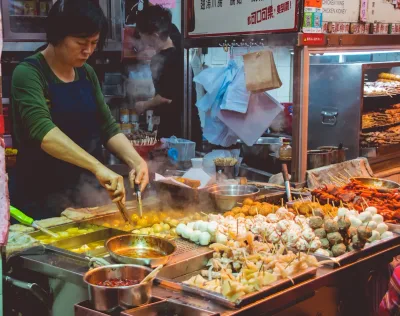
- High turnover = fresh ingredients. Eat at stalls with long queues. The food hasn’t been sitting around.
- Cooked-to-order > pre-cooked. Watch your food being made. If it’s been sitting in a warming tray, skip it.
- Bottled or boiled water only. Tap water is not potable anywhere in China. Ice in reputable restaurants is fine (made from purified water). Street stall ice is a judgment call.
- Peelable fruit is safe. Bananas, oranges, lychees: the peel protects them. Unpeeled fruit from markets should be washed with bottled water.
- Wash your hands. Carry hand sanitizer. Many bathrooms don’t have soap.
- Trust your nose. If it smells off, it is off. Chinese food culture values freshness; “off” food is not a cultural difference, it’s bad food.
For a deeper checklist covering night markets specifically, including which stall setups to avoid and what to do if a dish does go wrong, see our night market food safety guide.
Street Food Hunting: How to Find the Good Stuff
The safety rules tell you what to avoid. This section solves the opposite problem: there are 200 stalls on one street, and you have one stomach. Here’s how to spend it well.

Read the stall, not the sign
Three signals matter more than anything printed on the banner:
- The queue. A line of locals at 7pm means the food is good and moving fast. An empty stall next to a busy one is empty for a reason.
- Turnover speed. Watch for two minutes. If skewers come off the grill and go straight into hands, everything is fresh. If the same tray of dumplings has been sitting since you arrived, keep walking.
- Who’s eating. Office workers, delivery drivers, and grandmothers are a stronger endorsement than a cluster of tourists. Regulars who order without looking at the menu are the strongest signal of all.
Use Dianping even if you can’t read a word
Dianping (大众点评) is China’s Yelp, and it works fine with zero Chinese reading ability. Open the app, let it use your location, and browse by photos and star ratings. Numbers need no translation: a 4.8 rating with 3,000 reviews is a safe bet in any language. Look for the orange 必吃榜 badge, Dianping’s annual “must-eat list,” which covers hole-in-the-wall shops and stalls, not just restaurants. Tap a listing, scroll the user photos to see what to order, then show your chosen photo to the person at the counter. That’s the whole transaction.
The next-table method, street edition
The point-and-shoot method from the ordering section works even better at street level. At a stall, the food is being made in front of you, so you can point directly at the griddle or the skewer pile. Watch what the person ahead of you orders and say 我要这个 (wǒ yào zhè ge). At a sit-down place, pointing at another table’s dish is normal and nobody blinks. This one phrase plus a pointed finger will feed you across the entire country.
What meals actually cost
| Meal Type | Price Range | What You Get |
|---|---|---|
| Street food | ¥8–30 | Jianbing, skewers, roujiamo, a bowl of noodles from a window |
| Casual restaurant | ¥30–80/person | Noodle shops, dumpling houses, food courts, local stir-fry joints |
| Mid-range restaurant | ¥80–200/person | Hot pot, Peking duck houses, well-reviewed regional restaurants |
| Fine dining | ¥200+/person | Tasting menus, high-end Cantonese, hotel dining rooms |
For context on how food fits into your overall daily spend, our China travel budget guide breaks down full trip costs by style.
When the QR menu photos are useless
Some QR menus have glossy photos. Others have blurry thumbnails the size of a fingernail, or no photos at all. Tactics, in order of effort:
- Screenshot the menu and run it through Google Translate’s image mode
- Match characters against the screenshot list earlier in this guide (鸡 chicken, 牛 beef, 鱼 fish, 辣 spicy)
- Order whatever is marked 招牌 (signature) or 特色 (house special); it’s usually the reason the restaurant exists
- Flag a server, show the phrase sheet, and let them recommend something
The one-plus-one ordering rule
At any shared meal, the default formula is one dish per person plus one soup for the table, with rice for everyone. Two people: a meat dish, a vegetable dish, a soup, rice. Four people: two meats, two vegetables, a soup. Undershoot on the first round; dishes arrive in minutes and adding more is effortless. Over-ordering is for banquets, and half-finished plates at a casual dinner just mean you paid for food you didn’t eat.
A food-focused day, budgeted
Here is what a serious eating day looks like in a city like Chengdu or Xi’an:
- Breakfast: jianbing or noodles plus soy milk from a street cart, ¥10–15
- Mid-morning: tanghulu or a bakery stop, ¥8–10
- Lunch: a bowl at a noodle shop (Lanzhou beef noodles, biang biang mian), ¥18–30
- Afternoon: lamb skewers and a cold drink at a market, ¥25–40
- Dinner: casual restaurant, three dishes and rice split between two people, ¥50–70 each
- Late night: bingfen or one more round of skewers, ¥10–15
Total: roughly ¥120–180 per person for a day where you never stop eating. Double it if dinner is hot pot with drinks. It is still one of the best food-money ratios anywhere on earth.
What to Drink
| Drink | What It Is |
|---|---|
| 🍵 Tea (茶) | Poured free at most restaurants. Green tea (绿茶) is the default. Jasmine (茉莉花茶) in Beijing. Pu’er (普洱茶) in Yunnan. Tieguanyin (铁观音) in Fujian. |
| 🍺 Tsingtao Beer (青岛啤酒) | The ubiquitous lager. Available everywhere. Cheap (¥6–10 for a large bottle). |
| 🥛 Soy Milk (豆浆) | Breakfast staple, served hot and slightly sweet. Also the default vegan milk. |
| 🍶 Baijiu (白酒) | Aromatic grain spirit, 40–60% ABV. Moutai is the luxury brand. Proceed with caution. |
| 🍊 Suanmeitang (酸梅汤) | Sweet-sour plum drink. Refreshing, especially with spicy food. |
| 🥥 Coconut water | Available fresh in southern China and Hainan. |
The Honest Truth
Chinese food is one of the greatest pleasures of traveling in China — and also one of the most intimidating. The menus are in characters you can’t read. You’ll accidentally order tripe when you wanted chicken. The Sichuan peppercorn will numb your entire face, and you’ll either love it or hate it. A dish labeled “vegetable” will arrive with minced pork on top.
But the highs are extraordinary. That first bite of real Peking Duck — skin shattering like glass, fat melting on your tongue. A perfect xiaolongbao, the broth flooding your mouth before the pork hits. Street-side biang biang noodles in Xi’an, the chili oil pooling at the bottom of the bowl. Hot pot in Chongqing with new friends, tongues tingling, beers clinking, laughter bouncing off the windows into the humid night.
The best advice: be curious. Point at things. Smile. Say “好吃” (hǎochī — delicious) when it’s good. Chinese people care deeply about food, and when you show genuine enthusiasm, doors open: literally, to restaurants you’d never have found on your own, and figuratively, to a version of China you can only taste.
Frequently asked questions
What is the difference between Sichuan and Hunan cuisine?
Both are seriously spicy, but the heat works differently. Sichuan cuisine is built on mala, the numbing-spicy combination of Sichuan peppercorn and chili, layered with fermented bean paste for depth. Your lips tingle and go slightly numb. Hunan cuisine skips the peppercorn entirely and delivers pure fire from fresh and fermented chilies, often with a sour or smoky edge. Hunan food is generally hotter; Sichuan food is more complex. To compare them directly, order mapo tofu (Sichuan) and chopped chili fish head (Hunan).
How do I order food in China if I can’t read the menu?
Most restaurants use QR code menus with photos: scan with WeChat or Alipay, tap the pictures, and pay in the app. If there are no photos, point Google Translate’s camera at the screen. At street stalls and traditional restaurants, point at what another table is eating and say “wo yao zhe ge” (I want this one). Nobody considers this rude. Screenshot a handful of key characters before you go, such as 鸡 (chicken), 牛 (beef), 鱼 (fish), and 辣 (spicy), so you can decode dish names at a glance.
Is street food in China safe to eat?
Generally yes, if you pick stalls the way locals do. Eat where there is a queue and high turnover, so ingredients never sit around. Choose food cooked to order in front of you over anything waiting in a warming tray. Drink bottled or boiled water only, since tap water is not potable, and stick to peelable fruit unless you can wash it. Millions of people eat street food daily in China; traveler food poisoning usually traces back to a stall that broke these rules, not to street food itself.
What should vegetarians know before traveling in China?
Vegetarianism is a culturally unfamiliar concept in much of China, and vegetable dishes routinely contain oyster sauce, lard, meat stock, or minced pork. Learn the phrase “wo chi su” (I eat vegetarian) and specify no meat, no fish, no oyster sauce, no lard. Buddhist vegetarian restaurants (look for the character 素) exist in every major city and exclude all animal products. Safe fallback orders include tomato and egg stir-fry, cold cucumber salad, and plain stir-fried greens. The Happy Cow app works in China and maps vegetarian-friendly restaurants.
Which cities should I visit for the best food in China?
Chengdu and Chongqing for Sichuan food and hot pot, Guangzhou for dim sum and Cantonese cooking, Xi’an for street food in the Muslim Quarter, and Shanghai for soup dumplings. Beijing is the place for Peking duck, and Changsha is the capital of Hunan spice and stinky tofu. If you only have one food stop, Chengdu is the strongest single-city choice: UNESCO named it a City of Gastronomy, and you can eat spectacularly well there for under ¥100 a day.
How much does a typical meal cost in China?
Street food runs ¥8–30 for a filling snack or a bowl of noodles. A casual restaurant meal costs ¥30–80 per person, a mid-range restaurant ¥80–200, and fine dining starts around ¥200 per person. A dedicated food day, from a jianbing breakfast to late-night skewers, lands around ¥120–180 per person. Tea is usually free at restaurants, a large bottle of Tsingtao costs ¥6–10, and there is no tipping anywhere.
Have food questions? Dietary concerns? Want recommendations for a specific city? Reach out — I love talking about Chinese food.
New to China travel? Our first-timer’s guide covers everything from visas to what to eat.