Labubu and Pop Mart in China: Prices, Stores and What to Expect
What Pop Mart actually is
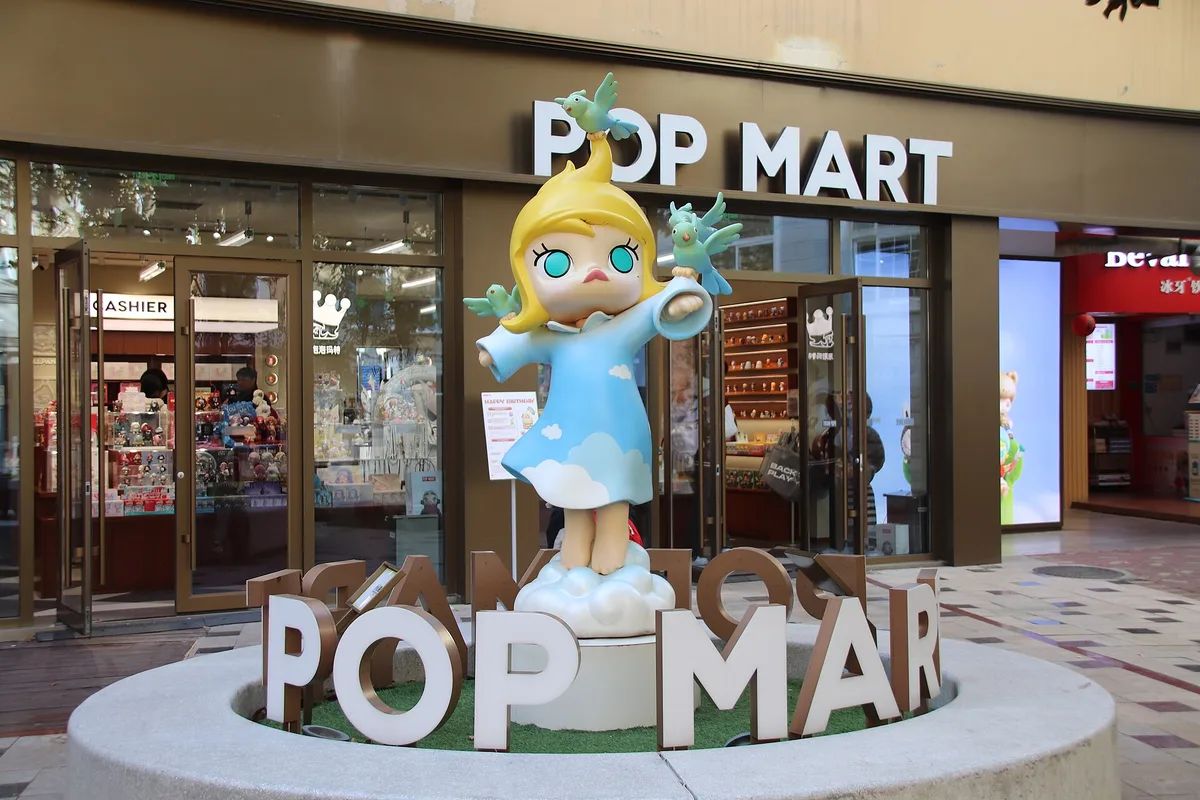
Pop Mart is a Beijing company founded in 2010 that turned an old habit of Japanese toy vending into a mainstream retail category. The model is the blind box: a sealed package containing one figure from a set, with the contents unknown until you open it. Buyers know the odds, not the outcome.
The company does not mostly design its own characters. It signs artists and manufactures their work, which is why the shelf reads like a gallery of separate styles rather than a house brand. Molly, a pouting girl with saucer eyes, was the first to break through. Dimoo, Skullpanda and Hacipupu followed. The one that went global is Labubu, created by the Hong Kong artist Kasing Lung and sitting inside a family of characters called The Monsters.
By the end of June 2026 Pop Mart ran 455 stores in mainland China and 676 worldwide, plus 2,827 Robo Shop vending machines. Group revenue for the first half of the year was ¥17.17 billion, up 23.8 percent, at a gross margin just under 70 percent. It has 82.44 million registered members in mainland China alone, who account for 92.9 percent of sales.
That last number explains the stores. Chinese Pop Mart outlets are not aimed at passing tourists. They are clubhouses, and they are busy with people who already know the catalogue.
What a Labubu costs in China
Prices are set per series and printed on the shelf, and mainland China gets the lowest official pricing in the world.
The current generation of Labubu vinyl plush pendants, roughly 17 centimetres tall, retails at ¥159 for a single blind box and ¥954 for a sealed case of six. The Labubu collaboration with Sanrio, released in March 2026, sat at the same ¥159 and ¥954. A Lunar New Year plush series earlier in 2026 ran ¥159 a box and ¥1,113 for a case of seven.
The classic hard-plastic blind boxes are cheaper and are where most first purchases happen. Across Pop Mart’s lines the standard tiers are ¥59, ¥69, ¥79 and ¥99, and the price depends on the line rather than on the shop. A reporter who toured several stores in Wuhan in January 2026 found shelf prices matching the official ones exactly, with no discounting.
Each series publishes its own odds. A six-box set normally contains six regular designs plus one hidden figure, and the hidden probability for recent Labubu series is commonly 1 in 72, though 1 in 96, 1 in 144 and 1 in 168 all appear across the catalogue. Read the specific series page rather than assuming.
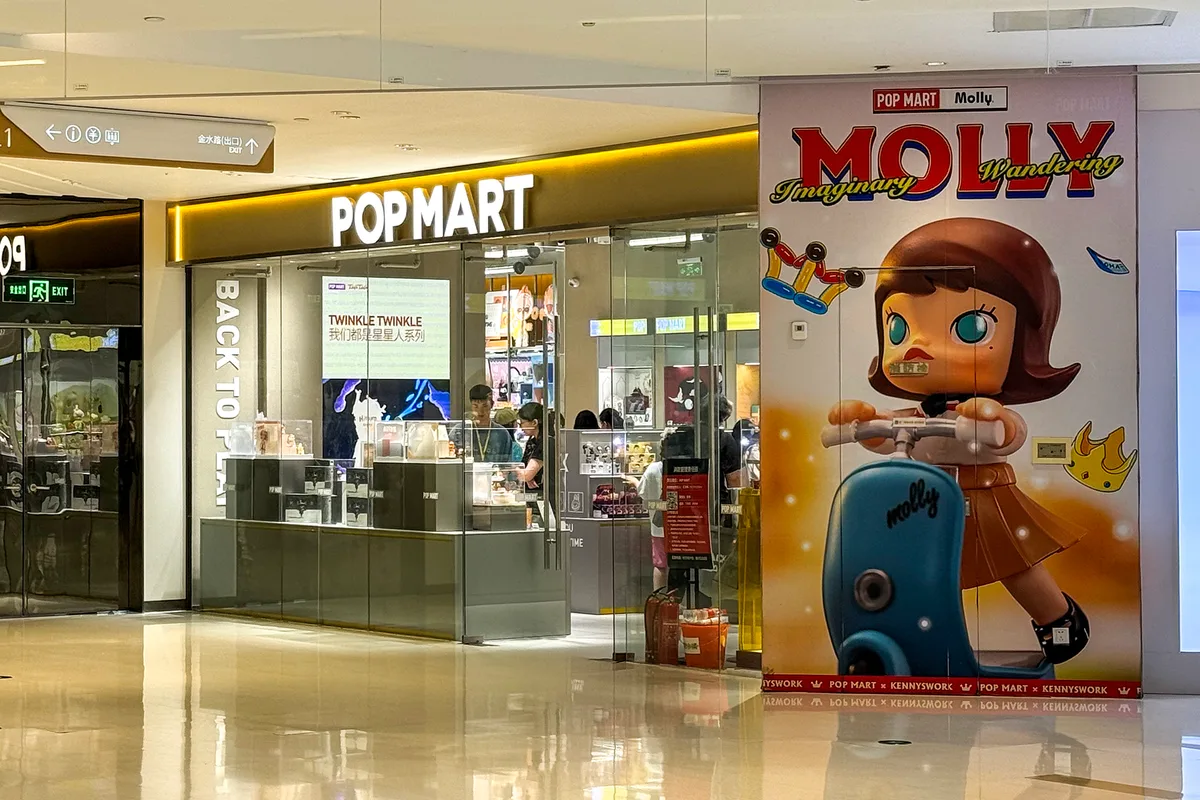
This is where visitors overspend by accident. A single box feels cheap next to the same figure overseas, so people buy three or four and end up with duplicates of the one design nobody wants. If you are buying to keep rather than to gamble, one sealed case gives you the full set of regulars with no repeats, for roughly the price of six boxes. It does not give you the hidden figure. If the case contains one, it replaces a regular, so you finish with five regulars and the hidden.
The resale market broke, and that is good news
If your mental picture of Labubu is a queue outside a store and figures selling for twenty times retail, you are working from 2025.
That market existed and it was extreme. A Vans collaboration figure with a ¥599 retail price averaged ¥18,761 in secondary trading over 30 days. An early mint-green Labubu sold at a Chinese auction house for ¥1.08 million. In Seoul and Bangkok, resale prices ran ten times retail and stores posted notices that stock had run out.
It has since come apart, and the collapse is well documented. By January 2026 the seven-day average transaction price for Labubu on Xianyu, China’s main secondhand platform, had fallen to ¥78.5, and ordinary figures from earlier series were being listed at ¥49 with free shipping, below their own issue price. A hidden figure called Benwo that had once changed hands for ¥4,000 to ¥5,000 was down to around ¥400.
The most recent releases confirm the pattern rather than reversing it. When the fourth-generation Labubu series launched on 25 June 2026, several regular designs fell below their ¥159 issue price within half an hour, dropping more than 30 percent. The hidden figure from that series, Misty White Noise, did rise to around ¥855, which sounds impressive until you compare it with an earlier hidden that peaked near 26 times retail.
Two things caused it. Pop Mart restocked aggressively from mid-2025, with monthly production approaching ten million units by September of that year, which destroyed the artificial scarcity the resale market was built on. And the buyers changed: the people paying 20 times retail for an investment were replaced by people paying retail for something they like.
What this means on the ground is straightforward. You can now walk into a Pop Mart store in China and buy a current Labubu at the official price without queuing, which was not true a year ago. The store is the cheap option and the resale platform is the one to be careful with.
Where to buy, and which stores are worth it
The Shanghai flagship that everyone names is at 299 Nanjing East Road, inside Hongyi International Plaza in Huangpu district. It opened in September 2022 as the company’s first global flagship, about 500 square metres over two floors. Do not confuse it with the other Pop Mart on the same street at 829 Nanjing East Road, inside Shimao Plaza. The store’s posted opening hours have been published in at least four conflicting versions, so read the door rather than any guide, this one included.
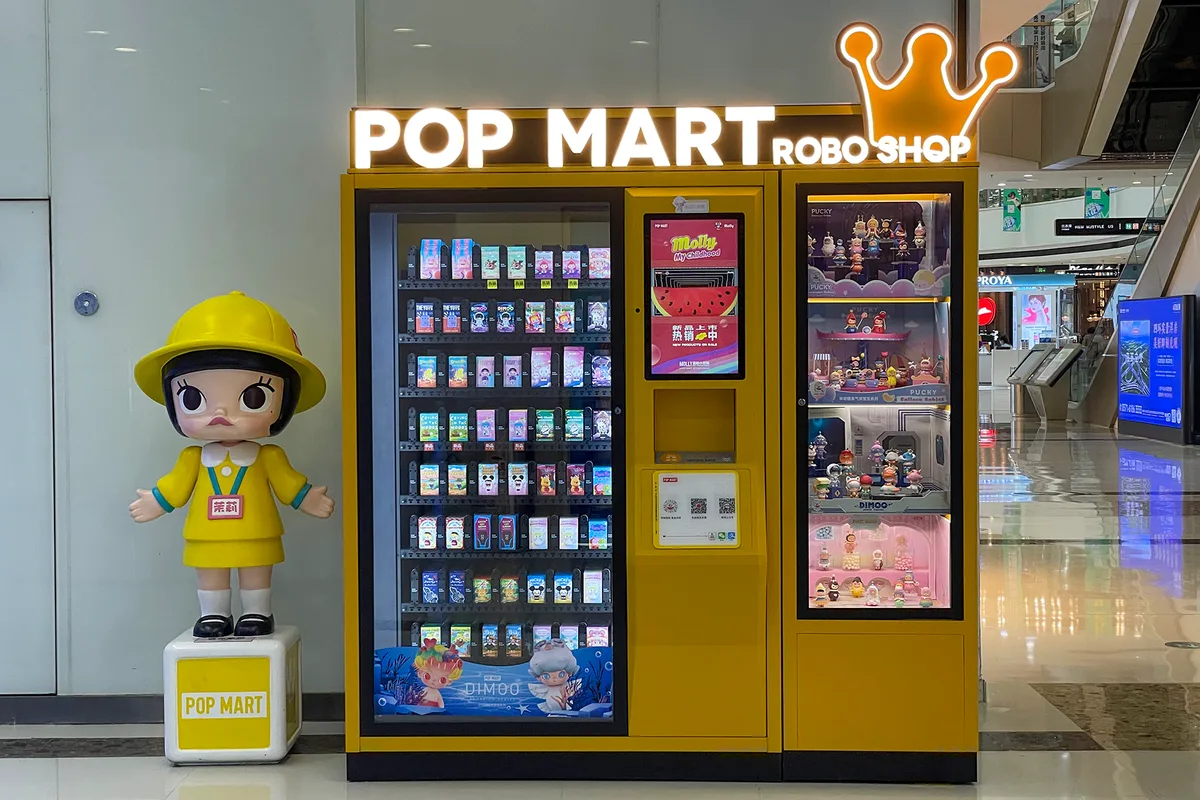
Format matters more than address. A standard store carries the full current range. A Robo Shop is a yellow vending machine, found in metro stations, airports and mall corridors, useful when you want one box and not a browse.
Pop Mart spent the second half of 2026 opening very large stores, and these are the ones a visitor should aim for. A flagship opened in Chengdu IFS in July, another in Changsha IFS on 5 September, and the largest in the country opened on Hangzhou’s Hubin pedestrian street beside West Lake on 12 September, with more than 1,000 square metres across three floors. On opening morning the queue numbers passed 700 before ten o’clock.
Beijing has two things worth planning around. Pop Mart City, the company’s theme park in Chaoyang Park, runs evening shows built around its characters. And the tenth-anniversary touring exhibition for The Monsters closed its world tour at the Qihao Art Museum in Chaoyang, having started in Shanghai in October 2025 and stopped in Paris, Tokyo and New York on the way.
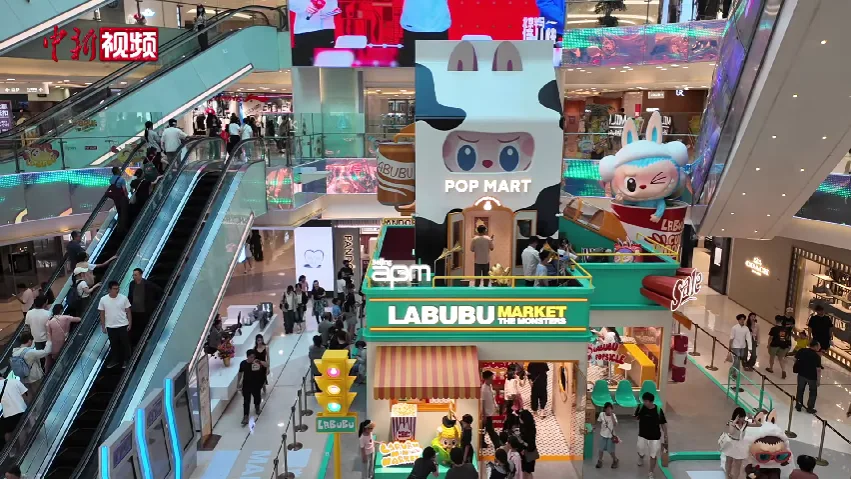
One piece of context before you go. Labubu is no longer the centre of the shelf. In the first half of 2026 the family containing Labubu brought in ¥4.45 billion, which is a huge number, but it was down 7.5 percent year on year and its share of company revenue fell from 34.7 to 26 percent. The IP that grew 580 percent over the same period, to ¥2.65 billion, is Twinkle Twinkle Star, and it is now the one in the middle of the window. The chief executive has said publicly that the full-year growth target will probably be missed.
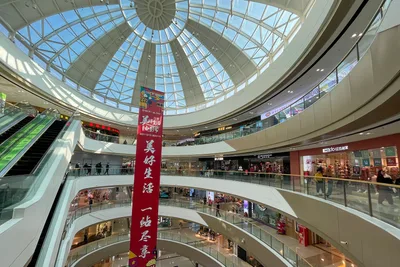
Almost every store on that list sits inside a shopping centre, which is a story in itself. If you want to understand why a toy shop holds the ground floor position that perfume used to, what is surprising about Chinese malls explains the pattern.
How the blind box works, and why you cannot cheat it
The rules are printed, enforced, and slightly unforgiving if you arrive expecting a shop assistant to help you pick.
You buy a sealed box. You open it. Opened boxes are not returnable, because the randomness is the product. Within a sealed case of six there are no duplicates among the regular designs, which is the only structural guarantee you get. Staff will not let you weigh boxes, shake them for a specific rattle, or open any before purchase, though Chinese collectors swap elaborate feel-guides online about the weight and the sound of a box that might hold a hidden figure. Treat those as folklore.
If you want one specific design, do not gamble. Buy it opened on the resale market, where ordinary recent figures now trade at or below retail because so many people are trying to offload duplicates. Do that through a platform with buyer protection and check the authenticity marks, which is the next problem.
Fakes, and how to check
Counterfeiting is industrial scale, and Chinese media has nicknamed the copies Lafufu and Lagogo. Guangzhou market regulators and police broke up an online counterfeit operation in August 2025. Shanghai’s Xuhui police seized more than 5,000 fake dolls with a case value above ¥12 million. American customs officers found over 11,000 counterfeit collectibles at Seattle airport in September 2025, and Pop Mart sued 7-Eleven in California the same year over sales of fakes. It is not only a money problem: the US Consumer Product Safety Commission issued a warning in August 2025 that counterfeit plush dolls posed a choking risk and might contain toxic materials.
The tells are specific and quick to check. A genuine Labubu has nine teeth and a peach-coloured face, and the foot carries a Pop Mart stamp. The paint should transition cleanly with no colour bleeding, the joints should move without slop, and the packaging should carry a QR code, a holographic sticker and, on many series, an ultraviolet stamp that shows under a UV light. One documented giveaway on a batch of fakes was the Chinese characters for vinyl, 搪胶, printed as 塘胶.
Verification is possible on the spot. In mainland China, scan the box’s anti-counterfeit code through the official Pop Mart service mini-program. Outside China, the same check runs through the customer service pages at m-gss.popmart.com. If the result says the code has already been verified more than once, be suspicious, because a genuine box should be checked for the first time by its first owner. A 2026 case made the point publicly: a car brand handed out Labubu boxes as gifts at a store event, buyers scanned them and got a failed verification, and the company’s brand manager apologised on 20 August and committed to buying ten thousand genuine ones.
The practical rule is the boring one. Buy from a Pop Mart store, the official mini-program or app, or a listed authorised retailer, and be sceptical of anything priced far below the shelf. If you are in China anyway, the store is right there. Set up Alipay or WeChat Pay before you fly, because the mini-program checkout runs through them and a physical foreign card will not work at the till in most stores.
Labubu is also only one line in a much longer shopping list. If you are allocating suitcase space, what is actually worth buying in China puts it in context alongside the tea, the tailoring and the electronics that hold their value better.
Frequently asked questions
How much does a Labubu cost in China?
The current Labubu vinyl plush pendant series retails at ¥159 for a single blind box and ¥954 for a full case of six. Smaller classic blind boxes from other Pop Mart lines run from about ¥59 to ¥99. Prices in mainland China are lower than overseas, and the official price has stayed steady even as resale prices collapsed.
Is Labubu still popular in China in 2026?
Yes, but the mania has cooled and the crown has moved. The Monsters family, which includes Labubu, fell 7.5 percent year on year in the first half of 2026 and dropped from 34.7 to 26 percent of Pop Mart’s revenue. Twinkle Twinkle Star grew 580 percent over the same period and now sits in the middle of the shelves. Stores were still queueing over the October 2026 holiday.
Can I buy a Labubu at the airport in China?
Sometimes. Pop Mart runs Robo Shop vending machines in some terminals, including Zhengzhou airport, and they stock current series. They are not reliable for a specific character or a new release, since the machine only holds what was loaded into it. For choice, go to a store.
How do I know if a Labubu is real?
Check the tooth count first, since genuine Labubu figures have nine teeth, then look for the Pop Mart stamp on the foot. Packaging carries a QR code, a holographic sticker and, on many series, a UV stamp. Scan the QR code through the official Pop Mart service mini-program or at m-gss.popmart.com. If it reports the code has already been verified more than once, treat the figure as suspect.
Does a full case of Labubu guarantee the complete set?
A sealed case of six normally contains all six regular designs with no duplicates, which is why collectors buy a whole case. It does not guarantee a hidden figure. If a hidden figure is in the case it replaces one of the regulars, so you end up with five regulars and the hidden one.
Can I return a Labubu blind box if I do not like what I opened?
No. Opened blind boxes are not returnable, and that is the entire point of the format. You are buying a sealed box with a known probability, not a specific figure. If you want a particular design, buy it opened from the resale market, where prices for ordinary figures are now often below the retail price.