Chinese Designer Brands Worth Buying: Songmont, PANE and More

The same bag costs about 40 percent less here
Start with one number. Songmont’s crescent bag sells in mainland China for between ¥1,650 and ¥1,880. On the brand’s overseas site the same bag is $389, which works out at roughly ¥2,750. That is a gap of about ¥1,100 on an object you can fold into a carry-on.
The gap is not a promotion and it is not a mistake. Chinese labels price for the home market first. The overseas figure has to absorb import duty, freight, a distributor’s margin and the cost of running a small foreign operation, and the brand’s own site charges in dollars, pounds, Singapore dollars and Australian dollars, every one of them above the RMB price. Buy the thing where it was designed and you skip all of that.
That is the whole argument for putting two or three shops on your itinerary. It is not an argument for buying something you did not want. The brands below are worth the detour because the stores are interesting in themselves, and the price is a bonus rather than the point.
Songmont started with one laptop bag
Songmont, written 山下有松 in Chinese, began in 2013 with a problem rather than a business plan. Fu Song had worked on interface design at Google and could not find a laptop bag worth carrying, so they drew one and their mother sewed it. The first bags were made the same way, at a kitchen table, and the label still names its leather after the mountains the family came from.
The brand now sells from its own shops rather than through department-store concessions, which matters for a visitor. You get to handle the leather, put your own laptop inside and see how the strap sits on your shoulder, none of which happens when a bag is behind glass in a mall.
Shanghai’s store is in the Rockbund block behind the Bund, at 149 Yuanmingyuan Road inside the Hami Building, a 1930s office block that has quietly filled up with design tenants. Beijing’s original shop is at Indigo, in the north-east of the city. Both are small. Neither is a flagship in the airport sense of the word.
When you are in the shop, spend your time on the two places where a bag gives itself away: the finish on the inside of the flap, which is where a cheap lining hides, and the stitching where the strap meets the body, which is where a heavy load will eventually pull. Check that before you check the mirror.
PANE turned a German army trainer into a Shanghai souvenir
PANE is a Shanghai footwear label that launched in 2022 and does one thing unusually well. It takes shoe shapes the market has already accepted, most famously the German army trainer, the plain leather and suede sneaker that the West German military issued in the 1970s, and reworks the materials and the colours.
Prices sit between ¥800 and ¥1,000. The best-selling Light Training NO-GI is ¥880, and it has become the shoe that overseas visitors buy in pairs: the store on Huaihai Road reports that international customers make up 60 to 80 percent of its footfall, with Singaporean and Thai shoppers the most common. The same shoe abroad runs about 30 percent higher, and NO-GI sells for $226 outside China.
The main store is on Yongyuan Road in Jing’an, a short street that has turned into a small fashion district, with a second Shanghai shop at TX Huaihai. There are seven in total, in Shanghai, Beijing, Shenzhen, Guangzhou and Hangzhou.
Two practical warnings. The shoes are unisex and sized on the Chinese scale, so try before you commit rather than converting from your European size on a phone. And the popular colourways run out: a restock can take two to three weeks, which is longer than most trips, so buy the pair you like when you see it.
To Summer sells a smell inside a courtyard
To Summer, 观夏 in Chinese, is a Beijing fragrance house founded in 2018, and it is the hardest of the three to buy by accident. It has no mall stores. Every shop is a restoration job on an old building.

Beijing’s flagship is a Qing-dynasty courtyard house at 23 Guozijian Street, a three-courtyard siheyuan that took about a year to repair and opened in July 2022. Shanghai’s is a 1920s Spanish-style villa at 111 Hunan Road, restored over roughly 200 days. Both keep the retail on the ground floor and put a tea room or an exhibition space above it.
That approach is why the brand is worth a visit even if you never open your wallet. You are walking through buildings that would otherwise be closed to you, and the shop assistants expect you to browse rather than buy. Set aside half an hour.
What to check before you pay
Tax refund. China refunds VAT to visitors on goods bought in participating stores. The threshold is ¥200 in a single store on a single day, the goods must leave the country unused within 90 days, and you get roughly 9 percent back once the agency fee is taken. Many malls now run a refund desk on site, so you can claim before you reach the airport. The full process is in our shopping guide.
Paying. Set up Alipay or WeChat Pay with your own card before you fly. A foreign physical card works directly in a minority of places, and small independent shops are the least likely to take one. Our Alipay and WeChat Pay comparison covers what actually happens at the counter.
Repairs and warranty. A bag bought in Shanghai and repaired in Europe is a conversation, not a right. Ask at the till whether the brand services the model internationally, and get the answer in writing if you are spending real money.
Resale and fakes. The resale market in China moves fast and the copy market moves faster. Buy from the brand’s own store, its Tmall flagship or its official mini-program. A “factory surplus” handbag sold from a suitcase is exactly what the words suggest.
Where the shops are

Shanghai does most of the work. Songmont is in the Rockbund. PANE is on Yongyuan Road and at TX Huaihai. To Summer is on Hunan Road in the former French Concession. Add Xintiandi and its Style I building, where the tenants are a mix of homegrown labels and foreign brands, and you have a day that needs no planning beyond a metro card. Our guide to what a Chinese shopping mall is actually like explains why the interesting floors are not the ones you would expect.
Beijing splits the difference between the old city and the new one. To Summer’s courtyard is on Guozijian Street, a five-minute walk from the Confucius Temple and one metro stop from the Yonghe Temple. Songmont is at Indigo. Sanlitun has the density if you want to compare twenty labels in an afternoon.
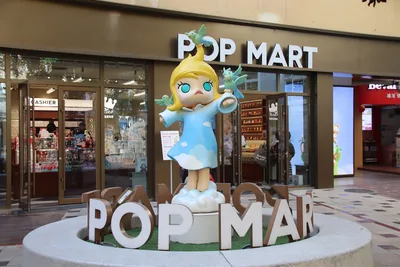
One habit worth copying from Chinese shoppers: the labels people actually rate are the ones with a single-product reputation, not the ones with the biggest shop. If a brand does one bag, one shoe or one scent and has done it for years, that is the one worth your suitcase space. The toy and collectible side of the same market is a different story, and the state of Labubu and Pop Mart is the place to read up on it, because prices there behave nothing like they do on a handbag.
For everything else you might carry home, our souvenirs guide covers the categories that are worth the weight.
Frequently asked questions
Are Chinese designer brands cheaper in China than abroad?
Yes, usually by a wide margin. Songmont’s crescent bag is ¥1,650 to ¥1,880 at home and $389 overseas, which is roughly ¥2,750, a gap of about ¥1,100. PANE’s trainers are around 30 percent cheaper in China, with the Light Training NO-GI at ¥880 against $226 abroad. Import duty, freight and distributor margins explain most of the difference.
Where can I buy Songmont in Shanghai?
At 149 Yuanmingyuan Road in the Hami Building, inside the Rockbund district behind the Bund. The nearest metro is Tiantong Road on line 12, about a 900-metre walk. Beijing’s shop is at Indigo. Small stores, no appointment needed.
What are PANE shoes and why are they popular?
PANE is a Shanghai footwear label founded in 2022 that reworks classic shapes, above all the German army trainer. Prices run ¥800 to ¥1,000. Its Huaihai Road store reports that 60 to 80 percent of customers are international visitors, and the best-selling colourways regularly sell out.
Can I claim a tax refund on a handbag in China?
Yes, if the store participates. Spend at least ¥200 in one store on one day, keep the receipt and the refund form, and take the goods out of China unused within 90 days. You get back roughly 9 percent after the agency fee. Many malls have an on-site refund desk.
Do these brands have stores outside China?
Songmont sells internationally through its own website, which is why the price gap is easy to check before you fly. PANE has been expanding in Asia and beyond since 2026. The catch is service: repairs and exchanges are handled in the market where you bought the item, so a bag bought in Shanghai is usually serviced in Shanghai.
Is it worth buying these brands second-hand?
Only with care. The resale market for Chinese designer goods is thinner than the market for collectible toys, and the copy market is well organised. Buy from the brand store, the Tmall flagship or the official mini-program, and treat any offer of factory surplus stock as a warning rather than a bargain.